 27°C


Los Tres Ojos National Park: What to See, How to Visit and Practical Tips
Just outside the historic center of Santo Domingo, Los Tres Ojos National Park offers a remarkable natural landscape of limestone caves, underground freshwater lakes and tropical vegetation. Its name refers to three striking pools hidden inside a cavern, while a fourth lake, Los Zaramagullones, lies in an open-air basin nearby. Visitors can explore the site along stairways and paths that descend into the cave system, making it one of the most distinctive nature attractions in the Dominican capital.


What Is Los Tres Ojos National Park?
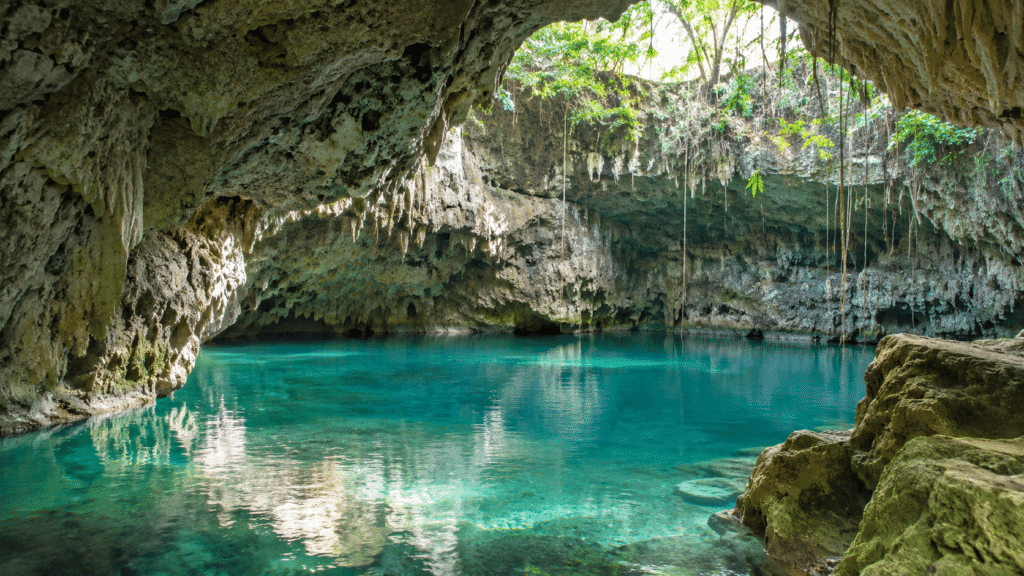
Los Tres Ojos National Park is a protected natural attraction in Santo Domingo Este, on the eastern side of the Dominican capital. Its main feature is a limestone cavern containing several freshwater lakes, surrounded by rock formations, vegetation and openings that allow natural light to reach the water below.
The name translates as “The Three Eyes” and refers to the three principal lakes located inside the cave. A fourth lake, Los Zaramagullones, is found in a separate open-air basin and forms an important part of the visitor experience. Together, the four bodies of water create a landscape that is unusual so close to a large Caribbean city.
The park is part of the wider natural environment of eastern Santo Domingo and is a popular excursion for visitors interested in geology, nature, photography and the island’s pre-Columbian heritage. Unlike a conventional city park, its main attraction is underground: visitors descend below ground level to follow paths and stairways around the lakes.
How Were the Caves and Lakes Formed?
The landscape of Los Tres Ojos is associated with the geological processes that shape limestone regions. Limestone is a sedimentary rock that can gradually dissolve when exposed to water containing naturally occurring carbon dioxide. Over long periods, this process creates cavities, underground passages and larger chambers beneath the surface.
At Los Tres Ojos, the cavern system developed within limestone rock. The interaction between groundwater and the rock helped create underground spaces that eventually became accessible as parts of the cave roof opened or collapsed. Water accumulated in the resulting depressions, forming the lakes visible today.
This type of landscape is commonly known as karst topography. It is found in many parts of the Caribbean, where limestone formations, underground drainage systems and natural cavities are characteristic features. At Los Tres Ojos, the combination of exposed rock, shaded chambers and clear water makes these geological processes particularly easy to appreciate.
Why Are the Lakes Different Colors?
The lakes can appear blue, turquoise, green or darker depending on the angle of sunlight, the depth of the water, the surrounding vegetation and the mineral composition of the environment. Light entering through openings in the cavern creates changing reflections on the water and highlights the contrast between the illuminated surfaces and the shaded cave walls.
The water is also affected by the conditions of each individual basin. Some sections receive more direct sunlight than others, while deeper or more enclosed areas remain considerably darker. These differences are part of what makes the lakes visually distinctive.
The Four Lakes of Los Tres Ojos
Although the attraction is named after three lakes, visitors encounter four principal bodies of water. Each has a different setting and appearance, and understanding their layout makes it easier to follow the route through the park.
1. Lago de Azufre (Sulfur Lake)
Lago de Azufre is one of the first lakes encountered inside the cavern. Its name comes from the historical belief that the whitish material visible in parts of its bed was sulfur. Later descriptions have associated this material with calcium and other mineral deposits rather than confirming that it is sulfur.
The lake is particularly interesting because of the contrast between its water and the pale mineral formations beneath the surface. The name remains part of the traditional identity of the attraction, even though it should not be taken as a definitive description of the lake’s chemical composition.
2. La Nevera (The Refrigerator)
La Nevera is known for its cooler, darker environment. Its name refers to the relatively low temperature of the water compared with the more exposed areas of the park. Because sunlight reaches this section less directly, the lake maintains a noticeably shaded atmosphere.
The contrast between La Nevera and the brighter areas of the cavern helps visitors understand how the cave’s openings influence the conditions inside. It is one of the most distinctive stops along the underground route.
3. Lago de las Damas (Lake of the Ladies)
Lago de las Damas is another of the interior lakes. It is generally described as a smaller pool within the cave system and forms part of the sequence of water basins connected by the visitor paths.
Its name is traditionally associated with its former use as a bathing area for women and children. Today, visitors should treat it as a protected natural feature to be observed from the designated areas rather than as a swimming spot.
4. Lago Los Zaramagullones
Los Zaramagullones is the fourth lake and the one that differs most clearly from the other three. Instead of being enclosed within the cavern, it occupies an open-air basin surrounded by tropical vegetation and exposed rock.
The name is associated with the zaramagullón, a waterbird found in the area. The lake’s setting provides a different perspective on the park, with natural light, vegetation and open water replacing the enclosed atmosphere of the caves.
Reaching Los Zaramagullones involves a small wooden raft or barge that carries visitors across the water. The crossing is one of the most memorable parts of the visit and provides access to a section of the park that cannot be reached simply by following the cave stairways.
What to See During the Visit
The lakes are the main attraction, but the experience involves more than looking at the water. The route offers several opportunities to observe the cave environment, geological features and vegetation surrounding the underground pools.
The Limestone Walls and Cave Formations
As you descend into the cavern, pay attention to the exposed limestone surfaces. The irregular walls, cavities and natural textures reveal the effects of water acting on the rock over long periods. The contrast between the stone and the clear water is one of the defining visual features of Los Tres Ojos.
Natural openings in the cave roof allow sunlight to enter in certain areas. Depending on the time of day and weather conditions, these openings can create bright patches on the water and illuminate sections of the rock walls.
The Underground Viewpoints
The paths and stairways provide different viewpoints over the lakes. From some positions, visitors can look down toward the water, while other sections offer closer views of the cavern walls and the surrounding rock formations.
Take time to observe the landscape rather than rushing from one lake to another. The experience is largely visual, and the appearance of the water changes as you move through the cave.
Vegetation and Wildlife
The open-air section around Los Zaramagullones is especially interesting for its vegetation and aquatic environment. The presence of waterbirds is part of the lake’s natural character, while the surrounding vegetation creates a striking contrast with the rocky interior of the cave.
Visitors should observe wildlife from a respectful distance and avoid feeding birds or disturbing animals. The park is a natural area, not a wildlife attraction where animals are expected to interact with visitors.
Evidence of Taíno Presence
The caves are also associated with the history of the Taíno, the Indigenous people who inhabited Hispaniola before European colonization. Official tourism information identifies the caverns as places that may have served as refuges or ceremonial spaces, and visitors are encouraged to look out for traces of Indigenous presence, including rock markings and archaeological material.
Any petroglyphs, pottery fragments or other possible archaeological remains should be treated as protected heritage. Do not touch, remove or attempt to clean objects or markings on the cave walls.
How to Visit Los Tres Ojos: The Walking Route
The visit follows a route that descends from the park entrance into the cavern and continues along stairways and paths beside the lakes. The exact sequence and access arrangements may be adjusted by park staff according to maintenance or safety conditions, but the main experience centers on the three interior lakes and the crossing to Los Zaramagullones.
1. Enter the Park and Begin the Descent
After entering the attraction, visitors reach the access area leading down into the cave. The descent is made through stairways, which provide access to the lower sections of the cavern. This is where the atmosphere begins to change: outside light becomes more limited, the air feels cooler and the first views of the water appear.
Take the steps carefully and avoid rushing, particularly if the surfaces are wet. The stairways are an essential part of the experience, but they also mean that the attraction is not suitable for every visitor with mobility limitations.
2. Explore the Interior Lakes
Once inside the cavern, follow the designated paths around the lakes. The route allows visitors to see Lago de Azufre, La Nevera and Lago de las Damas from different viewpoints. The paths may involve additional steps, changes in level and relatively narrow sections.
Move slowly and pay attention to the barriers and signs. Some viewpoints are better suited to photography, while others offer a clearer view of the water and the surrounding rock formations. Avoid stepping outside the marked areas to get a closer photograph.
3. Take the Raft to Los Zaramagullones
The visit to Los Zaramagullones adds an open-air dimension to the experience. A small wooden raft or barge crosses the water to connect the interior visitor route with the fourth lake’s basin.
The crossing is not a conventional boat tour. It is a short transfer across the water, and visitors should follow the instructions of the staff operating it. Confirm whether the crossing is operating and whether it involves an additional charge when you arrive.
4. Explore the Open-Air Lake
At Los Zaramagullones, the environment is noticeably different from the enclosed cavern. The open sky, vegetation and waterbirds create a quieter natural setting, and the lake provides another perspective on the geological landscape.
Take a little time to appreciate the surroundings before returning along the designated route. Do not attempt to enter the water or approach the edge beyond the areas permitted by park staff.
How Many Stairs Are There, and Is the Visit Difficult?
One of the most important practical considerations at Los Tres Ojos is the number of steps involved. The route descends into a cavern and follows paths that connect different levels around the lakes. Visitors should expect repeated stair sections rather than a flat, accessible walking trail.
The effort required is generally manageable for people who are comfortable walking and using stairs, but it can be challenging for anyone with knee problems, balance difficulties, reduced mobility or a condition that makes repeated climbing uncomfortable. The return journey also involves ascending from the lower areas.
Some stairways and walkways may be uneven, damp or slippery. Wearing shoes with a secure grip is more important than choosing footwear for appearance. Visitors should use handrails where available and follow any temporary restrictions imposed by park personnel.
Facilities and Services at the Park
Los Tres Ojos is a natural attraction with an established visitor route, rather than a fully developed leisure complex. The main facilities and services are related to access, admission and the movement of visitors through the cave system.
The most distinctive service is the raft crossing to Los Zaramagullones. It is an integral part of the route for visitors who want to see the fourth lake. Because this crossing involves staff and operating conditions, availability should be confirmed at the entrance.
Do not assume that every convenience found at a large tourist attraction is available inside the park. Before visiting, check whether restrooms, food and drink services, parking arrangements, guided visits or other facilities are operating. Availability and conditions can change, and not all services are necessarily located within the cave area.
It is sensible to bring drinking water for before or after the visit, but avoid carrying unnecessary bags down the stairways. Food should not be taken into the water or left in the natural surroundings.
Where Is Los Tres Ojos National Park?
The park is located in Santo Domingo Este, the municipality east of the Ozama River that forms part of the Greater Santo Domingo metropolitan area. It is situated near Avenida Las Américas and the Mirador del Este area, making it relatively easy to reach from the historic center and other parts of the capital.
The official Dominican tourism website places the attraction approximately five miles east of Santo Domingo. The Dominican Film Commission also identifies Los Tres Ojos as a location in Santo Domingo Este and publishes its geographical coordinates for location reference.
How to Get to Los Tres Ojos
By Taxi or Ride-Hailing Service
For most international visitors, a taxi or ride-hailing service is one of the simplest ways to reach the park. Ask to be taken to Parque Nacional Los Tres Ojos or the entrance near Avenida Las Américas. Confirm the destination with the driver before starting the journey, as the wider Mirador del Este area includes other facilities.
Travel time depends on the starting point and traffic conditions. The route from the Colonial Zone is relatively short in distance, but congestion around the bridges and main avenues can affect the journey.
By Rental Car
Visitors with a rental car can reach the park using the main roads toward Santo Domingo Este and Avenida Las Américas. A navigation app can help identify the entrance, but follow the signs and instructions at the destination rather than assuming that every access road in the surrounding park leads to the attraction.
Check parking arrangements before leaving valuables in the vehicle. As in other urban destinations, it is advisable not to leave bags, electronics or other visible belongings inside a parked car.
By Public Transportation
Public transportation serves the wider Santo Domingo Este area, but reaching the entrance may require walking or changing routes. Visitors unfamiliar with the city should check the current route and stop locations before setting out, as transport services and operating patterns can change.

Opening Hours, Tickets and Other Practical Information
Opening times and admission prices are among the details most likely to change, so visitors should verify them before traveling. Published tourism information has listed different schedules over time, and older guides may not reflect current operating arrangements.
The Dominican Ministry of Environment and Natural Resources manages the country’s protected areas and publishes information about access and admission procedures. For the latest conditions, consult the ministry’s official information and confirm the arrangements directly with the park before your visit.
When planning your visit, check the following points:
- Opening hours: Confirm the current daily schedule and the last permitted entry time.
- Admission: Check the applicable entrance fee and whether different rates apply to residents, foreign visitors, children or students.
- Raft crossing: Ask whether the crossing to Los Zaramagullones is operating and whether it is included in the admission price.
- Payment: Confirm which payment methods are accepted. Carrying some Dominican pesos is a sensible precaution.
- Closures: Access may be affected by maintenance, weather or safety restrictions.
For official background and visitor information, consult the Dominican Republic Ministry of Tourism’s Los Tres Ojos visitor guide.
How Long Should You Spend at Los Tres Ojos?
For most visitors, around one to two hours is a reasonable amount of time to explore the main route, observe the interior lakes and visit Los Zaramagullones if the raft is operating. The actual duration depends on walking speed, the number of visitors, waiting times and how long you spend at the viewpoints.
Allow additional time if you are visiting with children, traveling with someone who needs to take the stairs slowly or planning to take photographs. It is better to leave enough time for a relaxed visit than to rush through the cave system.
Best Time to Visit Los Tres Ojos
The best time to visit depends on whether you prioritize cooler temperatures, fewer people or photography. An earlier arrival can be useful because it leaves more time for the route and reduces the risk of feeling rushed if the park becomes busy later in the day.
Natural light changes the appearance of the lakes, particularly where sunlight enters through openings in the cavern roof. Conditions vary with the weather and the position of the sun, so there is no guarantee that the same lighting effects will be visible on every visit.
Rain can make steps and walkways slippery, even when the main attraction remains accessible. If heavy rain or adverse weather is forecast, check whether the park is open and whether any sections have been temporarily restricted.
Visiting Los Tres Ojos with Children
Los Tres Ojos can be an interesting family outing because it combines unusual natural scenery with an opportunity to introduce children to caves, freshwater ecosystems and geological processes. The different lakes and the raft crossing can make the visit especially engaging for school-age children.
However, families should consider the physical layout before deciding to visit. The route involves stairs, uneven surfaces and areas close to water. Young children need close adult supervision throughout the experience, particularly on stairways, narrow paths and viewpoints.
For a safer and more comfortable family visit, keep these recommendations in mind:
- Use comfortable closed shoes with good grip.
- Hold young children’s hands on stairs and near the lakes.
- Do not allow children to run along the paths or climb barriers.
- Keep a safe distance from the water’s edge.
- Follow staff instructions during the raft crossing.
- Bring drinking water and plan breaks before or after the underground route.
- Consider whether younger children can manage the descent and the return climb.
Families with strollers should be aware that the stairways make the main route unsuitable for conventional stroller access. Visitors carrying infants should also consider the physical demands of the descent and ascent.
Accessibility: Is Los Tres Ojos Suitable for Visitors with Reduced Mobility?
The cave route is not fully accessible to visitors who cannot use stairs. Reaching the lakes involves descending into the cavern and moving between different levels, so wheelchair users and people with significant mobility limitations may not be able to complete the standard visit.
People with mild mobility difficulties should assess their own ability to manage repeated steps, uneven surfaces and the return climb. It is advisable to ask park staff about current access conditions before purchasing admission, particularly if a visitor needs assistance or has a specific accessibility requirement.
What to Wear and Bring
The temperature inside the cavern can feel cooler than outside, but the route remains physically active and includes steps. Lightweight, comfortable clothing is generally appropriate. The most important choice is footwear: sandals with slippery soles, high heels and shoes without adequate grip are poor options for the stairways.
A small bag is preferable to bulky luggage. Carry only what you need for the visit, and keep cameras and phones secure while moving through narrow or uneven sections. If you plan to take photographs, remember that the lighting inside the caves can be low and that flash photography may be restricted or discouraged in certain areas.
Useful items include:
- Comfortable walking shoes with non-slip soles.
- Drinking water for before or after the visit.
- A small bag that does not interfere with climbing stairs.
- A phone or camera with enough battery for photographs.
- Cash in Dominican pesos as a precaution for admission or additional services.
- Sun protection for the outdoor areas before and after entering the cavern.
Rules and Responsible Visitor Behavior
Los Tres Ojos is a protected natural environment, and visitors should treat the caves and lakes as conservation areas rather than recreational swimming facilities. The water and geological formations are part of the attraction’s natural value and should not be disturbed.
Swimming is not part of the standard visitor experience. Do not enter the lakes, throw objects into the water, feed wildlife or remove stones, plants, archaeological material or other natural objects.
Stay on the designated paths, respect barriers and follow the instructions of park staff. Avoid touching cave formations or possible archaeological markings. These precautions help preserve the site and reduce risks for visitors.
Common Mistakes to Avoid When Visiting Los Tres Ojos
Assuming the Visit Is a Flat Walk
The attraction is sometimes described as an easy nature walk, but the route includes a descent into the cave and repeated stair sections. Visitors should plan for the physical demands of the return climb.
Wearing Slippery Footwear
Some surfaces can become damp, and steps may be uneven. Shoes with poor grip increase the risk of slipping. Choose practical footwear rather than beach sandals or fashion shoes.
Expecting to Swim in the Lakes
The lakes are protected natural features and are viewed from designated paths. Visitors should not assume that the water is available for swimming or bathing.
Arriving Without Checking Current Information
Opening hours, admission prices and additional services can change. Information found in older travel guides may no longer be accurate. Confirm the details before setting out, especially if you have limited time in Santo Domingo.
Skipping Los Zaramagullones
Some visitors focus exclusively on the three interior lakes and overlook the fourth. If the raft crossing is available and conditions permit, include Los Zaramagullones in your route. Its open-air setting provides a different experience from the underground cavern.
Can You Combine Los Tres Ojos with Other Attractions?
Los Tres Ojos is close enough to Santo Domingo’s main urban attractions to be included in a wider day of sightseeing. However, it is worth treating the park as a separate visit rather than assuming that the cave route can be completed in only a few minutes.
Visitors interested in history can combine it with the Colonial Zone, where landmarks such as the Cathedral of Santa María la Menor, Calle Las Damas and the Alcázar de Colón provide a different perspective on the capital’s heritage.
Another nearby landmark is the Columbus Lighthouse (Faro a Colón), a major monument dedicated to Christopher Columbus. It is located in Santo Domingo Este and can be included in a broader itinerary, depending on transport arrangements and opening times.
If you are planning to visit several attractions in one day, allow time for traffic between locations. Santo Domingo is a busy metropolitan area, and journey times can vary considerably.