 28°C
28°C

Countries That Send the Most Tourists to the Dominican Republic
The Dominican Republic has become one of the Caribbean's leading tourism destinations, welcoming millions of international visitors every year. While travelers arrive from more than 170 countries, a relatively small group of markets accounts for the majority of international arrivals. Understanding where these visitors come from helps explain the country's tourism industry, airline connectivity, economic relationships, and future growth opportunities.



The Dominican Republic is consistently among the most visited destinations in the Caribbean. Its combination of year-round tropical weather, extensive beach resorts, growing air connectivity, and diversified tourism offerings attracts millions of international visitors every year.
Although tourists arrive from every region of the world, the country’s visitor base is highly concentrated. North America represents the largest source market by a wide margin, while Europe and South America continue to provide important volumes of travelers that contribute to the diversification of the tourism sector.
Official tourism statistics are compiled by the Central Bank of the Dominican Republic (Banco Central de la República Dominicana – BCRD), using information provided by immigration authorities and other government agencies. These reports classify visitors according to their country of residence and provide a detailed overview of the evolution of international tourism.
Top Countries Sending Tourists to the Dominican Republic
According to official statistics published by the Central Bank of the Dominican Republic, the largest inbound tourism markets remain heavily concentrated in the Americas. The United States continues to dominate international arrivals, followed by Canada and several Latin American countries.
| Rank | Country | Approximate Share of Air Arrivals |
|---|---|---|
| 1 | United States | 46.5% |
| 2 | Canada | 15.4% |
| 3 | Argentina | 6.1% |
| 4 | Colombia | 4.6% |
| 5 | Puerto Rico | 2.7% |
Together, these five markets account for well over two-thirds of all foreign visitors arriving by air. Their dominance reflects geographic proximity, extensive airline networks, strong tourism promotion, and long-established travel patterns.
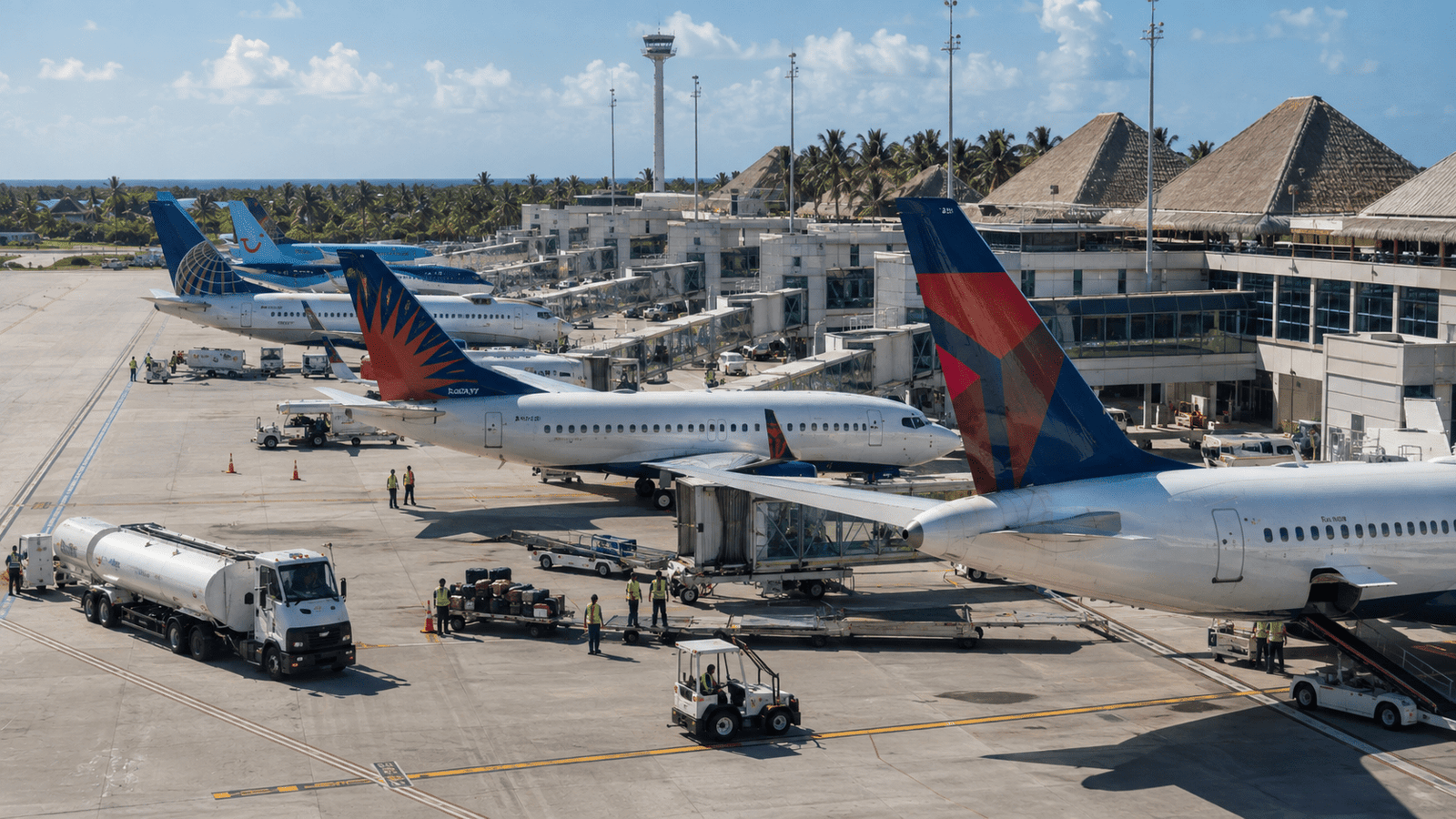
Why the United States Is the Dominican Republic’s Largest Tourism Market
The United States has been the Dominican Republic’s primary tourism source market for decades. Nearly half of all international air visitors originate from the U.S., making it by far the country’s most important inbound market.
Several factors explain this leadership. The relatively short flight times from major American cities, numerous direct routes operated by both legacy and low-cost airlines, and the Dominican Republic’s reputation as a year-round beach destination make travel convenient and competitive.
The Dominican-American community also plays an important role. Many travelers visit relatives while extending their stay for leisure, contributing to visitor numbers beyond traditional vacation tourism.
Canada: The Second-Largest Source Market
Canada consistently ranks second among countries sending tourists to the Dominican Republic. Canadian travelers are particularly important during the northern winter, when many seek warm-weather destinations with direct flights and all-inclusive resort options.
Resort areas such as Punta Cana, Puerto Plata, La Romana, and Samaná have long maintained strong connections with Canadian tour operators and airlines, making the Dominican Republic one of Canada’s preferred Caribbean vacation destinations.
Growing Importance of Latin American Markets
Although North America dominates inbound tourism, Latin America has become increasingly significant over the past decade. Argentina and Colombia have emerged as two of the fastest-growing source markets, supported by improved air connectivity and increasing regional travel demand.
Argentina has become the Dominican Republic’s largest South American tourism market, while Colombia continues to expand thanks to direct flights linking Bogotá, Medellín, Cartagena, and other cities with Santo Domingo and Punta Cana.
Puerto Rico also maintains an important position despite its relatively small population. Frequent flights between San Juan and multiple Dominican airports support both leisure travel and family visits, reflecting the close historical and cultural ties between the two Caribbean destinations.
Spain and Other European Source Markets
Although Europe represents a smaller share of total arrivals than North America, it remains one of the Dominican Republic’s most important long-haul tourism markets. European visitors are attracted by the country’s tropical climate, extensive resort infrastructure, cultural attractions, and the availability of direct flights from major European cities.
According to the Central Bank of the Dominican Republic, Europe accounted for approximately 12.1% of all non-resident foreign air arrivals during the January–August 2025 reporting period. While this is significantly below North America’s contribution, Europe remains the second-largest regional source of international visitors.
Within Europe, the leading tourism markets traditionally include France, Germany, Spain, the United Kingdom, and Italy. These countries have maintained regular air connections with the Dominican Republic for decades and continue to generate a steady flow of leisure travelers.
Spain’s Role in Dominican Tourism
Spain is one of the Dominican Republic’s most important European tourism markets. Although it does not rank among the country’s five largest source markets overall, it consistently remains one of the leading European countries sending visitors to the Caribbean destination.
Several factors explain Spain’s position. Historical and linguistic ties encourage both tourism and family travel, while direct flights between Madrid and several Dominican airports make the destination easily accessible throughout the year.
Spanish visitors also differ slightly from traditional resort travelers. While many choose beach destinations such as Punta Cana, others combine their trips with cultural tourism in Santo Domingo, nature tourism in Samaná, or business travel linked to the strong economic relationship between Spain and the Dominican Republic.
Why North America Dominates Dominican Tourism
The concentration of visitors from the United States and Canada is not accidental. Multiple structural factors have reinforced the Dominican Republic’s position as one of the preferred Caribbean destinations for North American travelers.
Short Flight Times
Most major cities on the U.S. East Coast and eastern Canada are located within a four- to five-hour flight from the Dominican Republic. This allows travelers to enjoy tropical vacations without the need for long-haul international travel.
Extensive Air Connectivity
The country is served by several international airports, including Punta Cana International Airport, Las Américas International Airport in Santo Domingo, Cibao International Airport in Santiago, Gregorio Luperón International Airport in Puerto Plata, and La Romana International Airport.
These airports receive hundreds of weekly international flights operated by both full-service and low-cost airlines, providing year-round connectivity with North America, Europe, and Latin America.
Large All-Inclusive Resort Industry
The Dominican Republic has one of the largest concentrations of all-inclusive resorts in the Caribbean. This accommodation model remains especially popular among travelers from the United States and Canada because it simplifies vacation planning by combining lodging, meals, entertainment, and many recreational activities into a single package.
Competitive Pricing
Compared with several competing Caribbean destinations, the Dominican Republic offers a wide range of accommodations across different price categories. This diversity allows the country to attract luxury travelers, families, couples, groups, and budget-conscious visitors alike.
How Tourism Source Markets Have Changed
The composition of the Dominican Republic’s tourism markets has evolved over time. While the United States has remained the dominant source country for decades, other markets have experienced significant growth.
South American countries, particularly Argentina and Colombia, have expanded their presence thanks to improved airline connectivity and increasing outbound tourism. At the same time, European arrivals have remained relatively stable, although their share of total arrivals has gradually declined as the American continent has grown faster.
Tourism authorities continue working to diversify inbound markets by promoting the Dominican Republic in Europe, Latin America, and emerging international destinations. Diversification reduces dependence on a single market and helps strengthen the industry’s resilience during periods of economic uncertainty or travel disruptions.
Regional Distribution of International Visitors
| Region | Importance | Main Source Markets |
|---|---|---|
| North America | Very High | United States, Canada, Puerto Rico |
| South America | Growing | Argentina, Colombia, Brazil, Chile |
| Europe | High | France, Germany, Spain, United Kingdom, Italy |
| Central America | Moderate | Panama, Costa Rica, Guatemala |
| Other Regions | Emerging | Asia, Middle East and other international markets |
The continued diversification of international visitors reflects the Dominican Republic’s growing reputation as a destination that offers much more than beach tourism. Cultural heritage, ecotourism, golf, cruise tourism, gastronomy, adventure activities, and luxury accommodations increasingly attract visitors from a wider range of countries.