 25°C
25°C

Central Romana Rejects Forced Labor Allegations Over Sugarcane Work
Central Romana Corporation has rejected allegations of forced labor in its sugarcane operations, defending its labor, social security and healthcare practices after a new report by Corporate Accountability Lab.


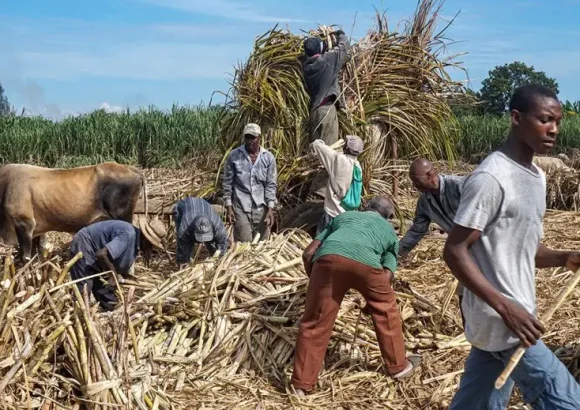
Central Romana Corporation has categorically rejected allegations of forced labor in its sugarcane fields, calling a report by human rights group Corporate Accountability Lab (CAL) defamatory and disputing claims about working conditions in its agricultural operations.
The Dominican agro-industrial company issued its response in a letter to Listín Diario following coverage based on an Associated Press report published August 18. CAL said it had spent more than three years investigating labor conditions at Central Romana and argued that forced labor persists in the company’s sugarcane plantations.
Central Romana Defends Its Labor Practices
Central Romana said its agricultural workers are registered with the Dominican Social Security System (SDSS) when they have regularized immigration documentation. The company also said sugarcane workers receive pay above the legally established daily minimum wage for the sugar sector and that its employment practices comply with applicable requirements under Dominican labor law.
On union representation, the company said agricultural employees can join the United Workers’ Union, with which Central Romana has maintained a collective bargaining agreement since 1966. According to the company, the agreement provides salary increases, employment benefits and bonuses above statutory requirements.
The company’s position contrasts directly with CAL’s findings. The organization has called for workers to be enrolled in the Dominican social security system, paid at least the legal minimum wage and allowed to join an independent union, among other measures.
Company Highlights Healthcare Benefits
Central Romana also pointed to healthcare services as evidence of its labor and social programs. The company said agricultural workers who are not covered by the social security system receive private medical insurance without payroll deductions.
The company has previously announced an agreement with ARS Abel González to provide private health insurance at no cost to agricultural workers outside the social security system. Central Romana said the plan complements primary care at two agricultural medical centers and mobile medical units serving cane-growing communities.
In its latest response, the company said two medical subcenters provide primary care and free medication to workers and their families. It also said three mobile medical units travel through agricultural communities daily, while patients requiring specialized treatment are transported by company ambulances to nearby hospitals or to Central Romana’s medical center in La Romana.
Dispute Follows U.S. Import Restrictions
The dispute comes after a major U.S. trade action against Central Romana’s sugar. In November 2022, U.S. Customs and Border Protection (CBP) issued a Withhold Release Order blocking sugar and sugar-based products from the company from entering the United States after identifying indicators of forced labor. Readers following the latest news from the Dominican Republic can also track developments involving the country’s trade, business and international relations.
CBP modified that order on March 17, 2025, allowing Central Romana to resume shipments to the U.S. The U.S. Department of Agriculture’s Foreign Agricultural Service reported that the modification enabled the company to resume sugar exports and noted that Central Romana had previously accounted for about 63% of the Dominican Republic’s raw sugar quota for the U.S. market.
CBP has said the modification followed documented improvements in labor standards verified by independent sources, although the agency did not identify those sources publicly.
CAL Says Conditions Remain Unresolved
CAL disputes the assessment that conditions have been adequately addressed. In an April 2025 statement, the organization said workers had reported excessive overtime, threats of deportation, increased surveillance and other alleged abuses after the U.S. import restriction was lifted. CAL called for the order to be reinstated.
Its latest report renews that position and calls for renewed U.S. restrictions on imports from Central Romana. The organization says many of the workers affected are Haitian migrants or people of Haitian descent, a population it describes as particularly vulnerable because of immigration and documentation issues.
Central Romana, meanwhile, maintains that the allegations are unfounded and that its labor and social programs demonstrate compliance with applicable standards. The company said its lawyers have formally communicated their rejection of CAL’s report to the organization and argued that the accusations seek to damage the reputation of both the sugar industry and the Dominican Republic.
The disagreement leaves Central Romana at the center of an ongoing debate over labor conditions in the Dominican sugar industry, with the company defending its employment practices while CAL continues to press for stronger protections for sugarcane workers and renewed scrutiny of the sector’s exports to the United States.