 30°C
30°C

Dominican Republic Hotel Industry Tops 90,000 Rooms
The Dominican Republic's hotel industry has expanded into one of the Caribbean's largest and most investment-intensive lodging markets, with 90,055 hotel rooms in 2024 and an average occupancy rate of 76.4%, according to ProDominicana. The market is dominated by large international and regional operators, particularly in Punta Cana and other coastal destinations, but it also includes independent hotels, urban properties, boutique establishments and increasingly diversified all-inclusive concepts. Investment remains substantial, with a pipeline of more than 18,000 rooms under development at the end of 2025, indicating that hotel supply is continuing to expand alongside demand.


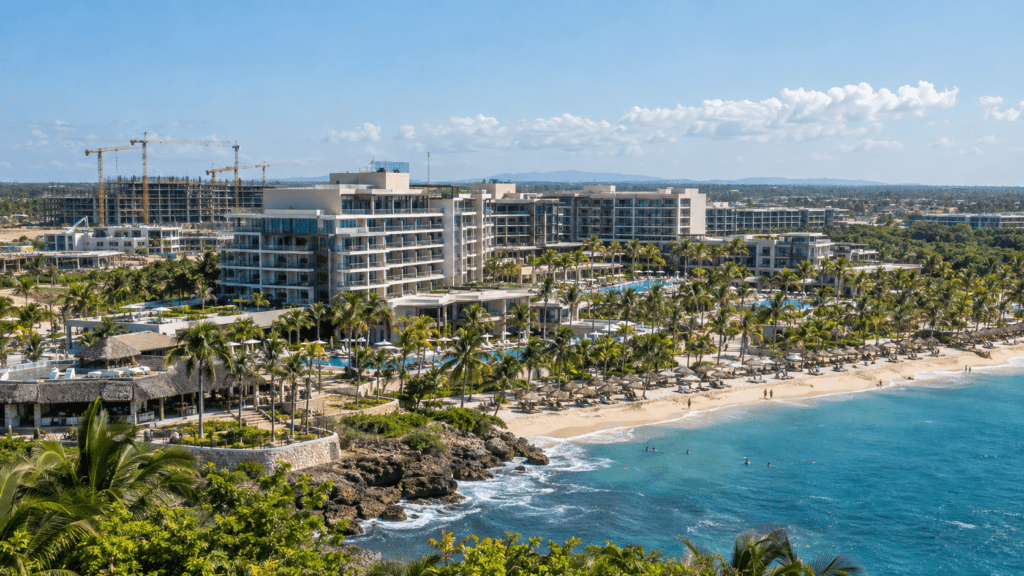
The hotel industry in the Dominican Republic is one of the country’s largest tourism-related business sectors, combining a substantial room inventory with a high concentration of international brands, large resort developments and continued construction activity. The sector has expanded significantly over the past decade: official investment data show hotel rooms increasing from 72,192 in 2015 to 90,055 in 2024, while hotel revenues rose from US$6.1 billion to US$10.7 billion over the same period.
The market is not built around a single hotel model. Large all-inclusive resorts account for a significant share of the coastal supply, particularly in Punta Cana-Bávaro, but the country also has full-service city hotels, limited-service properties, luxury resorts, boutique hotels, adults-only resorts, family-oriented resorts, branded residences and other formats. International operators increasingly use multiple brands to address different price points and customer segments.
The Size of the Dominican Republic Hotel Market
The scale of the hotel sector has grown steadily over the long term. According to ProDominicana’s investment guide, the Dominican Republic had 90,055 hotel rooms in 2024, compared with 83,041 in 2019 and 72,192 in 2015. The same dataset recorded a national hotel occupancy rate of 76.4% in 2024.
The figures illustrate both the depth of the market and its recovery after the disruption caused by the COVID-19 pandemic. Hotel room supply fell sharply in the 2020 dataset because large portions of the country’s hotel inventory were closed or inactive. By 2021, reported inventory had returned to 86,774 rooms, followed by further increases in 2022, 2023 and 2024.
| Year | Hotel Rooms | Occupancy | Hotel Revenue |
|---|---|---|---|
| 2015 | 72,192 | 75.5% | US$6.1 billion |
| 2019 | 83,041 | 71.6% | US$7.5 billion |
| 2020 | 36,191 | 40.5% | US$2.7 billion |
| 2022 | 87,317 | 71.4% | US$8.4 billion |
| 2023 | 88,330 | 74.0% | US$9.8 billion |
| 2024 | 90,055 | 76.4% | US$10.7 billion |
The revenue figures should be understood as sector-level hotel revenues rather than simply room sales. Hotel businesses generate income from accommodation as well as food and beverage, meetings, entertainment, retail, spa services and other activities, depending on the property and business model.
Where the Hotel Supply Is Concentrated
Hotel development in the Dominican Republic is highly concentrated geographically. Punta Cana-Bávaro is the country’s largest resort market and has attracted a particularly large concentration of international hotel groups. The area combines a major international airport, extensive beachfront land, large-scale resort infrastructure and established tourism supply chains.
Other important hotel markets include La Romana-Bayahibe, Puerto Plata, Santo Domingo, Samaná, Juan Dolio-Boca Chica and the emerging destination of Miches. Pedernales is also becoming a major development area as new tourism infrastructure is introduced in the southwest.
The geographic distribution of new construction is changing the structure of the national market. Established destinations continue to add and renovate properties, while newer destinations are attracting large projects intended to create an initial hotel cluster rather than simply adding isolated properties.
Punta Cana and the Dominance of Large Resorts
Punta Cana-Bávaro is particularly associated with large-scale resort operations. The area’s hotel model is characterized by properties with hundreds of rooms, extensive food and beverage facilities, swimming pools, entertainment, conference facilities and direct or controlled access to beaches.
This scale is closely connected to the all-inclusive model. Large resorts can spread fixed costs such as kitchens, entertainment facilities, pools, landscaping, security and other infrastructure across a substantial number of rooms. They can also negotiate large procurement contracts and operate multiple restaurants and service outlets within the same property.
The concentration of large resorts creates a business environment in which hotel operators compete not only on room price but also on the breadth of the product, brand positioning, food and beverage offering, service level and ability to attract specific customer segments.
All-Inclusive Hotels: The Dominant Resort Model
The all-inclusive resort is one of the defining business models of the Dominican hotel industry. Under this format, the room rate normally incorporates accommodation and a package of food, beverages, entertainment and other services. The exact inclusions vary by brand and property.
The model provides operators with a relatively predictable revenue structure because a substantial portion of the guest’s expenditure is captured by the resort itself. It also allows the hotel to manage demand across multiple internal outlets, including restaurants, bars, activities and entertainment.
For customers, the model reduces the need to make separate purchasing decisions during a stay. From the operator’s perspective, however, profitability depends on maintaining an appropriate balance between the room rate, occupancy, food and beverage costs, labor, energy, maintenance and other operating expenses.
The Dominican Republic has developed several variations of the all-inclusive format. These include large family resorts, adults-only properties, luxury all-inclusive resorts and branded resorts operated by international hotel companies.
Luxury and Premium All-Inclusive Development
The all-inclusive segment is also moving upward in the market. International companies have increasingly introduced luxury and premium brands into the Dominican Republic rather than concentrating exclusively on traditional mass-market resort concepts.
A prominent example is W Punta Cana, developed by Grupo Puntacana, Marriott International and Mac Hotels. The 340-room property opened as the first W Hotels property operating under an all-inclusive concept and represented an investment of approximately US$160 million.
Hyatt has also expanded its Inclusive Collection in the Dominican Republic. The company announced Hyatt Vivid Punta Cana, a 500-room adults-only resort, while its portfolio has expanded through brands including Dreams, Secrets and other all-inclusive concepts.
The increasing use of premium brands reflects a broader effort to increase the value generated per room rather than relying exclusively on additional room volume. Higher-end properties can target customers with greater willingness to pay while using differentiated brands to justify higher rates.
Hotel Formats Beyond All-Inclusive Resorts
Although all-inclusive resorts are central to the Dominican market, they do not represent the entire hotel industry. The country has a substantial urban and independent hotel segment, particularly in Santo Domingo and other cities.
Urban properties generally depend more heavily on business travel, meetings, government activity, events, weekend demand and international visitors staying before or after resort trips. Their revenue mix can therefore differ significantly from that of a beachfront all-inclusive resort.
The country also has boutique hotels, small independent properties, extended-stay products and branded select-service hotels. These formats are particularly relevant in urban and historic districts where land availability and customer demand favor smaller developments.
International companies have expanded their branded portfolios beyond traditional resorts. Marriott, Hilton, Hyatt, IHG, Barceló, Meliá, Iberostar, Palladium, Bahia Principe, Catalonia, Riu and other groups have established multiple brands or properties across different segments of the Dominican market.
The Main Hotel Operators and Chains
The Dominican hotel market combines international hotel companies, Spanish and other European resort groups, Dominican-owned businesses and mixed ownership structures. The brand visible to the guest does not necessarily indicate who owns the underlying real estate.
This distinction is particularly important in the hotel business. A property may be owned by a Dominican investment group or real-estate company while being operated under an international brand through a management agreement. Other properties may be owned and operated by the same hotel group, while some use franchise or licensing arrangements.
| Hotel group or operator | Examples of brands present in the Dominican Republic | Market positioning |
|---|---|---|
| Marriott International | Marriott, W, Westin, St. Regis, Autograph Collection and others | Luxury, upscale, full-service and resort segments |
| Hyatt | Hyatt, Dreams, Secrets, Hyatt Ziva, Hyatt Zilara, Hyatt Vivid and others | Luxury, upscale and all-inclusive resorts |
| Barceló Hotel Group | Barceló, Occidental, Royal Hideaway and others | Resort, all-inclusive and urban segments |
| Meliá Hotels International | Meliá, Paradisus, Zel and other brands | Resort, luxury and lifestyle segments |
| Palladium Hotel Group | Grand Palladium, TRS and other brands | Large all-inclusive resorts |
| Bahia Principe Hotels & Resorts | Bahia Principe | Large resort and all-inclusive segment |
| Iberostar Hotels & Resorts | Iberostar | Resort and all-inclusive segment |
| Riu Hotels & Resorts | Riu | Large resort and all-inclusive segment |
| Hilton | Hilton, Curio Collection, Hilton Garden Inn and others | Luxury, upscale, full-service and resort segments |
| IHG Hotels & Resorts | InterContinental, Holiday Inn and other brands | Luxury, upscale and business-oriented hotels |
The list is not exhaustive. The market includes numerous additional regional operators, independent hotels and international brands. It also changes as new management agreements, conversions and hotel openings bring additional brands into the country.
Ownership Versus Hotel Brand
Understanding ownership and operation is essential when analyzing the Dominican hotel industry as a business sector. A recognizable international brand can operate a hotel without owning the land or building. In such cases, the owner may retain the real-estate asset while paying the operator management or franchise fees.
This structure allows international companies to expand their presence with less direct exposure to real-estate ownership. It also gives Dominican developers access to international distribution systems, reservation platforms, loyalty programs, brand standards and operational expertise.
For investors, the distinction affects the economics of a hotel project. The value of the real estate, the operating performance of the hotel and the contractual relationship with the brand are related but separate considerations.
Hotel Occupancy in the Dominican Republic
Occupancy is one of the principal measures used to assess hotel-market performance. It shows the proportion of available rooms that are occupied over a defined period, although the exact calculation can vary depending on whether temporarily closed rooms are included.
The Ministry of Tourism’s hotel-industry data system distinguishes between several measures, including open occupancy, expanded occupancy and effective occupancy. This distinction is important in a market where hotels can temporarily close rooms or portions of their inventory for renovation or operational reasons.
At the national level, ProDominicana recorded an average hotel occupancy rate of 76.4% in 2024. The figure was higher than the 74.0% reported for 2023 and the 71.6% recorded in 2019.
Occupancy also varies significantly by destination and season. During the first quarter of 2025, the national hotel occupancy rate was reported at 81%, while Punta Cana-Bávaro reached 89% and La Romana 85%. These figures demonstrate the difference between national averages and performance in the country’s leading resort markets.
Average Daily Rates and RevPAR
Occupancy alone does not determine hotel profitability. Two properties can have similar occupancy rates but very different financial results if their room prices differ substantially.
The two metrics most frequently considered alongside occupancy are Average Daily Rate (ADR) and Revenue per Available Room (RevPAR). ADR measures the average price paid for occupied rooms, while RevPAR combines room rate and occupancy to indicate revenue generated per available room.
Data presented by the Dominican Republic’s tourism investment authorities using STR hotel-performance data showed an average ADR of US$199 for January-August 2024, with occupancy at 72% and RevPAR at US$128.30. The reported room supply was 84,128 rooms in that dataset.
These figures provide a market-level benchmark rather than a universal rate for Dominican hotels. Luxury resorts, large all-inclusive properties, urban business hotels and small independent hotels operate under different pricing structures and should not be compared solely on their advertised room rates.
Hotel Pricing and Revenue Management
Hotel rates in the Dominican Republic are increasingly managed through dynamic pricing systems. Prices can change according to demand, seasonality, booking window, room type, distribution channel, length of stay and special events.
Resort operators also use package pricing extensively. In an all-inclusive property, the headline room price incorporates multiple services, making direct comparison with a room-only urban hotel less meaningful.
Revenue management therefore focuses on maximizing the value of each available room rather than simply maximizing occupancy. A hotel operating at a slightly lower occupancy rate can potentially generate more room revenue than a fully occupied property if its average rate is substantially higher.
Hotel Construction and the Development Pipeline
The Dominican Republic remains one of Latin America’s most active hotel development markets. Lodging Econometrics reported 84 hotel projects containing 18,061 rooms in the country’s construction pipeline at the end of 2025. The number of projects increased 27% year over year, while room volume increased 7%.
The pipeline includes projects at different stages, from early planning through active construction. Not every project in a pipeline necessarily becomes an operating hotel on its originally announced schedule, so pipeline figures should be interpreted as development activity rather than guaranteed future inventory.
The size of the pipeline nevertheless indicates continued confidence in the country’s accommodation market. It also means that operators and investors must consider the potential effect of additional supply on occupancy, room rates and competition within individual destinations.
New Hotel Supply and Market Expansion
New construction is increasingly spread across established and emerging destinations. Punta Cana continues to attract large branded resorts, while Miches, Pedernales, Puerto Plata and Samaná are developing new hotel clusters.
In Puerto Plata, the Punta Bergantín development is planned as a large mixed tourism and real-estate project. Government information describes a master plan covering 9.5 million square meters with a long-term target of 4,000 hotel rooms and 4,000 residential units, alongside a golf course, beach clubs, commercial areas and recreational facilities.
The project is also attracting major international hotel brands. Meliá, Westin, Hyatt and Marriott have been identified in connection with the broader development, with the Meliá Bergantín Beach project already under construction.
Such projects differ from the traditional standalone hotel model because the hotel is part of a larger destination development. Residential real estate, golf, retail, entertainment and hospitality can be developed together to create a more diversified revenue and investment structure.
Miches and the Expansion of Premium Resorts
Miches has emerged as one of the country’s most important new hotel-development zones. Its development combines beachfront resorts with a growing presence of international luxury and all-inclusive brands.
Hyatt has expanded into the area through its Inclusive Collection, while the opening of Zemi Miches All-Inclusive Resort, Curio Collection by Hilton, added a 500-room luxury-oriented property backed by an investment reported at US$225 million.
The development of Miches illustrates a broader market trend: new destinations are increasingly being positioned around differentiated resort concepts rather than simply replicating the largest mass-market all-inclusive properties found in older resort zones.

Pedernales and the Creation of a New Hotel Market
Pedernales represents an even earlier stage of destination development. The southwest has historically had a much smaller tourism and hotel base than Punta Cana or Puerto Plata, but public infrastructure projects and private hotel investment are creating the foundations for a new resort market.
Projects involving brands such as Iberostar, Secrets and Dreams have been associated with the development around Cabo Rojo. The strategy combines hotel construction with airport and port infrastructure, meaning that hotel development is being undertaken as part of a broader destination-building process.
This type of development can produce a different investment profile from adding rooms to an established market. Investors benefit from the potential creation of a new destination, but the projects also depend on infrastructure, transportation, labor availability and the ability to establish sustained demand.
Hotel Investment in the Dominican Republic
Investment in the hotel industry comes from both Dominican and international capital. Tourism investment data presented for 2024 identified Spain as a major foreign source of hotel investment, alongside the Dominican Republic, the United States, Italy and other countries.
The same investment overview recorded 172 hotels associated with foreign investment, representing 71% of the total room count in the relevant investment dataset. The figures demonstrate the importance of international capital and international hotel groups to the country’s lodging infrastructure.
At the same time, government officials have highlighted the growing role of Dominican capital in hotel ownership and development. The combination of domestic real-estate investors and international hotel operators has become a defining characteristic of the market.
What Is Driving Hotel Investment?
Several factors influence investment decisions in Dominican hospitality. The first is the scale of international tourism demand. The country received 11,676,901 visitors in 2025, according to the Dominican government, creating a large potential customer base for hotels.
Air connectivity is another critical factor. Punta Cana International Airport is the country’s principal tourism gateway and provides direct access to major source markets. Other airports, including Las Américas, Cibao and Puerto Plata, support different hotel destinations and help distribute demand geographically.
Access to beaches, land availability, tourism infrastructure and the presence of established hotel operators also affect investment decisions. In emerging destinations, the availability of roads, airports, utilities and other public infrastructure can determine whether a large resort project is commercially viable.
Hotel Construction Versus Hotel Renovation
Growth in the hotel industry does not come exclusively from new buildings. Existing hotels require periodic renovation to maintain their competitive position, update rooms and common areas, comply with brand standards and justify their room rates.
Hotel renovations can also involve repositioning. An existing property may move from one market segment to another, adopt a new international brand or change from a conventional resort concept to a more specialized product.
Brand conversions can be particularly significant because they can introduce an established distribution network to an existing physical asset without requiring the construction of an entirely new hotel.
The Role of International Hotel Brands
International brands provide several advantages to hotel owners seeking to compete in a global tourism market. These include reservation systems, loyalty programs, global marketing, standardized operating procedures and access to established customer segments.
The Dominican Republic has attracted brands across the luxury, upscale, midscale and all-inclusive segments. Marriott’s portfolio includes brands such as W, St. Regis, Westin and Autograph Collection, while Hyatt operates multiple resort and all-inclusive brands. Other international groups have similarly expanded their brand portfolios.
The result is a market in which brand recognition has become an important competitive factor, particularly for large resort projects seeking customers from North America and Europe.
The Growth of Branded All-Inclusive Concepts
One of the most important structural trends is the convergence between global hotel brands and the all-inclusive business model. International companies that historically operated primarily in conventional hotel segments have developed or expanded dedicated all-inclusive portfolios.
Hyatt’s Inclusive Collection is a clear example. Its Dominican portfolio includes brands aimed at families, adults-only travelers and luxury customers. Marriott has also introduced the W all-inclusive concept in Punta Cana.
This strategy allows international operators to participate in a segment in which Dominican resorts already have extensive experience, while applying global brand standards and distribution systems.
Urban Hotels and Santo Domingo
Santo Domingo has a substantially different hotel market from the large coastal resort zones. The capital’s properties serve business travelers, government and diplomatic activity, events, conferences, leisure visitors and passengers combining city stays with trips to other parts of the country.
The city has attracted brands including JW Marriott, Marriott, Sheraton, InterContinental, Courtyard by Marriott, Aloft, Holiday Inn, Hilton-related brands, Barceló, Catalonia and other operators.
The urban market also supports smaller properties and boutique hotels, particularly around the Colonial City. These hotels compete on location, design, service and access to cultural attractions rather than on the large-scale facilities characteristic of Punta Cana’s resort complexes.
Hotels, Convention Business and MICE Demand
Meetings, incentives, conferences and exhibitions, commonly grouped under the acronym MICE, represent another source of hotel demand. Large urban and resort hotels can combine accommodation with meeting rooms, ballrooms, restaurants and event services.
This segment is particularly relevant to properties that cannot depend entirely on leisure demand. Conferences and corporate events can generate room nights during periods when leisure occupancy may be weaker, helping hotels diversify their demand base.
The Dominican Republic has developed MICE facilities within both city hotels and large resorts, with Punta Cana, Santo Domingo and other destinations competing for international events.
Hotel Labor and Operating Costs
Hotels are labor-intensive businesses. Housekeeping, food and beverage, front-office operations, maintenance, security, landscaping and management require substantial staffing, particularly at large all-inclusive resorts.
Official investment data indicate that hotels generated approximately 399,694 direct and indirect jobs in 2024, including 113,889 direct positions and 285,804 indirect jobs. These figures illustrate the broader economic footprint of hotel operations beyond the employees working inside the property itself.
Operating costs also include electricity, water, food and beverage supplies, maintenance, insurance, technology, distribution fees and property upkeep. Large resorts can face particularly significant utility and food costs because of their scale and the number of services incorporated into their rates.
Hotel Distribution and Booking Channels
The Dominican hotel industry sells rooms through a combination of direct and third-party channels. Direct hotel websites and reservation centers compete with online travel agencies, tour operators, wholesalers, travel advisors and package-tour companies.
All-inclusive resorts have traditionally relied heavily on tour operators and package distribution because their products can be sold as complete vacations combining flights, accommodation and other services. Direct digital booking has become increasingly important as hotel groups seek greater control over customer relationships and distribution costs.
International hotel loyalty programs are another important channel for branded properties. They allow large operators to direct demand toward participating hotels while giving guests incentives to book within a particular brand family.
Seasonality and Hotel Market Performance
Hotel demand is not evenly distributed throughout the year. Resort markets experience seasonal changes linked to source-market travel patterns, weather, school calendars and holiday periods.
Seasonality affects both occupancy and pricing. Hotels can raise rates during periods of strong demand while using promotions, packages and other commercial strategies to stimulate demand during weaker periods.
The ability to manage seasonality is particularly important for large resorts because fixed operating costs continue regardless of occupancy. Revenue management, group business, events and diversified source markets can help reduce the effect of seasonal fluctuations.
The Hotel Industry’s Expansion Beyond Traditional Resort Zones
The next stage of Dominican hotel development is increasingly characterized by geographic diversification. Punta Cana remains the country’s dominant resort market, but investment is expanding into Miches, Pedernales, Puerto Plata, Samaná and other destinations.
This expansion changes the competitive landscape. New destinations can offer investors access to undeveloped beachfront land and the opportunity to create large integrated resorts. Established markets, by contrast, offer proven demand, infrastructure, airports and mature supplier networks.
For hotel operators, the choice between an established and emerging destination therefore involves different operating conditions. Mature markets offer greater certainty around demand but can also involve higher land costs and stronger competition, while emerging markets can provide larger development opportunities but depend more heavily on infrastructure and destination formation.
What the Hotel Development Pipeline Indicates
The size and composition of the hotel pipeline provide an indication of where investors expect future demand to emerge. At the end of 2025, the Dominican Republic had 84 hotel projects representing approximately 18,061 rooms in the Lodging Econometrics pipeline.
The pipeline’s growth was particularly notable at a regional level. The Dominican Republic ranked behind Mexico and Brazil by total project count in Latin America’s construction pipeline, but its 84 projects placed it among the region’s most active hotel-development markets.
The pipeline also includes different hotel categories, meaning future supply will not necessarily compete for exactly the same customer. Luxury resorts, upscale hotels, midscale properties and all-inclusive resorts serve different segments and can have different pricing and occupancy dynamics.
Key Business Trends Shaping Dominican Hotels
- Continued room-supply growth: The national inventory surpassed 90,000 rooms in 2024 and the development pipeline remained substantial through 2025.
- Expansion of international brands: Global operators continue to introduce additional brands and management agreements.
- Premiumization: Luxury and higher-rate resort concepts are gaining importance alongside traditional large-scale all-inclusive hotels.
- All-inclusive diversification: Operators are developing family, adults-only, luxury and lifestyle versions of the all-inclusive model.
- Geographic expansion: Miches, Pedernales, Samaná and Puerto Plata are attracting development alongside established Punta Cana and La Romana.
- Mixed-use development: New projects increasingly combine hotels with residential units, golf, retail, entertainment and other real-estate components.
- Renovation and repositioning: Existing properties are being upgraded or converted to new brands as operators seek to maintain pricing power and competitiveness.
- Greater use of revenue management: Hotels increasingly optimize rates according to demand, distribution channel, season and customer segment rather than relying on fixed pricing.
The Competitive Structure of the Dominican Hotel Market
The Dominican hotel industry combines economies of scale with significant brand differentiation. Large resorts benefit from operating scale, while international brands can provide global distribution and customer recognition. Independent hotels compete through location, specialization, service and flexibility.
This creates several layers of competition. A large all-inclusive resort may compete primarily against other resorts targeting the same international markets, while an urban hotel in Santo Domingo may compete for corporate accounts, events and independent travelers. A boutique hotel in a historic district faces a different competitive environment again.
As new rooms enter the market, operators must therefore consider not only national supply growth but also the type, location and positioning of the competing inventory. The addition of 500 luxury rooms in an emerging destination has different implications from the addition of 500 midscale rooms in an established urban market.
Hotel Investment and the Next Development Cycle
The combination of high visitor volumes, established resort infrastructure and continued international investment has kept hotel construction active in the Dominican Republic. The development pipeline suggests that room supply will continue expanding, while new projects are increasingly differentiated by brand, destination and customer segment.
The market is consequently moving toward a more complex hotel ecosystem. Large all-inclusive resorts remain central to the country’s accommodation industry, but luxury brands, lifestyle hotels, urban properties, boutique accommodation, branded residences and mixed-use developments are taking a larger role in the investment landscape.
For the hotel industry itself, the key operating variables remain closely connected: the number and type of available rooms, occupancy, average daily rates, RevPAR, construction costs, financing, labor and utility expenses, distribution costs and the ability of each property to differentiate its product. Together, these factors determine how additional investment translates into hotel-sector performance across the Dominican Republic.