 27°C
27°C

Dominican Republic Places Key Water Resources Under Protection
President Luis Abinader has placed major water infrastructure and strategic ecosystems under special protection through Decree 615-26, part of a government effort to prevent deliberate environmental damage and protect the country’s water security.


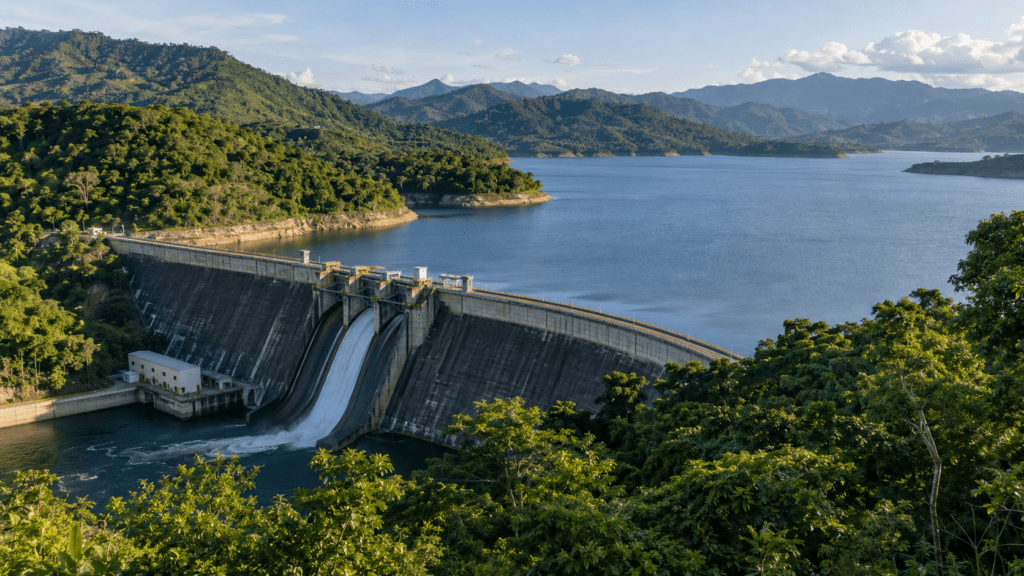
The Dominican Republic has designated its most important water infrastructure and ecosystems as assets requiring special protection under Decree 615-26, giving government agencies a coordinated framework to respond to threats against rivers, dams, aquifers and other resources considered essential to national water security.
The measure, issued by President Luis Abinader, establishes a framework to combat what the government describes as “environmental terrorism,” particularly in protected areas. The decree draws on Law 267-08 on Terrorism and identifies strategic components of the water sector whose serious disruption or destruction could affect the population and the country’s wider environmental, food or economic security.
Which Water Assets Are Covered?
The decree specifically identifies dams, reservoirs, lakes, main irrigation canals, aqueducts and water treatment plants as strategic water infrastructure. It also extends special protection to environmental assets whose deterioration could have broader consequences for the country.
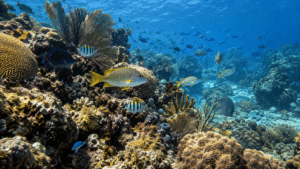
These include priority watersheds, aquifers, mangroves, wetlands, coral reefs, protected forests and river headwaters. Other ecosystems may also fall under the designation when severe damage could threaten the Dominican Republic’s water, food, environmental or economic security.
The broad scope reflects the close connection between the country’s water supply and its natural ecosystems. Rivers and watersheds support drinking-water systems, agriculture and other economic activities, while wetlands, forests and aquifers play important roles in maintaining water availability.
What the Decree Means by “Environmental Terrorism”
Decree 615-26 makes an important distinction regarding the term “environmental terrorism.” The designation is intended for administrative, preventive and interagency coordination purposes when circumstances warrant it. An environmental violation does not automatically become a terrorism offense simply because it affects a protected resource.
Any criminal classification must still meet the elements established under Dominican law. The decree therefore provides a framework for identifying and coordinating responses to serious threats without automatically assigning terrorism charges to every environmental offense.
Security Agencies to Coordinate the Response
The National Counterterrorism Committee and the National Counterterrorism Directorate (DNA) are tasked with identifying and neutralizing threats associated with environmental terrorism against strategic assets.
The decree also directs several government institutions, including the Ministry of Defense, the Directorate of National Intelligence (DNI) and the Public Prosecutor’s Office, to develop a prevention and response plan. Environmental attacks against protected assets are to be referred immediately to prosecutors, who will determine the applicable violations, pursue criminal action when warranted and lead the corresponding investigations.
The measure comes against a backdrop of longstanding environmental pressures in the Dominican Republic, including illegal sand extraction, fires, agricultural encroachment and pollution affecting rivers and other ecosystems. Such activities can damage natural systems that underpin both water supply and agricultural production.
New Channels for Environmental Complaints
Decree 615-26 also calls for technological platforms and confidential reporting mechanisms through which citizens can alert authorities to activities threatening strategic natural resources. The measure provides for protections for whistleblowers and people who cooperate in good faith.
The government has specifically warned that deliberate acts such as forest burning and sand extraction from rivers will be pursued. The new framework places those activities within a broader effort to protect environmental assets that are considered strategically important to the country.
For the Dominican Republic, the policy links environmental protection more directly with national water security. Its implementation will depend on coordination among security agencies, environmental authorities and prosecutors, as well as on how individual cases are assessed under existing criminal law.