 24°C
24°C

Antibiotic Self-Medication In Santo Domingo: What The Study Found
A study of 687 adults living in Santo Domingo and the National District found that 14.6% had self-medicated with antibiotics during the previous 12 months, with pharmacies the reported source in 98% of cases and convenience the most common reason. The research, published in BMC Public Health and indexed by PubMed, provides evidence about antibiotic-use behavior in two major urban areas of the Dominican Republic, while its sampling method means the results should not be treated as a national estimate.


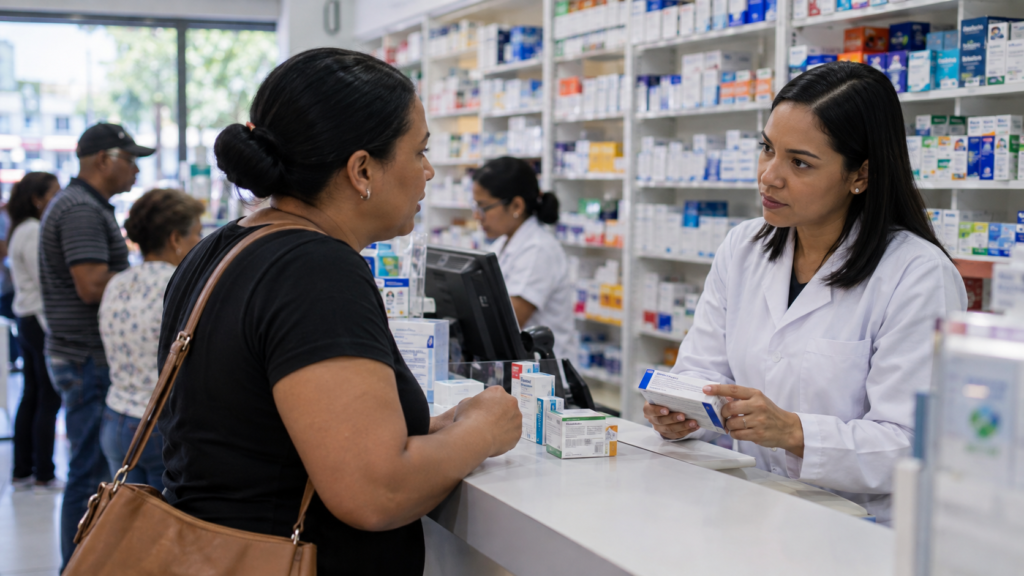
Antibiotic self-medication is not simply a question of whether someone takes a medicine without seeing a doctor. It sits at the intersection of access to health care, pharmacy practices, household habits, health information and the growing global problem of antimicrobial resistance. A study published in BMC Public Health examined that behavior among adults in Santo Domingo and the National District of the Dominican Republic, offering a closer look at how and why people obtain antibiotics without a medical prescription.
The study found that 14.6% of the 687 participants reported self-medicating with antibiotics during the previous 12 months. Among those who did so, amoxicillin was the most commonly reported antibiotic, pharmacies were by far the most common source, and convenience was the leading stated motivation. The researchers also identified an association between self-medication and certain income groups.
What The Santo Domingo Study Investigated
The research was designed to measure the prevalence of antibiotic self-medication among adults living in Santo Domingo and the National District and to identify socioeconomic and demographic factors associated with the behavior. The National District contains Santo Domingo, the capital and administrative center of the Dominican Republic, while Santo Domingo Province surrounds the capital and includes a much larger and more socially diverse geographic area.
The researchers conducted a cross-sectional online survey in October 2024. Participants completed a self-administered questionnaire, and the researchers used descriptive statistics, chi-square tests and multinomial logistic regression to examine patterns in antibiotic use. The study received ethical approval from the Consejo Nacional de Bioética en Salud, or CONABIOS, in April 2024.
The final sample consisted of 687 adults, exceeding the study’s calculated minimum sample size of 385. Participants were not selected through random population sampling. Instead, the researchers used convenience sampling and recruited people through an online questionnaire. That distinction is important when interpreting the findings: the study provides evidence about the surveyed population, but it does not establish that exactly 14.6% of all adults in Santo Domingo or the Dominican Republic self-medicate with antibiotics.
How Common Was Antibiotic Self-Medication?
Among the 687 participants, 100 people, or 14.6%, reported antibiotic self-medication during the preceding 12 months. The researchers classified participants according to whether they had not used antibiotics, had used antibiotics following a doctor’s prescription, or had self-medicated.
Overall, 48.8% of the sample reported no antibiotic use during the period, 36.7% reported antibiotic use following a doctor’s prescription, and 14.6% reported self-medication. The study therefore identifies self-medication as a substantial behavior within its sample, but not the predominant form of antibiotic use among all participants.
The prevalence varied across demographic groups. Self-medication was reported by 15.5% of female participants compared with 11.1% of male participants. The researchers found a statistically significant association between gender and antibiotic-use patterns, although the study does not establish that gender itself causes self-medication.
Age, by contrast, was not significantly associated with the three antibiotic-use categories in the study’s statistical analysis. Self-medication ranged from 10.5% among participants older than 60 to 16.4% among those aged 40 to 59, but the reported association did not reach statistical significance.
Amoxicillin Was The Most Frequently Self-Administered Antibiotic
Amoxicillin accounted for 69% of reported self-administered antibiotic use in the study. Azithromycin was the second most frequently reported, at 56%. Because participants could report more than one antibiotic, these percentages should not be interpreted as mutually exclusive shares of the 100 people who self-medicated.
The study also recorded less frequently reported antibiotics, including several topical or other antimicrobial products. The prominence of amoxicillin is particularly relevant because it is a widely recognized antibiotic used to treat certain bacterial infections, but its appropriateness depends on the diagnosis, the suspected organism and other clinical factors.
An antibiotic is not a general treatment for every infection or respiratory symptom. Antibiotics work against bacteria; they do not treat viral illnesses such as the common cold or influenza. The World Health Organization has repeatedly identified inappropriate antibiotic use as a driver of antimicrobial resistance and advises that antibiotics be used when prescribed by an appropriately qualified health professional.
Pharmacies Were The Main Source
One of the clearest findings concerned where participants obtained antibiotics. Pharmacies were reported as the source in 98% of self-medication cases. The finding places community pharmacies at the center of any discussion about antibiotic access in the study population.
The researchers also found that 26% of participants who self-medicated reported keeping leftover antibiotics from previous treatments. Leftover medicines can create another route to unsupervised use: a person may retain an antibiotic prescribed for an earlier illness and later decide to use it for symptoms that appear similar, without determining whether the same treatment is appropriate.
The study’s findings are consistent with a broader public-health concern identified by the WHO: inappropriate access to and use of antimicrobial medicines can increase selective pressure on microorganisms and contribute to resistance. The issue is not limited to people taking an antibiotic without a prescription. Incorrect drug selection, dosage, duration or use for an infection that does not require an antibiotic can also contribute to inappropriate use.
Convenience Was The Leading Reason For Self-Medication
Convenience was cited by 56% of participants who self-medicated, making it the most frequently reported motivation. This finding is important because it points beyond individual knowledge or attitudes toward the practical circumstances surrounding access to treatment.
For some patients, seeking professional medical care can involve time, transportation, waiting periods or direct costs. A pharmacy may appear to offer a faster route to medication, particularly when someone believes that familiar symptoms correspond to a previous illness. The study identifies convenience as a reported motivation, but it does not establish which specific barriers caused individual participants to choose self-medication.
The researchers’ interpretation is that interventions should therefore address both information and access. Their recommendations include stronger pharmacy oversight, public education through community health workers and measures to deal with leftover antibiotics. These are proposed responses to the study findings, rather than outcomes tested by the research itself.
Which Symptoms Led People To Take Antibiotics?
The most commonly reported symptoms associated with self-medication were sore throat, reported by 55%, and nasal congestion, reported by 23%. Pain was also reported by 23% of participants.
These findings deserve particular attention because symptoms such as sore throat and nasal congestion do not by themselves establish a bacterial infection. Many upper-respiratory symptoms are caused by viruses, against which antibiotics are ineffective. A clinical assessment may be needed to determine whether an antibiotic is appropriate and, when necessary, which antibiotic should be used.
The distinction matters because taking an antibiotic for a condition that does not respond to antibiotics exposes the person to potential medication-related harms without providing the intended benefit. At the population level, unnecessary antibiotic exposure also contributes to the broader pressure that drives antimicrobial resistance.
Income Was The Strongest Socioeconomic Signal In The Study
The researchers found a statistically significant relationship between monthly income and antibiotic-use behavior. Self-medication was most common in the study’s low-middle-income group, where 24.3% reported the practice. The corresponding figures were 9.5% among the low-income group, 15.2% among the middle-income group and 13.1% among the high-income group.
The multivariable analysis provided a more detailed picture. Compared with participants who reported no antibiotic use, people in the low-middle-income group had higher odds of self-medication, with an adjusted odds ratio of 4.30. The middle-income group also had higher odds relative to non-use, with an adjusted odds ratio of 2.59.
The low-middle-income group also had higher odds of self-medication when compared specifically with participants who obtained antibiotics through a doctor’s prescription. The adjusted odds ratio in that comparison was 2.39. These are associations identified by the statistical model, not proof that income itself causes people to self-medicate.
The results suggest that economic circumstances may be relevant to antibiotic-use behavior, but the study cannot determine the precise mechanism. Cost of care, time constraints, access to health services, previous experiences with treatment and other factors could all potentially play a role. More research would be required to separate those influences.
What The Study Says About Access To Health Care
The researchers place antibiotic self-medication within the wider context of the Dominican health system, which includes public and private providers and different forms of health insurance coverage. Their discussion points to barriers such as waiting times, resource constraints and out-of-pocket costs as factors that may encourage people to seek alternatives to formal medical consultations.
Those observations provide context rather than direct measurements from the 687-person survey. The study did collect information on insurance and education: 90.7% of participants reported having health insurance and 85.6% reported higher education. Neither insurance status nor educational level showed a statistically significant association with antibiotic-use patterns in the reported analysis.
This is an important distinction. The study does not support a simple explanation in which lack of insurance or limited education accounts for antibiotic self-medication. Its strongest statistical signal was associated with income, while the online sample itself was relatively highly educated and highly insured.
Why Antibiotic Self-Medication Matters For Antimicrobial Resistance
Antimicrobial resistance occurs when microorganisms develop the ability to withstand medicines that previously worked against them. For bacterial infections, antibiotic resistance can make familiar treatments less effective or ineffective, increasing the difficulty of treating infections.
The WHO identifies misuse and overuse of antimicrobials as major drivers of resistance. Its current global guidance emphasizes optimizing antimicrobial use while also recognizing that inadequate access to appropriate medicines, diagnostics and vaccines can contribute to the problem. In 2021, bacterial antimicrobial resistance was associated with more than 4.7 million deaths worldwide, according to WHO estimates.
That global context does not mean the Santo Domingo study measured antimicrobial resistance itself. It did not test participants for resistant bacteria or determine whether an individual’s self-medication caused a resistant infection. The connection is instead a public-health one: inappropriate antibiotic consumption is one of the factors known to contribute to the development and spread of resistance.
For the Dominican Republic, that distinction is particularly important. A study of antibiotic consumption behavior and a surveillance study measuring resistant bacteria answer different questions. Both are relevant to antimicrobial stewardship, but one should not be presented as evidence of the other.
How The Dominican Republic Is Addressing Antibiotic Misuse
The study’s findings come as Dominican health authorities have been placing greater emphasis on antimicrobial stewardship. The Ministry of Public Health and Social Assistance has promoted responsible antibiotic use and identified prescription requirements, pharmacy supervision, medication-distribution controls and public education as components of its response to antimicrobial resistance.
The ministry’s 2025–2030 Strategic Health Sector Plan on Antimicrobial Resistance sets out national priorities including governance, surveillance, rational antimicrobial use, technical training and coordination across sectors. The plan uses a One Health approach, recognizing that antimicrobial resistance involves human health, animal health and the environment rather than a single part of the health system.
The Ministry of Public Health also opened a public consultation in August 2026 on a proposed resolution that would require prescription-based dispensing of antimicrobial medicines. Because this was a consultation on a proposed measure rather than evidence that a new rule had already taken effect, it should not be described as an enacted nationwide requirement.
These policy developments are relevant to the Santo Domingo findings because pharmacies were the reported source in 98% of self-medication cases. They also illustrate why reducing inappropriate antibiotic use involves more than telling patients not to self-medicate: regulation, pharmacy practices, access to professional care and public understanding all form part of the same system.
How This Study Fits With Earlier Dominican Research
The 14.6% prevalence reported in the Santo Domingo and National District survey should not be confused with figures from earlier studies conducted in more specific clinical or pharmacy settings.
For example, a separate cross-sectional study involving 2,160 dental patients in the Dominican Republic reported that 39.7% acknowledged antibiotic self-medication. That research focused specifically on people with dental pathologies, rather than a general online sample of adults in Santo Domingo and the National District. It also found amoxicillin-containing medicines and azithromycin among the antibiotics most frequently reported.
The difference between the figures illustrates why prevalence estimates cannot simply be compared without considering the population studied. People attending dental clinics may have different symptoms, treatment expectations and prior antibiotic experiences from people recruited through an online community survey.
The newer study’s authors make a similar point when comparing their findings with previous Dominican research. They argue that research conducted in pharmacies or dental clinics can capture populations that are already more likely to have sought medication, whereas an online community sample may provide a different perspective. At the same time, the online method introduces its own limitations.
What The Study Can And Cannot Tell Us
The most important limitation is the use of non-probability convenience sampling. Participants volunteered through an online survey rather than being randomly selected from the adult population. This limits the extent to which the 14.6% figure can be generalized to all adults in Santo Domingo, the National District or the Dominican Republic.
The online format may also have favored people who are younger, more connected to the internet or more comfortable completing digital questionnaires. The authors note that this could have affected the representation of older and lower-income groups. The sample was also 77.7% female, 85.6% had higher education and 90.7% reported health insurance, characteristics that should be considered when interpreting the results.
The study relied on self-reported behavior. Participants were asked to recall antibiotic use over a 12-month period, which creates the possibility of recall error. The researchers also did not measure the number of separate self-medication episodes each participant experienced, so the study cannot distinguish between someone who self-medicated once and someone who did so repeatedly during the year.
Finally, the research covered Santo Domingo and the National District rather than rural communities or the country as a whole. Its findings therefore should not be automatically extrapolated to other provinces or to the national population. The authors explicitly identify representativeness and generalizability as limitations and call for broader research using mixed methods and more representative sampling.
What The Findings Mean For People Living In Or Visiting The Dominican Republic
For readers in the Dominican Republic, the practical message is straightforward: an antibiotic should not be treated as a general-purpose medicine for symptoms that resemble a previous illness. The appropriate drug, if an antibiotic is needed at all, depends on the underlying infection and the individual’s circumstances.
For international visitors, the study also provides useful context about the health environment in Santo Domingo. Access to pharmacies is an important part of everyday health care, but availability of a medicine does not establish that the medicine is appropriate for a particular illness. Visitors who become sick should seek advice from a qualified health professional rather than relying on an antibiotic obtained for a previous illness or recommended informally.
WHO guidance recommends using antibiotics only when they are prescribed or otherwise appropriately recommended by a qualified health professional, following the instructions provided and avoiding the use of leftover antibiotics. These principles apply regardless of whether the person lives in the Dominican Republic or is visiting temporarily.
Frequently Asked Questions
What percentage of adults in the study self-medicated with antibiotics?
Among the 687 adults included in the study, 14.6%, or 100 participants, reported self-medicating with antibiotics during the previous 12 months. This is a study-specific prevalence and should not be interpreted as the percentage of all adults in the Dominican Republic who self-medicate.
Which antibiotic was most commonly used without a prescription?
Amoxicillin was the most frequently reported self-administered antibiotic, appearing in 69% of the self-medication reports. Azithromycin was also common, at 56%. Because participants could report more than one antibiotic, the percentages do not add up to 100%.
Where did participants obtain antibiotics?
Pharmacies were the reported source in 98% of self-medication cases. The study also found that 26% of participants who self-medicated reported keeping leftover antibiotics from previous treatments.

Why did people self-medicate?
Convenience was the most frequently reported reason, cited by 56% of participants who self-medicated. The study does not establish that convenience was caused by a particular barrier, such as cost or waiting time; it records convenience as the participants’ stated motivation.
Which symptoms most often led to antibiotic self-medication?
Sore throat was the most commonly reported symptom, at 55%, followed by nasal congestion and pain, each at 23%. These symptoms alone cannot establish whether an infection is bacterial or whether an antibiotic is appropriate.
Does the study prove that self-medication causes antibiotic resistance in Santo Domingo?
No. The study measured self-medication behavior and associated factors; it did not test bacteria or measure antimicrobial resistance among participants. The broader link is supported by public-health evidence showing that inappropriate and excessive antibiotic use contributes to the development and spread of antimicrobial resistance.
Does the 14.6% figure apply to the whole Dominican Republic?
No. The research was limited to adults in Santo Domingo and the National District and used online convenience sampling. Its results cannot automatically be generalized to rural areas, other provinces or the entire Dominican population.
Why The Findings Matter Beyond A Single Survey
The value of the study lies less in producing a single national-style percentage than in showing how antibiotic self-medication operates within an urban Dominican setting. The combination of pharmacy access, convenience, leftover medicines and socioeconomic differences points to a behavior shaped by both individual choices and the health-care environment.
The findings also show why antimicrobial stewardship cannot be reduced to a message about personal responsibility. Patients need reliable information, but effective antibiotic use also depends on appropriate prescribing, responsible dispensing, accessible health services, surveillance and enforcement of applicable rules. The Dominican Republic’s national antimicrobial-resistance strategy reflects this broader approach.
For Santo Domingo and the National District, the study provides a useful baseline for future research. A larger, probability-based survey could establish whether the 14.6% prevalence changes when the sample better represents age, income, education, insurance status and internet access. Future studies could also examine how often individuals self-medicate, which antibiotics they use in specific episodes, why they choose pharmacies instead of medical consultations, and how dispensing practices affect antibiotic consumption.
The central finding is therefore both specific and limited: in this sample of adults from Santo Domingo and the National District, roughly one in seven reported antibiotic self-medication over the preceding year. Most obtained the medicines through pharmacies, amoxicillin was the most frequently reported antibiotic, and convenience was the most common stated reason. Those results do not describe every Dominican resident, but they provide concrete evidence of a community-level antibiotic-use pattern that matters because preserving antibiotic effectiveness depends on using these medicines appropriately.