 26°C
26°C

Dominican Republic To Hold Nationwide Earthquake Drill
The Dominican Republic will conduct its 2026 National Earthquake Evacuation Drill on Tuesday, September 8, bringing together public and private institutions, schools, social organizations and residents nationwide.


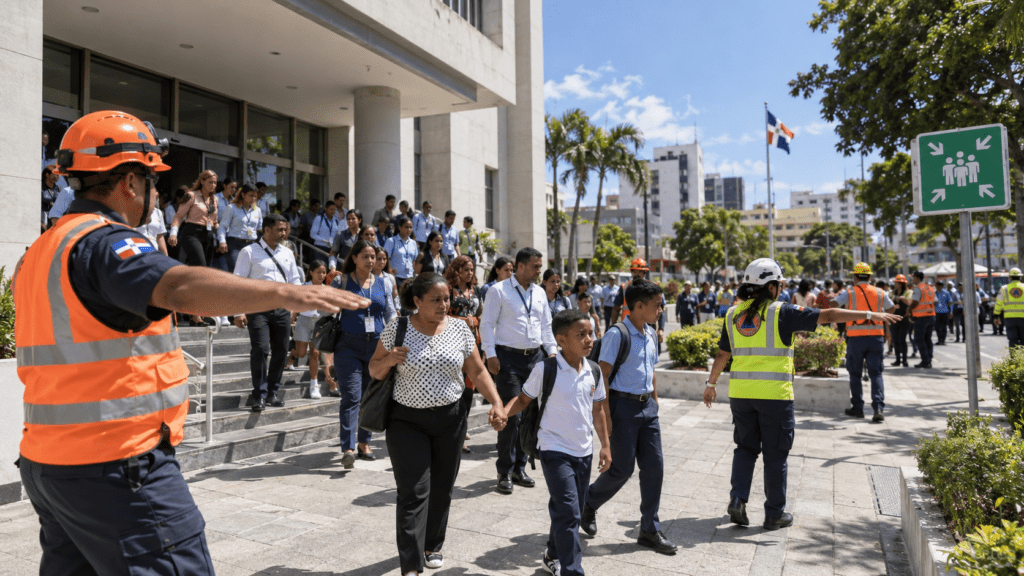
The Dominican Republic will conduct a nationwide earthquake evacuation drill on Tuesday, September 8, as authorities test how effectively the country can respond to a major seismic event. The exercise comes after powerful earthquakes recently struck Venezuela and Colombia, underscoring the importance of preparedness across the Caribbean and northern South America.
On June 24, Venezuela was hit by two major earthquakes near its northern coast, with magnitudes reported at 7.4 and 7.3 by the GEOFON earthquake information service. The events caused severe damage, particularly around La Guaira, and triggered a prolonged recovery effort.
Colombia also experienced a major earthquake on August 10. GEOFON recorded two strong events in the country that day, including earthquakes of magnitude 7.5 and 7.3. The disaster caused extensive damage and casualties in western Colombia, with relief operations continuing weeks later.
The regional activity provides a timely reminder that earthquakes can strike without warning and that emergency systems, infrastructure and communities must be prepared before a major event occurs. The Dominican drill will begin at 10:00 a.m. and involve public and private institutions, educational centers, social organizations and citizens across the country.
Mobile Alerts Will Be Tested
The exercise will begin with sirens, whistles and loudspeakers, while authorities will also test a system designed to send an immediate message to mobile phones across the country at the time of the simulated event. The test is part of efforts to strengthen the Dominican Republic’s national emergency alert capabilities.
Edwin Olivares, director of the Emergency Operations Center, said earthquakes provide no warning, making preparation, organization and knowledge of protective measures essential to reducing risks and saving lives. He said the exercise will assess more than the evacuation of individual buildings or communities, including protocols, communication and coordination among institutions.
The drill will also test the activation and coordination mechanisms of the institutions that form part of the country’s emergency response system. The objective is to identify areas that require improvement before an actual earthquake places those systems under pressure.
Businesses Are Also Being Encouraged to Prepare
Leonardo Reyes Madera, director of the National Office for Seismic Evaluation and Infrastructure and Building Vulnerability, urged private-sector companies and owners of private buildings to participate in preparedness efforts. He said building reviews are available free of charge to interested parties, providing an opportunity to identify vulnerabilities before a seismic emergency occurs.
People who want to participate in the national drill can register through the official website of the Emergency Operations Center. The participation of workplaces, schools and other organizations is intended to make the exercise representative of the country’s broader emergency response capacity.
What To Do During an Earthquake
The Civil Defense recommends that families prepare an emergency plan and practice it before an earthquake occurs. During an earthquake, people should remain calm, move to a safe location, crouch down and protect their heads. If evacuation becomes necessary, elevators should not be used; people should exit using stairs.
Inside a building, people should stay away from glass windows, light fixtures, cabinets, bookshelves, storage racks and other objects that could fall. People using wheelchairs should move to a safe location and protect their heads with their arms.
In crowded facilities, people should avoid rushing toward exits, where sudden movement can create dangerous crowd surges. The recommended approach is to seek protection near sturdy furniture and remain in a protective position until conditions allow for a safe evacuation.
People outdoors should move away from power poles, buildings, trees and walls. Drivers should stop in a safe location, activate their hazard lights and remain inside the vehicle, avoiding areas beneath or on top of bridges, elevated roads and overpasses. Bus passengers should remain seated after the driver stops in a safe place until conditions return to normal.