 30°C
30°C

Authorities Seize More Than 30,000 Illegal Goods In Santiago
Dominican authorities have seized more than 30,000 goods classified as illicit from Chinese-owned businesses, including 5,872 products in the latest operation conducted in Santiago de los Caballeros.


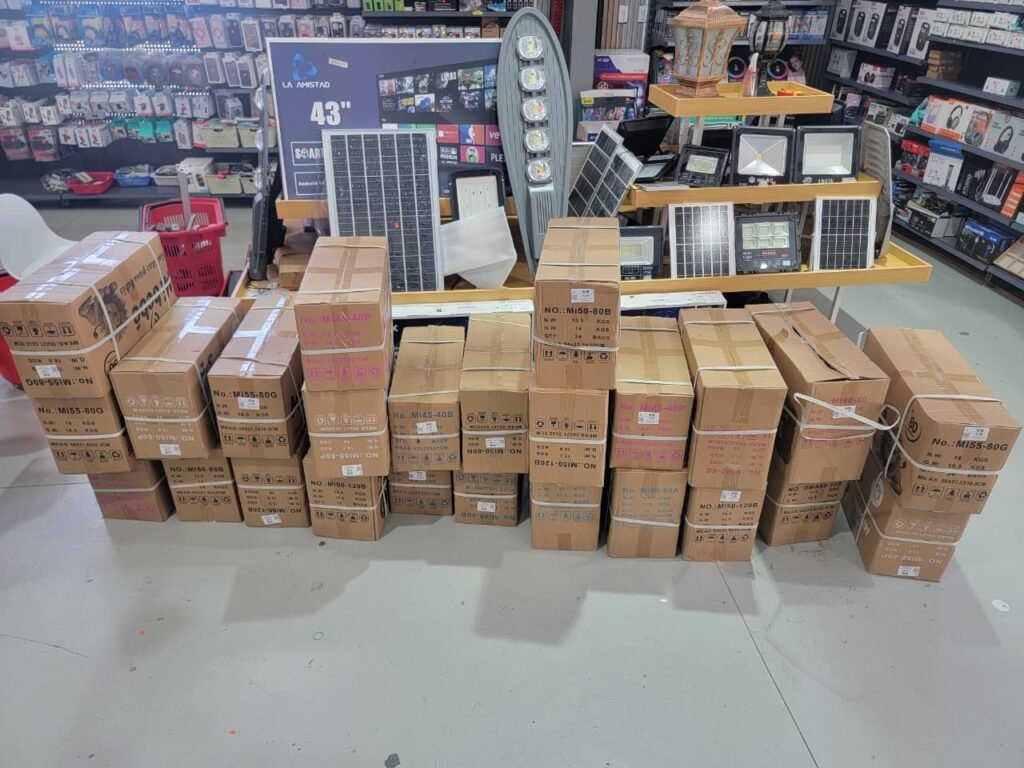
Dominican authorities have seized more than 30,000 goods classified as illicit during inspections of Chinese-owned businesses as part of an ongoing effort to curb the sale of products that allegedly do not meet the country’s legal and regulatory requirements.
The latest operation took place in Santiago de los Caballeros, the Dominican Republic’s second-largest city, where the Cuerpo Especializado de Control de Combustibles y Comercio de Mercancías (CECCOM), under the Ministry of Industry, Commerce and MSMEs (MICM), inspected four commercial establishments with the support of the Public Prosecutor’s Office.
5,872 Products Seized In Latest Operation
The businesses inspected were Mall Lindo, Well Being Malls, Plaza Moda Select and Kindo Mall. Authorities reported the seizure of 5,872 irregular products during the operation, including 3,706 units of sexual stimulants, 2,141 medicines and other consumer goods without sanitary registration, and 25 units of premium alcoholic beverages.
Authorities also reported that some of the seized products were labeled exclusively in their original language rather than in Spanish, a requirement under Dominican regulations for products marketed in the country.
The operation was led by magistrate Lía Collado, a prosecutor with the Electronic Crime Department of the Santiago Prosecutor’s Office. The inspections form part of a broader series of interventions targeting businesses where authorities say similar commercial irregularities have been detected.
Authorities Cite Multiple Commercial Violations
The MICM said the irregular practices identified during the inspections include the sale of products without sanitary registration, without fiscal traceability and without the Spanish-language labeling required under Dominican regulations.
According to the authorities, these practices can create risks for consumers when products subject to health or safety controls enter the market without the required documentation. They also represent a potential loss of tax revenue when goods are commercialized outside the established regulatory and fiscal framework.
The government has cited Law 17-19, which addresses illicit trade, smuggling and counterfeiting of regulated products, as well as the General Health Law 42-01 and the General Customs Law 168-21 as part of the legal framework governing the products and practices identified during the operations.
Inspections Extend Beyond Santiago
The latest Santiago operation follows inspections carried out in other parts of the Dominican Republic, including Los Alcarrizos, Villa Consuelo, Haina and areas along the Sánchez Highway. Authorities said similar products were seized during those interventions.
The accumulated seizures illustrate the government’s broader focus on monitoring commercial establishments and enforcing requirements related to product registration, labeling, customs compliance and fiscal traceability.
For consumers, the enforcement campaign highlights the importance of purchasing regulated products through businesses that comply with Dominican health, customs and commercial requirements. For legitimate businesses, the inspections are also part of efforts to enforce the same regulatory standards across the formal market.
The MICM and CECCOM said they will continue surveillance and enforcement operations against illegal commerce throughout the country.