 22°C
22°C

Dominican Republic Economy Faces A Critical Test Before 2028
The Dominican Republic economy is showing renewed momentum in 2026 after a slower 2025, but strong headline growth is being accompanied by persistent challenges in productivity, wages, informal employment, living costs, electricity and public debt.


The Dominican Republic is entering the final two years of Luis Abinader’s presidency with an economy that has regained momentum in 2026 after a marked slowdown in 2025. Yet beneath the stronger growth figures, persistent challenges in productivity, informal employment, electricity, living costs, public spending and debt continue to shape the country’s economic outlook.
The Central Bank reported average economic growth of 4.5% during the first half of 2026, while the Monthly Indicator of Economic Activity (IMAE) increased 6.4% year over year in June. The figures point to a significant recovery, but they also raise a broader question: whether stronger economic activity is translating into higher purchasing power and better economic conditions for Dominican households.
Construction And Services Drive The 2026 Recovery
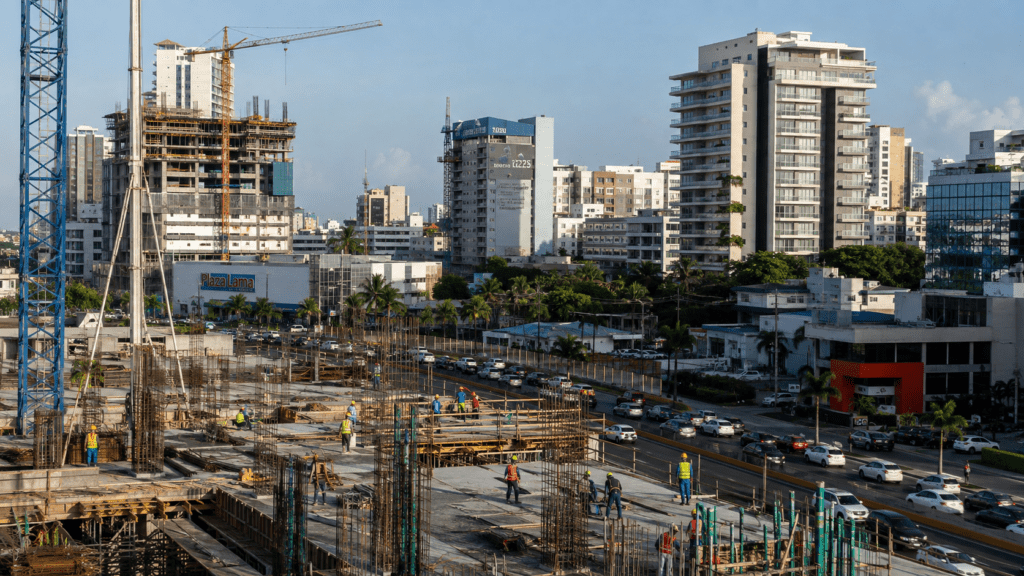
Construction has emerged as one of the most visible drivers of the rebound. Between January and June 2026, the Ministry of Housing, Habitat and Buildings issued 921 construction licenses, compared with 512 during the same period in 2025.
The approved projects represented more than RD$330 billion in private investment, an increase of 157% from a year earlier. The government has sought to accelerate construction approvals through changes to permitting procedures, helping reduce administrative delays for new projects.
The scale of the investment makes construction an important contributor to economic activity, but its longer-term impact will depend on the employment, local supply chains and productivity generated by those projects. Strong construction figures alone do not determine how broadly economic growth is distributed across the economy.
Tourism Remains A Major Economic Engine
Tourism continues to be one of the Dominican Republic’s most important sources of foreign exchange, investment and employment. Its impact extends beyond hotels and resorts, supporting transportation, food services, commerce and other activities connected to visitor spending.
The sector also remains closely linked to the country’s external position. A strong tourism industry can help generate the foreign currency needed to support imports and investment while creating economic activity across several regions.
The longer-term challenge is to increase the amount of value that remains within the Dominican economy. Stronger connections between tourism and local agriculture, manufacturing, transportation and other suppliers could allow visitor spending to generate broader domestic benefits.
Economic Growth Has Not Eliminated Pressure On Household Budgets
For consumers, the economic picture is more complicated than the headline growth rate suggests. The Central Bank reported annual inflation of 5.67% in June 2026, while the monetary policy rate stood at 5.25% in July.
Inflation is substantially lower than during the most severe price pressures associated with the pandemic and the international supply shock. However, households experience the cumulative effect of price increases over time. The cost of food, housing, transportation, electricity and other essential expenses can remain difficult even when the monthly inflation rate moderates.
This helps explain why stronger economic growth does not necessarily produce an immediate improvement in how families perceive their financial situation. Purchasing power depends on the relationship between prices, wages, employment and household expenses rather than on GDP growth alone.
Formal Employment Is Growing, But Informality Remains A Structural Problem
The labor market has also improved, although the expansion has not eliminated informality. Between 2019 and 2025, formal employment increased by approximately 34.9%, while informal employment grew 17.5%.
In absolute terms, the number of formal workers increased by about 611,000 during that period, compared with an increase of roughly 415,000 informal workers. The stronger growth of formal employment is significant, but the size of the informal economy remains an important obstacle to a broader distribution of economic gains.
High informality affects both workers and the government. Workers outside formal employment generally have weaker access to social security, training and income stability, while the state faces greater difficulties expanding its tax base and financing public services.
Social Assistance Helps Families But Does Not Replace Income Growth
The government has expanded social protection programs as part of its response to economic pressures. The Aliméntate program, administered through Supérate, increased its monthly transfer from RD$825 to RD$1,650. In 2025, the program reported 1,445,612 beneficiary households.
The Bonogás subsidy also increased, reaching RD$470 per month. The government reported 1,313,407 beneficiary households in 2025 and an investment of RD$7.2422 billion in the program.
These transfers can provide an important buffer for households facing higher costs. Their role, however, is different from that of sustained income growth. Social assistance can reduce immediate financial pressure, while higher productivity, formal employment and stronger real wages are needed to improve household economic security over the longer term.
Food Costs Remain A Persistent Challenge
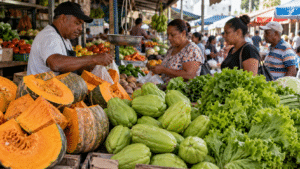
The government has also attempted to reduce food costs by shortening the distribution chain between producers and consumers. The “A Comer: Del Campo al Colmado” program was launched in 2023 with the goal of lowering the cost of 16 agricultural and mass-consumption products.
The Instituto de Estabilización de Precios (INESPRE), the government agency responsible for supporting access to agricultural products at controlled prices, has also expanded producers’ markets and mobile food outlets. The initiatives are designed to bring consumers closer to farmers and reduce some of the costs associated with intermediaries.
For households, however, the broader challenge remains the affordability of basic food. Lower distribution costs can help, but lasting improvements in purchasing power depend on a combination of wages, productivity, agricultural efficiency and consumer prices.
Public Debt Will Be A Major Issue Through 2028
Public debt is another major challenge for the final two years of the administration. As of May 31, 2026, debt held by the nonfinancial public sector stood at US$67.9955 billion, equivalent to 48.3% of estimated GDP.
External obligations represented 71% of the total, while domestic debt accounted for 29%. The size of the debt is only part of the issue. Its economic impact also depends on what the borrowed funds finance and whether those investments generate sufficient economic and social returns.
Borrowing for infrastructure and productive projects can increase the economy’s future capacity and support additional revenue generation. Debt used primarily to cover recurring expenses presents a different fiscal challenge because it does not necessarily create new productive capacity.
The Electricity System Remains A Key Economic Challenge
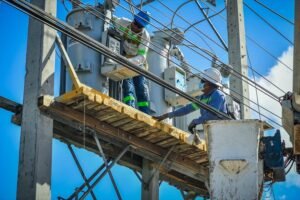
The electricity sector is another structural issue that will influence the country’s economic performance. Reliable and financially sustainable electricity is essential for manufacturers, businesses, households and investors, while inefficiencies in the system can increase operating costs throughout the economy.
For businesses considering long-term investment in the Dominican Republic, electricity costs and reliability form part of the country’s broader competitiveness. Improving the sector would therefore have consequences beyond the energy industry itself, affecting productivity and the cost of doing business.
The Next Two Years Will Test The Quality Of Growth
The Dominican Republic has demonstrated a strong capacity to recover from the pandemic shock, and the economic expansion recorded in 2026 shows that its main growth engines remain active. Construction, tourism, services and investment are supporting renewed momentum.
The more difficult task will be ensuring that this expansion produces lasting improvements in productivity, wages and household purchasing power. That will require stronger formal employment, more efficient public spending, better-performing infrastructure and careful management of public debt.
By 2028, the economic legacy of the current administration will therefore be measured by more than the size of GDP. The central question will be whether the country has managed to convert economic growth into a more productive economy, stronger incomes and sustainable improvements in living standards for a broader share of the population.