 23°C
23°C

Stereotypes About Life In The Dominican Republic: What Is True?
Life in the Dominican Republic is often described through a handful of familiar stereotypes: friendly people, endless beaches and nightlife, relaxed attitudes toward time, widespread corruption, insecurity, low wages and a difficult environment for foreigners. Some of these perceptions contain a fragment of reality, while others confuse genuine social or institutional challenges with sweeping judgments about more than 11 million people.


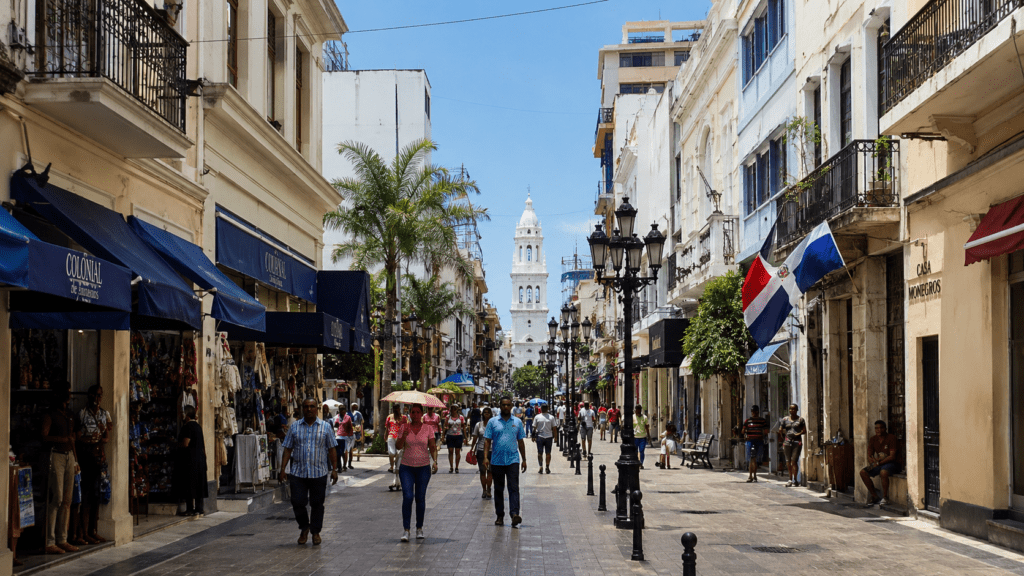
The Dominican Republic is one of the Caribbean’s most recognizable countries, yet much of what outsiders think they know about everyday life comes from tourism, popular culture, personal anecdotes or assumptions about Latin America. For someone considering living in the country, those impressions can be particularly misleading. A resort holiday in Punta Cana, for example, reveals only one part of Dominican society, while a difficult experience with a business transaction tells us little about the behavior of an entire population.
Personal experiences can be genuine without being representative. At the same time, dismissing every negative perception as prejudice would also be misleading. The better approach is to separate cultural differences, measurable social problems and individual behavior.
Why Stereotypes About Dominican Life Are So Persistent
The Dominican Republic is unusually exposed to outside perceptions because tourism is such an important part of its international identity. Visitors encounter beaches, hotels, music, dancing and a highly social atmosphere, while many of the country’s less visible realities involve work, housing, public services, transportation, bureaucracy and income differences.
The country’s economic development also complicates simple descriptions. The economy has grown rapidly over the past two decades, while the middle class has expanded and poverty has declined. At the same time, important challenges remain, including productivity, job quality, inequality and access to better opportunities.
This combination helps explain why two foreigners can have dramatically different impressions of the same country. Someone with a foreign salary working remotely may experience the Dominican Republic primarily through housing, restaurants, transportation and leisure. Someone dependent on local wages will experience the economy very differently. Likewise, a resident in a well-established urban or tourist community can have a different experience of security and public services from someone living in a poorer or more remote area.
Stereotype 1: Dominicans Are Always Friendly and Helpful
This is one of the most common positive stereotypes, and it is not difficult to understand why it exists. Dominican culture places considerable importance on social interaction, hospitality, music, celebrations and informal contact.
For foreigners, this can translate into an impression that Dominicans are unusually outgoing. Conversations can become personal more quickly than a visitor from a more reserved culture might expect, and social interaction can be an important part of ordinary life rather than something reserved for close friends.
But “Dominicans are friendly” is still a stereotype if it is treated as a universal personality trait. More importantly, friendliness should not be confused with trustworthiness in financial or legal matters. A person can be warm, sociable and generous while still being a poor business partner. The reverse is also true.
The practical lesson for newcomers is simple: appreciate social openness without abandoning ordinary judgment. Personal warmth is not a substitute for contracts, receipts, background checks or professional advice.
Stereotype 2: Dominican Social Life Is Mostly Parties, Beaches and Music
The country’s international image is strongly associated with merengue, bachata, beaches, resorts and nightlife. There is a genuine cultural foundation behind that image, and music and social gatherings occupy an important place in Dominican life.
The problem arises when a cultural characteristic is mistaken for the whole of everyday life. Most Dominicans also work, study, raise families, commute, run businesses, manage household expenses and deal with the same practical pressures found elsewhere.
The difference between tourism and residency is especially important. A visitor may spend two weeks surrounded by entertainment and hospitality. A resident has to deal with rent or a mortgage, electricity, transportation, healthcare, banking, employment and administrative procedures. The country can offer a highly social lifestyle, but that does not mean daily life is permanently recreational.
Stereotype 3: Life in the Dominican Republic Is Always Relaxed
Foreigners sometimes describe Dominican society as “laid-back,” particularly when comparing it with cultures where schedules, appointments and administrative deadlines are treated very rigidly. This perception can be connected to different expectations about social time and communication.
However, calling an entire society relaxed can obscure important distinctions. A missed appointment may reflect an individual, a business’s organization, traffic, bureaucracy or circumstances rather than a national attitude toward time. Large companies, hospitals, schools, government offices and professional services necessarily operate with schedules and procedures.
For expatriates, the more useful adjustment is to recognize that social expectations may differ from those in their home country and to clarify practical arrangements in advance. Written confirmations, documented agreements and realistic time allowances can reduce misunderstandings without turning a cultural difference into a moral judgment.
Stereotype 4: Dominicans Are Less Educated or Less Socially Refined
One of the most problematic stereotypes about life in the Dominican Republic is that Dominicans are inherently less educated, less cultured or less refined than people from other countries. Such statements are not meaningful descriptions of an entire population.
Education, income, occupation, age, geography and social background vary enormously within the Dominican Republic. The country has more than 11 million inhabitants, and its population includes major urban centers, smaller towns, rural communities, affluent neighborhoods, working-class areas and internationally connected professional communities.
The perception can also be produced by differences in communication style. A person accustomed to restrained conversation may interpret directness, loud speech, jokes or physical expressiveness as impolite. Someone from a more expressive culture may interpret the same behavior as normal sociability.
That does not mean every behavior should be excused as “cultural.” Rudeness exists in the Dominican Republic, just as it exists elsewhere. The important distinction is between criticizing a specific behavior and assigning that behavior to an entire nationality.
Stereotype 5: Corruption Is Everywhere and Everyone Is Corrupt
This stereotype requires more careful treatment because it mixes a real institutional concern with an unjustified generalization about individuals.
The Dominican Republic does face concerns about public-sector corruption, bureaucracy and institutional transparency. Those problems can affect how residents and businesses interact with public institutions.
But an institutional problem does not mean that ordinary Dominicans are personally corrupt.
A newcomer may encounter bureaucracy that feels opaque or hear warnings about unofficial payments. The appropriate response is not to assume that everyone is dishonest. It is to use documented procedures, request receipts, keep copies of important documents and use qualified professionals when a transaction has legal or financial consequences.
Stereotype 6: You Cannot Trust Dominicans With Money
Financial trust is one of the areas where personal experiences can easily turn into national stereotypes.
Problems involving loans, business arrangements or financial agreements can happen in any country. An informal loan between friends or acquaintances can become complicated regardless of nationality. There is an important distinction between being cautious with money and believing that an entire nationality is financially dishonest.
For substantial transactions, especially those involving property, the appropriate response is stronger documentation rather than stronger suspicion of an entire population.
Written agreements, clear payment conditions, receipts and independent verification can protect everyone involved. When unfamiliar situations arise, understanding the common scams in the Dominican Republic can also help newcomers recognize warning signs without assuming that dishonesty is a defining characteristic of Dominican society.
Stereotype 7: Buying Property in the Dominican Republic Is Too Risky

Property purchases deserve more attention than casual loans because the financial consequences can be much larger.
This does not mean that buying property in the Dominican Republic is inherently dangerous or that property transactions are generally fraudulent.
The Dominican Republic has a formal land-registration system and procedures for establishing the legal status of properties. Buyers can verify ownership information, examine liens and encumbrances and obtain documentation relating to a property’s legal situation.
That means the sensible lesson for a foreign buyer is not “never buy property in the Dominican Republic.” It is to treat a property purchase as a legal transaction.
Independent legal advice, verification of title, review of liens and encumbrances, confirmation of the seller’s authority and careful examination of the transaction documents are basic precautions.
The same principle applies in countries with highly developed property markets. Due diligence is not evidence that a country is uniquely dangerous; it is part of responsible property ownership.
Stereotype 8: The Police and Public Institutions Cannot Be Trusted
Concerns about institutions are more complicated than stereotypes about individual behavior. Crime can be a concern in the Dominican Republic, but security conditions are not identical throughout the country.
At the same time, the country’s homicide rate has improved from some historical levels. These facts can coexist. A country can experience real crime risks while also improving its security indicators. Likewise, concerns about institutional accountability do not mean that every police officer or public servant is corrupt.
For a resident, the sensible approach is to distinguish between ordinary personal safety and generalized distrust. Use secure financial practices, protect documents, avoid unnecessary exposure to risk and understand local procedures. If a legal problem arises, seek qualified legal assistance rather than relying exclusively on informal advice.
Stereotype 9: The Dominican Republic Is Cheap for Foreigners
The idea that the Dominican Republic is simply a cheap Caribbean country is another common misconception. Whether it feels affordable depends heavily on income, location, housing choices and lifestyle.
A person earning in dollars, euros or another strong foreign currency may find some services and everyday expenses relatively affordable. A person earning a local salary faces a completely different calculation.
This distinction is particularly important in areas heavily influenced by international tourism and foreign demand. Housing, restaurants, imported products and services aimed at affluent residents or visitors can operate at very different price levels from locally oriented markets.
Therefore, “the Dominican Republic is cheap” is less useful than asking a more precise question: cheap compared with what income, in which city, and for which lifestyle?
Stereotype 10: Low Local Wages Mean the Country Is Poor
This stereotype confuses individual incomes with the overall performance of an economy. The Dominican Republic has experienced sustained economic expansion and has become one of the stronger-growing economies in the region over the past two decades.
That progress does not mean that every household shares the same standard of living. The labor market contains both a growing formal economy and significant numbers of workers in lower-productivity or informal employment.
For foreigners considering employment in the country, this is a crucial distinction. A lifestyle that is comfortable for someone with foreign income may not be realistic on a local salary. Conversely, the existence of low-paid work does not accurately describe the entire Dominican economy.
Stereotype 11: Everyone Lives Like a Tourist
This may be the most consequential misconception for someone considering relocation. The Dominican Republic has an extraordinary tourism industry, but most residents do not live inside a resort.
The country’s economy includes tourism, manufacturing, agriculture, construction, mining, financial services, commerce, transportation, technology and a large number of small businesses.
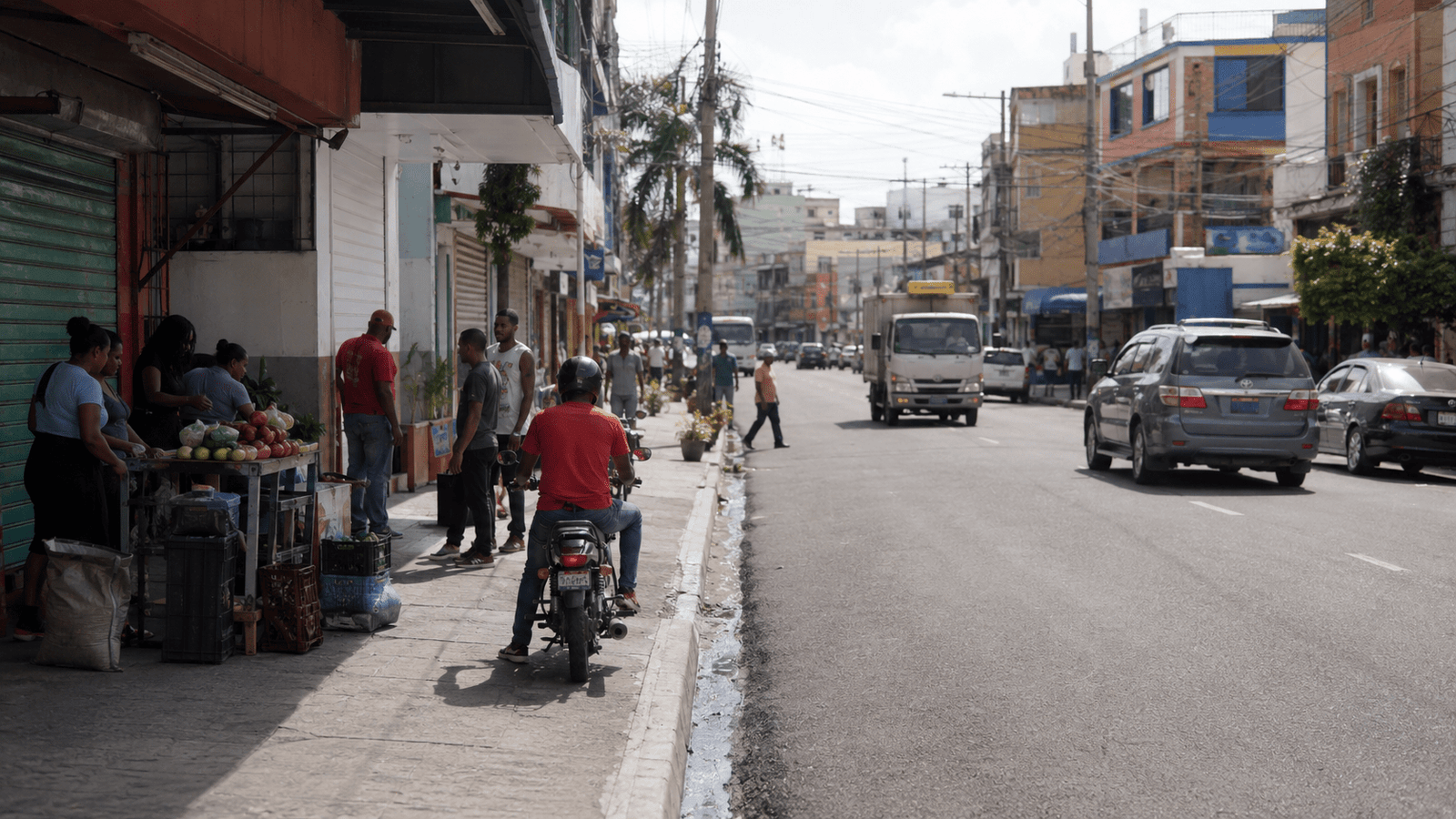
Daily life therefore varies dramatically by location and socioeconomic position. Santo Domingo is a major metropolitan environment; Santiago has a different urban character; coastal communities vary according to their tourism exposure; and rural areas can have completely different economic and infrastructural realities.
Someone moving from abroad should therefore research the specific community in which they intend to live rather than asking whether “life in the Dominican Republic” is good or bad in general.
Stereotype 12: Foreigners Can Adapt Without Changing Anything
Moving to another country requires some degree of mental preparation and adaptation. That does not mean abandoning one’s identity. It means recognizing that another society has its own expectations about communication, relationships, schedules, food, celebrations, family life and everyday etiquette.

Successful adaptation is usually easier when newcomers approach these differences with curiosity rather than superiority. A foreign resident does not have to adopt every local habit, but understanding the context behind a behavior can prevent unnecessary conflict.
At the same time, adaptation should not mean accepting conduct that would be unacceptable anywhere. Cultural differences do not justify fraud, violence, discrimination, exploitation or abuse. The useful distinction is between learning how a society works and abandoning reasonable personal boundaries.
What Foreigners Often Misread About Dominican Social Behavior
Some of the strongest stereotypes are created by interpreting unfamiliar social behavior through the standards of another culture. Directness may be interpreted as rudeness. Informality may be interpreted as irresponsibility. Sociability may be interpreted as superficiality. Negotiation may be interpreted as dishonesty. A flexible approach to arrangements may be interpreted as a refusal to take commitments seriously.
None of those interpretations is automatically correct.
The better method is to look at context and repetition. One unusual interaction tells a newcomer very little. Repeated experiences with the same business, neighborhood, institution or social circle provide much stronger information. Over time, foreigners can learn which behaviors are cultural preferences and which represent genuine problems.
The Most Important Distinction: Individual Behavior vs. Structural Problems
Individuals can behave dishonestly, institutions can have weaknesses, and social norms can differ without an entire nationality sharing those characteristics.
The existence of corruption does not make every Dominican corrupt. The existence of crime does not make every neighborhood dangerous. The existence of property disputes does not make every property transaction fraudulent.
Conversely, saying “not everyone is like that” should not be used to dismiss legitimate problems. A mature understanding of the Dominican Republic requires both ideas at once: avoid national stereotypes, but take real risks seriously.
How to Approach Life in the Dominican Republic Without Stereotypes
Foreigners can reduce many misunderstandings by replacing broad assumptions with practical habits. The following approach is more useful than arriving with either an idealized or deeply negative image of the country.
- Research the specific location. Conditions vary considerably between cities, neighborhoods and rural areas.
- Separate tourism from residency. A resort experience does not describe ordinary life.
- Use documentation for important transactions. Verbal trust is not a substitute for contracts and official records.
- Verify property information independently. Important real estate transactions should always be properly documented.
- Keep normal security precautions. Crime is a genuine concern in certain circumstances, so common-sense precautions remain appropriate.
- Learn local social expectations. Understanding communication and social customs makes adaptation easier.
- Do not confuse friendliness with financial trust. Treat substantial financial commitments professionally, regardless of who is involved.
- Do not confuse cultural difference with misconduct. Evaluate specific behavior rather than assigning it to an entire nationality.
These principles are useful not only in the Dominican Republic but in almost any country where a foreigner is moving into an unfamiliar social environment.
What the Stereotypes Get Right—and What They Miss
| Common stereotype | What may be behind it | What the stereotype misses |
|---|---|---|
| Dominicans are very friendly | A highly social culture with strong traditions of music, gatherings and community interaction | Friendliness varies by person and does not guarantee professional or financial reliability |
| The country is all beaches and parties | Tourism, music and dance are highly visible parts of Dominican culture | Most residents also work, study, raise families and manage ordinary economic pressures |
| Everyone is relaxed about time | Social expectations can differ from those in more schedule-oriented cultures | Businesses and institutions still operate according to formal procedures and deadlines |
| Everyone is corrupt | Public-sector corruption can be a genuine institutional concern | Institutional problems do not make every individual dishonest |
| Property purchases are dangerous | Property transactions require serious legal due diligence | The country has a formal land-registration system and mechanisms for verifying property status |
| The country is cheap | Some expenses can be relatively affordable for people with foreign incomes | Affordability depends on income, location and lifestyle |
| The country is unsafe everywhere | Crime is a genuine concern in certain circumstances and locations | Risk varies considerably by location |
| Dominicans are less educated or refined | Communication styles can differ between cultures and social groups | Education, income and behavior vary enormously within the Dominican population |
Frequently Asked Questions
Are Dominicans generally welcoming to foreigners?
Many foreigners describe Dominicans as sociable and welcoming, and the country’s cultural traditions place substantial importance on social gatherings and community interaction. However, hospitality is an individual and situational quality, not a universal characteristic of every Dominican.
Is corruption a serious problem in the Dominican Republic?
Corruption remains a legitimate institutional concern. However, that does not mean that ordinary Dominicans are personally corrupt. It is important to distinguish institutional weaknesses from the behavior of individuals.
Is crime a major concern for people living in the Dominican Republic?
Crime is a genuine concern, particularly in certain circumstances and locations. At the same time, security conditions vary considerably across the country. Public security should therefore be assessed using specific locations and current conditions rather than the assumption that the entire country is equally dangerous.
Should foreigners be afraid of buying property in the Dominican Republic?
There is no reason to treat all Dominican property transactions as fraudulent, but buyers should carry out proper legal due diligence. Ownership, title information, liens, encumbrances and the seller’s authority should be carefully verified before completing a significant transaction.
Is the Dominican Republic inexpensive for expatriates?
It can be affordable for some foreigners, particularly those with income from abroad, but affordability varies significantly according to housing, location and lifestyle. Local wages and foreign incomes should not be treated as equivalent when assessing the cost of living.
Do foreigners need to adapt to Dominican culture?
Yes. Understanding local customs, communication styles and social expectations can make everyday life easier. Adaptation does not require abandoning one’s identity or accepting inappropriate behavior. It means learning how the society works and adjusting expectations where cultural differences are involved.
A More Accurate Way to Think About Life in the Dominican Republic
The most useful conclusion from the stereotypes surrounding life in the Dominican Republic is not that they are all false or all true. Most contain a distorted version of something real.
The country really does have a highly visible culture of music, dance and social interaction. It also has genuine institutional and security challenges. Its economy has made substantial progress while continuing to face inequality and job-quality problems.
Property purchases require serious due diligence, but that is different from saying that property transactions are inherently fraudulent. Crime exists, but that does not make every neighborhood equally dangerous. And many foreigners may encounter considerable warmth without that warmth being proof that every person they meet can be trusted with money or business.
For someone considering life in the Dominican Republic, the best preparation is therefore neither romanticization nor suspicion. It is context. Learn the specific community, understand the local institutions, document important transactions, take sensible security precautions and remain open to social customs that may differ from those of your home country.
That approach also changes the question. Instead of asking whether Dominicans match a stereotype, a prospective resident can ask much more useful questions: What is this neighborhood like? How does this institution work? What does this contract require? What are the actual security conditions? What income will I have? Which customs should I understand?
Those questions lead to a far more accurate picture of life in the Dominican Republic than any generalization about its people.