 23°C
23°C

Traveling with Pets in the Dominican Republic: What Every Pet Owner Should Know
Living in the Dominican Republic with a pet is generally easier than many newcomers expect, especially when it comes to everyday transportation. While the country has relatively few nationwide rules governing pets on public transport, local customs often provide more flexibility than formal regulations. Understanding how transportation works in practice—and being aware of a few important safety concerns—can make traveling with your dog or cat considerably less stressful.


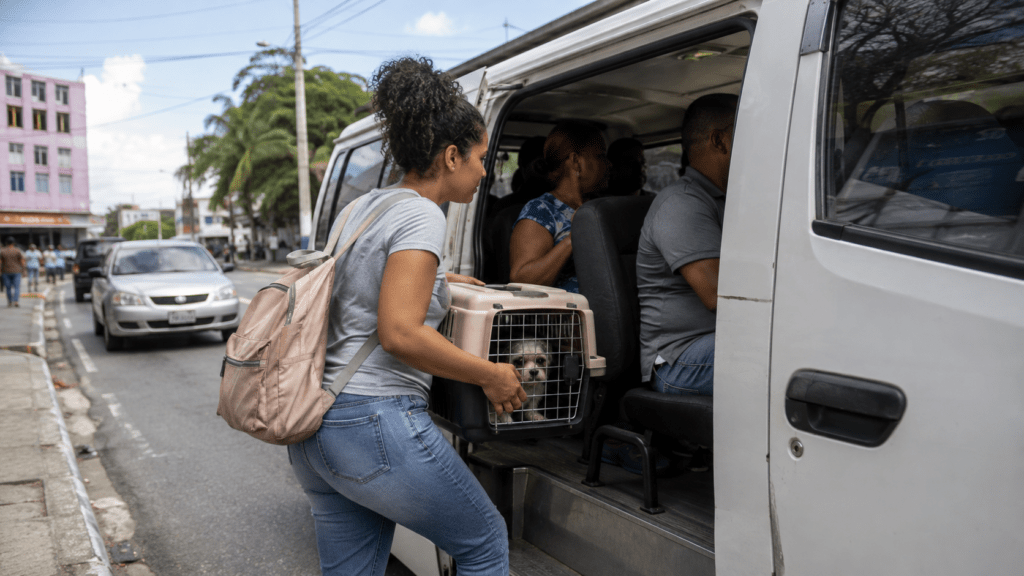
Whether you are an expatriate, digital nomad, long-term resident or traveler, sooner or later you will need to move around the Dominican Republic with your pet. Unlike many European countries or North America, transportation rules are often based more on the driver’s discretion than on standardized national policies.
This flexibility can work in your favor, but it also means that every journey may be slightly different. Knowing what to expect before you leave home can save time, avoid misunderstandings and help keep your pet safe.
Is It Easy to Travel with Pets in the Dominican Republic?
In general, yes. Compared with many countries, the Dominican Republic is relatively pet-friendly when it comes to everyday transportation. Dogs and cats are commonly seen traveling in private vehicles, taxis and even public minibuses known locally as guaguas.
However, the country lacks a single nationwide policy regulating pets on public transportation. Instead, each transport operator—or sometimes each individual driver—may decide whether to accept an animal.
Because of this, experiences vary. Some passengers travel regularly with small dogs without encountering any problems, while others may occasionally be asked to wait for another vehicle or pay a small additional fee.
Traveling by Public Transportation
Public transportation in the Dominican Republic includes several different services:
- Urban and intercity guaguas (shared minibuses)
- Public buses
- Carros públicos (shared taxis)
- The Santo Domingo Metro
- Long-distance coach services
In practice, acceptance of pets depends almost entirely on the service being used and the driver’s willingness to carry the animal.
Guaguas and Shared Transportation
Guaguas are among the most flexible forms of transportation in the country. They frequently transport passengers carrying groceries, luggage, bicycles and even small livestock in rural areas. As a result, bringing a pet is often not considered unusual.
Small dogs, cats and other domestic animals are frequently accepted, particularly if they remain calm throughout the journey.
Some drivers may request a modest surcharge, while many simply charge the normal passenger fare.
There is no standard nationwide tariff for pets.
Public Buses
Larger public buses also vary considerably.
Some companies allow pets only if they remain inside an appropriate carrier, while others leave the decision to station staff or the driver.
Private intercity operators may publish their own transport conditions, which can include carrier requirements and additional charges for animals transported in luggage compartments. Policies differ significantly between operators, making it advisable to confirm conditions before traveling.
Metro de Santo Domingo
The Santo Domingo Metro is a modern urban transportation system serving the capital.
Unlike buses or taxis, pets are generally not part of normal daily use unless permitted under specific operational rules or when they qualify as assistance animals. Before attempting to travel with a pet on the Metro, it is advisable to verify the current regulations directly with the operator.
Traveling by Taxi and Ride-Hailing Services
Taxis are usually one of the easiest ways to travel with a pet.
Unlike public transportation, the decision rests almost entirely with the driver. Most drivers are willing to accept small or medium-sized pets provided they are well behaved and do not damage the vehicle.
Ride-hailing services such as Uber also operate in major Dominican cities, although acceptance of pets still depends on the individual driver. Sending a message immediately after requesting the ride to inform the driver that you are traveling with a pet is considered good practice.
If the driver declines, simply cancel and request another vehicle.
Using Your Own Vehicle
Traveling in your own car offers the greatest flexibility.
Unlike some European countries, there are currently no widely enforced national requirements obliging owners to transport pets inside approved carriers or use specific restraint systems during everyday driving.
Nevertheless, this does not necessarily mean unrestricted transport is the safest option.
Veterinarians and animal welfare organizations generally recommend using harnesses, travel crates or secured carriers whenever possible. These devices help reduce distractions while driving and provide additional protection for both the animal and vehicle occupants in the event of sudden braking or an accident.
Flying With Your Pet
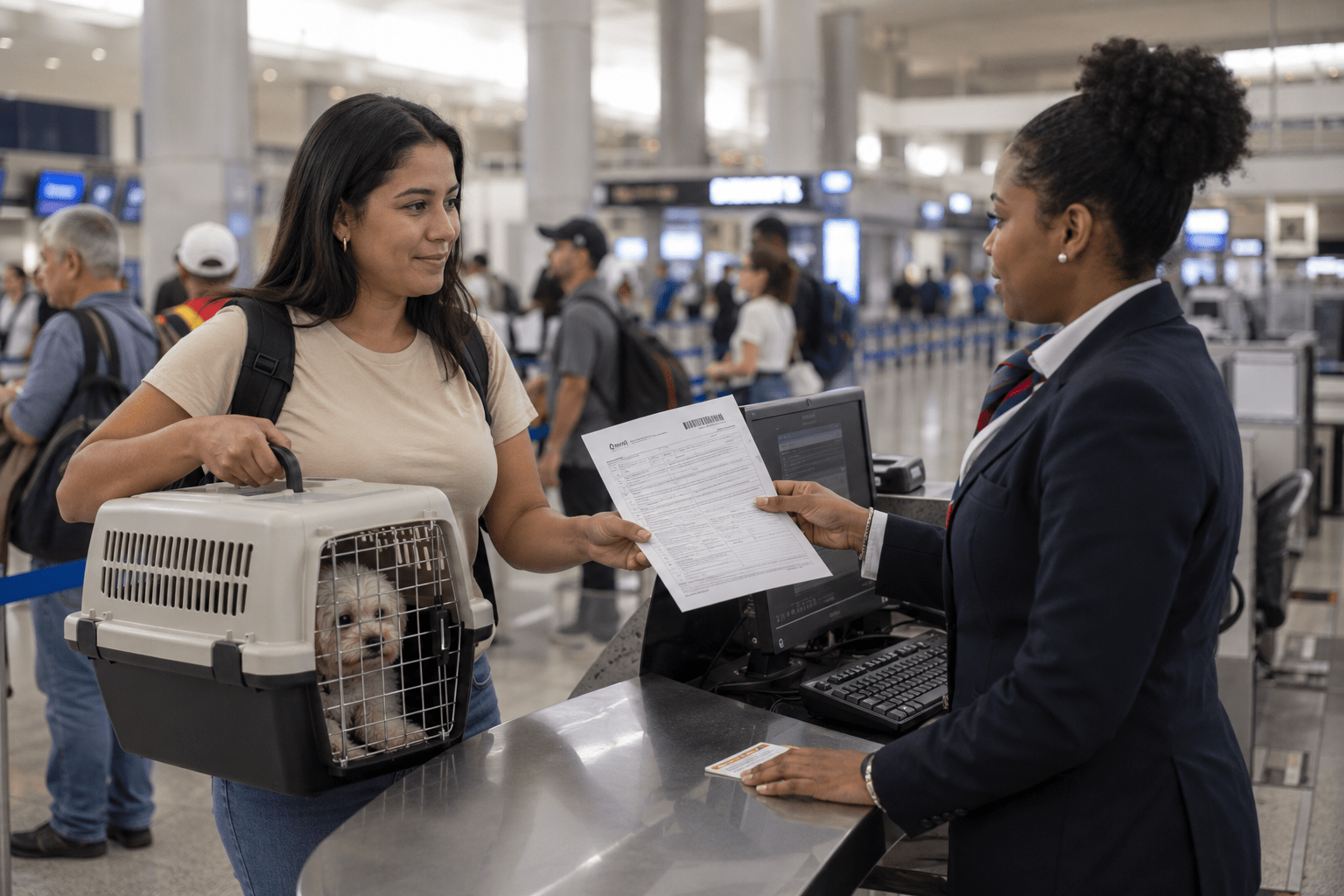
If you plan to arrive in or leave the Dominican Republic by air with your pet, transportation becomes considerably more regulated than domestic travel.
Each airline establishes its own rules regarding:
- Cabin travel
- Cargo transportation
- Maximum weight limits
- Carrier dimensions
- Reservation procedures
- Additional fees
Passengers should always contact their airline before purchasing tickets because many carriers limit the number of animals accepted on each flight.
To enter the Dominican Republic, dogs and cats generally require an official veterinary health certificate together with proof of rabies vaccination. Upon arrival, an animal control officer reviews the documentation before authorizing entry into the country.
How Much Does It Cost to Travel With a Pet?
Costs vary considerably depending on the type of transportation.
| Transportation | Typical Situation |
|---|---|
| Private vehicle | No additional cost. |
| Taxi | Usually no surcharge, although some drivers may request a small supplement. |
| Guagua | Often no extra charge or only a small additional fare. |
| Intercity bus | Depends entirely on the company’s own policy. |
| Airlines | Fees vary according to airline, destination and whether the pet travels in the cabin or cargo hold. |
Because there is no standardized national pricing system for transporting pets, confirming costs in advance is always recommended.
The Biggest Safety Risk: Poisoning of Pets
While transportation itself is generally uncomplicated, one issue deserves far more attention than many newcomers initially expect: the deliberate poisoning of dogs and other animals.
Cases of intentional poisoning have been reported in different parts of the Dominican Republic over the years. Pet owners occasionally discover poisoned food left on sidewalks, empty lots or, in some instances, thrown into private gardens. The motivations vary and may include neighborhood disputes, attempts to kill stray animals or simple acts of cruelty.
For anyone walking a dog, this represents one of the most important everyday safety concerns.
Unlike traffic regulations or transportation rules, this is not a problem that can be solved by planning your route. Prevention depends largely on constant supervision.
How to Reduce the Risk
Although no precaution can eliminate the risk entirely, experienced pet owners recommend adopting a few habits:
- Never allow your dog to eat food found on the street.
- Keep dogs on a leash during walks in urban areas.
- Teach basic commands such as “leave it” or “drop it.”
- Avoid leaving pets unattended in front yards or open gardens.
- Be particularly cautious if unfamiliar food suddenly appears near your property.
If you suspect your pet has ingested poison, seek veterinary assistance immediately. Many toxic substances act very quickly, making rapid treatment essential.
Keeping Your Pet Comfortable During Travel
The Dominican Republic’s warm tropical climate can make journeys more demanding for animals than transportation itself.
Dogs and cats that are accustomed to cooler climates may require time to adapt, especially during the hottest months.
Simple precautions can make a significant difference:
- Carry fresh drinking water.
- Avoid long journeys during the hottest hours of the afternoon.
- Never leave a pet inside a parked vehicle.
- Plan regular stops on longer road trips.
- Watch for signs of overheating, including excessive panting or lethargy.
Many expatriates also keep a small travel kit containing water, a collapsible bowl, waste bags, basic first-aid supplies and copies of vaccination records.
Traveling Between Tourist Areas
Many residents and long-term visitors regularly travel with their pets between destinations such as Santo Domingo, Punta Cana, Santiago, Puerto Plata, Las Terrenas or Cabarete.
Private vehicles remain the simplest option for these longer trips because they eliminate uncertainty over transport policies and allow owners to stop whenever necessary.
When using commercial transportation, contacting the company in advance is advisable, particularly if traveling with medium or large dogs.
What About Beaches and Public Spaces?
Transportation is only one part of traveling with a pet.
Acceptance of animals at beaches, parks and tourist attractions also varies considerably. Some beaches welcome dogs without issue, particularly quieter local beaches, while others—especially those associated with private resorts—may prohibit animals altogether.
Restaurants with outdoor seating are often more flexible than indoor establishments, although policies differ from one business to another.
Checking in advance helps avoid unnecessary inconvenience.
Practical Advice for Expats and New Residents
People moving to the Dominican Republic often expect transportation rules similar to those in Europe or North America. In reality, flexibility is one of the defining characteristics of everyday travel.
Rather than relying on detailed national regulations, success usually depends on communication, courtesy and preparation.

If using taxis or ride-hailing services, informing the driver beforehand often prevents misunderstandings. On public transportation, remaining respectful and ensuring that your pet is calm and under control significantly increases the likelihood of being accepted.
Carrying a towel or blanket for your pet to sit on is another simple gesture that many drivers appreciate.
Frequently Asked Questions
Can I take my dog on a guagua in the Dominican Republic?
Usually yes, although acceptance depends on the driver. Some may charge a small supplement, while others allow pets without additional cost.
Are pet carriers legally required inside private cars?
No general nationwide requirement obliges pet owners to use carriers in private vehicles, although using an appropriate restraint is recommended for safety.
Can taxis refuse to transport pets?
Yes. Taxi drivers generally have discretion to decide whether to accept animals in their vehicles.
Are pets allowed on all buses?
No. Each bus company may establish its own transport policy, making it important to confirm conditions before traveling.
What is the biggest danger for dogs during daily walks?
One of the most serious risks reported by long-term residents is accidental ingestion of poisoned food deliberately left in public spaces. Careful supervision during walks is essential.
Final Thoughts
Traveling with a pet in the Dominican Republic is often more straightforward than many foreigners expect. Everyday transportation tends to be flexible, particularly when compared with countries that enforce strict rules regarding carriers or restraint systems. The absence of rigid regulations, however, also means that individual drivers and transport operators frequently make their own decisions.
Preparation, courtesy and a willingness to adapt usually make traveling with pets relatively easy. Above all, responsible owners should remain vigilant during walks and outdoor activities, ensuring that their animals are protected not only while traveling but also from the environmental risks that can occasionally arise.