 28°C
28°C

Dominican Republic Residency by Investment Offers a Different Caribbean Plan B
The Dominican Republic does not operate a citizenship-by-investment program, but its investor residency framework offers North American investors another route: establish residency through qualifying investment and potentially pursue Dominican citizenship through naturalization.



For North American investors considering a second base in the Caribbean, the Dominican Republic presents a model that differs from the region’s better-known citizenship-by-investment programs. Rather than selling citizenship directly in exchange for a qualifying contribution, the country offers residency categories that can provide a foundation for longer-term settlement and, under Dominican law, a potential route to naturalization.
That distinction is significant because the Dominican Republic is a large, diversified economy rather than a small island state built primarily around the citizenship market. It combines an established tourism industry with banking, real estate, manufacturing, services and a population of more than 10 million people, creating an investment environment that extends beyond the purchase of a second passport.
Residency, Not Citizenship, Is the Starting Point
The country’s investor framework is administered by the Dirección General de Migración (DGM), the government agency responsible for immigration matters. The DGM currently lists permanent residency for foreign investors who commit at least US$200,000 to qualifying economic investments and obtain the required foreign-investment certification.
Qualifying investors can therefore begin with a residency status rather than an immediate citizenship application. The DGM’s current requirements include a residence visa, foreign-investment documentation and supporting civil and identity records, with documents subject to the applicable legalization or apostille requirements. The agency states that the investor residence card is initially valid for one year and can subsequently be renewed for longer periods.
Other residency-by-investment categories are aimed at people whose financial position comes from outside the Dominican economy. The Rentista category requires a minimum permanent foreign-source income of US$2,000 per month, while the pensioner or retiree category requires at least US$1,500 in monthly pension or retirement income. These routes can be relevant to Americans and Canadians looking for a place to spend extended periods without making a business or property investment the central element of their residency application.
Investors considering these options should review the current requirements directly with the DGM because immigration procedures, documentation and administrative requirements can change. The agency’s Dominican Directorate General of Migration provides the current government information on residency services.
The Size of the Economy Changes the Investment Case
The economic backdrop is one of the main differences between the Dominican Republic and the small Caribbean jurisdictions that operate citizenship-by-investment programs. The International Monetary Fund projected 4.5% real GDP growth for 2026 in its 2025 country assessment, after growth of 5% in 2024. The IMF has also described the country’s medium-term fundamentals as strong while noting exposure to external conditions and natural disasters.
For an investor, economic scale matters because residency is attached to an economy in which people work, businesses operate and property markets function on a national scale. Santo Domingo serves as the country’s principal business and financial center, while Punta Cana, Puerto Plata and Las Terrenas have developed substantial international residential and tourism markets.
That does not eliminate emerging-market risks. Currency movements, changes in regulation, property-specific risks and broader economic conditions still matter. The attraction is instead the possibility of combining a Caribbean lifestyle with access to a much larger domestic market than the smallest island economies can provide.
Naturalization Can Follow Residency
Citizenship is a separate legal process. Law No. 1683 on Naturalization establishes several routes for foreigners seeking Dominican nationality, including a general residence requirement and shorter qualifying periods in certain circumstances.
The law provides a two-year uninterrupted residence route for ordinary naturalization and also establishes a six-month residence provision for certain foreigners who have established and maintained industries or who own real estate in the Dominican Republic. That provision is a legal eligibility pathway, not an automatic citizenship guarantee.
The distinction is important for investors. Reaching the minimum residence period does not mean a passport is automatically issued. Naturalization involves an application and government review, and the final grant of nationality is made through the legal process established by Dominican authorities.
Consequently, investors should not treat the six-month provision as a guaranteed six-month path from the purchase of a property to a Dominican passport. The residence requirement is only one part of the naturalization process, and individual circumstances can affect the overall timeline.
Real Estate Makes the Plan More Tangible
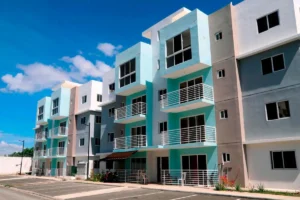
For an investor who wants a Caribbean base rather than a passport alone, real estate can make the residency strategy more practical. The country has established residential markets in destinations such as Punta Cana, Cap Cana, Las Terrenas and Puerto Plata, alongside the larger urban market in Santo Domingo.
For foreign buyers, buying property in the Dominican Republic can therefore be considered as part of a broader residency and lifestyle strategy rather than simply as an immigration transaction. Investors evaluating a purchase a property should still distinguish between the legal requirements for residency and the commercial merits of the asset itself.
The distinction from a donation-based citizenship program is straightforward. Capital committed to a Dominican property can potentially represent an actual asset that can be occupied, rented or sold, subject to the property’s legal and financial characteristics. That does not make every property a good investment, and rental returns or future appreciation should never be assumed without property-specific analysis.
Investors who intend to rent their property should also consider the operational side of ownership. In tourist-oriented markets, professional property management can become an important consideration, particularly for owners who will spend only part of the year in the country.
The initial research stage is equally important. A structured Dominican property search can help investors compare locations, property types and price levels before committing to a specific asset.
Investors should also separate immigration eligibility from investment performance. A property that satisfies the requirements for a particular residency category is not automatically a sound investment, just as a profitable property does not by itself guarantee citizenship.
A Second Home May Matter More Than a Second Passport
For many American investors, the practical value of Dominican residency may have less to do with international travel than with having a reliable place to spend time outside the United States. A Dominican residence can serve as a second home, retirement base or longer-term option for someone who wants to establish a meaningful connection with the Caribbean.
The country’s existing infrastructure also distinguishes it from destinations where the investment case is primarily tied to a small tourism economy. Santo Domingo offers a large urban environment, while the country’s major coastal markets combine tourism infrastructure with established residential communities and services used by both residents and international visitors.
This breadth is reflected in the Dominican Republic’s property market, which encompasses everything from urban apartments and family homes to resort-area condominiums and higher-end coastal developments. Investors should compare asking prices, rental prospects, location-specific demand and ownership costs rather than assuming that all parts of the country offer the same investment profile.
That combination is central to the Dominican model. The investor is not simply acquiring an immigration benefit; the underlying proposition is the ability to establish a genuine presence in a country with a substantial domestic economy and established international connections.
The Bottom Line for North American Investors
The Dominican Republic is better understood as a residency-and-investment destination than as a conventional Caribbean citizenship-by-investment jurisdiction. Its US$200,000 investor threshold provides a clearly defined entry point for qualifying investment residency, while other programs address retirees and people with foreign-source income.
For investors seeking a second Caribbean base, the attraction is therefore broader than the eventual possibility of naturalization. The country offers a functioning property market, major tourism destinations, a large domestic economy and established communities of foreign residents.
Anyone considering the strategy should treat immigration status, property selection, taxation and investment returns as separate questions and obtain current advice from qualified Dominican professionals before committing capital. The residency rules and naturalization requirements should be confirmed directly with the relevant authorities because meeting a financial threshold or residence period does not, by itself, guarantee citizenship.