 25°C
25°C

More Dominicans Are Choosing Mobile Wallets Over Physical Cards
Mobile payments continue to gain momentum in the Dominican Republic, with more than 2.2 million debit, credit, and prepaid cards now linked to digital wallets, reflecting consumers' growing preference for paying with smartphones instead of physical bank cards.


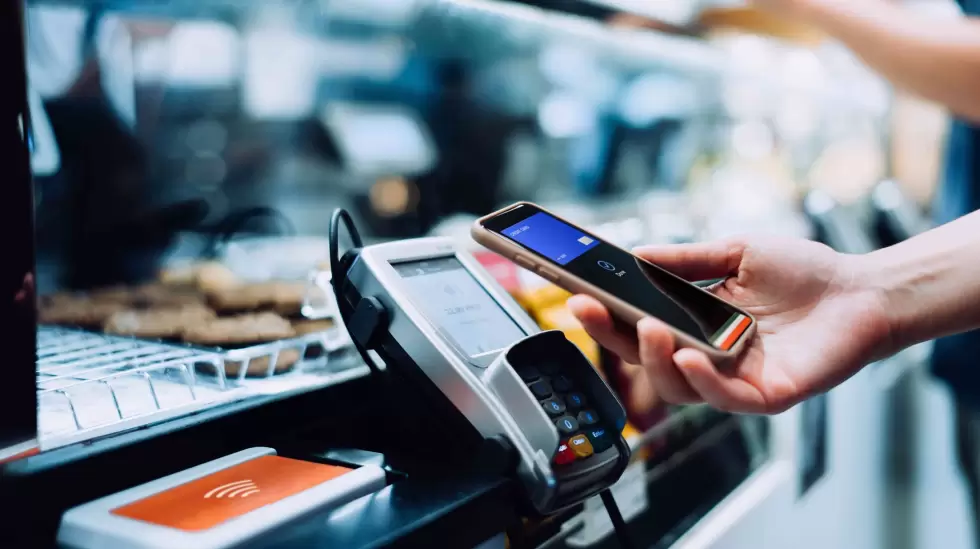
Consumers in the Dominican Republic are increasingly embracing mobile wallet payments, replacing traditional plastic cards with smartphones for everyday purchases. According to figures released by the Central Bank of the Dominican Republic (BCRD), more than 2.2 million payment cards had been registered on digital wallet platforms as of June 2026, highlighting the country’s steady shift toward digital payments.
The data show that debit cards account for the largest share of cards linked to mobile wallets, with 1,404,337 registrations, representing 63.4% of the total. Credit cards follow with 810,446 registrations, or 36.6%, while only 114 prepaid cards had been added to these platforms.
Mobile Payments Continue to Expand
The number of cards registered in digital wallets continues to rise. In June 2025, the BCRD reported 2,081,699 registered cards. Twelve months later, that figure had increased by 133,198 cards, representing annual growth of approximately 6.4%.
The trend reflects growing consumer confidence in contactless payment technologies, which allow users to complete purchases using smartphones or other compatible devices instead of carrying physical bank cards. Mobile wallets also offer added convenience by enabling customers to store multiple payment methods securely in a single application.
How Mobile Wallets Work
Digital wallets such as Apple Pay, Google Wallet, and solutions offered by financial institutions use tokenization technology, replacing a card’s actual number with an encrypted digital token during transactions. This approach helps reduce the exposure of sensitive payment information while allowing customers to make contactless purchases at compatible point-of-sale terminals.
In addition to in-store purchases, digital wallets can also be used for online shopping and, in some cases, public transportation, making them an increasingly versatile payment option as merchants continue expanding contactless payment infrastructure.
Digital Payments Gain Ground
The continued increase in mobile wallet adoption mirrors the broader digital transformation of the Dominican financial system. Banks and payment providers have expanded their digital services in recent years as consumers increasingly favor faster, more convenient, and secure payment methods.
While physical debit and credit cards remain widely used, the latest figures suggest that more Dominicans are choosing to keep those cards stored digitally on their smartphones, a trend that aligns with the global growth of contactless and mobile payment technologies.