 28°C
28°C

PUCMM Brings 14 Research Projects to CEICYT 2026
Pontificia Universidad Católica Madre y Maestra is presenting 14 student research projects at CEICYT 2026, showcasing Dominican innovation across artificial intelligence, health, engineering, sustainability and other fields.


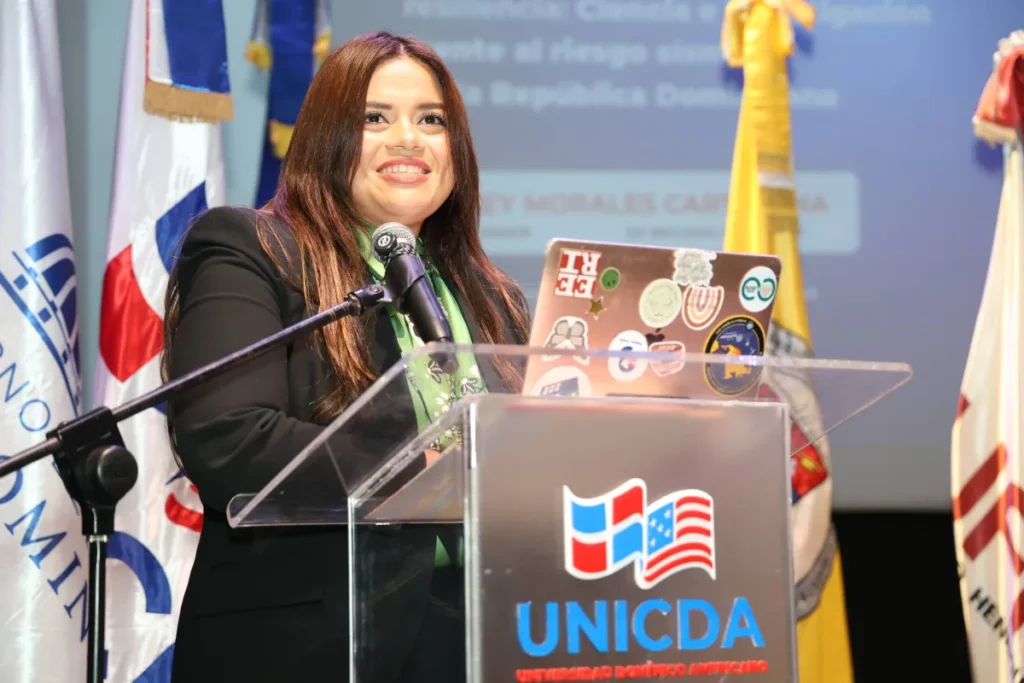
Pontificia Universidad Católica Madre y Maestra (PUCMM) is participating in the 11th Student Congress of Scientific and Technological Research (CEICYT 2026) with 14 projects developed by undergraduate students, bringing research in artificial intelligence, healthcare, engineering and other fields to a national forum focused on practical solutions.
The congress is being held at Universidad Domínico Americana (UNICDA) in Santo Domingo under the theme “Young Science with Real Impact.” The event seeks to strengthen scientific culture, encourage innovation and connect academic research with productive sectors in the Dominican Republic.
PUCMM Projects Span AI, Health and Engineering
PUCMM is represented by 22 students connected to the 14 research projects, which are being presented through oral and poster sessions. Their work covers health, technology and artificial intelligence, engineering, architecture and heritage, education and law.
The technology-related projects include research into artificial intelligence applied to education, mobility and body-posture classification. Other studies examine pediatric epilepsy, the risk of sarcopenia and burnout measurement, reflecting the range of issues being addressed by Dominican university researchers.
The delegation is also presenting research related to sustainable construction, including the use of cocoa shells in concrete blocks and recycled rubber in asphalt. Other projects focus on Dominican architectural and cultural heritage, while legal research examines modern dispute-resolution mechanisms in the criminal justice system and the legal implications of continuously broadcast reality television.
Together, the projects provide a snapshot of Dominican innovation emerging from university research, with students working on subjects that connect scientific knowledge with challenges affecting education, healthcare, infrastructure, technology and other areas of society.
CEICYT Connects Student Research With National Priorities
CEICYT 2026 brings together approximately 678 students and researchers, including authors and co-authors, from universities across the Dominican Republic. A total of 353 research projects qualified for presentation during the event.
Participating institutions include PUCMM, the Autonomous University of Santo Domingo (UASD), Universidad Federico Henríquez y Carvajal (UFHEC), the Technological Institute of Santo Domingo (INTEC), Universidad del Caribe (UNICARIBE), Universidad Abierta para Adultos (UAPA), Universidad APEC, Universidad Nacional Pedro Henríquez Ureña (UNPHU) and the ADRU Research Network (RIADRU).
The congress is intended not only as a platform for presenting academic work but also as a way to connect research with productive sectors and public policy. Some projects could eventually develop into sustainable business initiatives or contribute to solutions for specific challenges facing the country.
Rafael Santos Badía, minister of Higher Education, Science and Technology, announced that MESCyT will distribute RD$1 million among the strongest research projects as an incentive for young researchers participating in the 11th edition of the congress.
Researchers Highlight AI and Scientific Responsibility
AI was also a central theme during the opening sessions. Enrique A. Fernández Malla, rector of UNICDA, emphasized the importance of curiosity, critical thinking, innovation and scientific rigor in research, while also addressing the responsibilities that accompany the rapid development of artificial intelligence.
Fernández Malla stressed that AI can accelerate the way people think and work but cannot assume human intellectual or ethical responsibility. His remarks placed information verification and academic integrity alongside technological innovation as important elements of contemporary research.
The keynote address was delivered by Ashly Morales Cartagena, a geological engineer, Fulbright alumna and PUCMM professor. Her presentation, “From Risk Knowledge to Resilience: Science and Research in the Face of Seismic Risk in the Dominican Republic,” examined the country’s particular exposure to seismic hazards.
Morales Cartagena highlighted the importance of geological and seismic research in generating accurate data that can support updates to construction regulations. She also emphasized community contingency planning and evidence-based public policies for disaster-risk management.
During the presentation, she stated that more than 70% of construction in the Dominican Republic is informal, meaning it is carried out without seismic engineering design. The observation underscored the relationship between scientific research, construction practices and the country’s preparedness for earthquakes.
A National Platform for Young Researchers
By bringing together hundreds of students and researchers from universities across the country, CEICYT 2026 provides a national platform for presenting emerging research and connecting academic work with practical applications.
For PUCMM, the 14 projects presented at the congress cover a particularly broad range, from artificial intelligence and health research to sustainable materials, cultural heritage and legal questions. Their participation places undergraduate research within a wider effort to strengthen scientific and technological development in the Dominican Republic.