 26°C
26°C

How Green Leadership Is Reshaping Dominican Ecotourism
A study of 187 ecotourism companies in the Dominican Republic has found that environmentally focused leadership is positively associated with green creativity and organizational eco-innovation, while financial and other external incentives alone did not show a significant relationship with employees’ green creativity. Published in Business Strategy and the Environment, the research offers a detailed look at how sustainability can move from an environmental objective to an organizational capability—and why leadership, creativity, collaboration and workplace culture may matter as much as technology when Dominican tourism businesses attempt to innovate sustainably.


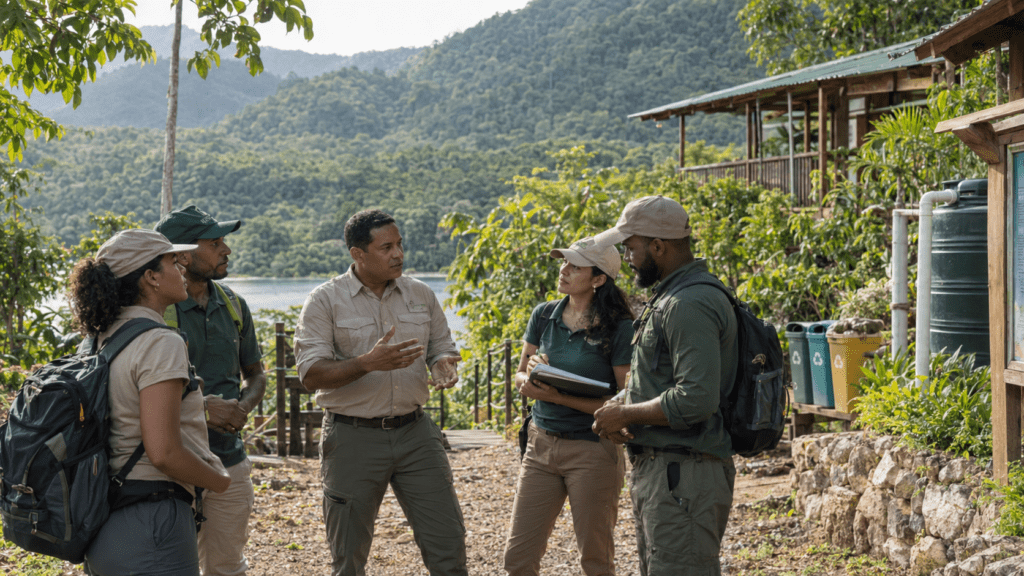
The Dominican Republic’s tourism industry is built around assets that are fundamentally environmental: beaches, forests, mountains, coral ecosystems, caves, rivers and protected landscapes. That creates an unusual business challenge. Tourism companies depend on natural resources while operating in an industry that can place pressure on those same resources.
A new scientific study examines one part of that challenge from inside the companies themselves. Rather than asking simply whether tourism businesses use environmentally friendly technologies, researchers investigated whether the way companies are led and how employees generate environmental ideas are associated with their ability to develop what the researchers call organizational eco-innovation.
The study, published in Business Strategy and the Environment in 2026 by Hayrold José Ureña-Espaillat of Universidad Nacional Pedro Henríquez Ureña and researchers from the Universidad Politécnica de Cartagena in Spain, surveyed 187 ecotourism companies in the Dominican Republic. Using partial least squares structural equation modeling, the researchers found statistically significant positive relationships between green transformational leadership and green creativity, between green creativity and organizational eco-innovation, and between green transformational leadership and eco-innovation. By contrast, green extrinsic motivation—motivation linked to recognition, salary, promotion and rewards—was not significantly associated with green creativity in the model.
The findings do not prove that a particular management style causes a company to become more sustainable. The research is based on survey data and statistical relationships among measured constructs. But it provides evidence for a potentially important proposition for Dominican ecotourism: sustainable innovation may depend not only on equipment, investment or regulation, but also on whether organizations create the leadership and creative conditions needed to turn environmental goals into new practices.
Why Green Leadership Matters in Ecotourism
The study focuses on green transformational leadership, a form of leadership centered on creating an environmental vision, encouraging employees to think about environmental solutions and inspiring them to participate in sustainability-oriented change.
The concept is more specific than simply having an environmentally conscious manager. In the questionnaire, green transformational leadership included indicators such as inspiring employees with environmental plans, providing a clear environmental vision and stimulating people to generate environmental ideas. These indicators were measured as part of a broader construct rather than as isolated questions.
The distinction is important for tourism businesses. An organization can purchase efficient equipment or introduce recycling programs without necessarily changing how employees solve problems. Transformational leadership, as examined in this study, concerns the organizational process behind those initiatives: how managers communicate environmental objectives, encourage participation and influence the way employees approach sustainability problems.
In an ecotourism business, those problems can take many forms. A company may need to reduce resource consumption, redesign a visitor experience, cooperate with local communities, improve environmental monitoring or find new ways of operating in ecologically sensitive areas. The study does not measure each of these activities separately. Instead, it examines whether broader organizational capabilities are related to eco-innovation.
What the Researchers Actually Studied
The research model contained four principal constructs: green transformational leadership (GTL), green extrinsic motivation (GEM), green creativity (GC) and organizational eco-innovation (OEI).
Green creativity referred to employees’ ability to generate, promote, develop and rethink new ideas intended to improve environmental performance. The questionnaire included indicators concerning new ways of achieving environmental goals, new green ideas, advocacy of those ideas and plans for implementing them.
Green extrinsic motivation represented external incentives. The study’s indicators included motivation associated with recognition, salary, promotion and demonstrating one’s capabilities to others. This allowed the researchers to distinguish motivation generated by external rewards from the broader leadership and creativity processes in the model.
Organizational eco-innovation was measured as a broader organizational outcome rather than simply the adoption of a new piece of technology. Its indicators included the use of applied environmental audits, cooperation with stakeholders and the presence of personnel responsible for environmental quality.
That definition is central to the study’s argument. Eco-innovation, in this framework, can include organizational systems and relationships as well as technical or operational changes. The researchers therefore treat sustainability innovation as something that can become embedded in how a company operates.
How the Study Was Conducted
The researchers used a quantitative survey design and applied a Likert-type questionnaire using a five-point response scale. The measurement instrument was tested in a pilot phase before the larger survey was administered. The researchers then used structural equation modeling based on the partial least squares method, commonly known as PLS-SEM, to test relationships among the constructs.
The sampling process was deliberately focused on established businesses. The researchers initially identified an ecotourism population and used a Delphi-based expert filtering process involving 22 expert profiles. From that process, 300 companies were selected across three broad groups: rural tourism and sports, nature experiences, and cultural heritage. The final survey contained complete responses from 187 companies, producing a reported response rate of 62%.
Only company directors or middle managers participated in the final survey. That choice gave the research access to people with knowledge of organizational management, but it also creates an important limitation: the study does not represent the views of every employee or external stakeholder involved in Dominican ecotourism.
The researchers also explicitly note that the sample focused on medium-sized and large companies. Small ecotourism businesses were excluded, meaning the results should not automatically be generalized to the entire sector.
Why PLS-SEM Was Used
PLS-SEM is a statistical method used to examine several relationships among variables at the same time. It is particularly useful when researchers are studying interconnected organizational concepts that cannot be represented by a single observable measurement.
In this case, the researchers wanted to examine a chain of relationships involving leadership, motivation, creativity and eco-innovation. Instead of treating each variable independently, the model allowed them to test whether the relationships proposed by the researchers were supported by the survey data.
The researchers assessed the reliability and validity of their measurement model before testing the hypotheses. They reported that the constructs met their criteria for internal consistency, convergent validity and discriminant validity. The analysis also used bootstrapping with 5,000 resamples and a 95% confidence level to estimate the statistical significance of the model’s path coefficients.
The model’s reported standardized root mean square residual, or SRMR, was 0.086. The authors interpreted that value as indicating an acceptable overall model fit.
The Main Findings: Leadership Was Consistently Important
The strongest relationship in the model involving green transformational leadership was its association with green extrinsic motivation. The reported path coefficient was β = 0.477, with a t-value of 5.138 and p = 0.000. The researchers therefore accepted their first hypothesis that green transformational leadership was positively associated with green extrinsic motivation.
Green transformational leadership was also positively associated with organizational eco-innovation, although the relationship was smaller: β = 0.228, with a t-value of 2.603 and p = 0.005. The study therefore supported its second hypothesis.
The relationship between green transformational leadership and green creativity was also statistically significant. The reported coefficient was β = 0.318, with a t-value of 2.274 and p = 0.012. This supported the third hypothesis.
In practical terms, the statistical pattern suggests that companies in the sample reporting stronger green transformational leadership also tended to report stronger green creativity and stronger organizational eco-innovation. It does not establish that leadership alone produced those outcomes. Because the research is based on survey relationships rather than a controlled experiment, causal claims would go beyond the evidence.
The Unexpected Result: Rewards Did Not Translate Into Creativity
The most revealing result may be the hypothesis that did not receive statistical support.
The researchers expected green extrinsic motivation to be positively related to green creativity. But the coefficient was only β = 0.141, with a t-value of 1.108 and p = 0.174. The researchers therefore rejected the fourth hypothesis.
In other words, the survey did not provide sufficient statistical evidence that employees who were motivated by external rewards, recognition, salary or promotion were more likely to demonstrate green creativity.
This does not mean that financial incentives are inherently ineffective in tourism businesses. The study did not test every possible incentive scheme, nor did it conduct an experiment comparing different compensation systems. It means that, within this particular model and sample, extrinsic motivation was not significantly associated with green creativity.
The authors suggest that cultural and organizational factors could help explain the result and call for further research using larger and more diverse samples. They also discuss the possibility that excessive reliance on external rewards could weaken some forms of intrinsic engagement with creative work. Those interpretations are presented by the researchers as explanations and avenues for future investigation rather than as conclusions demonstrated directly by the survey.
Green Creativity Was Closely Linked to Eco-Innovation
The strongest direct relationship with organizational eco-innovation was found for green creativity. The reported coefficient was β = 0.440, with a t-value of 5.120 and p = 0.000. The researchers accepted their fifth hypothesis that green creativity was positively associated with organizational eco-innovation.
This finding gives the study its central organizational message. Environmental innovation may require more than setting sustainability targets. Companies also need people capable of generating, refining, communicating and implementing ideas related to environmental performance.
The study goes further by describing green creativity as a mediating mechanism between leadership and eco-innovation. In simple terms, the statistical model suggests that leadership is connected to innovation partly through the organization’s creative capabilities.
Mediation should not be interpreted as proof of a simple cause-and-effect chain. It is a statistical model of relationships among variables. But it offers a useful way to think about how an environmental strategy can become an organizational practice: leadership can establish direction, employees can generate and develop ideas, and those creative capabilities can be associated with broader eco-innovative practices.
What Counts as Eco-Innovation in the Study?
The study’s definition is broader than the common image of a company buying solar panels, electric vehicles or energy-efficient machinery.
Organizational eco-innovation included environmental audits, stakeholder cooperation and dedicated environmental-quality personnel. These examples place organizational structure alongside technology and equipment.
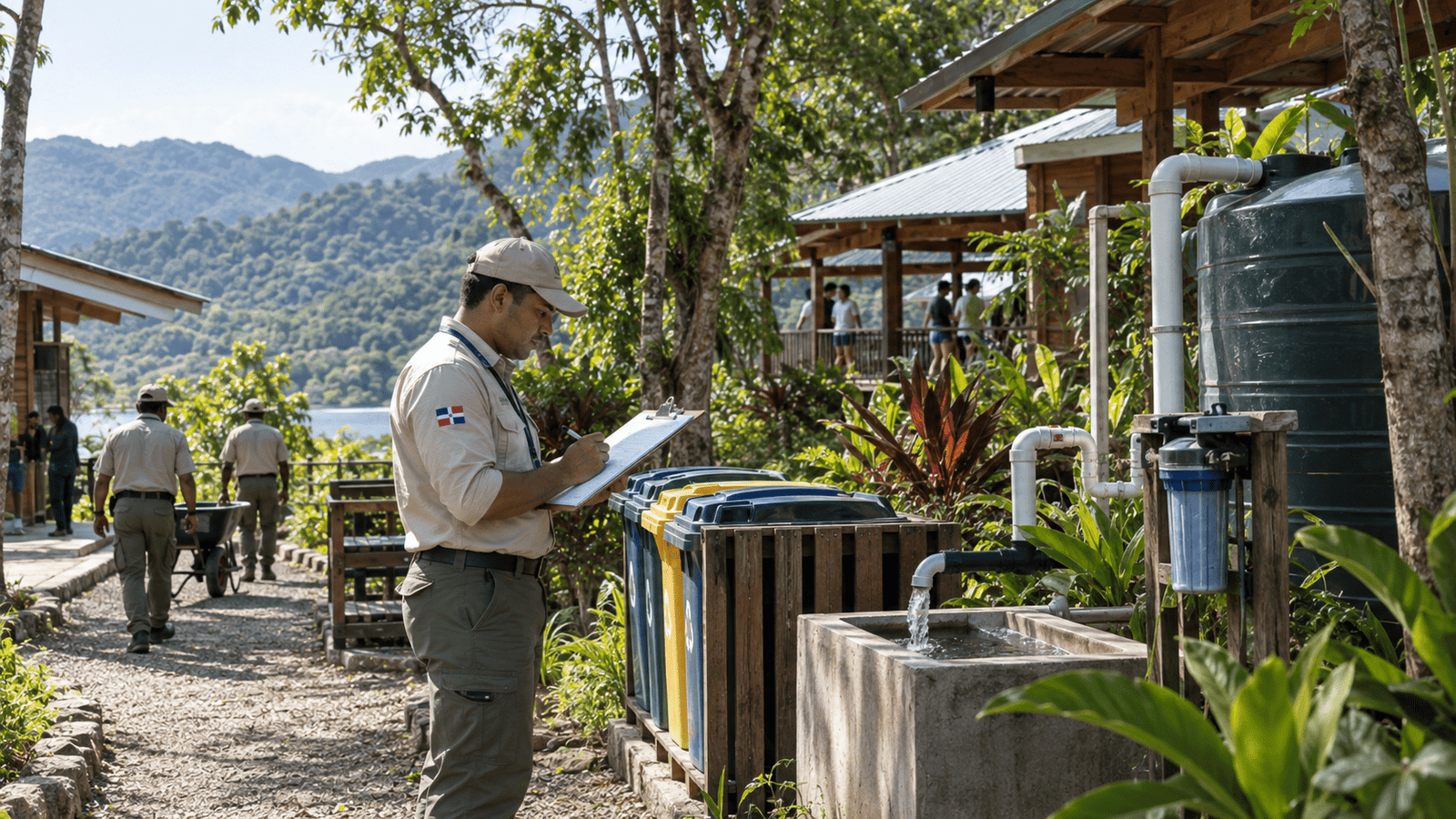
That perspective is particularly relevant to service industries. A tourism company does not manufacture a physical product in the same way as a factory. Its environmental performance can depend on how it manages visitors, employees, suppliers, communities and natural resources.
For that reason, innovation in ecotourism can involve changes in processes, management systems, services, partnerships and organizational behavior. The study’s framework captures some of these less visible forms of innovation.
Why the Findings Matter for the Dominican Republic
The Dominican Republic’s tourism economy gives these organizational questions considerable importance. According to official Central Bank data, the country received more than 11.2 million nonresident visitors in 2024, including approximately 8.5 million by air and 2.6 million by sea. Tourism revenue reached about US$10.97 billion that year. The National Statistics Office, or ONE, maintains long-term tourism datasets covering visitor arrivals, accommodation, occupancy, spending and other indicators.
Those figures describe the scale of tourism, not the scale of ecotourism specifically. The study should therefore not be interpreted as evidence that all tourism activity in the country is becoming more sustainable or that the 187 companies represent the entire Dominican tourism industry.
What the figures do show is why organizational sustainability has national relevance. Tourism operates at a scale large enough for decisions about energy, water, waste, transportation, land use, visitor management and community relationships to have consequences beyond individual businesses.
The Dominican Ministry of Tourism has also published work addressing sustainable tourism, including initiatives involving environmental protection, community-based tourism, resource conservation and reductions in resource consumption. That policy context is consistent with the broader problem examined by the scientific study: the challenge is not simply attracting visitors, but maintaining the environmental and social assets on which tourism depends.
The Country’s Natural Assets Make the Question More Urgent
Ecotourism is especially dependent on the quality of natural and cultural environments. Forests, wetlands, coastlines, marine habitats, mountains and protected areas are not merely scenery for visitors; they are part of the underlying resource base that makes many nature-oriented tourism experiences possible.
The Dominican Republic has a large protected-area system and a wide range of ecosystems. Government and international conservation initiatives increasingly emphasize the need to combine biodiversity protection with sustainable use and local economic opportunities.
The significance of the research is therefore not limited to individual businesses. If eco-innovation is partly an organizational capability, then sustainability policies may need to consider how companies develop management skills, employee creativity, stakeholder relationships and environmental knowledge—not only whether businesses purchase specific technologies.
What the Ministry of Tourism Context Adds
The Ministry of Tourism’s sustainability work provides an important policy backdrop to the study. A ministry presentation on sustainability in the tourism sector has highlighted efforts involving sustainable community tourism, environmental practices in hotels, conservation and resource-efficiency measures.
International organizations have also worked with Dominican authorities on resource-efficient tourism. The United Nations Environment Programme, for example, documented a roadmap developed with Dominican institutions to address issues including greenhouse-gas emissions, food waste, energy use and single-use plastics in accommodation.
These initiatives provide context rather than evidence for the scientific study’s statistical findings. The study itself did not evaluate government sustainability programs or estimate their effectiveness. Instead, its contribution is to examine the organizational mechanisms inside ecotourism businesses that may be associated with eco-innovation.
Leadership May Matter More Than a Sustainability Slogan
One implication of the research is that environmental goals may be difficult to translate into innovation if they remain disconnected from everyday management.

A sustainability strategy can be written into a corporate plan, but employees still have to identify problems, propose solutions, cooperate with colleagues, communicate with communities and implement new practices. The study’s findings suggest that leadership and creativity are important components of that organizational process.
The researchers therefore argue for management approaches that combine clear environmental direction with opportunities for employees to participate creatively. They also emphasize collaboration with external stakeholders, including communities and other organizations.
For Dominican ecotourism companies, this could mean treating environmental knowledge as a business capability rather than as a separate compliance function. It could also mean giving employees structured opportunities to propose and test improvements instead of relying primarily on financial rewards.
Why External Incentives Are Not the Whole Answer
The study’s finding on extrinsic motivation deserves particular attention because financial incentives are an intuitive management tool. If a company wants employees to save resources or develop environmental improvements, rewarding those behaviors might appear to be an obvious solution.
But the research found no statistically significant relationship between green extrinsic motivation and green creativity. The authors argue that creativity may depend more heavily on organizational culture, participation, knowledge and intrinsic engagement than on external rewards alone.
This should not be turned into the opposite oversimplification. The study does not establish that bonuses or promotions damage creativity, nor does it demonstrate that intrinsic motivation is always superior. Its evidence is narrower: the hypothesized positive relationship between the measured form of extrinsic motivation and green creativity was not statistically supported in this sample.
That distinction matters for managers. The practical lesson is not necessarily to eliminate incentives. It is to avoid assuming that incentives alone can create the organizational conditions required for sustainable innovation.
A Hybrid Management Model May Be More Realistic
The researchers propose a hybrid approach that combines leadership, collaboration, participation, training and selective incentives. Their argument is that companies should create an environment in which employees can develop and test ideas while ensuring that environmental objectives remain aligned with business strategy.
Such an approach could be particularly relevant to ecotourism because environmental challenges rarely belong to one department. A visitor-experience team may understand customer behavior; operations staff may understand resource use; local communities may possess knowledge of the surrounding environment; and managers may control investment and strategy.
Innovation can emerge when those different forms of knowledge interact. The study emphasizes trust and collaboration as part of that process, arguing that relationships inside and outside the company can create conditions for new ideas to develop.
What the Study Says About Smaller Businesses
This is one area where caution is particularly important. Ecotourism in the Dominican Republic includes businesses and community initiatives that vary considerably in size and organizational structure, but the study deliberately concentrated on medium-sized and large companies.
The researchers acknowledge that excluding small firms limits the generalizability of their findings. Small businesses may have different leadership structures, fewer formal environmental systems and different access to finance, training and government programs.
Consequently, it would be inappropriate to conclude from this study that the same statistical relationships necessarily apply to every ecotourism operator in the country.
That limitation also points toward a useful next step for research. Studies involving smaller enterprises, frontline employees, communities, suppliers and public-sector stakeholders could reveal whether the organizational mechanisms identified in this research operate similarly across the wider ecotourism economy.
The Study’s Other Important Limitation: Self-Reported Data
The research relies on questionnaire responses from company directors and middle managers. Self-reported data can provide valuable information about how organizations perceive their leadership, creativity and environmental practices, but they can also introduce response bias.
A manager’s assessment of a company’s environmental leadership is not necessarily identical to the assessment of employees, customers or independent observers. The researchers explicitly recognize this limitation and recommend using additional data sources in future studies.
The study is also observational rather than experimental. There was no controlled intervention in which some companies adopted a particular leadership system and others did not. As a result, the statistical associations should not be interpreted as proof that changing leadership would automatically produce a specified increase in eco-innovation.
What This Means for Sustainable Tourism Policy
The research nevertheless offers a useful policy perspective. Sustainable tourism policies often focus on infrastructure, environmental standards, protected areas, financing or technology. Those tools remain important, but the study suggests that organizational capabilities deserve attention as well.
Training programs could, for example, place greater emphasis on environmental problem-solving, collaborative creativity and management skills. Public support for ecotourism could also encourage partnerships among companies, communities, universities and local authorities.
These are implications of the study rather than tested policy interventions. The researchers do not demonstrate that a specific training program or government policy would produce a measurable increase in eco-innovation. Their evidence instead supports the broader idea that leadership, creativity and organizational relationships are relevant components of sustainable business development.
Why This Is More Than a Tourism Management Study
The study’s wider contribution is its attempt to redefine eco-innovation. Instead of treating innovation primarily as a new technology or a research-and-development expenditure, the researchers describe it as an organizational capability that can emerge from leadership, creativity, knowledge and relationships.
That interpretation is particularly relevant to service businesses and emerging economies, where technological resources may not always be the only constraint on innovation.
For the Dominican Republic, it offers a different way of viewing sustainability. A tourism business does not necessarily need to wait for a new technology before it can innovate environmentally. Organizational changes—such as stronger stakeholder cooperation, environmental audits, dedicated environmental responsibilities and employee participation—can also form part of an eco-innovation strategy.
Again, this is the conceptual interpretation advanced by the researchers, not evidence that any one of these practices will independently produce better environmental outcomes.
What Visitors Should Take From the Research
For international visitors, the study offers a useful reminder that sustainable tourism is not simply a question of choosing a destination marketed as environmentally friendly.
The environmental performance of tourism depends on how businesses operate and how effectively sustainability becomes part of their everyday decision-making. That includes the less visible organizational processes behind a visitor experience.
The study does not evaluate individual hotels, tour operators or attractions, and it should not be used to label particular companies as sustainable or unsustainable. Its contribution is at the sector level: it identifies organizational relationships that may help explain how ecotourism firms develop environmental innovation.
Why the Findings Matter for the Dominican Tourism Model
The Dominican Republic has built one of the Caribbean’s largest tourism economies, with visitor numbers and tourism revenues reaching record levels in recent years. Official statistics show both the scale of the industry and its importance to the national economy.
That scale makes the question of sustainability increasingly organizational. As tourism expands, environmental management cannot depend only on individual projects or isolated green initiatives. It becomes a question of whether businesses can repeatedly identify environmental challenges, generate solutions and integrate those solutions into their operations.
The study suggests that leadership and creativity are part of that capacity. It also provides a warning against assuming that financial incentives automatically generate the creative behavior needed to produce sustainable innovation.
For policymakers, business leaders and researchers, the most useful message may therefore be relatively simple: sustainable tourism is not only about what companies buy or install. It is also about how they are managed, how employees participate, how knowledge moves through organizations and how businesses cooperate with the communities and institutions around them.
Frequently Asked Questions
What did the Dominican ecotourism study investigate?
The study examined relationships among green transformational leadership, green extrinsic motivation, green creativity and organizational eco-innovation in Dominican ecotourism companies. It sought to understand how environmental leadership and creative organizational processes are associated with sustainable innovation.
How many companies were included?
The final sample consisted of 187 ecotourism companies. The study focused on medium-sized and large firms and reported a 62% response rate among the companies invited to participate. Company directors and middle managers provided the questionnaire responses.
What is green transformational leadership?
In the study, green transformational leadership describes leadership that provides an environmental vision, inspires employees around environmental plans and encourages them to think about environmental ideas. It is measured as a multidimensional organizational construct rather than as a single leadership behavior.
What is green creativity?
Green creativity refers to the generation, promotion, development and refinement of new ideas intended to improve environmental performance. In the study, it was measured through several indicators related to generating and implementing green ideas.
Did financial rewards increase green creativity?
Not according to the statistical relationship tested in this study. The relationship between green extrinsic motivation and green creativity was not statistically significant, with β = 0.141 and p = 0.174. This does not prove that financial incentives are ineffective in general; it means the study did not find sufficient evidence for the specific relationship it tested.
What was the strongest relationship involving eco-innovation?
The study reported a positive relationship between green creativity and organizational eco-innovation, with β = 0.440, t = 5.120 and p = 0.000. Green transformational leadership also had a statistically significant direct relationship with eco-innovation, although the coefficient was smaller at β = 0.228.
Does the study prove that green leadership causes eco-innovation?
No. The research identifies statistically significant relationships within survey data analyzed using PLS-SEM, but it was not a controlled experiment. The findings support associations in the study’s model and do not establish a simple causal effect.
Can the findings be applied to every Dominican tourism business?
Not automatically. The sample concentrated on medium-sized and large ecotourism firms, and the researchers explicitly identify the exclusion of small businesses as a limitation. The findings should therefore not be generalized to every tourism or ecotourism business in the Dominican Republic.
Why is the research relevant to the Dominican Republic?
The country has a large tourism economy that depends heavily on natural and cultural assets. The study provides evidence that organizational factors—particularly environmental leadership and creativity—are associated with eco-innovation among the ecotourism companies examined. That offers a useful complement to policy approaches focused on environmental regulation, conservation and technology.
Conclusion
The Dominican Republic’s transition toward more sustainable tourism is not simply a technological challenge. Research involving 187 ecotourism companies suggests that what happens inside organizations also matters: green transformational leadership was positively associated with green creativity and organizational eco-innovation, while the external rewards represented by green extrinsic motivation were not significantly associated with green creativity in the study’s model.
The evidence should be interpreted with appropriate limits. The study does not prove causation, does not represent every Dominican tourism business and relies on self-reported responses from managers. Yet its contribution is substantial because it moves the discussion of eco-innovation beyond equipment and technology toward leadership, organizational culture, employee creativity and stakeholder relationships.
For a country whose tourism economy depends heavily on environmental and cultural assets, that distinction matters. Sustainable tourism ultimately requires businesses capable of adapting their practices as environmental pressures and visitor expectations change. The study suggests that the capacity to innovate may be built not only through investment, but also through the way organizations lead people, develop ideas and connect with the communities and environments around them.
The broader lesson is therefore not that green leadership guarantees sustainable tourism. It is that sustainability can become a business capability only when environmental goals are connected to the people, knowledge, creativity and organizational systems responsible for turning those goals into action.