 25°C
25°C

Dominican Peso Gains 8.1% as Dollar Inflows Rise
The Dominican peso has appreciated 8.1% against the U.S. dollar since the end of 2025, with the Central Bank attributing the move mainly to stronger foreign-currency inflows from exports, tourism, remittances and foreign direct investment.


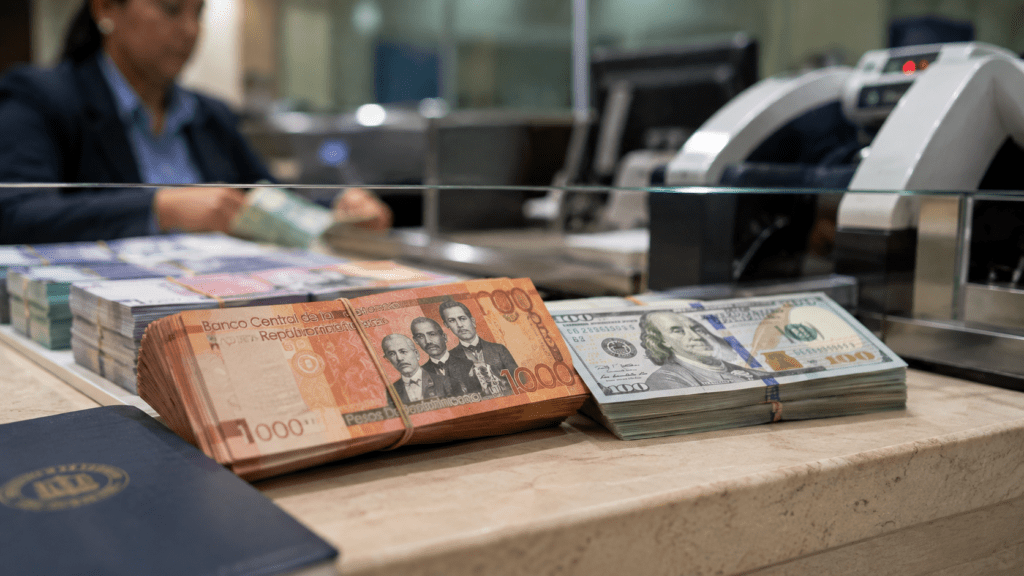
The Dominican peso has strengthened significantly against the U.S. dollar in 2026, reflecting a larger supply of foreign currency entering the economy rather than a policy aimed at maintaining a particular exchange-rate level. The Central Bank of the Dominican Republic (BCRD) says the increase has been driven mainly by stronger inflows from the country’s export, tourism, remittance and investment sectors.
The currency has gained 8.1% against the dollar since the end of 2025 and is up 5.4% year over year. The movement has prompted debate among analysts and in the local media about its causes and potential effects, particularly as the peso’s appreciation has occurred alongside a more flexible exchange-rate framework.
Exports and Tourism Lead a Stronger Dollar Supply
During the first half of 2026, the Dominican Republic generated substantial foreign-currency revenues across several major sectors. Exports reached $8.746 billion, while tourism generated $6.716 billion. Remittances totaled $6.291 billion and foreign direct investment contributed another $3.277 billion.
Together, those four sources produced roughly $2.8 billion more than during the same period of 2025. The additional supply of dollars was enough to offset increased demand associated with a higher petroleum import bill, according to the BCRD.
For businesses and investors, the exchange-rate movement highlights the importance of the Dominican Republic’s external revenue base. Tourism, exports, remittances and foreign investment provide large and recurring flows of foreign currency, reducing pressure on the peso when dollar supply expands faster than demand.
Inflation Remains the Central Bank’s Main Policy Anchor
The BCRD has emphasized that the peso’s value is not the primary target of monetary policy. Since adopting an inflation-targeting framework in 2012, the central bank has focused on keeping inflation close to 4%, with a tolerance range of one percentage point above or below that target.
Under this framework, exchange-rate movements are allowed to respond to economic conditions rather than being held at a predetermined level. The BCRD says average year-over-year inflation since the system was introduced has remained at 4.0%, while both inflation and its volatility have declined. That record has helped shift economic expectations toward the inflation target rather than toward movements in the dollar.
This approach also gives the exchange rate a larger role in absorbing external shocks. A stronger or weaker peso can respond to changes in international prices, capital flows and demand for foreign currency without requiring monetary policy to defend a fixed exchange-rate level.
Greater Exchange-Rate Flexibility
The Dominican Republic’s exchange-rate framework has also become more flexible. The International Monetary Fund reclassified the country’s de facto exchange-rate arrangement as floating in 2025, reflecting a greater role for market forces and a more limited role for central-bank intervention.
In practical terms, the peso’s value is primarily determined by supply and demand for foreign currency. The BCRD can still intervene when market movements become excessively volatile and threaten inflation or financial stability, but those interventions are not intended to establish a specific exchange rate.
The central bank says it purchased $415 million in foreign currency during 2026 while making no spot-market sales. The figures are being cited by the institution to reject claims that direct dollar sales have been responsible for the peso’s current appreciation.
What the Stronger Peso Means for the Economy
A stronger peso can reduce the local-currency cost of imported goods and inputs, including petroleum, while potentially creating different conditions for exporters and businesses that earn revenue in dollars. The overall effect therefore depends on how companies and consumers are exposed to foreign-currency transactions.
For the Dominican economy, the BCRD argues that the recent appreciation is broadly consistent with stronger foreign-currency fundamentals. The increase in tourism receipts, remittances, exports and foreign investment has expanded the supply of dollars at a time when the exchange rate is being allowed greater flexibility.
The central bank expects inflation to remain within its 4% target plus or minus one percentage point through the end of 2026. It also projects continued strength in the activities generating foreign exchange and estimates a current-account deficit of about 1.3% of gross domestic product, with foreign direct investment expected to provide broad financing for that gap.
The BCRD said it will continue monitoring international conditions and the foreign-exchange market while adjusting monetary policy when necessary. Its stated priority remains preserving price stability, ensuring the foreign-exchange market functions effectively and maintaining overall macroeconomic stability as the peso responds to changing economic conditions.