 22°C
22°C

DR-CAFTA Explained: What It Means for the Dominican Republic
The Dominican Republic-Central America-United States Free Trade Agreement, commonly known as DR-CAFTA or CAFTA-DR, is the trade framework that connects the Dominican Republic, the United States and five Central American economies through preferential market access and common rules. For the Dominican Republic, its importance goes well beyond lower tariffs: the agreement shapes the conditions under which goods are exported and imported, establishes rules for investment and services, supports regional supply chains and gives Dominican producers preferential access to the U.S. market, while also exposing domestic businesses to greater competition.


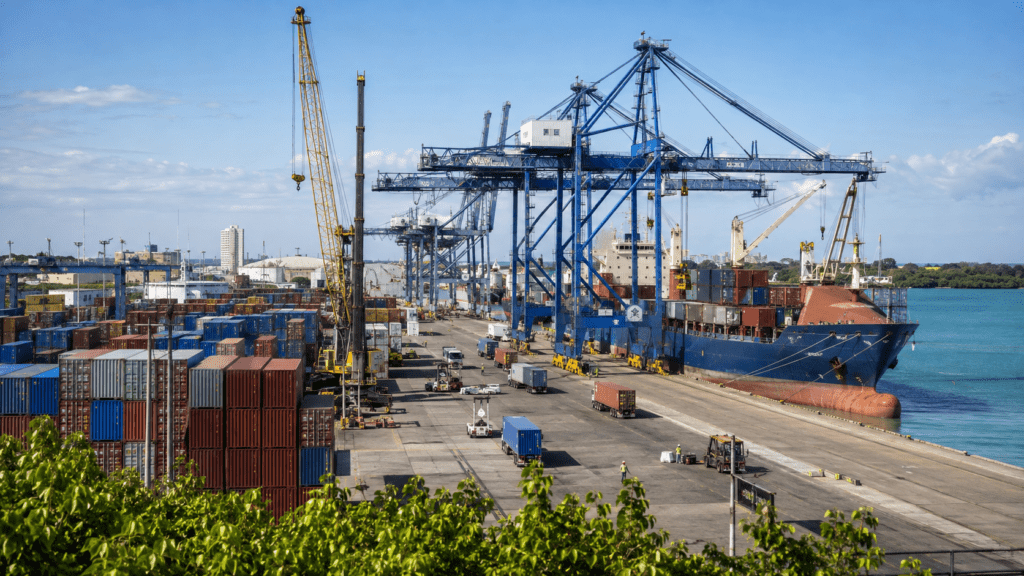
DR-CAFTA is one of the most important economic agreements governing the Dominican Republic’s relationship with the United States and Central America. Signed in 2004 and implemented for the Dominican Republic on March 1, 2007, it substantially liberalized trade in goods and services while establishing rules covering customs, investment, government procurement, telecommunications, electronic commerce, intellectual property, labor and environmental protection. The Office of the United States Trade Representative identifies the agreement as a framework for stronger trade and investment ties among the participating economies.
What Is DR-CAFTA?
DR-CAFTA is a free trade agreement between the United States, the Dominican Republic, Costa Rica, El Salvador, Guatemala, Honduras and Nicaragua. The agreement is sometimes called CAFTA-DR in U.S. government documents and DR-CAFTA in other contexts; both names refer to the same agreement. It expanded the original U.S.-Central America Free Trade Agreement by bringing the Dominican Republic into the framework.
The agreement was signed on August 5, 2004. It subsequently entered into force on different dates as each country completed its domestic implementation requirements: El Salvador on March 1, 2006; Honduras and Nicaragua on April 1, 2006; Guatemala on July 1, 2006; the Dominican Republic on March 1, 2007; and Costa Rica on January 1, 2009.
It is important to understand that DR-CAFTA is not simply a treaty that removes import duties. Its 22 chapters establish a broader set of commercial rules. The agreement covers market access for goods, rules of origin, customs administration, sanitary and phytosanitary measures, technical barriers to trade, trade remedies, government procurement, investment, services, financial services, telecommunications, electronic commerce and intellectual property, among other areas.
Which Countries Are Part of DR-CAFTA?
| Participant | Role in the Agreement | Entry Into Force |
|---|---|---|
| United States | Major trading partner and agreement participant | 2006 |
| Dominican Republic | Caribbean participant | March 1, 2007 |
| Costa Rica | Central American participant | January 1, 2009 |
| El Salvador | Central American participant | March 1, 2006 |
| Guatemala | Central American participant | July 1, 2006 |
| Honduras | Central American participant | April 1, 2006 |
| Nicaragua | Central American participant | April 1, 2006 |
The Dominican Republic is therefore part of a trade framework that links it not only to its largest nearby commercial partner, the United States, but also to five Central American economies. This regional dimension matters because companies can organize production, sourcing and distribution across participating countries while taking account of the agreement’s rules of origin and other requirements.
How Does DR-CAFTA Work?
At its simplest, DR-CAFTA works by giving qualifying goods and services preferential treatment when they move between participating countries. The most visible benefit is the reduction or elimination of tariffs, but preferential treatment depends on compliance with the agreement’s rules.
A Dominican exporter cannot automatically claim a zero tariff in the United States merely because the product was shipped from the Dominican Republic. The product must satisfy the relevant rules of origin, and the importer must have the documentation or certification needed to support the preferential claim. The agreement contains product-specific origin rules, while customs authorities can verify whether a product actually qualifies.
The basic process can be understood in four stages:
- Classification: The product is identified under the relevant Harmonized System tariff classification.
- Origin determination: The producer or exporter establishes whether the product meets the applicable DR-CAFTA rule of origin.
- Certification: The necessary information supporting the preferential claim is provided to the importer or customs authority.
- Preferential treatment: If the requirements are satisfied, the product receives the tariff treatment established by the agreement.
For U.S. goods entering the Dominican Republic, U.S. exporters and Dominican importers likewise need to ensure that the products meet the relevant origin requirements before claiming the preference. The Dominican General Customs Directorate can require supporting certification.
How DR-CAFTA Changed Tariffs
The central economic feature of DR-CAFTA is tariff liberalization. The agreement established schedules under which tariffs on qualifying products were reduced or eliminated over time rather than necessarily becoming zero on every product immediately.
For the Dominican Republic, most U.S. non-agricultural goods became duty-free under the agreement by January 1, 2015. Agricultural liberalization followed different schedules for particular products. The U.S. Trade Representative reported that the Dominican Republic agreed to eliminate its tariffs on rice, chicken leg quarters and certain dairy products on January 1, 2025, although specific measures and market-access arrangements can still affect individual products.
As a result, the phrase “free trade” does not mean that every import automatically enters the Dominican Republic without any tax or regulatory requirement. Tariffs are only one component of the import cost. Other taxes, such as the Dominican selective consumption tax on certain goods, are separate from the DR-CAFTA tariff preference.
The distinction is important for businesses. A product may qualify for a preferential tariff while still being subject to other taxes, sanitary requirements, permits, technical standards or customs procedures.
What Are the Rules of Origin?
Rules of origin determine whether a product is sufficiently connected to one or more DR-CAFTA countries to receive preferential treatment. They prevent a company from simply importing a product from a non-member country, making minimal changes in the Dominican Republic and then claiming that the finished product is Dominican for purposes of the agreement.
The rules vary according to the product. Some rely on where materials were produced, while others use tariff changes, regional value requirements or product-specific criteria. The agreement includes an extensive set of product-specific rules in Annex 4.1.
Textiles and apparel illustrate why these rules can be particularly important. DR-CAFTA generally uses a yarn-forward approach for qualifying textile and apparel products, meaning that yarn production and subsequent operations such as fabric formation and apparel assembly generally need to take place within the United States or the DR-CAFTA region, subject to specified exceptions.
For Dominican manufacturers, this can turn the agreement into more than a tariff benefit. The origin rules can influence where companies buy fabric, components, packaging and other inputs, and therefore affect the design of regional supply chains.
DR-CAFTA and Dominican Exports to the United States
The United States is the most important external market connected to DR-CAFTA for the Dominican Republic. Preferential access gives Dominican exporters a competitive advantage when their products satisfy the agreement’s requirements, because qualifying goods can enter the U.S. market under the applicable preferential tariff rather than the normal tariff treatment for goods from countries without the same agreement.
The commercial relationship is substantial. U.S. goods and services trade with the Dominican Republic totaled an estimated $34.2 billion in 2025, according to the U.S. Trade Representative. U.S. goods exports to the Dominican Republic were about $12.9 billion, while U.S. goods imports from the Dominican Republic were about $7.6 billion. Services trade was even larger, with U.S. services imports from the Dominican Republic reaching an estimated $9.9 billion in 2025.
These figures should not be interpreted as trade created solely by DR-CAFTA. Geographic proximity, tourism, migration, consumer preferences, production costs and other economic factors also shape the bilateral relationship. The agreement is one important institutional foundation within that larger relationship.
What Does the Agreement Mean for Dominican Imports?
DR-CAFTA benefits Dominican consumers and companies by making many qualifying goods from the United States and other participating countries less expensive to import than they would be under higher non-preferential tariffs. This can reduce the cost of machinery, equipment, components, agricultural inputs and consumer products.
Lower import barriers can also improve the competitiveness of Dominican businesses. A manufacturer that can obtain machinery or intermediate inputs at a lower tariff cost may be able to produce more efficiently. A hotel can gain easier access to imported equipment, while a food processor may benefit from preferential access to eligible agricultural inputs.
The agreement also increases competitive pressure. Domestic producers that previously operated behind higher tariff barriers may face stronger competition from imported goods. For consumers, that can mean greater choice and competitive pricing; for less competitive domestic businesses, it can create pressure to reduce costs, improve productivity or differentiate their products.
In practical terms, DR-CAFTA therefore creates both trade creation opportunities and adjustment pressures. The economic effect depends heavily on the sector and on whether local businesses can take advantage of cheaper inputs and larger markets while competing with imports.
Access to the U.S. Market
For the Dominican Republic, preferential access to the United States is particularly valuable because the U.S. market is large, geographically close and integrated with Dominican business and consumer networks. U.S. government trade data describe the Dominican market as relatively accessible to American companies and emphasize the strength of the countries’ geographic, commercial and personal ties.
The agreement can make the Dominican Republic more attractive as a manufacturing and distribution location for companies seeking access to the United States. This is especially relevant to industries where transport time, supply-chain responsiveness and proximity to customers matter.
Free trade zone manufacturing is an important part of this equation. The Dominican Republic has developed export-oriented manufacturing activities in sectors including apparel, medical devices and other products. DR-CAFTA can strengthen the case for locating production in the country when the resulting products meet the agreement’s origin requirements and the company can compete on cost, quality and logistics.
Access to Central American Markets
DR-CAFTA also gives Dominican companies preferential access to the five participating Central American economies: Costa Rica, El Salvador, Guatemala, Honduras and Nicaragua. This is strategically different from simply having access to the United States.
Central America can serve as a regional market for Dominican products and as part of a broader production network. A company may source certain inputs in one participating country, manufacture or process them in another and sell the resulting product within the region, provided the applicable origin and other requirements are met.
The agreement therefore supports regional economic integration. Its rules cover not only tariffs but also customs procedures, technical barriers, services, investment and other areas that influence the cost and predictability of cross-border business.
DR-CAFTA and Foreign Investment
Investment is another major part of the agreement. DR-CAFTA contains provisions intended to establish rules for investors and investments among the participating economies. The agreement’s investment chapter sits alongside provisions covering services, financial services, telecommunications and other commercial activities.
For the Dominican Republic, this can matter because an investor is not necessarily interested only in selling inside the local market. A company may consider the country as a production platform from which to serve the United States or other DR-CAFTA markets.
The U.S. Department of Commerce identifies DR-CAFTA membership as an advantage for foreign investors in the Dominican Republic. It also notes that tourism, real estate, telecommunications, free trade zones, mining and energy have attracted significant foreign investment.
However, the agreement should not be treated as a guarantee that investment will arrive. Investors also consider electricity costs and reliability, infrastructure, labor availability, taxation, regulation, judicial effectiveness, customs performance and the broader business environment. U.S. government assessments continue to identify concerns involving corruption, rule of law and administrative inefficiencies as factors that can affect investment decisions.
Services, Investment and Digital Commerce
One of the less visible aspects of DR-CAFTA is that it extends well beyond merchandise. The agreement contains provisions on cross-border trade in services, financial services, telecommunications and electronic commerce.
This matters to a modern economy because international trade increasingly involves services and digital transactions rather than only containers of physical goods. Telecommunications rules, for example, can affect the competitive environment for companies providing communications services, while electronic commerce provisions establish a framework for digital commercial activity.
For the Dominican Republic, these provisions broaden the potential value of the agreement to sectors such as business services, communications, technology and finance. They also mean that the agreement’s commercial significance cannot be measured solely by customs duties collected on imported goods.
DR-CAFTA and Textiles and Apparel
Textiles and apparel have a particularly close relationship with the agreement because production can be organized across several participating economies. The agreement provides duty-free treatment for qualifying textile and apparel products while linking that treatment to detailed rules of origin.
The yarn-forward rule encourages manufacturers to source qualifying yarn and fabric within the United States or the DR-CAFTA region. This creates opportunities for regional supply chains but can also constrain sourcing choices when a desired input is not available within the eligible supply base. The agreement includes mechanisms for certain materials that are not commercially available in the region and provides other specific exceptions.
For the Dominican Republic, the opportunity is therefore two-sided: companies can use preferential access to compete in the U.S. market, but they must design their production and sourcing processes carefully enough to satisfy the applicable origin requirements.
Main Opportunities for the Dominican Republic
DR-CAFTA creates several structural opportunities for the Dominican economy. The most important is the ability to combine preferential market access with the country’s geographic position in the Caribbean.
- Export growth: Dominican producers can reach the U.S. and participating Central American markets under preferential conditions when their products qualify.
- Manufacturing investment: Export-oriented companies can consider the Dominican Republic as a production base serving a large nearby market.
- Lower input costs: Preferential treatment can reduce the tariff cost of qualifying machinery, components, raw materials and other imports.
- Supply-chain diversification: Companies seeking alternatives to distant manufacturing locations can consider the Dominican Republic and the wider DR-CAFTA region.
- Services expansion: Rules covering services, telecommunications and electronic commerce broaden the agreement’s relevance beyond physical goods.
- Regional integration: Dominican businesses gain a framework for commercial relationships with five Central American economies as well as the United States.
The opportunity is strongest when the Dominican Republic can combine tariff preferences with advantages such as proximity to the U.S. market, reliable logistics, competitive production, skilled labor and efficient customs procedures.
Main Challenges and Limitations
Preferential market access does not remove every obstacle to international trade. Companies must still comply with customs rules, product standards, sanitary requirements, labeling regulations and other non-tariff measures. The agreement itself contains provisions dealing with technical barriers and sanitary and phytosanitary measures, but compliance remains a practical responsibility for exporters and importers.
U.S. government assessments have also identified implementation problems in the Dominican market, including agricultural import permits and sanitary registration procedures for some products. Such requirements can create delays or additional costs even where the underlying tariff is zero.
Another challenge is competition. Lower trade barriers benefit exporters, but they also expose domestic businesses to competing products from other DR-CAFTA countries and the United States. Businesses that cannot improve productivity or quality may find the new competitive environment difficult.
Finally, rules of origin can be technically demanding. A company that misunderstands the origin requirement may assume that a product qualifies for preferential treatment when it does not. This can lead to unexpected duties, customs disputes or the loss of the preference.
DR-CAFTA Is Not the Same as Duty-Free Trade for Everything
One of the most common misconceptions about DR-CAFTA is that every product crossing a participating country’s border is automatically exempt from tariffs and other charges. That is not how the agreement works.
Preferential treatment is conditional. The product must fall within the agreement’s coverage, satisfy the applicable rules of origin and meet the relevant procedural requirements. In addition, taxes and regulatory requirements outside the tariff preference may still apply.
The distinction is particularly important for businesses calculating landed costs. A zero customs tariff can reduce the cost of an import, but it does not necessarily mean that the final imported product is tax-free or regulation-free.
DR-CAFTA and the Dominican Republic’s Economic Strategy
The agreement fits into a broader Dominican strategy of using international trade and foreign investment to diversify the economy. The country combines tourism, agriculture, manufacturing in free trade zones, mining, real estate and services, while its geographic location gives it potential value as a production and logistics platform for North American markets.

DR-CAFTA is particularly relevant to that strategy because it provides a degree of institutional predictability for companies making decisions about production and market access. A factory is more attractive to an investor when the conditions governing access to major export markets are defined in a long-term agreement rather than depending entirely on unilateral preferences.
At the same time, the agreement cannot substitute for domestic competitiveness. Infrastructure, energy, workforce skills, public administration, customs efficiency, regulatory quality and the rule of law determine how effectively Dominican companies and investors can use the market access created by the treaty.
DR-CAFTA Compared With a Traditional Tariff Agreement
| Area | Traditional Tariff Agreement | DR-CAFTA |
|---|---|---|
| Goods | Focuses primarily on tariff treatment | Broad market-access and tariff rules |
| Rules of origin | May be limited or product-specific | Detailed rules determine eligibility for preferences |
| Customs | May receive limited treatment | Includes customs administration and trade facilitation provisions |
| Services | May be outside the agreement | Covered by dedicated provisions |
| Investment | May require separate instruments | Covered by an investment chapter |
| Digital commerce | Often not addressed in older agreements | Electronic commerce is included |
| Labor and environment | May be addressed separately | Included within the broader agreement framework |
What DR-CAFTA Means for Dominican Businesses
For a Dominican company, the agreement should be viewed as a market-access tool rather than simply a tariff discount. Before exporting, a business needs to identify the product’s tariff classification, determine the applicable rule of origin, verify the destination-market requirements and prepare the supporting documentation.
Companies importing from the United States or other DR-CAFTA partners should perform a similar calculation. The relevant question is not simply whether the product comes from a member country, but whether it qualifies for the preference and what other taxes, permits and regulatory obligations apply.
Businesses planning regional supply chains should also consider the origin rules at the design stage. Choosing suppliers first and checking origin later can create problems if an essential component prevents the finished product from qualifying for preferential treatment.
What DR-CAFTA Means for Consumers
Consumers can benefit indirectly from lower tariffs because imported goods may become less expensive and competition among suppliers can increase. The effect varies by product, however, because the final retail price also reflects international freight, insurance, exchange rates, taxes, distribution costs, market competition and other factors.
Consumers can also benefit from greater product variety and access to goods that are easier for businesses to import under preferential conditions. Conversely, stronger import competition can place pressure on domestic producers, particularly in sectors where local companies have higher production costs or lower economies of scale.
How DR-CAFTA Has Shaped U.S.-Dominican Trade
The scale of bilateral trade illustrates why the agreement matters. In 2025, U.S. goods and services trade with the Dominican Republic reached an estimated $34.2 billion. U.S. goods trade alone was approximately $20.5 billion, while services trade was about $13.8 billion.
These flows include a broad range of commercial activity rather than a single industry. The U.S. Department of Commerce identifies areas such as air-conditioning and refrigeration equipment, automobile parts, building products, hotel and restaurant equipment, medical equipment, renewable energy products, telecommunications equipment and other sectors among the opportunities associated with the Dominican market.
The figures also show why it would be misleading to view DR-CAFTA purely as an export agreement for Dominican manufacturers. The relationship is two-way: Dominican companies gain access to U.S. customers, while Dominican consumers and businesses gain preferential access to U.S. goods, services and investment.
Common Mistakes When Understanding DR-CAFTA
Several misunderstandings can lead to incorrect assumptions about the agreement.
- Assuming every Dominican export is duty-free: Preferential treatment depends on the product and compliance with the applicable rules.
- Confusing tariff-free with tax-free: Other taxes and charges can remain applicable.
- Ignoring rules of origin: Shipping a product from a DR-CAFTA country does not by itself establish origin.
- Focusing only on tariffs: Customs, technical, sanitary, services and investment provisions are also important.
- Assuming market access guarantees sales: Preferential access removes or reduces trade barriers but does not guarantee demand, competitiveness or profitability.
- Checking origin only after production begins: Origin requirements should be considered when designing the supply chain.
Why DR-CAFTA Matters to the Dominican Republic
The strategic importance of DR-CAFTA lies in the combination of market access, regional integration and investment rules. The agreement connects the Dominican Republic to the United States through a permanent trade framework while also linking it to five Central American economies.
For exporters, the principal advantage is access to major markets under preferential conditions. For importers and consumers, the agreement can reduce tariff barriers and increase competition. For investors, it provides a framework within which the Dominican Republic can function as part of a broader regional production network.
But the benefits are not automatic. The country must continue improving the conditions that allow companies to exploit market access effectively. Logistics, infrastructure, energy, skills, customs administration, regulatory transparency and institutional quality all influence whether the theoretical benefits of a free trade agreement become practical economic gains.