 23°C
23°C

Dominican Republic Import Duties: How Tariffs, Taxes and Trade Rules Shape the Cost of Imported Goods
Importing goods into the Dominican Republic involves more than applying a single customs tariff: the final tax burden can depend on the product’s tariff classification, customs value, country of origin, applicable trade agreements, and whether the merchandise is subject to ITBIS, the Selective Consumption Tax, exemptions, or other import-related charges. The Dominican Republic’s customs framework is administered primarily by the Dirección General de Aduanas (DGA), while domestic consumption taxes fall under the tax authority Dirección General de Impuestos Internos (DGII). Understanding how these elements interact is essential for businesses, investors, and individuals estimating the landed cost of imported merchandise.



Importing merchandise into the Dominican Republic requires several separate determinations before the amount payable at customs can be established. The importer must identify the correct tariff classification, establish the customs value, determine the applicable tariff rate, verify the origin of the goods, and identify any additional taxes or preferential treatment that may apply. The result is not necessarily the same for two products with an identical purchase price because their tariff classifications, tax treatment, or origin may differ.
The principal customs framework is established by Law No. 168-21 on Customs and its implementing Regulation No. 755-22. The tariff structure itself is based on the Harmonized System of tariff nomenclature and the tariff legislation, including Law No. 146-00 and subsequent modifications. The DGA states that Law No. 168-21 regulates customs procedures and regimes rather than replacing the country’s tariff and import-tax structure.
How Import Duties Are Determined
The calculation can be understood as a sequence rather than as a single formula. First, the merchandise must be classified under the applicable tariff nomenclature. Second, the customs value must be established. Third, the tariff rate corresponding to the classification is applied, subject to any preferential rate, exemption, quota, or special regime. Additional taxes, particularly ITBIS and, where applicable, the Selective Consumption Tax, are then calculated according to their own statutory bases.
This distinction matters because the tariff rate is determined primarily by the nature of the merchandise, while the amount actually paid depends on the value used for customs purposes and on the complete tax treatment of that particular importation.
| Element | What determines it | Why it matters |
|---|---|---|
| Tariff classification | Nature, characteristics, composition, function and other legally relevant attributes of the merchandise | Determines the tariff subheading and the corresponding treatment |
| Customs value | Applicable customs valuation rules and supporting commercial information | Provides the value used for ad valorem duties and contributes to the tax base for other import taxes |
| Country of origin | Applicable origin rules under domestic law or a trade agreement | Can determine whether preferential tariff treatment is available |
| Tariff rate | Tariff classification, origin and applicable legal regime | Determines the customs duty on an ad valorem basis when a percentage applies |
| ITBIS | Taxable import base established under Dominican tax law | Can create a significant additional liability even when the customs duty is zero |
| Selective Consumption Tax | Type of product and specific tax rules | Applies to designated goods and can be ad valorem, specific, or a combination depending on the product |
Tariff Classification: The Starting Point
Tariff classification is the process of assigning an imported product to the appropriate code in the Dominican Republic’s customs nomenclature. The system is based on the Harmonized System of the World Customs Organization, with additional national tariff subdivisions where applicable.
Classification is more technical than simply selecting the product name that appears closest to an invoice description. Customs classification is determined by legally applicable tariff rules, section and chapter notes, subheading notes, and the characteristics of the merchandise. The DGA has repeatedly emphasized that the General Rules for the Interpretation of the Harmonized System must be applied successively. In particular, Rule 1 begins with the wording of the headings and the relevant legal notes, while Rule 6 governs classification at the subheading level.
The practical consequence is that the commercial name of a product is not, by itself, decisive. A device described commercially as a “smart screen,” for example, may require analysis of its technical characteristics, functions, connectivity, components, and intended use before the appropriate tariff heading and subheading can be established.
The General Rules of Interpretation
The Harmonized System contains General Rules of Interpretation that establish the legal methodology for classification. The rules are applied in sequence rather than selected freely according to whichever provision produces the preferred tariff rate.
Rule 1 establishes that classification is determined legally by the wording of the headings and the relevant section or chapter notes. The titles of sections, chapters and subchapters are primarily indicative.
Rules 2 through 5 address specific situations such as incomplete or unfinished goods, mixtures and combinations, goods that may be classified under more than one heading, packing materials and containers, and certain cases involving components or accessories.
Rule 6 applies the classification principles at the subheading level. It requires comparisons between subheadings at the same level and incorporates the relevant subheading notes.
The DGA uses this methodology in formal classification decisions. Its published resolutions demonstrate that classification can depend on technical specifications and the actual characteristics of a product rather than merely its commercial description.
Why Product Specifications Matter
An importer should normally maintain sufficiently detailed product documentation to demonstrate what the merchandise is and how it functions. Depending on the product, relevant information may include composition, material, technical specifications, dimensions, power, capacity, manufacturing process, intended use, functionality, packaging and whether the product incorporates other devices or components.
This is particularly important for products whose classification depends on technical distinctions. Electronic equipment, machinery, chemicals, prepared foods, textiles, vehicles and composite products can contain characteristics that materially change the appropriate tariff classification.
How the Customs Value Is Established
Once the tariff classification is established, customs must determine the value used to calculate ad valorem duties. Dominican customs valuation rules operate within the framework of the World Trade Organization’s customs valuation principles and the country’s customs legislation.
The transaction value is generally the starting point when the legal conditions for its use are satisfied. The customs authorities may examine the declared value and supporting documentation, and the Regulation implementing Law No. 168-21 establishes a procedure for situations in which customs has doubts about the declared transaction value.
The DGA’s implementing regulation provides for a reasonable doubt procedure when customs officials have doubts concerning the declared value. That procedure is relevant because the declared invoice price is not automatically immune from customs verification.
For importers, this means that commercial documentation should be consistent. The invoice, purchase agreement, payment records, transport documentation and other evidence supporting the declared transaction should correspond to the actual commercial transaction.
CIF Value and Customs Charges
The DGA explains in its guidance on Law No. 168-21 that the customs value used in certain customs calculations corresponds to the CIF concept, meaning cost, insurance and freight. This is an important distinction from the simple amount paid to the overseas supplier because international transportation and insurance can form part of the customs value.
Where the applicable rules require a value expressed in foreign currency to be converted into Dominican pesos, the customs legislation provides for conversion using the applicable official exchange rate under the statutory methodology.
The value used for customs purposes should therefore not be confused with the final landed cost of the merchandise. The landed cost may also include inland transportation, customs brokerage, storage, port or airport charges, financing costs and other commercial expenses that do not necessarily form part of the customs duty base in the same way.
How the Import Tariff Is Calculated
The Dominican Republic’s general tariff structure includes several ad valorem rates. Law No. 146-00 established tariff rates of 0%, 3%, 8%, 14% and 20% for the relevant tariff classifications, while certain products and legal regimes are subject to special treatment. The law also provides exceptions for goods covered by specific legislation and international commitments.
An ad valorem tariff is calculated as a percentage of the applicable customs value. The basic calculation can therefore be represented as:
Customs duty = Customs value × applicable tariff rate
For an illustrative example, suppose a hypothetical shipment has a customs value of US$20,000 and the applicable tariff rate is 14%. The customs duty would be US$2,800 before considering other taxes, preferential treatment, exemptions or other adjustments.
This example is purely illustrative. The actual duty depends on the legally applicable tariff classification, customs value, origin and any special provisions governing the merchandise.
A Zero Tariff Does Not Necessarily Mean Zero Import Taxes
One of the most important distinctions for importers is the difference between the customs tariff and the taxes imposed on the importation. A product can have a 0% customs duty and still be subject to ITBIS or another tax.
The DGA’s online tariff consultation system illustrates this distinction by displaying separate fields for the tariff “gravamen,” ITBIS, and Selective Consumption Tax. Some classifications show a 0% tariff alongside an 18% ITBIS rate, while other classifications can have different combinations of taxes. DGA tariff consultation example
Consequently, an importer should not calculate the total tax burden by looking only at the tariff percentage. The tariff code should be checked for all applicable taxes and regulatory requirements.
ITBIS on Imported Goods
The Impuesto a la Transferencia de Bienes Industrializados y Servicios (ITBIS) is the Dominican Republic’s value-added consumption tax. The DGII states that ITBIS applies to the importation of taxable industrialized goods, as well as to qualifying domestic transactions and services. The general ITBIS rate is 18%, although specific goods can be subject to different statutory treatment or exemptions.
For an importation, ITBIS is not simply calculated by multiplying the supplier’s invoice by 18%. The DGII explains that the taxable base for imported goods is obtained by adding to the value used for customs duties the taxes applicable to the importation or arising because of it. In other words, the ITBIS base can incorporate customs duty and other import taxes.
This creates a cascading effect in the calculation. Where a product is subject to customs duty, the ITBIS calculation may therefore be based on a higher amount than the original customs value.
Illustrative ITBIS Calculation
Consider a hypothetical taxable import with a customs value of US$20,000 and a 14% customs duty. The customs duty would be US$2,800. If no other tax affecting the ITBIS base applied, the illustrative ITBIS base would be US$22,800, producing ITBIS of US$4,104 at an 18% rate.
The hypothetical combined customs duty and ITBIS would therefore be US$6,904. This does not represent the complete landed cost because it excludes potential Selective Consumption Tax, fees, brokerage, transportation after importation and other applicable charges.
The example demonstrates why an importer should not apply 18% directly to the invoice value when estimating the tax burden.
The Selective Consumption Tax
The Impuesto Selectivo al Consumo (ISC) is a separate tax that applies to specified goods and services. For imports, it can materially increase the amount payable depending on the product.
The DGII identifies categories including alcohol products, tobacco, hydrocarbons and certain other goods and services under the tax legislation. The applicable calculation differs according to the category. Some products are subject to an ad valorem percentage, some to a specific amount based on quantity, and some to a combination of both.
For example, the DGII states that alcohol products are subject to a 10% ad valorem component based on the applicable retail-price methodology plus a specific amount, while tobacco products have a 20% ad valorem component plus a specific amount. The specific amounts can be adjusted periodically according to the applicable statutory rules.
Hydrocarbons have their own tax methodology, and other categories covered by the ISC have separate rules. An importer of a potentially excisable product should therefore identify the exact tariff classification and tax category rather than applying a generic ISC percentage.
ISC and ITBIS Can Apply to the Same Import
For goods subject to both taxes, the existence of ISC does not automatically eliminate ITBIS. The DGII explains that the ITBIS base for imported goods includes the customs-duty value plus applicable import taxes. As a result, the calculation of one tax can affect the base used to calculate another.
This is particularly important when importing alcohol, tobacco, fuels or other products subject to special taxation. The total tax burden can be substantially different from the customs tariff alone.
Trade Agreements and Preferential Tariffs
The Dominican Republic participates in several trade agreements that can provide preferential tariff treatment for qualifying goods. A preferential tariff does not mean that every product imported from a treaty partner automatically receives a reduced rate. Eligibility normally depends on the agreement’s product-specific tariff schedule and rules of origin, as well as compliance with documentation and other applicable requirements.
The DGA’s legal framework identifies, among others, the DR-CAFTA, the Economic Partnership Agreement between CARIFORUM and the European Union, the Economic Partnership Agreement between CARIFORUM and the United Kingdom, the Dominican Republic-CARICOM agreement, the Dominican Republic-Central America Free Trade Agreement, and the Partial Scope Agreement with Panama.
DR-CAFTA
The Dominican Republic-Central America-United States Free Trade Agreement, commonly known as DR-CAFTA, establishes preferential market access between the participating countries subject to its tariff schedules, rules of origin and other provisions.
For an importer, the critical question is not simply whether the goods were shipped from the United States or another DR-CAFTA country. The merchandise must satisfy the agreement’s applicable origin rules. The DGA identifies Law No. 424-06 as the domestic legislation implementing DR-CAFTA.
The distinction between country of shipment and country of origin is fundamental. A product manufactured in a third country and merely shipped through a treaty partner does not automatically become originating merchandise of that partner.
CARIFORUM-European Union Economic Partnership Agreement
The Economic Partnership Agreement between the CARIFORUM states and the European Union provides a preferential trade framework covering goods and other areas of economic relations. The DGA publishes the agreement and its origin materials as part of its customs legal framework.
For imports from the European Union, preferential treatment therefore depends on the particular product, the tariff schedule and the applicable origin requirements. Importers should not assume that all European goods receive the same tariff treatment.
CARIFORUM-United Kingdom Economic Partnership Agreement
The Dominican Republic also participates in the Economic Partnership Agreement between CARIFORUM and the United Kingdom. This agreement provides a separate legal framework following the United Kingdom’s departure from the European Union.
As with other preferential agreements, the benefit depends on the applicable tariff provisions and origin rules rather than solely on the seller’s location.

CARICOM and Other Agreements
The Dominican Republic has a free trade agreement with CARICOM and a Partial Scope Agreement with Panama. These agreements do not necessarily provide universal duty-free treatment. Their benefits depend on product coverage, tariff schedules, rules of origin and the procedural requirements established by each agreement.
The DGA’s published material on the Dominican Republic-Panama agreement, for example, identifies specific products receiving preferential treatment and explains that qualifying goods must satisfy origin requirements and be supported by the relevant certificate of origin. DGA: Dominican Republic-Panama Trade Agreement
Rules of Origin: The Key to Preferential Treatment
Rules of origin determine whether merchandise qualifies as originating in a particular country or group of countries for purposes of a trade agreement. They are separate from tariff classification, although classification often plays an important role in applying them.
Depending on the agreement and the product, origin can be established through criteria such as wholly obtained goods, production using originating materials, a required change in tariff classification, regional value-content requirements, or product-specific processing rules.
The rules can become especially important when a product is manufactured using components from multiple countries. The country where the final product is assembled is not necessarily sufficient to establish preferential origin.
The DR-Central America agreement, for example, expressly uses changes in tariff classification as a fundamental origin principle when non-originating materials are incorporated, supplemented by additional requirements where applicable.
Certificates and Evidence of Origin
Preferential tariff treatment normally requires the importer to establish that the merchandise satisfies the applicable agreement’s origin rules. The required certification mechanism varies by agreement and can include a certificate of origin or another prescribed origin certification or declaration.
Documentation is particularly important when customs audits the preferential claim. The importer should be able to demonstrate how the merchandise meets the applicable origin rule rather than relying only on the supplier’s statement that the goods are “from” a treaty country.
For this reason, importers using preferential tariffs should maintain records concerning the manufacturer, production process, originating materials, non-originating materials and relevant origin certifications or declarations, according to the requirements of the specific agreement.
Tariff Preferences Are Different From Tax Exemptions
A preferential tariff and a tax exemption are not the same legal mechanism. A trade agreement may reduce a customs duty to zero while leaving domestic taxes such as ITBIS applicable. Conversely, a domestic exemption may remove a tax independently of the country of origin.
The Dominican tariff legislation contains examples of special treatment created by domestic laws. Law No. 146-00 identifies exceptions associated with specific legislation covering areas such as certain agricultural inputs, educational materials, insulin, personal computers and free-zone-related regimes. The actual availability of any exemption depends on the precise law, product and conditions applicable to the importation. Law No. 146-00
Special Customs Regimes
Not every importation enters the Dominican customs territory under an ordinary definitive import regime. The customs legislation also provides for special regimes that can alter when and how duties and taxes are payable.
These regimes can include situations involving temporary admission, bonded or customs-controlled arrangements, transit, logistics operations and other legally defined customs procedures. The appropriate treatment depends on the purpose of the goods, their destination, the intended customs regime and the conditions established by law.
Temporary admission is particularly important because merchandise may enter for a limited purpose and period without being treated in exactly the same way as goods permanently imported for domestic consumption. The tax consequences depend on the specific regime and its conditions.
The DGII’s guidance on the Selective Consumption Tax, for example, recognizes exemptions for certain imports under temporary admission and other situations established by the Tax Code. DGII: Guide to the Selective Consumption Tax
Free Zones and Other Special Situations
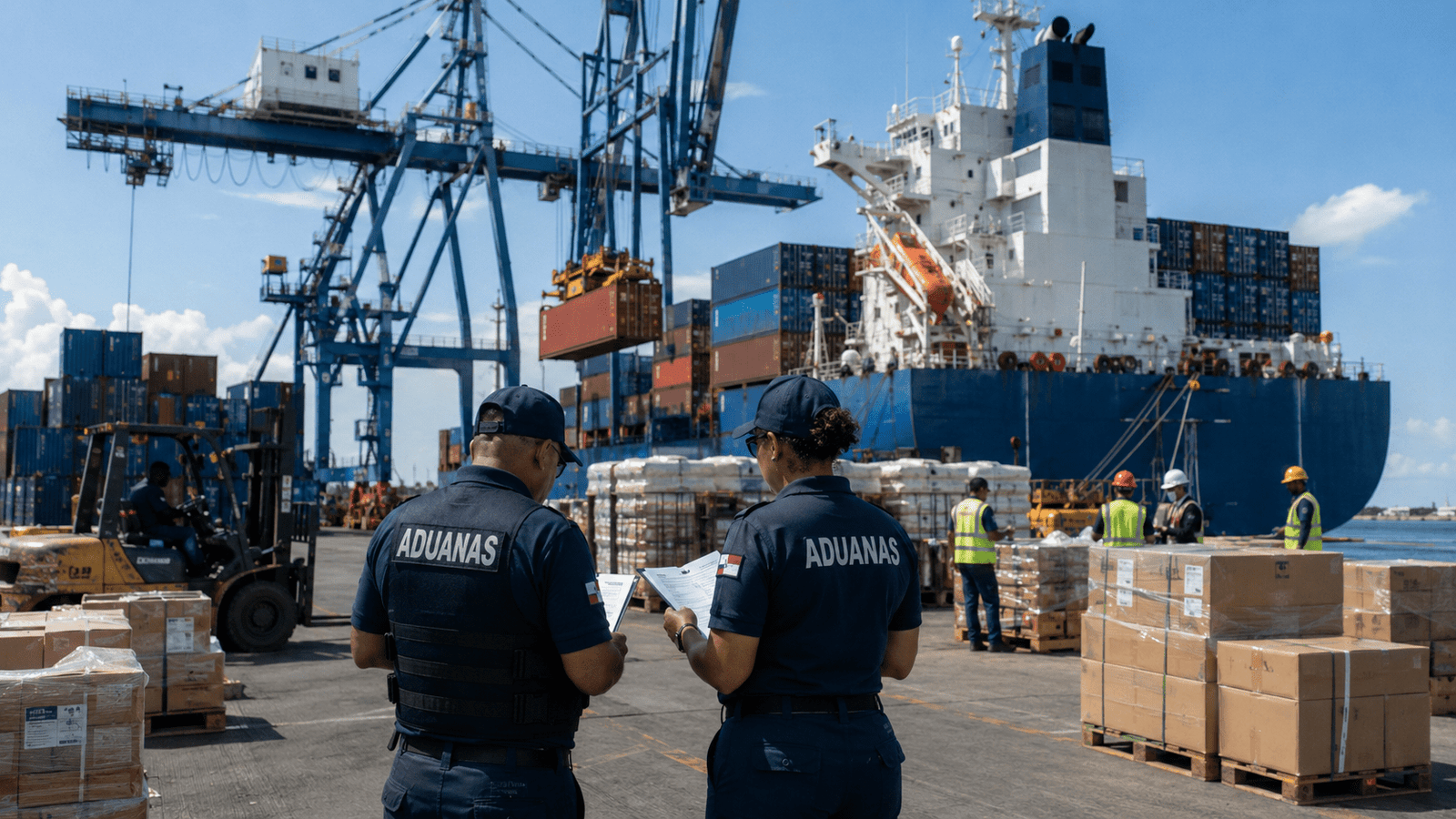
Free-zone operations are subject to their own legal framework and should not be analyzed in the same way as an ordinary commercial import for domestic consumption. Law No. 8-90 is among the legislation identified in the Dominican tariff framework concerning free zones.
The tax and customs consequences depend on whether goods are entering a free zone, being processed there, transferred between authorized operators, exported, or released into the Dominican domestic market. The relevant regime and conditions must therefore be established before calculating the expected tax liability.
Customs Fees Are Not the Same as Import Taxes
Importers should distinguish between taxes and customs service charges or fees. A customs fee may be associated with a service or administrative procedure and is not necessarily calculated as a percentage of the merchandise value.
Law No. 168-21 states that customs charges should correspond to the cost of the service provided. This is conceptually different from an import tariff, which is a tax imposed on merchandise according to the applicable tariff and customs rules.
The distinction becomes important when estimating total import costs. A calculation that includes only customs duty, ITBIS and ISC may still fail to represent the full amount an importer will spend to obtain the merchandise because commercial and logistical expenses can arise during the clearance process.
Regulated Imports and Non-Tax Requirements
An importer can satisfy the applicable tax obligations and still be unable to release merchandise if the product requires an authorization, registration, certificate or other regulatory approval.
The DGA’s tariff consultation system identifies additional requirements for individual tariff classifications. Depending on the product, the system can identify forms or approvals associated with institutions such as the Dominican Institute of Telecommunications, the Ministry of Environment and Natural Resources, the Ministry of Public Health or agricultural authorities.
For example, a tariff consultation for certain industrial chemical products can identify environmental authorization requirements and supporting documents such as a safety data sheet, CAS number and other technical documentation. DGA: Tariff and import-requirement consultation
This is why tariff classification has consequences beyond the duty rate. The correct tariff code can determine not only the customs duty and tax treatment but also which regulatory agencies must authorize or control the importation.
How to Calculate the Total Import Tax Burden
A practical calculation should be built in stages. The following simplified sequence is useful for an ordinary taxable import, although the exact calculation can vary according to the product and applicable legal regime.
- Determine the customs value. Establish the value according to the applicable customs valuation rules.
- Determine the tariff classification. Assign the legally appropriate tariff code using the Harmonized System and Dominican tariff rules.
- Check the normal tariff rate. Identify the applicable ad valorem rate or other tariff treatment.
- Check preferential treatment. Determine whether the goods qualify under a trade agreement, including its origin requirements and documentary conditions.
- Calculate the customs duty. For an ad valorem duty, multiply the applicable customs value by the applicable rate.
- Check the Selective Consumption Tax. Determine whether the product belongs to an ISC category and apply the relevant ad valorem and/or specific methodology.
- Determine the ITBIS base. Apply the Dominican tax rules governing the base for imported goods, including applicable import taxes.
- Calculate ITBIS. Apply the applicable ITBIS rate to the resulting taxable base.
- Add applicable customs fees and other charges. These should be distinguished from taxes and estimated separately.
The result represents a tax-and-charge estimate rather than necessarily the complete landed cost. International freight, insurance, customs brokerage, storage, port or airport charges, inland transportation and other commercial expenses can materially affect the final cost of obtaining the goods.
Illustrative Import Calculation
The following example shows how several taxes can interact. It is hypothetical and does not describe the treatment of a particular product.
| Calculation | Illustrative amount |
|---|---|
| Customs value | US$20,000 |
| Tariff rate | 14% |
| Customs duty | US$2,800 |
| Illustrative ITBIS base before other import taxes | US$22,800 |
| ITBIS at 18% | US$4,104 |
| Illustrative customs duty plus ITBIS | US$6,904 |
If the merchandise were also subject to the Selective Consumption Tax, the calculation would need to incorporate that tax according to the applicable ISC methodology. The ITBIS base could also be affected by the additional import tax, depending on the applicable rules.
Likewise, if a preferential tariff reduced the customs duty to zero, the ITBIS calculation would not necessarily become zero. The importer would still need to determine whether the goods are taxable for ITBIS and what base applies.
Why Classification and Valuation Should Be Reviewed Together
Classification and valuation are separate customs concepts, but they interact in the final calculation. Classification determines the tariff treatment, while valuation determines the monetary base to which an ad valorem duty is applied.
A classification dispute can therefore affect the percentage of duty, while a valuation dispute can affect the amount to which that percentage is applied. In both situations, customs documentation becomes important because the importer must be able to substantiate the information declared.
The DGA’s system also provides tools for tariff consultation and formal classification decisions. The availability of advance or formal classification mechanisms can be particularly useful when a product is technically complex or when the financial consequences of an incorrect classification are significant.
Advance Classification and Customs Decisions
The Dominican customs framework includes advance rulings and formal mechanisms for addressing classification questions. These procedures can provide greater certainty before an import transaction is completed, subject to the requirements and legal effects applicable to the particular decision.
The DGA has published advance decisions dealing with technically detailed products and explaining the reasoning used to reach a tariff classification. These decisions illustrate how the authority examines the product’s technical characteristics and applies the General Rules of Interpretation rather than relying solely on commercial terminology.
For an importer dealing with a recurring product line, obtaining appropriate classification certainty before repeated shipments can reduce the risk of inconsistent declarations and unexpected customs adjustments.
What Happens If Customs Questions the Declared Value?
Customs authorities can review the declared value when there are reasons to question whether the declared transaction value is acceptable under the applicable valuation rules. Regulation No. 755-22 provides for a reasonable-doubt procedure in these circumstances.
The existence of such a procedure means that an importer should not assume that an invoice automatically establishes the final customs value. Commercial documentation and evidence of the transaction can become important when customs requests clarification.
Where the declared value is challenged, the importer should be prepared to demonstrate the commercial circumstances of the transaction and provide the documentation requested under the applicable customs procedure.
Common Mistakes in Import Duty Calculations
Using the Supplier’s Product Description as the Tariff Classification
Commercial descriptions are useful for identifying goods but do not replace the legal classification process. The description used by a supplier may not correspond to the tariff terminology or the technical distinctions contained in the Harmonized System.
Calculating Duty From the Invoice Alone
The customs value can include elements beyond the product price, particularly where the customs valuation rules require them to be included. Freight and insurance can therefore be relevant to the customs value even though they may appear separately from the merchandise price.
Assuming a 0% Tariff Means No Taxes
A zero customs duty does not necessarily eliminate ITBIS or other applicable import taxes. The DGA tariff database displays these tax categories separately, which is why the complete tariff record should be checked.
Assuming the Country of Shipment Determines Origin
Origin rules under trade agreements are legal rules, not simply geographical descriptions of where the goods were shipped. Goods may be purchased from a company in a treaty country while originating elsewhere.
Ignoring Product-Specific Regulatory Requirements
A correct tariff classification can identify permits, registrations or approvals required by another government authority. Ignoring these requirements can delay clearance even when the taxes have been calculated correctly.
Using an Old Tax Rate or Specific Tax Amount
Some tax parameters can change through legislation, regulation or periodic adjustments. The DGII’s published ISC information, for example, contains specific amounts applicable for defined periods. Importers should therefore verify the rate or specific amount applicable to the relevant importation rather than relying on an old calculation.
Documents That Support an Import Tax Calculation
The documentation required varies according to the merchandise, customs regime and applicable regulatory authorities. For an ordinary commercial import, the information used to calculate the tax liability commonly includes the commercial invoice, transport document, product description and technical information, together with origin documentation when preferential treatment is claimed.
The DGA’s tariff consultation pages can also identify additional documentation for particular products. For some regulated imports, technical specifications, safety documentation, certificates, permits or authorizations may be required.
For businesses importing regularly, maintaining a consistent product master file can be useful. The file can contain the tariff code, technical description, country of origin, supplier, preferential-origin status, applicable tariff treatment, tax treatment and regulatory requirements for each product.
Import Taxes and the Final Landed Cost
The amount paid to customs is only one component of the cost of importing merchandise into the Dominican Republic. A complete landed-cost model should distinguish taxes from logistics and commercial expenses.
| Cost category | Typical relevance |
|---|---|
| Customs duty | Depends on classification, customs value and applicable tariff treatment |
| ITBIS | Applies to taxable imported goods according to the applicable tax base and rate |
| Selective Consumption Tax | Applies to specified products under product-specific rules |
| Customs or administrative charges | May arise from customs services or procedures |
| International freight | Commercial transportation cost and potentially relevant to customs valuation |
| Insurance | May be relevant to customs valuation depending on the applicable rules |
| Brokerage and clearance | Professional or administrative cost associated with customs clearance |
| Port, airport or storage costs | Operational expenses associated with handling and releasing the shipment |
| Domestic transportation | Cost of moving the goods after customs clearance |
Separating these categories makes financial planning more accurate. A product with a low tariff can still have a substantial landed cost if it is subject to ITBIS, ISC, expensive transportation or specialized regulatory requirements.
Online Tariff Consultation
The DGA provides an online tariff consultation service through the Integrated System for the Single Window of Foreign Trade. The database can be used to examine individual tariff codes and see information such as the tariff rate, ITBIS treatment, Selective Consumption Tax fields and certain import requirements.
For example, the DGA database can display a tariff classification with a 0% customs duty and 18% ITBIS, while another classification may show a 3% tariff and 18% ITBIS. These records demonstrate why the exact tariff code must be identified before estimating the tax burden. DGA: Tariff consultation system
The database should be treated as a tool for checking the applicable tariff information rather than as a substitute for the legal classification rules or a formal customs determination when a dispute or significant uncertainty exists.
Imports by Courier and the US$200 Threshold
Small personal shipments are subject to a specific customs treatment that differs from ordinary commercial imports. The DGA states that courier shipments for personal purposes that do not exceed US$200 can be imported without taxes under the applicable conditions.
This treatment should not automatically be extended to commercial shipments, multiple shipments structured to avoid applicable duties, or merchandise that falls under special restrictions. The purpose, value, classification and applicable courier rules remain relevant.
Businesses importing merchandise for resale should therefore distinguish clearly between personal courier purchases and commercial importation.
How Trade Preferences Affect the Calculation
When preferential treatment is available, the calculation should be performed using the tariff rate applicable to the qualifying originating goods rather than automatically using the general most-favored-nation tariff rate.
The sequence remains important. The importer first identifies the product classification, then determines whether the trade agreement covers that tariff line and whether the merchandise meets the relevant origin rule. Only after those conditions are satisfied should the preferential tariff be applied.
This means that two identical products with the same customs value can produce different customs-duty results if one qualifies for a preferential tariff and the other does not.
| Scenario | Possible tariff treatment | Other taxes |
|---|---|---|
| Ordinary import with no preference | General tariff rate for the classification | ITBIS and ISC where applicable |
| Qualifying import under a free trade agreement | Preferential rate established by the agreement | Domestic taxes may still apply |
| Product with a statutory domestic exemption | May receive special tariff treatment | May also receive an exemption from another tax if the law provides it |
| Temporary admission or other special customs regime | Special treatment according to the regime | Depends on the specific legal conditions |
| Free-zone operation | Special customs framework | Depends on the operation and whether goods enter the domestic market |
Who Administers the Different Import Charges?
The Dirección General de Aduanas is the central authority responsible for customs administration, including the classification, valuation and collection of customs duties and the customs clearance process. The Dirección General de Impuestos Internos administers the country’s principal internal taxes, including ITBIS and the Selective Consumption Tax.
For importation, however, ITBIS is paid together with customs duties and other customs taxes through the DGA. The DGII expressly states that ITBIS on imports is paid jointly with customs duties or taxes at customs. DGII: Payment of ITBIS on imports
This distinction between tax administration and the point of collection is useful for importers because the tax may be governed by domestic tax legislation while being collected as part of the customs clearance process.
Practical Workflow for Importers
A reliable import-tax review should begin before the goods are shipped. The following workflow can reduce the risk of calculating the wrong duty or discovering a regulatory requirement after arrival.
- Describe the product precisely. Record its composition, function, technical characteristics and intended use.
- Identify the likely tariff heading. Apply the Harmonized System rules rather than relying solely on the supplier’s commercial description.
- Verify the complete tariff code. Check the Dominican tariff database and relevant legal notes.
- Establish the customs value. Review the transaction and determine which costs must be included under the applicable valuation rules.
- Confirm origin. Determine where the goods legally originate, not merely where they were purchased or shipped from.
- Check trade agreements. If preferential treatment may apply, verify product coverage, origin requirements and documentary conditions.
- Review ITBIS. Determine whether the product is taxable and establish the applicable import tax base.
- Review ISC. Determine whether the merchandise falls into a Selective Consumption Tax category and identify the correct calculation method.
- Check permits and restrictions. Review the tariff consultation record and any requirements imposed by other government agencies.
- Calculate the landed cost. Add taxes and customs charges to the relevant logistics and commercial costs.
This process is especially important for businesses importing products repeatedly. A tariff-classification error that appears small on one shipment can become financially significant when multiplied across numerous transactions.
Key Distinctions to Keep in an Import Calculation
The Dominican import system becomes easier to understand when several concepts that are often treated as interchangeable are kept separate.
- Tariff classification identifies the legal tariff code.
- Customs valuation establishes the value used for customs purposes.
- Customs duty is the tariff charge resulting from the applicable classification, value and rate.
- Origin determines whether a product can qualify for preferential treatment under an applicable trade agreement.
- ITBIS is a consumption tax that can apply to imported industrialized goods.
- Selective Consumption Tax applies to specified goods and services under separate rules.
- Customs fees are distinct from taxes and may relate to specific customs services or procedures.
- Regulatory requirements can apply independently of the amount of tax payable.
Keeping these elements separate prevents one of the most common errors in import planning: treating the tariff percentage as though it were the complete import tax rate. In practice, the final liability depends on the interaction between classification, value, origin, tariff treatment, domestic taxes and the customs regime under which the merchandise enters the country.
For significant or technically complex imports, the most reliable approach is to verify the tariff classification and tax treatment against the applicable Dominican customs and tax legislation, use the DGA tariff consultation system, and obtain formal customs guidance where the classification or valuation is uncertain. The DGA publishes the country’s customs laws, regulations, trade agreements and classification decisions, while the DGII publishes the applicable ITBIS and Selective Consumption Tax rules.