 22°C
22°C

Dominican Republic CARICOM Trade: Agreements And Opportunities
Trade between the Dominican Republic and the Caribbean Community (CARICOM) is governed by a long-standing free trade framework and reinforced by their shared participation in CARIFORUM, yet the commercial relationship remains smaller and less diversified than its potential. Energy, fertilizers, chemicals, steel, food products, plastics, construction materials and beverages are among the most important goods traded, while tourism, logistics, professional services and investment offer additional room for expansion. The relationship has evolved from limited bilateral commerce in the 1990s into a more structured economic partnership shaped by the 1998 Free Trade Agreement, its implementation protocol, and the wider CARIFORUM-EU Economic Partnership Agreement.


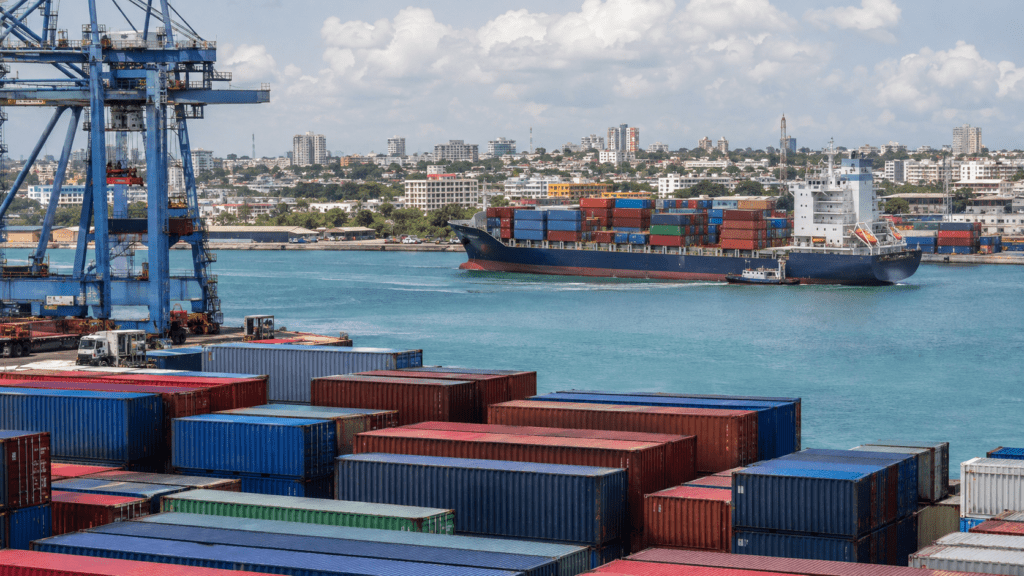
The Dominican Republic and the Caribbean Community (CARICOM) occupy a strategically important position in the Caribbean, but their economic relationship is often less visible than either party’s trade with the United States, Europe or larger Latin American markets. The Dominican Republic is not a CARICOM member; instead, it maintains a bilateral free trade relationship with the bloc and participates alongside CARICOM states in CARIFORUM, the wider Caribbean grouping used for relations with the European Union.
The commercial relationship has therefore developed through several overlapping layers. The CARICOM-Dominican Republic Free Trade Agreement created the principal bilateral framework for trade in goods, while provisions covering services, investment, government procurement and temporary entry of business persons established a broader economic agenda. The CARIFORUM-EU Economic Partnership Agreement subsequently added another regional dimension, including commitments intended to strengthen economic integration among Caribbean economies.
What Is The CARICOM-Dominican Republic Trade Relationship?
CARICOM is a regional organization comprising 15 member states, while the Dominican Republic remains outside the organization itself. The bilateral relationship is therefore not the same as trade between two CARICOM members. Instead, the Dominican Republic has a separate preferential trade agreement with CARICOM and maintains economic ties with individual member states under that framework.
The relationship dates to the Free Trade Agreement signed on August 22, 1998. The agreement sought to establish a free trade area, expand trade in goods, eliminate or reduce non-tariff barriers, establish rules of origin, improve customs cooperation and harmonize technical, sanitary and phytosanitary procedures. It also anticipated progressive liberalization in services and cooperation in areas including tourism, transportation, telecommunications, banking, insurance, professional services, agriculture and science and technology.
A protocol implementing the agreement was signed in Santo Domingo on April 28, 2000. The preferential arrangements subsequently entered into force at different dates for participating countries, with Barbados, Jamaica and Trinidad and Tobago beginning implementation in December 2001, the Dominican Republic in February 2002, Guyana in October 2004 and Suriname in August 2005.
The agreement is particularly important because CARICOM is not a single homogeneous market. Its member states differ considerably in population, income, production structure, tariff systems and institutional capacity. The original agreement therefore differentiated between the bloc’s more developed countries and its less developed countries, providing asymmetric treatment for the latter.
How The Free Trade Agreement Works
The agreement provides preferential market access for qualifying goods originating in the Dominican Republic or participating CARICOM states. It does not mean that every product automatically enters the other market without duties or regulatory requirements. Preferential treatment depends on the product, the applicable tariff schedule and compliance with the agreement’s rules of origin.
Rules of origin are particularly important for companies using imported components. They determine whether a product qualifies as originating in the Dominican Republic or a CARICOM country and therefore whether the preferential tariff can be claimed. The agreement contains product-specific origin criteria and documentation requirements.
The framework also contains provisions dealing with technical barriers to trade and sanitary and phytosanitary measures. These provisions matter especially for food, agricultural products, chemicals and other regulated merchandise. A nominally low or zero tariff does not remove the need to comply with labeling, health, safety, certification, import licensing or other national requirements.
A further feature is the treatment of selected agricultural products. Special arrangements were included to protect domestic producers in certain circumstances, allowing specified agricultural goods to be subject to special tariff treatment during periods of market surplus. This reflects the political sensitivity of agriculture in small Caribbean economies.
| Element | Importance for Businesses |
|---|---|
| Trade in goods | Provides preferential access for qualifying originating products. |
| Rules of origin | Determine whether goods qualify for preferential treatment. |
| Technical measures | Products must meet applicable standards and technical requirements. |
| SPS measures | Food, agricultural and animal products may require additional controls. |
| Services | The agreement provides a framework for market access and cooperation. |
| Investment | The framework includes reciprocal promotion and protection of investment. |
| Government procurement | Public-sector purchasing is included within the broader economic framework. |
| Business mobility | Special provisions address temporary entry of business persons. |
Which Products Are Traded Between The Dominican Republic And CARICOM?
The composition of trade reflects a combination of the Dominican Republic’s manufacturing base and the different production structures found across CARICOM. The most important products have historically included fuels and energy products, fertilizers, iron and steel, plastics, chemicals, food preparations, beverages, paper products and construction-related materials.
CARICOM Exports To The Dominican Republic
Energy products have historically played an outsized role in CARICOM’s exports to the Dominican Republic. Trinidad and Tobago is particularly important because of its energy and petrochemical industries. Historical trade assessments show petroleum products, petroleum gases and related energy products accounting for a substantial share of Dominican imports from CARICOM. More recent trade data also demonstrate the continuing importance of Trinidad and Tobago as a regional commercial partner.
Other important CARICOM export categories include fertilizers, iron and steel, chemicals, beverages and paper products. These reflect the industrial strengths of countries such as Trinidad and Tobago, Jamaica and Guyana rather than a uniform CARICOM export profile.
Trinidad and Tobago’s more recent trade statistics illustrate the scale of the relationship. For the period October 2024 to June 2025, Trinidad and Tobago reported exports of about US$278.7 million to the Dominican Republic and imports of about US$323.3 million from the Dominican Republic. Its exports included products such as urea, cereals and plastic bottles, while imports from the Dominican Republic included alcoholic beverages and other manufactured products.
Dominican Republic Exports To CARICOM
The Dominican Republic has a considerably broader manufacturing and consumer-goods base than many individual Caribbean economies. Its potential exports to CARICOM therefore extend beyond agricultural commodities into iron and steel products, plastics, food preparations, ceramics, machinery, chemicals, paper products, furniture and construction materials.
A CARICOM trade assessment identified fertilizers, plastics, soaps and related chemical products, furniture, iron and steel, ceramic products, machinery, inorganic chemicals, food preparations and other manufactured goods among Dominican exports to CARICOM. Although that assessment uses historical trade data, the product structure remains useful for understanding the complementary nature of the two markets.
More recent data confirm that Jamaica is an important destination within the CARICOM market. The World Trade Organization’s trade profile for the Dominican Republic records exports of approximately US$119.2 million to Jamaica in 2024, making Jamaica one of the Dominican Republic’s notable Caribbean destinations.
Dominican companies also supply smaller CARICOM markets. For example, World Bank trade data show Dominican exports of bananas and plantains to Guyana in 2024, illustrating how bilateral trade can extend into specific product niches even when overall trade values are modest.
Trade In Energy, Agriculture And Manufactured Goods
The trade relationship is best understood as complementary rather than as a simple exchange of similar products. Trinidad and Tobago’s energy and petrochemical industries provide products that the Dominican economy needs, while the Dominican Republic’s manufacturing sector can supply construction materials, consumer goods, processed foods and industrial products to Caribbean markets.
Agriculture presents a more complicated picture. Caribbean economies protect some agricultural sectors because of their importance to rural employment, food security and domestic production. The bilateral agreement therefore contains special arrangements for selected agricultural products rather than treating every agricultural commodity identically.
Food processing is nevertheless an area with potential for two-way trade. The Dominican Republic has developed substantial capabilities in processed foods and beverages, while CARICOM markets have demand for imported food products because many island economies face structural limitations on domestic agricultural production. CARICOM’s official statistics show that food remains a major component of the region’s international trade.
The Role Of Trinidad And Tobago
Trinidad and Tobago stands out as one of the most important CARICOM economies in the Dominican trade relationship. Its industrial structure, particularly in energy, petrochemicals, fertilizers and chemicals, gives it products that are complementary to Dominican demand.
The relationship is not exclusively based on energy. Trinidad and Tobago’s trade with the Dominican Republic also includes manufactured and food-related goods, while Dominican exports to Trinidad and Tobago include consumer and industrial products. The scale of this relationship means that changes in energy prices, production and regional demand can influence the overall balance of bilateral trade.
The country’s importance also demonstrates why CARICOM-wide trade figures should be interpreted carefully. CARICOM consists of economies with radically different export structures. A trade relationship dominated by Trinidad and Tobago’s energy sector can look very different from trade with Barbados, Jamaica, Guyana or the smaller Eastern Caribbean economies.
Jamaica And The Dominican Republic
Jamaica is another significant commercial partner. The Dominican Republic exported approximately US$119.2 million in goods to Jamaica in 2024 according to WTO data. At the same time, Dominican imports from Jamaica were much smaller: UN Comtrade data indicate approximately US$10.5 million in 2024, with mineral fuels accounting for most of the Jamaican exports recorded in that dataset.
Jamaica’s wider trade statistics show that CARICOM remains an important regional market even though the United States and other major economies account for much larger shares of Jamaican trade. In 2024, Jamaica exported about US$144.4 million in merchandise to CARICOM countries and imported about US$413.0 million from the bloc.
For Dominican exporters, Jamaica therefore represents more than a single-country opportunity. It is a relatively large Caribbean economy with established distribution networks, manufacturing activity and demand for imported consumer and industrial products.
How The Relationship Has Evolved
The commercial relationship predates the modern free trade framework. In the early 1990s, bilateral commerce was relatively limited. Historical regional analysis shows CARICOM exports to the Dominican Republic rising from about US$16.8 million in 1990 to US$67.3 million in 1998, while CARICOM imports from the Dominican Republic increased from approximately US$8.2 million to US$13.0 million over the same period.
The 1998 agreement represented a major institutional change. It established a formal framework for preferential goods trade and created a broader agenda for economic cooperation. The implementing protocol was subsequently signed in 2000, and the agreement began taking practical effect in the early 2000s.
Trade expanded during the following decade, although the relationship remained concentrated in a relatively small number of products. Historical assessments found that energy products accounted for more than 95 percent of CARICOM exports to the Dominican Republic in 2004, demonstrating how strongly petroleum-related commerce influenced the bilateral relationship at that time.
The next major development was the CARIFORUM-EU Economic Partnership Agreement, signed in 2008. CARIFORUM includes the Dominican Republic and CARICOM states, giving the Dominican Republic and CARICOM a second institutional setting in which to address trade and economic integration.
The EPA includes regional preference provisions intended to extend certain advantages granted among CARIFORUM states. Its implementation has been an ongoing regional policy issue, however, and the relationship between the CARICOM-Dominican Republic FTA and the wider CARIFORUM framework has required continuing institutional attention.
That process remains relevant to the modern relationship. In June 2026, the fifth CARIFORUM-EU Joint Council met in Santo Domingo, while CARIFORUM national EPA coordinators continued reviewing implementation and regional cooperation. These developments show that the Dominican Republic’s role in Caribbean economic integration extends beyond its bilateral FTA with CARICOM. :
What Are The Main Trade Barriers?
The existence of a free trade agreement does not eliminate every obstacle to commerce. In practice, the most important barriers can be regulatory, administrative, logistical or commercial rather than simply tariff-related.
Rules Of Origin
Companies must demonstrate that products meet the applicable origin criteria to receive preferential treatment. This can become complicated when manufacturers rely on imported inputs or operate regional supply chains. A product that is manufactured in one country is not necessarily considered originating there for purposes of the agreement.
Technical And Sanitary Requirements
Technical standards, sanitary and phytosanitary rules, labeling requirements, import permits and product registrations can create additional costs. These measures are particularly important for food, agricultural products, chemicals, pharmaceuticals and other regulated goods.
CARICOM itself maintains the Caribbean Exporter Gateway, which provides market-access information for CARICOM products entering the Dominican Republic, including tariffs, rules of origin and non-tariff measures.
Distribution Rules And Law 173
One distinctive issue for CARICOM exporters entering the Dominican market has historically been the Dominican Republic’s Law 173 governing certain exclusive distribution arrangements. A CARICOM study identified it as a significant concern for some exporters because of the potential consequences of terminating registered distribution agreements.
The FTA contains a provision under which the parties can agree that Law 173 will not apply to a particular commercial relationship. In practice, the effectiveness of that mechanism depends on negotiations between exporters and Dominican distributors. The issue has therefore remained a consideration for companies establishing long-term distribution arrangements in the Dominican Republic.
Logistics And Market Fragmentation
Caribbean trade faces structural logistical challenges. The region consists of numerous relatively small markets separated by sea, with different ports, customs procedures, currencies and regulatory systems. Even when tariffs are low, freight costs and shipment frequency can determine whether a product is commercially viable.
The Dominican Republic has an advantage in this respect because of its geographic position, large domestic market and extensive connections with North America, Central America, South America and the Caribbean. For Dominican companies, the opportunity is not simply to sell into one island market but to use the country as part of a broader regional supply strategy.
Opportunities For Dominican Companies
The most promising opportunities are likely to be found where the Dominican Republic has established production capacity and CARICOM economies have persistent import demand.
Construction Materials
Construction-related products are a natural area for expansion. Cement-related products, ceramics, steel products, furniture, fixtures and other building materials have appeared among Dominican exports to Caribbean markets. The Dominican Republic’s larger industrial base can allow producers to achieve economies of scale that are difficult to obtain in small island economies.
Processed Foods And Beverages
Food processing offers another opportunity. Dominican producers can potentially compete in categories such as prepared foods, beverages, sauces, snacks and other shelf-stable products where logistics are manageable and brand recognition can be developed through local distributors.
However, exporters should not assume that consumer preferences are identical across Caribbean markets. Packaging, labeling, product sizes, pricing and distribution strategies often need to be adapted to individual countries.
Plastics And Packaging
Plastics and articles made from plastics have historically been among the Dominican Republic’s export categories to CARICOM. Packaging demand is linked to food processing, retail, hospitality and manufacturing, making this an industrial segment with applications across several Caribbean economies.
Industrial And Chemical Products
The Dominican Republic’s manufacturing sector creates opportunities for industrial chemicals, cleaning products, household goods and related manufactured inputs. These products can complement the energy and petrochemical production of CARICOM rather than directly competing with it.
Services, Tourism And Logistics
Goods are only one part of the opportunity. The original CARICOM-Dominican Republic framework explicitly contemplated cooperation and market access in tourism, transportation, telecommunications, banking, insurance, professional services and other sectors.
Tourism is particularly relevant because the Dominican Republic has one of the Caribbean’s largest tourism industries. Opportunities can extend beyond direct travel to hotel supply, destination management, transportation, digital services, professional consulting, financial services and specialized business-to-business services.
Opportunities For CARICOM Companies In The Dominican Republic
The Dominican market is substantially larger than most individual CARICOM markets, which gives Caribbean companies an incentive to consider the country as an export destination rather than focusing exclusively on intra-CARICOM commerce.

Energy products and petrochemicals remain obvious areas of interest for suppliers from Trinidad and Tobago. Fertilizers, chemicals, industrial inputs, beverages, food products and steel-related products can also find opportunities where Caribbean producers have competitive advantages.
The Dominican Republic’s manufacturing, construction and tourism sectors create potential demand for specialized products that individual island markets may not be large enough to support. The country’s free trade relationships with other major markets can also make local partnerships attractive for companies seeking a broader regional production or distribution base.
Why Trade Potential Remains Underdeveloped
The central challenge is not simply whether tariffs have been reduced. It is whether companies can convert formal market access into commercially viable transactions.
CARICOM’s markets are fragmented, and many companies are relatively small. A manufacturer may face the cost of regulatory compliance, product adaptation, distributor selection, freight, insurance and inventory before a first shipment is completed. For a small potential order, those fixed costs can outweigh the tariff advantage.
The Dominican Republic also has a strong domestic manufacturing sector and its own extensive network of trade agreements. CARICOM exporters therefore compete not only against Dominican producers but also against suppliers from the United States, Central America, Europe, Asia and other Latin American economies.
For the Dominican side, the challenge is similar. A company accustomed to serving a domestic market of millions of consumers must adapt its commercial model to several smaller economies with different regulatory and consumer environments. Exporting to CARICOM is therefore rarely a simple extension of domestic sales.
How Companies Can Use The Trade Agreement More Effectively
The first step is to verify whether the product actually qualifies for preferential treatment. Exporters should identify the relevant tariff classification, determine the applicable rule of origin and confirm the documentation required by the destination country before negotiating a price based on a preferential tariff.
The second step is to examine non-tariff requirements. Food products, agricultural goods, pharmaceuticals, chemicals and other regulated products may require permits, certificates, registrations or laboratory documentation. These requirements can be more commercially significant than the customs duty itself.
The third step is to select the distribution model carefully. A company entering the Dominican Republic or a CARICOM market should establish in advance who will act as importer of record, distributor, agent or retailer and what contractual protections apply.
Finally, exporters should treat CARICOM as a collection of distinct markets rather than assuming that one commercial strategy will work everywhere. Trinidad and Tobago may be the logical market for industrial and energy-related products, Jamaica for consumer and industrial goods, and smaller Eastern Caribbean economies for targeted niche products.
What The Future Of Dominican Republic-CARICOM Trade Could Look Like
The strongest opportunity is likely to come from diversification. The historical relationship was heavily influenced by energy and a limited number of manufactured products. A more mature relationship would include more food processing, construction materials, industrial inputs, consumer goods, digital services, tourism-related services and investment.
The Dominican Republic’s role in CARIFORUM also gives the relationship a broader institutional dimension. The CARIFORUM-EU EPA includes regional trade preferences and mechanisms intended to support Caribbean integration, while current regional institutions continue working on implementation. The fifth CARIFORUM-EU Joint Council meeting in Santo Domingo in June 2026 and subsequent implementation discussions demonstrate that regional economic integration remains an active policy agenda.
For CARICOM economies, the Dominican Republic offers access to a relatively large and diversified Caribbean market, as well as a manufacturing and logistics base connected to major international trade routes. For Dominican companies, CARICOM offers a group of nearby markets with demand for food, manufactured products, construction materials, industrial inputs and services.
The key issue is therefore not whether a legal framework for trade exists. It does. The more important question is whether businesses, governments and regional institutions can reduce the practical costs that prevent companies from using that framework more extensively.