 22°C
22°C

How Customs Works in the Dominican Republic: Procedures, Controls, and Key Rules
Customs procedures in the Dominican Republic are governed principally by Law 168-21 and its implementing Regulation 755-22, with the Dirección General de Aduanas (DGA) serving as the country’s customs authority and national border authority. The system covers much more than the release of imported goods: it establishes how merchandise is declared, classified, valued, controlled and inspected, while also regulating exports, customs regimes, risk management, post-clearance controls and trade-facilitation mechanisms.


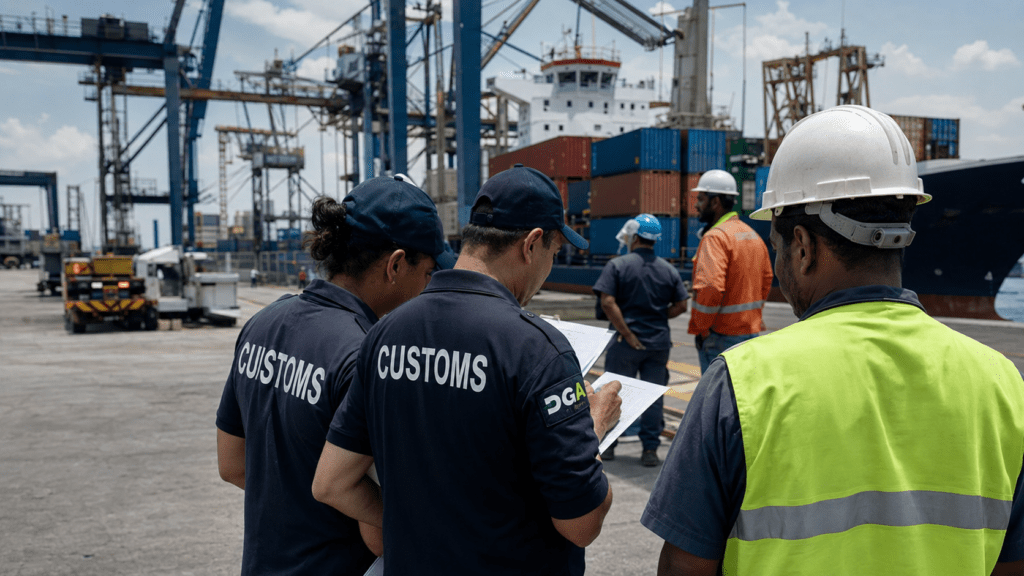
The Dominican Republic’s customs system is designed to perform two functions at the same time: facilitate legitimate international trade and enforce the country’s customs, tax, security, health and regulatory requirements. For importers and exporters, that means customs compliance begins well before a shipment reaches a port or airport and can continue after merchandise has been released.
The central institution is the Dirección General de Aduanas (DGA), the Dominican customs authority and a dependency of the Ministry of Finance. Its responsibilities extend beyond collecting duties and taxes. The DGA describes itself as the national border authority, with responsibilities connected to public health, state security, trade facilitation and customs control.
The Legal Framework Behind Dominican Customs
The foundation of the modern system is Law 168-21 on Customs, promulgated in August 2021. It replaced the principal customs legislation dating from 1953 and reorganized the country’s customs procedures and regimes to reflect newer commercial practices, technology and international commitments. Regulation 755-22 provides the implementing framework for the law.
The framework also interacts with other rules governing areas such as customs valuation, tariff classification, trade agreements, sanitary and phytosanitary controls, restricted merchandise and special customs regimes. The DGA maintains an official legal database that includes Law 168-21, Regulation 755-22, Regulation 36-11 on customs valuation and relevant international agreements.
This distinction is important because customs treatment is not determined by a single document. The applicable procedure can depend on the type of merchandise, its tariff classification, origin, customs regime, declared value, destination and whether another government authority must authorize or inspect the shipment.
What the DGA Does
The DGA administers the customs system and exercises customs authority over merchandise entering, leaving or moving through the Dominican Republic. Its role includes processing declarations, collecting customs-related charges, conducting controls, investigating possible violations and applying customs procedures established by law.
The institution also has a trade-facilitation function. The modern framework incorporates electronic processes, risk-based controls, advance rulings, the Authorized Economic Operator program and the Single Window for Foreign Trade, known as VUCE. The objective is not simply to inspect more goods, but to concentrate controls where the risk is considered greater while allowing compliant trade to move more efficiently.
This dual role explains why customs should not be understood merely as a checkpoint where taxes are paid. It is an administrative system that determines whether a shipment complies with the rules applicable to its entry, exit or particular customs regime.
How a Customs Operation Is Structured
A typical commercial operation involves several connected elements: the transport information, the merchandise itself, the customs declaration, supporting documents, tariff classification, customs value, origin, applicable duties and taxes, regulatory requirements and the customs regime under which the goods are being handled.
For an import, the process generally begins with information about the arriving shipment and proceeds through declaration, risk analysis and, where required, documentary or physical verification. The customs authority can then determine whether the merchandise satisfies the conditions applicable to the declared operation.
Exports follow a different commercial logic because the principal concern is the lawful departure and proper declaration of goods rather than the assessment of import duties. Nevertheless, exporters still need to provide accurate information and comply with restrictions, origin rules, licensing requirements and other controls that may apply to their products.
Customs Declarations
The Declaración Única Aduanera (DUA) is the electronic customs declaration used through the DGA’s customs management system to provide information concerning imports and exports. The DGA states that the declaration requires supporting information such as the commercial invoice and the relevant transport document, such as a bill of lading or air waybill.
The declaration is therefore much more than an administrative form. It establishes the information against which customs can evaluate the shipment. Errors in the description of the goods, quantity, origin, tariff classification or value can affect the customs treatment and may lead to additional documentation, inspection, reassessment or other consequences.
For imported merchandise, the DGA states that the general deadline under Article 199 of Law 168-21 is five business days, calculated from the legal receipt of the means of transport. The law also provides mechanisms concerning extensions, and the DGA warns that requesting an extension does not itself suspend the declaration deadline.
Importers should therefore treat the declaration as part of their compliance process rather than something to be completed only after the shipment has arrived. Commercial documentation, product information and any required permits should be prepared early enough to support an accurate filing.
Tariff Classification: Determining What the Goods Are
Tariff classification assigns merchandise to the appropriate tariff heading and subheading under the customs nomenclature. The classification can affect the applicable tariff treatment, statistical reporting and the application of other customs measures.
Classification is sometimes straightforward, but products containing several components, specialized equipment, chemical preparations, composite goods or products with multiple possible uses can create more difficult questions. A commercial name alone does not necessarily determine the legal tariff classification.
The DGA uses the Harmonized System and provides mechanisms for classification consultations and advance rulings. Its technical work includes binding classification decisions and procedures for resolving classification disputes.
An advance ruling can be particularly useful when a company expects to conduct repeated imports of a product and wants greater certainty before the transaction takes place. The DGA describes advance rulings as prior binding decisions that can address matters including tariff classification, valuation, origin and certain special customs regimes.
For businesses with recurring international trade operations, resolving classification questions before shipments begin can reduce the risk of inconsistent declarations and subsequent disputes.
Customs Valuation: Determining the Customs Value
Customs valuation determines the value used for customs purposes when duties or other charges depend on the value of imported merchandise. The Dominican Republic applies the WTO Customs Valuation Agreement, supplemented by its national valuation rules, including Regulation 36-11.
The principal concept is the transaction value, subject to the conditions and adjustments established by the applicable rules. According to the WTO’s review of the Dominican Republic, transaction value was used for approximately 84% of import transactions at the time of that review. The same review noted that the country does not establish minimum or official prices as customs values, although reference values may be used for risk-management purposes.
This makes the quality of commercial documentation important. The invoice, payment evidence, contracts and other records can become relevant when customs needs to verify whether the declared value is acceptable under the valuation rules.
If customs cannot accept the transaction value under the applicable rules, the valuation framework provides alternative methods for determining customs value. The DGA also explains that, where documentation does not adequately establish value, it may require additional evidence and apply the methods provided under the WTO valuation framework.
Origin Is Different From Customs Value and Classification
Origin is another separate element of customs treatment. It concerns the country or qualifying territory associated with the origin of the goods under the applicable rules. Origin can determine eligibility for preferential tariff treatment under a trade agreement and can also matter for other commercial policy measures.
The distinction is important. A product’s country of shipment is not automatically the same thing as its legal origin, while its origin is also separate from its tariff classification and customs value. These elements interact, but they answer different questions.
Law 168-21 recognizes preferential and non-preferential origin and provides for origin determinations in connection with preferential tariffs, non-preferential measures, safeguards, quotas and other measures established under agreements or national rules.
Companies claiming preferential treatment under a trade agreement should therefore verify the relevant rules of origin rather than assuming that shipment from a particular country is sufficient.
Risk Management and Customs Controls
Modern customs systems cannot physically examine every shipment. The Dominican system consequently uses risk analysis to determine where controls should be concentrated. The WTO has reported that the Dominican Republic uses risk-based control at the pre-clearance, clearance and post-clearance stages.
This means that the absence of a physical inspection does not necessarily mean that customs has accepted every aspect of a declaration without further scrutiny. Conversely, selection for inspection does not by itself establish that an importer has violated the law. Inspection is a control mechanism used to verify compliance.
The risk-based approach also explains why two shipments containing apparently similar products can experience different levels of customs intervention. Factors associated with the merchandise, documentation, origin, declared information, operator profile or other risk indicators can influence the level of control applied.
Documentary and Physical Inspection
Under Law 168-21, customs verification can involve examination of both the merchandise and its documentation. The law describes this process as a means of verifying elements relevant to the customs obligation, including the nature, origin, provenance, weight, tariff classification, condition, quantity and value of the goods, as well as compliance with the declared customs regime.
The examination may be total or partial and can include non-intrusive inspection technology. The DGA identifies the introduction of non-intrusive and intrusive controls, as well as coordinated inspections with other government bodies, as significant features of the modern customs framework.
For regulated merchandise, customs control may therefore involve more than the DGA. Products subject to health, agricultural, telecommunications, environmental or other requirements can require coordination with the competent government authority. The legal framework expressly provides for coordination between customs and para-customs agencies, including joint inspections.
Customs Controls Do Not End When Goods Are Released
One of the most important concepts for businesses is post-clearance control. Customs supervision can continue after merchandise has been released, allowing authorities to examine records and verify whether declarations, valuation, classification and other obligations were properly handled.
The WTO has specifically identified post-clearance control as an important component of the Dominican Republic’s risk-management system. It serves both as a trade-facilitation mechanism and as a way to verify compliance after the goods have entered commerce.
For importers, this means that customs compliance should not be reduced to obtaining a release order. Companies should retain appropriate commercial and customs records and maintain consistency between their declarations and underlying transactions.
Customs Regimes and Procedures
The Dominican customs framework recognizes different customs regimes, reflecting the fact that not every shipment enters the country under the same legal conditions. A definitive import, temporary admission, transit operation, warehousing arrangement, re-export or export can involve different obligations and controls.
The importance of the regime is practical: the customs treatment of merchandise depends partly on what the operator intends to do with the goods. Merchandise entering temporarily for a permitted purpose is not conceptually equivalent to merchandise imported permanently for domestic consumption.
Law 168-21 reorganized and clearly enumerated customs procedures and regimes, reducing the previous dispersion of rules. The DGA identifies this organization as one of the major changes introduced by the legislation.
Companies should therefore determine the appropriate regime before declaring the shipment. Selecting a procedure after the operation has already been structured can create avoidable compliance problems, particularly when the intended treatment depends on conditions that must be documented in advance.
Special Customs Frameworks and Trade Facilitation
The customs system also includes mechanisms intended to make compliant trade more predictable and efficient. Among them are the Authorized Economic Operator (OEA) program and the Single Window for Foreign Trade (VUCE).
The OEA concept is based on identifying operators that meet defined security and compliance standards and can therefore participate in a more facilitative customs environment. VUCE, meanwhile, is intended to coordinate trade-related procedures and information involving the public authorities responsible for foreign-trade requirements. The DGA identifies both mechanisms among the trade-facilitation measures incorporated into the modern customs framework.
These mechanisms illustrate a broader shift in customs administration: facilitation does not necessarily mean eliminating controls. It means using information, technology, risk management and operator compliance to apply controls more efficiently.
Electronic Systems and Documentation
Technology is now an integral part of Dominican customs administration. The DGA operates electronic platforms for customs services and uses digital processes for declarations and other transactions. Law 168-21 also incorporated provisions supporting information technology and electronic or digital signatures.
For businesses, electronic customs administration changes the practical meaning of document management. Information must be accurate not only on paper but also in the electronic declaration and associated records. Differences between invoices, transport documents, product descriptions and customs declarations can create questions during risk analysis or inspection.
The DGA also provides online tools for services such as customs declarations, tariff information, regulatory consultations and tax calculations. Its current portal includes access to the customs tariff, product searches, VUCE-related information and other trade services.
Common Compliance Problems
Many customs problems arise from inconsistencies rather than from deliberately unlawful conduct. A product may be described differently on the commercial invoice and customs declaration, a tariff code may not correspond to the product’s characteristics, or the declared value may not be adequately supported by the transaction records.
Other problems can arise when an importer assumes that a product is unrestricted without checking whether another government authority requires a permit or approval. The DGA notes that shipments can be held when special permissions are required from bodies such as the Ministry of Public Health, the Ministry of Agriculture or other competent authorities.
Another frequent source of risk is treating customs classification, valuation and origin as interchangeable concepts. They are not. Each involves a different legal analysis, and a correct customs operation normally requires all three to be addressed where applicable.

How Importers and Exporters Can Reduce Customs Risk
The most effective approach is to treat customs compliance as part of supply-chain planning rather than as a final administrative step. Before shipping, companies should identify the product correctly, establish the likely tariff classification, determine applicable origin rules, document the commercial value and verify whether permits or restrictions apply.
Businesses that import regularly should also maintain consistent product descriptions and supporting records across transactions. Where classification or another customs issue is genuinely uncertain and materially important to the business, an advance ruling or formal consultation may provide greater certainty than relying on an informal interpretation.
Companies should also prepare for the possibility of post-clearance review. Good customs records should allow the business to demonstrate how it arrived at the declared classification, value, origin and other material information, rather than merely showing the final declaration.
What Customs Procedures Mean for Exporters
Exporters sometimes assume that customs is primarily an import-tax institution. That is too narrow. Export operations are also subject to declaration, documentary requirements, controls, applicable restrictions and the conditions of any special export regime or trade agreement.
Correct export documentation can also affect the treatment of the goods in the destination market. Where preferential origin is claimed, for example, the exporter may need to demonstrate that the merchandise satisfies the applicable rules. The Dominican customs framework recognizes origin determinations for preferential and non-preferential purposes.
For manufacturers and agricultural exporters in particular, coordination with other authorities may be as important as the customs declaration itself when the product is subject to sanitary, phytosanitary, environmental or other regulatory requirements.
A Practical Way to Understand the System
For an international business entering the Dominican market, it is useful to think of customs compliance as a chain rather than a single event. The commercial transaction establishes what was bought and for how much; the transport documents establish how the goods move; classification determines how the merchandise is identified under the tariff; origin determines which origin rules apply; valuation establishes the customs value under the applicable methodology; and the declaration brings these elements together for customs administration.
Risk analysis then determines the appropriate level of control. If verification is required, customs can examine documents, the merchandise or both. Other authorities may participate where their regulatory powers apply. Even after release, post-clearance controls can examine whether the operation complied with the rules.
This perspective helps explain why customs procedures cannot be reduced to the question of how quickly a shipment is released. The system is designed to balance revenue collection, lawful trade, border protection and regulatory compliance with the objective of facilitating legitimate commerce.