 22°C
22°C

China and the Dominican Republic: How Trade Is Reshaping the Caribbean Economy
The Dominican Republic’s trade relations with China have expanded significantly since the two countries established formal diplomatic ties in 2018, turning China into one of the Caribbean nation’s most important commercial partners. The relationship is characterized by rapidly growing merchandise flows, a large Dominican trade deficit, strong Chinese demand for selected Dominican commodities and manufactured products, and substantial opportunities to diversify Dominican exports into the Chinese market. In 2024, China accounted for 18.3% of Dominican Republic merchandise imports, while the Dominican Republic’s exports to China represented 2.8% of its total exports, according to World Trade Organization data based on UN Comtrade.


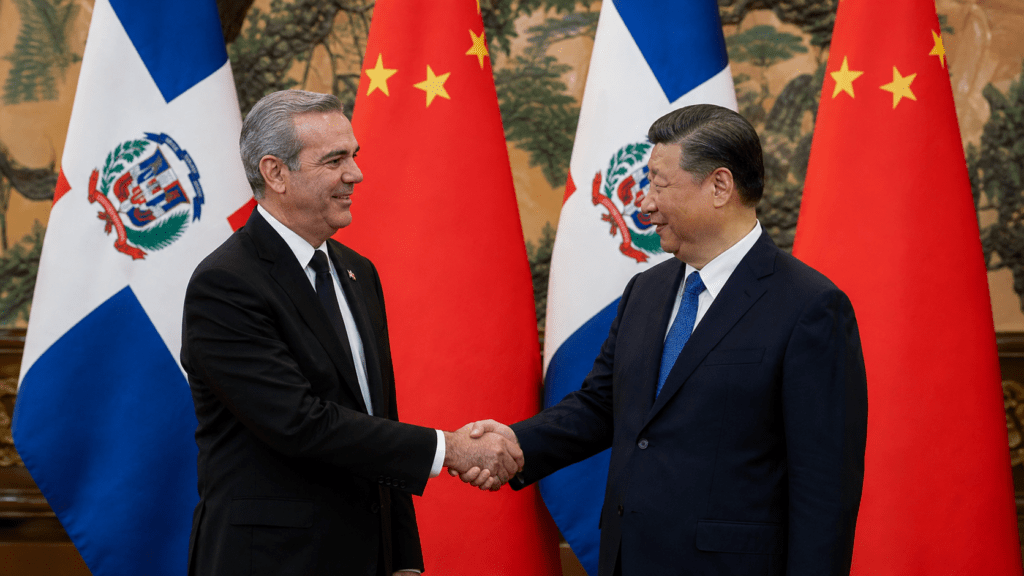
The economic relationship between the Dominican Republic and China is one of the most significant commercial relationships the Caribbean country has developed outside the Western Hemisphere. Although formal diplomatic relations were established on May 1, 2018, commercial contacts between the two countries predate that agreement by decades. The relationship has since evolved from relatively limited trade and commercial representation into a broader framework covering trade, investment, agriculture, infrastructure, tourism and economic cooperation.
The central feature of the relationship is its scale and asymmetry. China has become a major supplier to the Dominican economy, while Dominican exports to China remain comparatively concentrated in a smaller number of products. In 2024, China supplied approximately US$5.995 billion of Dominican merchandise imports, equivalent to 18.3% of the country’s total imports. By comparison, the Dominican Republic exported approximately US$367.8 million in merchandise to China, equivalent to 2.8% of its total exports.
How Dominican Republic-China Trade Developed
The commercial relationship did not begin with diplomatic recognition in 2018. According to the Dominican Ministry of Foreign Affairs, the two countries established an initial friendship treaty in 1940, although relations were interrupted in 1949. Commercial ties were revived in 1993 through the opening of economic and commercial offices, followed by a memorandum regulating their operation in 1997 and further customs cooperation in 2001. Formal diplomatic relations were finally established on May 1, 2018.
The 2018 agreement represented an important institutional turning point. Since then, the two governments have created mechanisms specifically designed to support economic relations, including a Joint Commission for Economic, Commercial and Investment Cooperation and a political consultation mechanism. They also signed memorandums covering commercial cooperation, economic and trade cooperation zones, infrastructure and cooperation under the Belt and Road framework.
The initial post-2018 period was accompanied by a notable increase in Dominican exports. Dominican government data show exports to China rising from US$92.62 million in 2018 to US$244.16 million in 2021, an increase of 163.43%. Exports reached US$275.56 million in 2019 before declining during the subsequent period and then recovering.
The longer-term trend therefore has two distinct dimensions. First, China has become deeply integrated into the Dominican Republic’s import market. Second, the Dominican Republic has gradually expanded access for selected products into China, although the export base remains much smaller than the import relationship.
The Scale of Bilateral Trade
China’s importance becomes clearer when the relationship is placed within the Dominican Republic’s overall trade structure. In 2024, the Dominican Republic imported US$32.76 billion in merchandise and exported US$13.20 billion, according to WTO data based on UN Comtrade. China was the country’s second-largest import source after the United States, supplying 18.3% of total imports. On the export side, China ranked among the country’s major destinations, accounting for 2.8% of Dominican merchandise exports.
| Indicator | 2024 Value | China’s Share |
|---|---|---|
| Dominican Republic merchandise imports | US$32.76 billion | China: 18.3% |
| Dominican Republic merchandise exports | US$13.20 billion | China: 2.8% |
| Imports from China | US$5.995 billion | Major import source |
| Exports to China | US$367.8 million | Major Asian destination |
These figures demonstrate why China occupies a particularly important position in Dominican trade policy. The country is not simply another overseas supplier. Its share of Dominican imports is large enough to influence the availability and cost of consumer goods, machinery, electrical equipment, industrial inputs and other products used throughout the economy.
What the Dominican Republic Imports From China
Dominican imports from China are highly diversified. They include manufactured goods, electrical equipment, machinery, vehicle-related products, consumer goods and numerous intermediate inputs used by Dominican businesses. This breadth is one reason the bilateral relationship has such a large impact on the domestic economy.
Electrical machinery and equipment provide a clear illustration. In 2024, the Dominican Republic imported approximately US$1.14 billion of electrical machinery and equipment from China. At the broader global level, China supplied nearly half of the Dominican Republic’s US$2.36 billion in imports within this product category.
Vehicle-related products are another important component. In 2024, Dominican imports of motor-vehicle parts and accessories under HS heading 8708 totaled about US$146.6 million worldwide, with China supplying approximately US$68.2 million.
China’s role also extends into industrial components and specialized equipment. For example, Dominican imports of certain electrical machines and apparatus under HS 854380 totaled US$31.7 million in 2024, of which nearly US$21.95 million came from China.
For Dominican businesses, the significance of these imports goes beyond retail consumption. Chinese products can function as inputs into construction, manufacturing, transportation, commerce and other services. This means that the bilateral trade relationship is partly embedded in the production structure of the Dominican economy rather than being limited to finished consumer products.
What the Dominican Republic Exports to China
Dominican exports to China are smaller but strategically important because they demonstrate where the country can compete in the Chinese market. The export portfolio includes mineral products, medical and technical equipment, tobacco products, metals and other goods.
China’s 2024 imports from the Dominican Republic reached approximately US$559.3 million according to UN Comtrade data compiled by the World Integrated Trade Solution. The largest categories included optical, photographic, technical and medical apparatus; ores, slag and ash; iron and steel; tobacco products; and copper.
Ferro-nickel illustrates the importance of mineral exports. In 2024, China imported approximately US$88.2 million of ferro-nickel from the Dominican Republic, making China by far the largest destination for this Dominican product among the markets listed by WITS.
Tobacco is another strategically relevant category. The Dominican Ministry of Foreign Affairs reports that Chinese authorities authorized the commercialization of Dominican-made cigars in China in January 2020. That decision created a formal pathway for one of the Dominican Republic’s most internationally recognized manufactured products to enter the Chinese consumer market.
Agriculture has also been identified as an area with export potential. In August 2020, Dominican and Chinese authorities signed a phytosanitary protocol for the export of fresh Dominican avocados to China. Such protocols are important because access to the Chinese food market depends not only on demand but also on sanitary, phytosanitary and customs requirements.
The Dominican government has also promoted products such as premium rum, specialty coffee, cocoa and chocolate, cigars and other nationally distinctive goods in China. These products are particularly relevant to a strategy based on differentiation rather than competing with Chinese manufacturers on price.
The Dominican Republic’s Trade Deficit With China
The most important structural issue in the bilateral relationship is the large trade imbalance. The Dominican Republic buys considerably more merchandise from China than it sells to the Chinese market.
Using WTO and UN Comtrade figures for 2024, Dominican imports from China were about US$5.995 billion compared with exports of approximately US$367.8 million. On that basis, the merchandise trade deficit with China was roughly US$5.63 billion.
The deficit should not be interpreted automatically as evidence that the relationship is economically harmful. Imports can provide consumers with lower-cost goods and businesses with machinery, components and inputs that support economic activity. The more relevant policy question is whether the Dominican Republic can progressively increase the value and diversity of its exports while retaining the productive benefits associated with imports.
The composition of the deficit matters as well. If imports are concentrated in capital goods, industrial inputs and equipment that increase productive capacity, their economic effect can differ from an import structure dominated exclusively by final consumption. Conversely, persistent dependence on imported manufactured goods can create vulnerabilities when domestic producers have limited capacity to compete or when external supply chains are disrupted.
Why the Trade Imbalance Persists
Several structural factors help explain the gap. China has an enormous manufacturing base and produces goods across almost every major industrial category. The Dominican Republic, by contrast, has a much smaller industrial economy and a comparatively narrower export basket.
The difference in productive scale is especially visible in manufactured goods. Chinese companies can supply large global markets with electronics, machinery, vehicles, components, household products and industrial equipment. Dominican exports are more concentrated in areas where the country has established advantages, including mining, medical-device manufacturing, tobacco, jewelry and selected agricultural and food products.
Market access also works differently in each direction. Dominican companies seeking to sell in China may face substantial requirements related to product standards, labeling, food safety, phytosanitary controls, distribution and market development. The physical distance and the need to establish reliable commercial channels can also raise the cost of entering the Chinese market.
For these reasons, increasing exports to China is unlikely to result simply from greater diplomatic engagement. It requires product certification, scale, consistent supply, logistics, local distribution and sustained marketing.
Opportunities for Dominican Businesses
The size of the Chinese market creates opportunities, but they are concentrated in sectors where Dominican companies can offer differentiated products or reliable inputs rather than attempting to compete directly with China’s mass manufacturing base.
Premium Food and Beverages
Specialty coffee, cocoa, chocolate, rum and other premium food and beverage products can benefit from a positioning strategy based on origin, quality and brand identity. The Dominican Republic already has internationally recognized agricultural and beverage products, giving exporters a foundation from which to develop a stronger presence in China. Government trade-promotion activities have already showcased several of these categories to Chinese audiences.
Tobacco and Cigars
Dominican cigars are another area in which differentiation is more important than low-cost production. China’s authorization of Dominican cigars in 2020 provided a formal opening for the sector. Continued growth, however, depends on distribution, regulatory compliance, brand development and the ability of exporters to build long-term relationships with Chinese buyers.
Agricultural Products
Fresh produce represents a potentially significant area of diversification, provided exporters can satisfy Chinese phytosanitary and market-access requirements. The avocado protocol demonstrates how government-to-government technical agreements can be a prerequisite for commercial expansion. Similar opportunities may emerge for other agricultural products when the necessary protocols and market conditions are established.
Minerals and Industrial Materials
Mineral exports already form part of the bilateral relationship. The 2024 ferro-nickel data show that China is a significant destination for Dominican mineral production. This provides an established commercial channel, although mineral exports are exposed to commodity prices, production conditions and changes in global demand.
Medical and Technical Manufacturing
The Dominican Republic’s free-zone manufacturing sector provides another potential platform for exports to China and other Asian markets. The country’s export structure includes medical and technical products, and Chinese import data show meaningful purchases from the Dominican Republic in optical, technical and medical apparatus.
This opportunity is particularly interesting because it shifts the discussion away from traditional commodities. Higher-value manufactured exports can potentially diversify the bilateral relationship and reduce reliance on a small number of raw materials.
Logistics as a Competitive Advantage
The Dominican Republic’s geographic position gives it a potential advantage in regional trade. The country is located at the center of major Caribbean shipping routes and has developed significant maritime and air connectivity with North America, Latin America and the Caribbean.
This matters for Chinese companies as well as Dominican exporters. The Dominican Republic can serve as a platform for companies seeking access to Caribbean and nearby regional markets, particularly when combined with the country’s manufacturing and free-zone infrastructure.
The Dominican customs authority has increasingly emphasized the development of the country as a logistics hub. Its foreign-trade dashboard provides data by country, product and customs regime, giving companies tools for evaluating import and export opportunities.
China as a Source of Investment and Industrial Cooperation
Trade is only one component of the bilateral economic relationship. Since 2018, the two governments have established institutional mechanisms covering investment, infrastructure and economic cooperation. The creation of the Joint Commission for Economic, Commercial and Investment Cooperation provides a formal channel for addressing issues that extend beyond individual transactions.
Infrastructure cooperation has also been included in the bilateral framework. A 2018 memorandum specifically addressed cooperation between the two countries in infrastructure sectors.
For the Dominican Republic, the economic value of Chinese investment depends on its contribution to productive capacity, employment, technology, logistics and export competitiveness. For Chinese companies, the country offers a combination of market access, Caribbean location, established manufacturing capacity and connectivity with larger markets.
Does the Dominican Republic Have a Free Trade Agreement With China?
No comprehensive Dominican Republic-China free trade agreement is currently identified in the bilateral framework described by the Dominican government. The relationship is instead supported by diplomatic agreements, memorandums of understanding, commercial cooperation mechanisms and product-specific market-access arrangements.
This distinction is important for companies. A diplomatic relationship does not automatically mean that Dominican products receive preferential tariff treatment in China or that Chinese goods enter the Dominican Republic under a bilateral free-trade regime. Businesses must therefore evaluate the applicable tariff classification, customs requirements, rules of origin and regulatory conditions for each product.
The Dominican Republic’s broader trade architecture includes other preferential agreements, including arrangements with the United States and Central America under CAFTA-DR and an Economic Partnership Agreement with the European Union and CARIFORUM states. These agreements can influence how companies use the Dominican Republic as a production and distribution platform, even when the final destination is not China.
What the Trade Relationship Means for Dominican Consumers and Companies
For consumers, Chinese imports can increase the availability of products across a wide range of price points. For businesses, Chinese suppliers can provide access to equipment, components and finished products that may not be produced competitively in the Dominican Republic.
At the same time, greater import penetration can increase competitive pressure on domestic manufacturers. Local companies competing directly with imported goods may need to improve productivity, specialize in areas where they have an advantage or integrate into regional and international supply chains.
The effect is therefore mixed by sector. Import-dependent businesses can benefit from competitive sourcing, while producers of goods that compete directly with Chinese manufactured products may face stronger pressure. The overall economic outcome depends on how effectively the country converts imported capital, technology and intermediate goods into higher productivity and greater export capacity.
What Would Reduce the Trade Imbalance?
Reducing the bilateral deficit does not require eliminating imports from China. A more realistic strategy would be to increase the value of Dominican exports and diversify the products sold to the Chinese market.
That would require several complementary measures:
- Expand market access: negotiate and implement the sanitary, phytosanitary and technical protocols needed for additional Dominican products.
- Increase export scale: help producers meet the volumes, consistency and quality standards expected by large Chinese buyers.
- Develop distribution networks: establish reliable importers, wholesalers, e-commerce channels and specialized distributors in China.
- Promote differentiated products: focus on categories where Dominican origin, quality or craftsmanship provides a meaningful advantage.
- Strengthen value-added manufacturing: expand exports beyond raw materials into processed and manufactured goods.
- Use trade intelligence: analyze Chinese import demand and Dominican production capacity at the product level rather than treating China as a single undifferentiated market.
The Dominican customs authority’s country- and product-level data can support this type of analysis. Its trade statistics allow users to examine imports and exports by product, country and customs regime.
Key Challenges for Businesses Entering the Chinese Market
China’s market size should not obscure the practical challenges involved in exporting there. Dominican companies must be prepared for a market that is geographically distant, highly competitive and governed by detailed technical and regulatory requirements.

Among the most important challenges are product compliance, Chinese-language commercial materials, local distribution, payment and contract arrangements, intellectual-property protection, shipping costs and the ability to maintain consistent supply. Food and agricultural exporters face additional sanitary and phytosanitary requirements.
Another challenge is scale. A product can be successful among a small group of consumers without becoming a commercially viable export. Dominican companies therefore need to evaluate whether they can produce sufficient volumes while maintaining quality and managing logistics costs.
Market selection within China also matters. China is not a single homogeneous consumer market. Large metropolitan areas, inland regions and different consumer segments can have very different purchasing patterns. Exporters may therefore benefit from working with specialized distributors rather than attempting to enter the entire market simultaneously.
The Evolution of the Economic Relationship
The trajectory since 2018 suggests that the Dominican Republic-China relationship has moved beyond the initial establishment of diplomatic ties toward a more institutionalized economic partnership. The two countries have created formal mechanisms for economic cooperation, expanded agricultural and commercial contacts and opened market-access channels for products such as cigars and avocados.
At the same time, the trade statistics show that the relationship remains heavily weighted toward Chinese exports to the Dominican Republic. China’s role as a supplier is already broad and deeply established, while Dominican exports are more concentrated in commodities, selected manufactured goods and premium products.
The next stage of the relationship will therefore depend less on increasing the volume of bilateral trade alone and more on improving its composition. A larger trade relationship is not necessarily a more balanced one. For Dominican policymakers and businesses, the strategic objective is to capture more value from access to the Chinese market while using imports and investment to strengthen domestic productive capacity.