 22°C
22°C

Electric Power Companies in the Dominican Republic: A Complete Guide
he Dominican Republic's electricity sector includes public and private power generators, a national transmission company, regional distribution utilities and specialized organizations that coordinate the operation of the interconnected grid. Major participants include EGE Haina, AES Dominicana, Empresa de Generación Eléctrica Punta Catalina, Empresa de Generación Hidroeléctrica Dominicana, ETED, and the distribution companies EDESUR, EDENORTE and EDEESTE. Understanding how these organizations differ helps investors, businesses and electricity consumers navigate the country's power market and identify the companies responsible for generation, grid infrastructure and electricity supply.


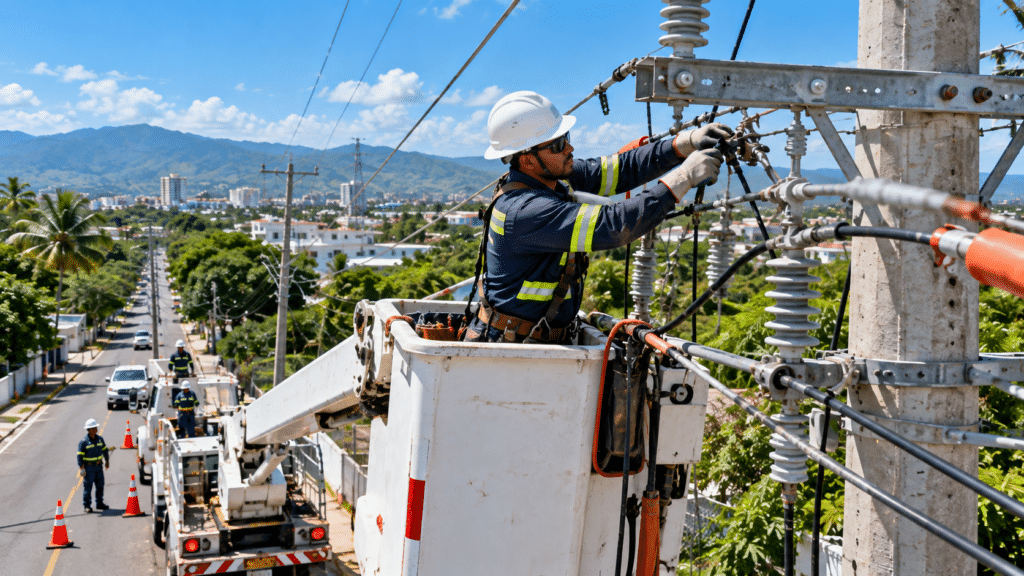
The electricity industry in the Dominican Republic is organized around several distinct activities: generating electricity, transporting it over high-voltage networks, distributing it to customers and coordinating transactions and system operations. Publicly owned companies operate alongside private and mixed-capital businesses, creating a market in which different organizations have specialized responsibilities.
For companies considering an investment in the country, these distinctions matter. A power generator produces electricity but does not necessarily deliver it directly to households. The national transmission company manages high-voltage infrastructure, while distribution utilities operate networks serving customers in their respective concession areas. Other participants coordinate system operations, regulate the market or purchase electricity under commercial contracts.
The country’s principal electricity framework is established by General Electricity Law No. 125-01 and its amendments. The National Energy Commission (CNE) explains that the restructuring of the former state electricity company created separate generation, transmission and distribution businesses, opening the way for private participation in generation and other activities that do not have the characteristics of a natural monopoly.
The following guide identifies the principal companies and explains their roles within the Dominican electricity system. It focuses on established market participants rather than attempting to list every generating facility, renewable energy developer or electricity-related service provider operating in the country.
1. How the Dominican Republic’s Electricity Industry Is Organized
The Dominican electricity industry is commonly divided into three core activities: generation, transmission and distribution. Commercialization and system coordination are also essential to the functioning of the market. Each activity addresses a different stage in delivering electricity from a generating facility to an end user.
Electricity Generation
Generation companies operate power plants that convert energy from fuels, water, wind, sunlight or other sources into electricity. The country’s generating fleet includes thermal plants, hydroelectric facilities, wind farms and solar photovoltaic installations. Different technologies contribute in different ways, depending on fuel availability, weather conditions, operating costs and system requirements.
Generation companies may sell electricity through contracts with distribution utilities or participate in the wholesale electricity market under the applicable rules. Their commercial arrangements, installed capacity and technologies vary considerably, so the presence of a company in the market does not necessarily indicate that all its plants operate under the same contractual model.
Electricity Transmission
Transmission involves transporting electricity through high-voltage lines and substations from generating facilities toward distribution networks and major consumers. In the Dominican Republic, Empresa de Transmisión Eléctrica Dominicana (ETED) is the principal company responsible for operating, maintaining and administering the national high-voltage transmission infrastructure.
Transmission is essential because generating capacity alone cannot guarantee a reliable supply. Electricity must be transported through a network capable of accommodating demand, managing power flows and connecting generating facilities to the wider system. Constraints or failures in transmission infrastructure can affect the delivery of electricity even when generating plants are available.
Electricity Distribution
Distribution companies deliver electricity through local and regional networks to residential, commercial and industrial customers. They also perform customer-facing functions such as service connections, metering, billing and the management of supply arrangements within their respective concession areas.
The three principal state-owned distribution utilities are EDESUR Dominicana, EDENORTE Dominicana and Empresa Distribuidora de Electricidad del Este (EDEESTE). Their geographic responsibilities differ, making the identity of the local distributor important for customers seeking a new connection, reporting a service interruption or arranging electricity supply.
System Coordination and Market Regulation
The physical electricity system also requires coordination between generators, transmission infrastructure and distribution networks. The Organismo Coordinador del Sistema Eléctrico Nacional Interconectado (OC) coordinates the operation of facilities belonging to participating agents in the interconnected system. Real-time operational functions are performed through the relevant control infrastructure, including the Centro de Control de Energía (CCE) within ETED.
The Superintendency of Electricity (SIE) has a different role: it regulates and supervises the electricity subsector under the applicable legal and technical framework. The OC coordinates system operation; ETED operates transmission infrastructure; and the SIE exercises regulatory oversight. These functions should not be confused.
The official SIE frequently asked questions and the Organismo Coordinador’s institutional overview provide further information about the structure and operation of the Dominican electricity system.
2. Major Electricity Generation Companies
Generation is the most diverse part of the Dominican electricity industry, with companies operating different technologies and participating in different commercial arrangements. Some focus on thermal generation, while others specialize in hydroelectric power or renewable energy. Several established companies play important roles in supplying electricity to the interconnected national system.
EGE Haina (Empresa Generadora de Electricidad Haina)
EGE Haina is one of the country’s major electricity generation companies. Established in 1999 during the restructuring of the state electricity sector, it operates a portfolio of generating assets and has a mixed-capital structure involving public and private interests. The company identifies electricity generation and the development of more sustainable energy resources as central elements of its business.
Its portfolio includes conventional thermal generation and renewable energy investments. This combination illustrates how established Dominican generators can contribute to electricity supply while participating in the diversification of the country’s generation mix.
EGE Haina is relevant to the wider electricity market because generation companies must provide the power required to meet demand while managing plant availability, operating costs, fuel or resource requirements and contractual commitments. Its role should be understood as that of a generator, rather than a regional electricity distribution utility.
More information about the company’s operations and corporate structure is available through its official corporate website.
AES Dominicana
AES Dominicana is an important participant in the country’s electricity generation industry. Its operations include AES Andrés, a combined-cycle power plant associated with a liquefied natural gas import terminal, and Dominican Power Partners (DPP), which operates generation facilities in the Los Mina area. AES also has an established relationship with the ITABO generation complex.
Natural gas infrastructure has been significant to the development of the company’s operations. AES Andrés combines electricity generation with LNG import and gas infrastructure, while gas supply arrangements also support generation assets connected to the company’s wider operations.
The company illustrates the relationship between electricity generation and fuel infrastructure. Thermal power plants depend on the availability, price and logistics of their fuel, making supply arrangements an important factor in operating costs and electricity market economics.
AES Dominicana’s role is distinct from that of ETED and the distribution companies: it operates in generation and related energy infrastructure rather than serving as the national transmission operator or a regional retail electricity distributor. Its corporate history describes its investments and generating operations in the Dominican Republic.
Empresa de Generación Eléctrica Punta Catalina (EGEPC)
Empresa de Generación Eléctrica Punta Catalina (EGEPC) is the public company associated with the Punta Catalina thermoelectric power complex. The facility is a major component of the country’s conventional generating fleet and uses coal-fired generation technology.
Punta Catalina is important because large thermal plants can provide substantial blocks of generating capacity to the interconnected system. Their contribution depends on plant availability, maintenance, fuel supply and the technical and commercial conditions under which they operate.
As a publicly owned generation business, EGEPC is distinct from the privately operated generating companies and from the utilities responsible for delivering electricity to customers. Its role is centered on producing electricity for the national system.
The company’s institutional status can be checked through the Dominican government’s official directory of state institutions and public companies.
Empresa de Generación Hidroeléctrica Dominicana (EGEHID)
EGEHID is the state-owned company responsible for operating and administering the Dominican Republic’s hydroelectric power plants. It generates electricity using water resources and manages facilities that form part of the country’s renewable generation infrastructure.
Hydroelectric generation has a distinctive role in an electricity system because output depends on water availability, reservoir conditions and operating requirements. Depending on the design of a facility and the availability of stored water, hydroelectric plants can contribute to meeting demand at different times and help diversify the country’s dependence on thermal generation.
EGEHID also manages the commercial side of its generation activities, including the sale of electricity under applicable contractual arrangements. Its operations therefore connect public ownership of hydroelectric infrastructure with participation in the wider electricity market.
The company’s official website provides information about its generating facilities, projects and institutional responsibilities.
Empresa Generadora de Electricidad ITABO
Empresa Generadora de Electricidad ITABO, commonly known as EGE ITABO, is another established participant in the Dominican generation market. The ITABO complex is associated with conventional thermal generation and forms part of the country’s broader portfolio of power plants.
The company’s importance lies in its contribution to the available generating capacity of the interconnected system. Like other thermal generators, its production and commercial performance depend on plant availability, fuel costs, maintenance requirements and the market arrangements under which electricity is supplied.
ITABO should be distinguished from AES Andrés and Dominican Power Partners, even though AES has historically held interests in ITABO. Corporate ownership and operating relationships can change, so businesses conducting investment due diligence should verify current shareholding and control arrangements using the relevant corporate disclosures.
The Organismo Coordinador lists EGE ITABO among the companies participating in the Dominican electricity system. Its directory of associated agents is a useful reference for identifying participating organizations.
Other Conventional Generation Companies
Beyond the largest and best-known generators, the Dominican market includes additional companies operating thermal power plants and other generation facilities. These include Generadora Palamara-La Vega, Seaboard-related generation businesses, Transcontinental Capital Corporation, Consorcio Energético LAESA, Lear Investments and other registered market participants.
Their technologies, installed capacities, fuel arrangements and commercial structures differ. Some operate facilities designed to provide dispatchable power, while others participate through specific plants or contractual arrangements. Their individual importance therefore depends on the facility concerned, its contribution to the system and its operating availability.
The Organismo Coordinador’s agent directory provides a broader view of the companies participating in the interconnected electricity market. Its listing should be used alongside company disclosures and regulatory records when verifying whether a particular entity is active and which facilities it operates.
3. Renewable Energy Companies and Independent Developers
Renewable energy has become an increasingly important part of the Dominican electricity market. Solar and wind projects are developed by established generators, specialized renewable energy companies and project-specific businesses. This structure allows investment to be distributed across different developers, locations and technologies rather than concentrated exclusively in large conventional power stations.
EGE Haina and Renewable Generation
EGE Haina is an example of an established generator that also develops renewable energy assets. Its Esperanza Renovable complex in Valverde province combines solar and wind generation. In May 2026, the National Energy Commission reported the inauguration of the integrated project, comprising Esperanza Solar 1, Esperanza Solar 2 and Esperanza Eólico, with a combined installed capacity of 200 megawatts.
The project demonstrates the growing use of hybrid renewable facilities, which combine different generation technologies within a coordinated development. Solar and wind resources can have different production patterns, although combining them does not eliminate variability or remove the need for appropriate grid planning and system coordination.
Further information about the project is available in the National Energy Commission’s report on EGE Haina’s Esperanza Renovable complex.
Independent Solar and Wind Developers
The market also includes companies whose principal activity is developing or operating renewable energy projects. The Organismo Coordinador’s agent directory identifies participants such as Agua Clara, Emerald Solar, Montecristi Solar FV, Grupo Eólico Dominicano, Parques Eólicos del Caribe and San Pedro Bio-Energy, among others.
These companies do not all perform the same function. Some own or operate generating assets, while others may be involved in project development, renewable energy investment or specific facilities. A company name appearing in an industry directory should not automatically be interpreted as proof that every proposed project has reached commercial operation.
The National Energy Commission maintains information on renewable energy concessions and project status. Its concession status portal helps distinguish projects with granted authorizations from applications that remain under review.
Why Renewable Energy Companies Matter
Renewable developers contribute to diversifying the country’s generation portfolio and attracting investment into new electricity infrastructure. Solar photovoltaic projects convert sunlight into electricity, while wind farms use wind resources to generate power. Biomass and other qualifying technologies can contribute through different operating models.
Their contribution must be evaluated in terms of actual operating capacity, energy production, grid connection and availability, rather than the total capacity announced for projects that are still under development. Concession approval, construction, commissioning and commercial operation are distinct milestones.
Renewable generation also creates additional planning requirements. Because solar and wind output varies with weather conditions, the electricity system must coordinate these resources with other generators and maintain the transmission and operational capabilities needed to balance supply and demand.
4. The National Electricity Transmission Company: ETED
Empresa de Transmisión Eléctrica Dominicana (ETED) is the principal state-owned transmission company in the Dominican Republic. It operates, maintains and administers the high-voltage transmission networks, substations and associated equipment used to transport electricity through the interconnected system.
ETED emerged from the restructuring of the former state electricity company and began operating under its separate institutional structure in 2008. Its responsibilities are distinct from those of power generators and distribution utilities: it provides the transmission infrastructure through which electricity can move between generating facilities and the networks serving consumers.

What ETED Does
ETED’s core functions include operating and maintaining transmission lines and substations, managing transmission assets and supporting the reliable movement of electricity across the national system. These activities are essential to connecting power plants with demand centers and allowing electricity generated in one area to be delivered elsewhere.
The company also houses the Centro de Control de Energía, which performs real-time operational functions for the interconnected system under the applicable coordination framework. This role is separate from the regulatory responsibilities of the SIE and the system coordination responsibilities of the Organismo Coordinador.
Why Transmission Matters to Investors
Transmission availability can determine whether a proposed generation project can connect to the electricity system and deliver its output economically. A project may have favorable resource conditions and the necessary generating equipment but still face connection constraints, network reinforcement requirements or delays associated with transmission infrastructure.
Developers should therefore consider the proposed connection point, available network capacity, required technical studies and any necessary infrastructure works early in project planning. The existence of a nearby transmission line does not, by itself, establish that sufficient capacity is available for a new plant.
ETED provides further information about its responsibilities through its institutional history and official frequently asked questions.
5. The Three Main Electricity Distribution Companies
The Dominican Republic’s three principal state-owned distribution companies are EDESUR Dominicana, EDENORTE Dominicana and EDEESTE. Each operates within a designated concession area and is responsible for distributing and commercializing electricity for customers in its territory.
Their functions extend beyond operating local electricity networks. Distribution companies connect customers, manage meters and billing, address service interruptions, maintain infrastructure and purchase electricity through applicable contractual arrangements. Their performance also affects the financial sustainability of the electricity sector because energy losses, collection rates and operating costs influence the relationship between electricity purchased and revenue collected.
EDESUR Dominicana
EDESUR Dominicana distributes and commercializes electricity in its concession area, covering parts of the southern region of the country, including areas of the capital region and surrounding provinces. Its network serves residential customers, businesses, public institutions and industrial users within its territory.
The company’s responsibilities include managing customer connections, billing electricity consumption, maintaining distribution infrastructure and addressing service issues. Its performance is therefore directly relevant to companies seeking to establish or expand operations in areas served by EDESUR.
For businesses, the relevant questions include the availability and capacity of the local distribution network, the requirements for a new connection, the applicable tariff and the procedures for resolving supply problems. These matters should be assessed at the specific property or project location rather than inferred from the distributor’s overall service territory.
Official information about the company and its services should be obtained through EDESUR Dominicana.
EDENORTE Dominicana
EDENORTE Dominicana distributes and commercializes electricity across a large part of the northern region of the Dominican Republic. Its concession area includes Santiago and other northern provinces, making it an important electricity provider for households, tourism businesses, agricultural operations, industrial facilities and commercial developments in that part of the country.
Like the other distribution utilities, EDENORTE manages the local infrastructure required to deliver electricity to customers and administers the associated customer service and commercial processes. The condition and capacity of its distribution network can be important when evaluating the electricity requirements of a new industrial facility, hotel or commercial property.
Companies planning to operate in the northern region should confirm whether a proposed site falls within EDENORTE’s concession area and establish the requirements for the intended electrical load before finalizing project design.
Further information is available through EDENORTE Dominicana.
EDEESTE
Empresa Distribuidora de Electricidad del Este (EDEESTE) is responsible for electricity distribution and commercialization in its concession area in the eastern part of the country, including areas extending toward La Altagracia province. Its territory also includes parts of the Greater Santo Domingo area and surrounding locations.
EDEESTE is particularly relevant to businesses operating in eastern urban and tourism destinations, although the responsible distributor must always be verified for the specific property. A business’s geographic description or proximity to a city does not necessarily establish which utility serves its connection.
The company handles customer supply arrangements and the distribution infrastructure within its concession area. Businesses should consult EDEESTE directly to confirm connection requirements, service availability and procedures for commercial or industrial installations.
Its official corporate profile describes its service area and distribution responsibilities.
How the Distribution Companies Are Managed
The three state-owned distribution utilities have been administered through the Consejo Unificado de las Empresas Distribuidoras (CUED), established as part of the restructuring of the public electricity sector. The arrangement provides a unified governance framework for EDESUR, EDENORTE and EDEESTE while preserving their separate operating identities and concession areas.
The companies remain distinct for customer service, network management and the administration of their respective supply arrangements. Businesses should therefore contact the utility responsible for their location rather than assuming that a centralized administrative structure means all customer procedures are identical.
6. Other Important Participants in the Electricity Market
The companies that generate, transmit and distribute electricity are not the only organizations necessary for the system to function. Market coordination, operational control and regulatory supervision are also essential. Understanding these roles helps explain how electricity moves from generating plants to consumers and how the system responds to changing demand.
Organismo Coordinador del Sistema Eléctrico Nacional Interconectado
The Organismo Coordinador (OC) coordinates the operation of facilities belonging to participating generation, transmission and distribution companies within the Sistema Eléctrico Nacional Interconectado (SENI). Its role is to support coordinated system operation under the applicable rules and to facilitate the functioning of the interconnected electricity market.
Electricity generation and consumption must be balanced across the system. Coordination helps determine how participating facilities operate within the applicable technical and commercial framework, taking into account factors such as available generation, demand, network conditions and operating constraints.
The OC should not be confused with a power generator or electricity distributor. It coordinates the system rather than serving as the ordinary retail supplier for households and businesses.
Its official institutional overview explains its role and legal foundation.
Superintendency of Electricity (SIE)
The Superintendency of Electricity is the specialized regulator responsible for supervising and regulating the electricity subsector within its legal mandate. Its functions include oversight of compliance with applicable legislation, regulations and technical standards, as well as responsibilities involving regulated tariffs and transmission or distribution charges where applicable.
The SIE is important to all categories of electricity companies because its regulatory framework establishes obligations that extend beyond the physical operation of a plant or network. Generators, distributors and other market participants must consider the rules relevant to their activities and the commercial arrangements in which they participate.
The regulator also publishes decisions and tariff information relevant to electricity customers. Businesses should consult its official publications when assessing regulatory changes or confirming the rules applicable to a particular transaction.
Official information is available through the Superintendency of Electricity.
Ministry of Energy and Mines and National Energy Commission
The Ministry of Energy and Mines (MEM) and the National Energy Commission (CNE) also play important roles, although neither should be described as an ordinary electricity generator or distribution utility. The ministry is responsible for national energy policy within its statutory mandate, while the CNE has responsibilities involving energy planning, concession procedures and renewable energy incentives.
These institutions are particularly relevant to developers seeking to establish new generating facilities. The applicable authorization process depends on the project’s technology, structure and intended activity. Investors should consult the CNE’s concession records and published procedures rather than relying solely on a company’s announcement that a project is planned or under development.
The relevant official resources are the Ministry of Energy and Mines and the National Energy Commission.
Unregulated Users and Large Electricity Consumers
Large electricity consumers may participate in the wholesale electricity market if they satisfy the applicable legal and regulatory requirements for unregulated users. Their position differs from that of ordinary customers receiving electricity under a regulated distribution arrangement.
Depending on their eligibility and contractual structure, these consumers may enter into electricity supply agreements with generators or other authorized market participants. The commercial benefits depend on the applicable market rules, contract terms, network charges and the consumer’s demand profile.
Businesses should not assume that high electricity consumption automatically confers eligibility for unregulated market participation. They must verify the relevant requirements and evaluate the complete cost of supply before deciding whether an alternative arrangement is appropriate.
7. How Electricity Companies Work Together
The electricity system depends on coordination among organizations with different responsibilities. A generator produces electricity, transmission infrastructure transports it through the interconnected network, and distribution utilities deliver it to customers. Market coordination and regulatory oversight provide the operational and institutional framework that allows these activities to function together.
Consider a commercial solar project that intends to sell electricity into the interconnected system. The developer must establish the relevant project authorizations and satisfy applicable technical requirements. The generating facility must then connect to an appropriate network, comply with the conditions governing its operation and participate in the market under the applicable contractual and regulatory framework.
A different process applies when a company installs solar panels primarily to reduce its own electricity consumption. In that case, the business must establish the requirements for its installation and connection, determine whether surplus electricity may be exported and confirm the applicable metering and compensation arrangements. The role of the distribution company may be more directly relevant than that of a wholesale electricity purchaser.
These examples demonstrate why the identity of the relevant company depends on the activity being undertaken. A generator, transmission operator, distributor, regulator and system coordinator are not interchangeable, even though their functions are closely connected.
8. What Businesses Should Consider When Dealing With Electricity Companies
Confirm the Responsible Distribution Utility
Businesses should identify the distribution company serving their specific location before signing a lease, purchasing a property or planning an electricity-intensive operation. This is particularly important for hotels, factories, warehouses, shopping centers and other facilities with significant power requirements.
Confirming the responsible utility helps establish the procedures for new connections, service upgrades, metering and commercial supply arrangements. It also provides a starting point for investigating local network constraints that may affect a proposed development.
Evaluate Power Requirements Early
Electricity demand should be incorporated into the early design of industrial and commercial projects. The required capacity, expected consumption profile, backup arrangements and sensitivity to interruptions can influence equipment selection, operating costs and infrastructure requirements.
Businesses with substantial or critical loads should assess whether the existing supply arrangement is suitable and whether additional technical measures are required. A connection that serves a small office may not be adequate for a manufacturing facility or a large hospitality development.
Distinguish Installed Capacity From Actual Electricity Production
A generator’s installed capacity describes its rated ability to produce electricity under specified conditions. It does not indicate how much electricity the facility will actually generate over a given period. Actual output depends on plant availability, operating constraints, fuel or resource availability and market conditions.
This distinction is especially important when comparing thermal plants, hydroelectric stations, solar facilities and wind farms. Their operating characteristics differ, so installed megawatts alone do not provide a complete measure of their contribution to the electricity system.
Review Contracts and Supply Conditions
Businesses purchasing electricity under commercial contracts should review the duration of the agreement, pricing structure, applicable charges, supply conditions and provisions addressing interruptions or changes in circumstances. Companies considering direct arrangements with generators must also confirm their eligibility and compliance with the applicable market rules.
For renewable energy projects, the commercial analysis should distinguish between contracted output, electricity sold under market arrangements and power consumed directly by the project owner. These categories can have different financial and operational implications.
Check Current Company and Project Information
Ownership structures, project status and operating arrangements can change. Investors should verify the current status of a company, its generating facilities and any relevant concession through official company disclosures, the Organismo Coordinador and the appropriate government authorities.
The National Energy Commission’s project records are particularly useful when evaluating renewable developments. A project listed as being processed or holding a provisional authorization should not automatically be treated as a completed power plant supplying electricity commercially.
9. Frequently Asked Questions
What are the main electricity companies in the Dominican Republic?
Major participants include EGE Haina, AES Dominicana, EGEPC, EGEHID and EGE ITABO in generation; ETED in transmission; and EDESUR, EDENORTE and EDEESTE in distribution. The OC coordinates the operation of the interconnected system, while the SIE regulates and supervises the electricity subsector.
Who is responsible for electricity transmission?
Empresa de Transmisión Eléctrica Dominicana (ETED) operates, maintains and administers the country’s principal high-voltage transmission infrastructure. It is responsible for transporting electricity through the transmission network rather than supplying electricity directly to ordinary retail customers.
Which companies distribute electricity to households and businesses?
The principal state-owned distribution utilities are EDESUR Dominicana, EDENORTE Dominicana and EDEESTE. Each serves a designated concession area. The appropriate company depends on the location of the property or business connection.
Which companies generate renewable electricity?
Renewable generation involves both established electricity companies and specialized developers. EGE Haina operates solar and wind assets, while EGEHID manages hydroelectric facilities. Other renewable participants include companies developing or operating solar, wind and biomass projects. Their operating status and capacity should be verified through official records.
Is Punta Catalina a distribution company?
No. Empresa de Generación Eléctrica Punta Catalina (EGEPC) is associated with the Punta Catalina thermoelectric generation complex. Its role is electricity generation, not the regional distribution of electricity to households and businesses.
What is the difference between ETED and the Organismo Coordinador?
ETED operates and maintains transmission infrastructure and houses the Centro de Control de Energía, which performs real-time operational functions. The Organismo Coordinador coordinates the operation of participating facilities across the interconnected system. Their responsibilities are complementary but distinct.
Can businesses purchase electricity directly from a generator?
Some large consumers may qualify to participate in the wholesale electricity market and enter into supply agreements under the applicable rules. Eligibility, network charges, contractual conditions and other requirements must be assessed before arranging direct electricity purchases.
Where can investors verify which electricity companies are active?
The Organismo Coordinador publishes a directory of associated agents, while the National Energy Commission provides information on concessions and renewable energy projects. Company websites and official government records can provide additional details about ownership, operating assets and project status.
Conclusion
The Dominican Republic’s electricity industry relies on a network of generators, transmission infrastructure, distribution utilities and specialized organizations responsible for system coordination and regulatory oversight. EGE Haina, AES Dominicana, Punta Catalina, EGEHID and ITABO represent important parts of the generation landscape, while ETED operates the national transmission network and EDESUR, EDENORTE and EDEESTE distribute electricity within their respective concession areas.
For investors and businesses, understanding these distinctions is essential when evaluating power supply, developing energy projects or entering the Dominican electricity market. The most relevant company depends on the specific requirement: generating electricity, connecting a facility, purchasing power, accessing the transmission network or obtaining regulatory information.
Official company directories, regulatory publications and concession records should be consulted when verifying current ownership, operating status and project capacity. These sources provide a more reliable basis for commercial decisions than company names or project announcements alone.