 25°C
25°C

Minerals Extracted In The Dominican Republic And Their Uses
The Dominican Republic has a diverse mining sector that produces metallic minerals such as gold, silver, copper, zinc and ferronickel, as well as industrial minerals and construction materials including limestone, gypsum, clay, silica sand and marble. The country also produces distinctive gemstones and organic gem materials such as larimar and amber. Their uses range from jewelry and electronics to cement, construction, industrial manufacturing and exports.


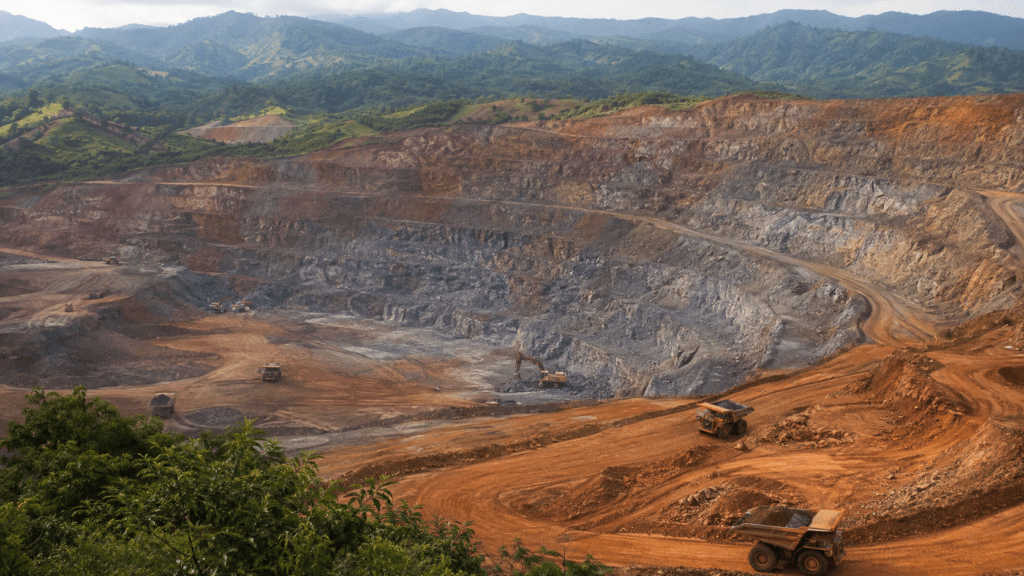
The Dominican Republic is known internationally for its beaches, agriculture and tourism, but its geology also supports a diverse mining industry. Mineral deposits occur across several regions of the country, with metallic mining concentrated particularly in provinces such as Sánchez Ramírez and Monseñor Nouel, while non-metallic minerals and construction materials are extracted in many other parts of the country.
The main minerals and mineral resources extracted in the Dominican Republic include gold, silver, copper, zinc, ferronickel, limestone, gypsum, clay, silica sand, marble, travertine, volcanic rock and salt. The country also produces larimar, a distinctive blue gemstone found in Barahona, and amber, a fossilized tree resin that is widely used in jewelry. The Ministry of Energy and Mines identifies both metallic and non-metallic mining as important components of the national extractive sector.
What Are the Main Minerals Extracted in the Dominican Republic?
The country’s mining industry can broadly be divided into two groups. Metallic minerals include gold, silver, copper, zinc and ferronickel, while non-metallic minerals and rocks include limestone, gypsum, clay, silica sand, marble, travertine, volcanic rocks and salt. Larimar and amber form a separate category because they are primarily valued as gemstones or ornamental materials.
| Mineral or resource | Main uses | Important producing areas |
|---|---|---|
| Gold | Jewelry, investment, electronics and industrial applications | Sánchez Ramírez, Monseñor Nouel and other mineralized areas |
| Silver | Jewelry, electronics, industrial and photographic applications | Primarily associated with metallic mining districts |
| Copper | Electrical wiring, electronics, plumbing and industrial equipment | Monseñor Nouel |
| Zinc | Galvanizing steel, alloys and industrial products | Monseñor Nouel |
| Ferronickel | Stainless steel and other nickel-containing alloys | Monseñor Nouel and La Vega |
| Limestone | Cement, aggregates, construction and industrial products | Several regions throughout the country |
| Gypsum | Plasterboard, plaster, cement and construction products | Barahona and other areas |
| Clay | Ceramics, bricks, cement and other industrial products | Santiago and other areas |
| Silica sand | Glass, foundry applications and industrial materials | Santiago and central and southern areas |
| Marble | Decorative stone, flooring, countertops and construction | Monseñor Nouel, Barahona and other areas |
| Salt | Food, chemical production and industrial processes | Southern areas, including Barahona |
| Larimar | Jewelry and ornamental objects | Barahona |
| Amber | Jewelry, ornaments and collectible pieces | Puerto Plata, Santiago and Hato Mayor |
Gold
Gold is one of the Dominican Republic’s most important metallic mineral resources. Large-scale gold production is associated particularly with the Pueblo Viejo mining area in Sánchez Ramírez Province. Gold is extracted from mineralized rock and processed to recover the metal, which is subsequently used in international markets.
The principal use of gold is jewelry, but its physical and chemical properties also make it useful for electronics and other specialized industrial applications. Gold is highly resistant to corrosion and conducts electricity effectively, which helps explain its use in electronic components. It is also widely treated as a financial asset and store of value.
Dominican gold production has historically represented a major part of the country’s mineral exports. Official Dominican mining data show a substantial increase in gold production over the 2010–2022 period.
Silver
Silver is another important metallic resource extracted in the Dominican Republic. It is produced in association with polymetallic deposits rather than functioning only as a standalone mining product. Official information identifies Sánchez Ramírez and Monseñor Nouel among the country’s principal metallic mining areas.
Silver has a wide range of uses. It is used in jewelry and decorative objects, but its high electrical and thermal conductivity also makes it valuable for electronics and electrical applications. Silver compounds have additional specialized industrial uses.
Because silver can occur together with other metals in the same ore, its recovery may form part of a broader processing operation rather than a completely separate mining process.
Copper
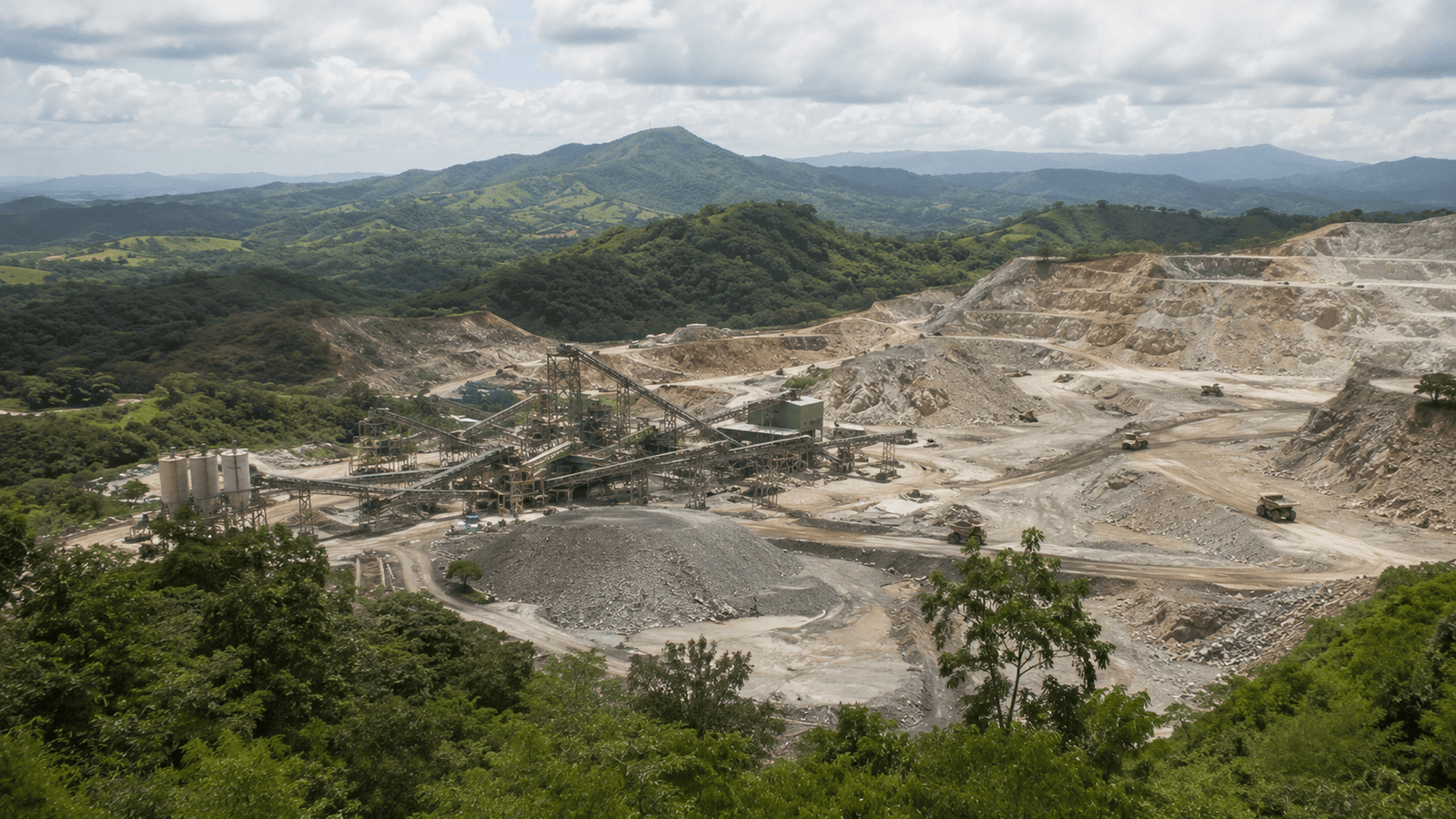
Copper is extracted in the Dominican Republic mainly in the central mining region. The Ministry of Energy and Mines identifies the Maimón area of Monseñor Nouel Province as an important location for copper and zinc mining.
Copper is one of the most widely used industrial metals in the world. Its principal advantage is its excellent electrical conductivity, which makes it important for electrical wiring, motors, generators, transformers and electronic equipment. It is also widely used in plumbing, industrial machinery and alloys such as brass and bronze.
The importance of copper therefore extends well beyond mining itself. Once processed, copper becomes a basic industrial input for infrastructure, manufacturing and electrical technology.
Zinc
Zinc is extracted alongside other metallic minerals in the Maimón mining district. Its most important industrial application is galvanization, a process in which zinc is applied to iron or steel to help protect the underlying metal from corrosion.
Zinc is also used to produce alloys, including brass, and in a range of industrial products. Because zinc is commonly associated with other metallic deposits, its production can be integrated into polymetallic mining and processing operations.
Ferronickel
Ferronickel is one of the Dominican Republic’s best-known mineral exports. Production is associated with the central part of the country, particularly Monseñor Nouel and La Vega. The mineral is produced from nickel-bearing lateritic ore and processed into a ferroalloy containing iron and nickel.
The principal use of ferronickel is the manufacture of stainless steel and other nickel-containing alloys. Nickel contributes properties such as corrosion resistance and durability, making it valuable in construction materials, industrial equipment, transportation and many manufactured products.
The Dominican Republic has a long history of nickel mining, and ferronickel remains an important example of how a locally extracted mineral can enter international industrial supply chains.
Limestone
Limestone is among the most widely extracted non-metallic resources in the Dominican Republic. Deposits occur in several regions, and official mining information identifies limestone extraction for construction aggregates and cement production as an important activity.
The most significant use is the manufacture of cement. Limestone provides the calcium-rich material needed to produce cement clinker, which is subsequently ground to manufacture cement. Limestone is also crushed and processed into aggregates used in roads, buildings and other construction projects.
Its widespread availability and importance to the construction industry make limestone fundamentally different from high-value metallic minerals. Much of its economic importance comes from the large quantities required for infrastructure and building materials.
Gypsum
Gypsum is another important industrial mineral extracted in the Dominican Republic. Mining activity involving gypsum has been documented particularly in the southern part of the country, including Barahona and Bahoruco.
Gypsum is widely used in construction. It is a key raw material for plasterboard and plaster products and is also added to cement during manufacturing to help control setting time.
Because gypsum is relatively soft and can be processed into useful building products, its importance is closely linked to the construction industry.
Clay
Clay is extracted for industrial and construction applications. Dominican mining records identify clay production in areas including Santiago.
Depending on its mineral composition and physical properties, clay can be used to manufacture bricks, tiles, ceramics and other products. Certain clays are also used as industrial raw materials and in cement production.
Clay therefore represents another example of a mineral resource whose value comes primarily from domestic industrial applications rather than from its price as a precious metal.
Silica Sand
Silica sand is extracted in several Dominican mining areas and is classified among the country’s industrial minerals. It is composed primarily of quartz and is valuable because of its high silica content.
One of its best-known applications is glass manufacturing. Silica sand can also be used in foundry processes, construction materials and other industrial applications. Its exact use depends on the purity and physical characteristics of the material.
Marble
Marble is extracted as an ornamental and construction stone. Official Dominican sources identify marble production in several areas, including parts of the central and southern regions.
After extraction and cutting, marble can be polished and used for flooring, wall coverings, countertops, decorative elements and other architectural applications. Its value depends heavily on its color, pattern, quality and ability to take a polish.
Unlike gold or copper, marble generally enters the market as a finished or semi-finished stone product rather than being chemically refined into a metal.
Travertine and Volcanic Rock
Travertine and volcanic rocks are among the other non-metallic resources produced in the Dominican Republic. They are primarily relevant to the construction and ornamental-stone industries.
Depending on their characteristics, these rocks can be cut into decorative pieces or crushed for use as aggregates and other construction materials. Official production records have included both travertine and volcanic rocks among Dominican non-metallic mineral resources.
Salt
Salt is also extracted in the Dominican Republic. Although it is less prominent in discussions of the country’s major metallic mines, it is included within the country’s extractive mineral sector.
Salt has two broad categories of use. Food-grade salt is used for human consumption and food preservation, while industrial salt is an input for chemical processes and other manufacturing applications. Its suitability for a particular use depends on purity and processing.
Larimar
Larimar is the Dominican Republic’s most distinctive mineral-related gemstone. It is a blue ornamental stone found in the Barahona area in the southwest of the country. Its extraction is largely associated with artisanal mining.
Larimar is primarily used to make jewelry and decorative objects. It is cut and polished into cabochons, beads and other shapes before being incorporated into necklaces, bracelets, earrings, rings and ornamental pieces.
The stone has particular cultural and commercial importance because its known deposits are associated with the Dominican Republic. Unlike gold, copper or limestone, its value is primarily aesthetic rather than industrial.
Amber
Dominican amber is not technically a mineral. It is fossilized tree resin and is classified as an organic gem material. Dominican government sources identify amber deposits and extraction in areas including Puerto Plata, Santiago and Hato Mayor.
Amber is best known for jewelry and ornamental objects. Pieces containing preserved plant material or insects can also have scientific and collectible interest.
Dominican amber occurs in several colors, including yellow and red varieties. Its appearance and inclusions contribute substantially to its value in the gemstone market.
Where Are Minerals Extracted in the Dominican Republic?
Mining is distributed across several geological regions rather than being concentrated in a single part of the country. The central region contains some of the country’s most important metallic operations, including ferronickel, gold, silver, copper and zinc.
The southern region has significant production of limestone, gypsum, marble, travertine, silica and salt, as well as the country’s famous larimar deposits in Barahona. The northern region has important industrial minerals and is associated with amber production. The eastern region is particularly relevant to limestone extraction for construction materials and cement.
The Ministry of Energy and Mines also identifies substantial mineral potential in areas where deposits may exist but are not necessarily being commercially exploited. This distinction is important: having a geological resource does not necessarily mean that active commercial extraction is taking place.
What Are Dominican Minerals Used For?
The uses of Dominican mineral resources can be grouped into several broad sectors.
- Construction: Limestone, gypsum, clay, volcanic rock, sand and other aggregates provide raw materials for cement, roads, buildings and finishing materials.
- Metallurgy: Gold, silver, copper, zinc and ferronickel enter international supply chains for metals, alloys and manufactured products.
- Manufacturing: Silica sand, clay, gypsum and other industrial minerals are used as inputs for industrial processes.
- Jewelry: Gold, silver, larimar and amber are used in jewelry and ornamental products.
- Infrastructure and engineering: Crushed stone, limestone, sand and volcanic rock are used in roads, concrete and other infrastructure.
- Exports: A substantial portion of the country’s metallic and non-metallic mineral production is sold to international markets.
Minerals Versus Gemstones: An Important Distinction
Not every resource commonly described as a Dominican “mineral” is technically a mineral in the strict geological sense. Larimar is a gemstone, while amber is fossilized organic resin rather than a mineral. They are nevertheless included in Dominican mining legislation and official extractive-sector information because their extraction and commercialization are regulated as mineral resources.
This distinction matters when discussing the country’s mining sector. A list of economically important extracted resources can therefore include minerals, rocks, gemstones and other geological materials without implying that they all have the same geological classification.
Mining and Mineral Exports
Mineral production is closely connected to international trade. Dominican government data identify gold, silver, copper, zinc, ferronickel, bauxite, limestone, clay, silica sand, larimar, amber, gypsum and salt among the country’s mineral exports.
The economic role of mining therefore extends beyond the extraction site. Minerals can be processed domestically or abroad and then incorporated into industrial supply chains in other countries. The final product may be very different from the original material extracted from a Dominican mine.

For example, nickel-bearing ore can become ferronickel and subsequently contribute to stainless steel production, while limestone can become cement or construction aggregate. Gold and silver can be refined and transformed into jewelry, industrial components or financial products.
Is Bauxite Still Extracted in the Dominican Republic?
Bauxite has historically been extracted in Pedernales, but it should not be confused with the country’s principal active metallic production. Official Dominican mining information records significant bauxite production in earlier years and notes that the relevant concession was terminated after the mining operation ceased.
Pedernales nevertheless remains geologically significant because official sources identify large bauxite reserves in the province, including material with some rare-earth-element content. Geological potential, however, should not automatically be interpreted as current commercial production.
Why Are Non-Metallic Minerals Important?
Precious metals attract more attention because of their high value per unit of weight, but non-metallic minerals can have an equally important practical role in the economy. Limestone, gypsum, sand, clay and volcanic rock are essential inputs for construction and manufacturing.
The scale of these materials is also different. A construction project can require very large quantities of aggregates and cement-related materials, while a small quantity of gold can have a comparatively high monetary value. This is why mining statistics should be interpreted according to both the type of material and its economic use.
Frequently Asked Questions
What is the most important mineral extracted in the Dominican Republic?
Gold is one of the country’s most economically significant metallic mineral products, while limestone is one of its most important non-metallic resources by volume and industrial use. Their importance is measured differently because gold has a high value per unit of weight, whereas limestone is produced in large quantities for construction and cement.
Where is gold mined in the Dominican Republic?
One of the country’s principal gold-producing areas is the Pueblo Viejo mining district in Sánchez Ramírez Province. Gold and other metallic deposits are also associated with mining areas in Monseñor Nouel.
What is larimar used for?
Larimar is mainly used for jewelry and ornamental products. It is cut and polished into pieces that can be incorporated into necklaces, rings, bracelets, earrings and decorative objects.
Is amber a mineral?
No. Amber is fossilized tree resin and is considered an organic gem material rather than a mineral. Nevertheless, Dominican mining regulations specifically regulate the artisanal extraction of amber and larimar.
What is limestone used for in the Dominican Republic?
Limestone is primarily used for construction aggregates and cement production. It can also serve as a raw material for other industrial applications.
What is ferronickel used for?
Ferronickel is primarily used as a source of nickel in the production of stainless steel and other nickel-containing alloys.
Does the Dominican Republic export its minerals?
Yes. The country exports a range of metallic and non-metallic mineral products, including gold, silver, copper, zinc, ferronickel, limestone, clay, silica sand, gypsum, salt, larimar and amber.
Are all mineral deposits in the Dominican Republic currently being mined?
No. The country has geological potential in areas that are not necessarily subject to active commercial extraction. A geological reserve or potential deposit should therefore not automatically be interpreted as an operating mine.