 24°C
24°C

The Dominican Central Railway That Connected Santiago and Puerto Plata
On August 16, 1897, the Dominican Central Railway opened a rail connection between Santiago de los Caballeros and Puerto Plata, linking the agricultural and commercial heart of the Cibao with a major Atlantic port. The railway offered a more efficient route for transporting goods across difficult terrain and strengthened the commercial relationship between the two cities. Its history also reveals the role of foreign investment, export markets, and transportation infrastructure in the Dominican Republic's economic development at the end of the 19th century.


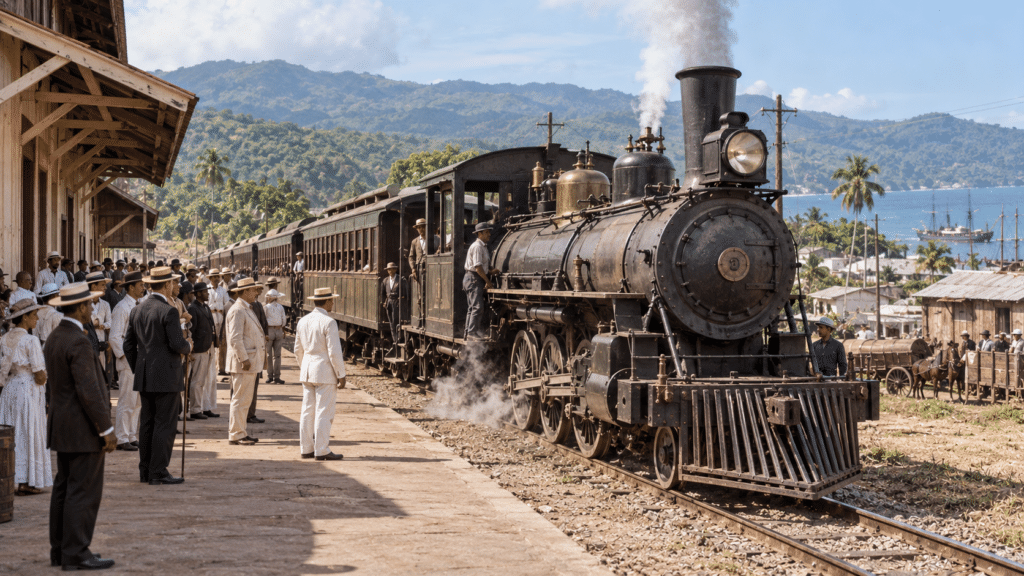
Before modern highways connected the Dominican Republic’s northern cities, the journey between Santiago and Puerto Plata depended on roads that made transportation difficult. The Dominican Central Railway changed that relationship by providing a rail link between the Cibao, the country’s principal northern agricultural region, and the Atlantic coast. Its opening was an important development in the history of Dominican transportation, although the railway operated within a broader economy in which export agriculture and foreign capital played major roles.
Why Santiago Needed a Railway to Puerto Plata
During the 19th century, Santiago de los Caballeros developed into a major commercial center for the Cibao Valley. Tobacco production and trade supported the regional economy, connecting farmers and merchants with domestic and international markets. However, Santiago’s inland location created a persistent transportation problem: agricultural goods had to reach a seaport before they could be exported.
Puerto Plata provided the natural maritime connection. Located on the Atlantic coast, the city served as an important port for commerce involving the northern Dominican Republic. Moving merchandise between the port and Santiago by road was difficult, particularly given the condition of the available routes and the mountainous terrain separating the coast from the interior.
Research published in the academic journal ECOS by the Autonomous University of Santo Domingo (UASD) identifies the railway’s arrival in 1897 as a turning point for Santiago, which had previously lacked an efficient direct connection to the sea. The railway offered a more reliable means of moving goods and strengthened the commercial relationship between the inland city and Puerto Plata.
The Opening of the Dominican Central Railway in 1897
The Dominican Central Railway, known in Spanish as the Ferrocarril Central Dominicano, was inaugurated on August 16, 1897. The Dominican Republic’s General Archive of the Nation preserves a historical photograph documenting the ceremony and the arrival of President Ulises Heureaux, widely known as Lilís.
The railway project emerged during a period when the government sought to expand transportation infrastructure and strengthen the country’s commercial connections. Construction involved foreign financing and private interests, reflecting the importance of international capital in the development of Dominican infrastructure during the late 19th century.
The line connected Santiago with Puerto Plata across approximately 82 kilometers, according to published accounts of the railway’s history. Its principal importance was practical: it created a direct rail corridor between an inland commercial center and a port through which regional products could enter international markets.
How the Railway Changed Regional Trade
The railway helped move agricultural produce and other merchandise between Santiago and Puerto Plata more efficiently than the difficult overland routes that preceded it. For merchants, improved transportation made it easier to coordinate the movement of goods between the interior and the coast. For the regional economy, the line strengthened the relationship between agricultural production, commercial activity, and maritime exports.
The railway also had a social dimension. According to the UASD study on Puerto Plata’s history, passenger services encouraged travel between the port city and the Cibao. During the government of Ramón Cáceres, express trains operated on Saturdays and Sundays, helping stimulate commercial exchanges and domestic tourism. Residents of Santiago could visit Puerto Plata for recreation, while travelers from the coast went inland for business and other activities.
These developments illustrate how railway infrastructure could serve purposes beyond freight transportation. By making journeys more predictable and accessible, the line supported connections between communities that had previously been separated by difficult terrain.
Foreign Investment and the Limits of Railway Development
The Dominican Central Railway was part of a wider pattern of railway development in the Dominican Republic, where private investment and export-oriented industries shaped the expansion of rail infrastructure. Foreign companies financed or operated several lines, while other railways served specific economic activities, particularly sugar production.
This distinction is important. The existence of a railway did not necessarily mean that the country possessed an integrated national passenger network. Many lines were designed primarily to move goods between production sites, industrial facilities, and ports. Their routes reflected the economic interests behind their construction rather than a comprehensive plan to connect all Dominican regions.
The Central Railway nevertheless provided a significant connection for the northern economy. It reduced the transportation barrier between Santiago and Puerto Plata and helped consolidate the role of the port in serving the Cibao. Its history demonstrates both the potential of railway infrastructure and the limitations of a system shaped by particular commercial priorities.
What Happened to the Dominican Central Railway?
The railway’s history continued beyond its inauguration. Its administration and ownership changed over time, and the government took possession of the Dominican Central Railway in 1908. A subsequent extension reached Moca in 1909, expanding the railway’s connections within the Cibao region.
During the early 20th century, rail transportation remained part of the Dominican Republic’s economic infrastructure, but it competed with changing transportation priorities and road development. The railway’s original importance as a link between the interior and the coast belongs to a period when overland transportation presented a much greater obstacle to regional commerce than it does today.
The historical record does not establish what the Dominican economy would have looked like if railways had remained its dominant form of transportation throughout the 20th century. It does show, however, that the 1897 connection between Santiago and Puerto Plata helped integrate regional markets at a formative stage in the country’s modern economic development.
Sources and Further Reading
- General Archive of the Nation: Inauguration of the Santiago–Puerto Plata Railway — an archival photograph dated August 16, 1897, documenting the opening ceremony and President Ulises Heureaux’s attendance.
- UASD, ECOS: History of the Province of Puerto Plata — historical research discussing the railway’s inauguration and its role in commercial exchanges and domestic tourism.
- UASD, ECOS: Historical Research on Santiago and the Cibao Economy — academic context on Santiago’s agricultural and commercial development and its connection to Puerto Plata in 1897.
- FLACSO: Economic Expansion and Social Inequality in the Dominican Republic, 1875–1899 — research on the relationship between infrastructure, export activity, and foreign investment during the late 19th century.