 22°C
22°C

Could Waste-Based Foods Help Tackle Hunger in the Dominican Republic?
A new food technology developed in the United States is exploring whether agricultural and plastic waste can be converted into protein-rich food, a concept that could eventually have relevance in the Dominican Republic, where food insecurity and the cost of maintaining a nutritious diet remain concerns for vulnerable households.


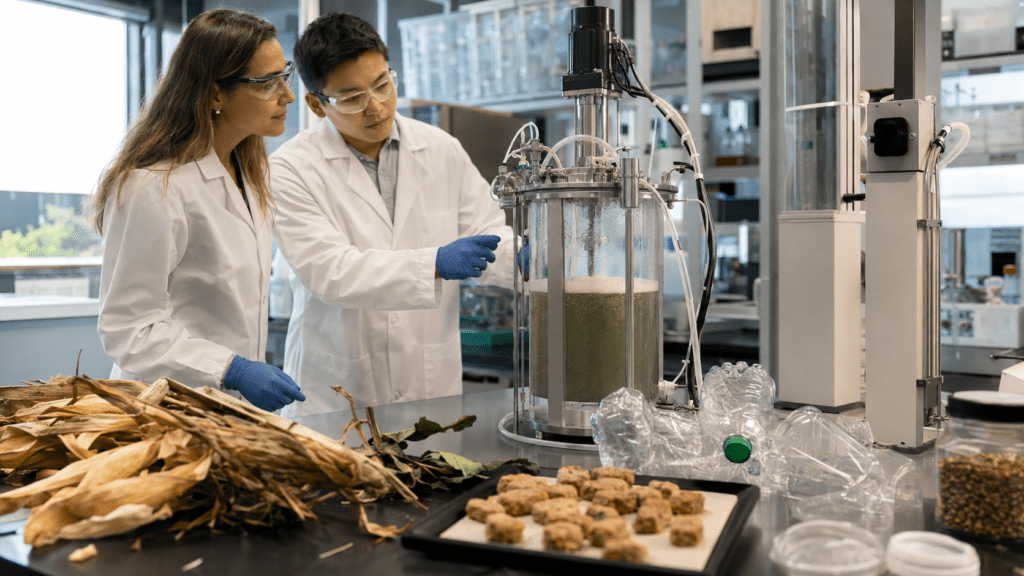
A research team at Southern Illinois University Carbondale is developing a technology that uses engineered microbes to transform agricultural waste and certain plastics into food ingredients rich in proteins, vitamins and other nutrients. The project, supported by NASA-related research, has produced prototype protein-rich cookies known as µBites, designed with extreme environments such as space travel and disaster zones in mind.
The idea also raises a broader question for countries such as the Dominican Republic: whether technologies capable of producing food from materials that would otherwise become waste could eventually contribute to food security at a time when household purchasing power remains an important factor in access to nutritious diets.
Food Security Remains a Challenge in the Dominican Republic
The Dominican Republic has made significant economic progress, but that growth has not eliminated inequalities in access to food. The World Food Programme estimates that 14% of the country’s population experiences food insecurity, with the problem concentrated among poorer and more vulnerable communities, including rural and disaster-prone areas. The agency also reports that one in three households lacks access to a nutritious diet.
For many families, the issue is not simply whether food is available, but whether a sufficiently diverse and nutritious diet is affordable. That makes the cost of living an important part of the food-security discussion, particularly for households with limited disposable income.
Recent figures from the Central Bank of the Dominican Republic show that food prices continue to influence household expenses. In July 2026, the food and non-alcoholic beverages category rose 0.23% during the month, with increases recorded for products including fresh chicken, potatoes and rice. The country’s annual inflation rate stood at 5.47% in July.
The pressure is not uniform across households, and individual food prices can rise or fall from month to month. Nevertheless, persistent increases in essential goods can reduce the amount of money available to low-income families for other necessities while making a balanced diet more difficult to maintain.
How Waste Could Become a Food Ingredient
The Southern Illinois University project approaches the problem from a very different direction. Researchers are using engineered yeast and other microbes to break down materials containing carbon and convert their components into substances that can be used to produce food.
One of the materials being studied is polyethylene terephthalate, or PET, a common plastic used in bottles. Agricultural materials such as corn stalks and leaves can also be processed. A hydrothermal oxidative dissolution process uses water, oxygen, high temperatures and pressure to break these materials into smaller components that microbes can consume.
The engineered microorganisms then transform those components into food-related compounds, including proteins, fats, acids, vitamins and flavoring materials. Researchers combine the resulting ingredients with fiber, starch and sweeteners before using a 3D printer to produce the µBites prototypes.
The technology is still at the research stage. The team says the prototypes are safe for consumption, but further regulatory approval is required before formal taste testing. Commercial availability is expected to remain several years away.
A Potentially Different Approach to Food Costs
For the Dominican Republic, the significance of the research would not be an immediate solution to hunger. There is currently no evidence that µBites or similar waste-to-food products are ready to address food insecurity on a commercial scale. Their potential relevance lies instead in the broader concept of producing nutrients from materials that are normally discarded.
The country already faces the combined challenges of food access, waste management and vulnerability to climate-related disruptions. The World Food Programme notes that floods, droughts and other disasters can threaten livelihoods and access to essential goods, particularly among vulnerable communities.
A technology that could eventually produce safe food ingredients from agricultural residues could, if proven economically viable and approved for human consumption, offer another tool for reducing dependence on conventional food inputs. Its usefulness would ultimately depend on production costs, nutritional quality, safety standards and whether the resulting products could be made affordable for consumers.
That last point is particularly important in the Dominican Republic. A new food technology would have limited impact on hunger if the resulting products remained too expensive for households already struggling with the cost of a nutritious diet. For the technology to become relevant beyond specialized environments such as space missions or emergency operations, affordability would have to be considered alongside scientific feasibility.
From Space Research to Possible Emergency Food
The original objective of the research is closely linked to environments where conventional food supplies are difficult to maintain. Long-duration space missions, underwater operations and disaster-response situations could benefit from systems capable of converting locally available waste into useful resources.
The same principle could eventually have applications in countries vulnerable to hurricanes, floods and other disruptions. In the Dominican Republic, where extreme weather events can temporarily affect communities and supply chains, technologies that diversify food-production options could become relevant if they eventually meet safety and cost requirements.
For now, however, the µBites project remains experimental. Its development illustrates how researchers are looking beyond traditional agriculture to address food production, waste and resource limitations at the same time. Whether that approach can eventually contribute to everyday food security in countries such as the Dominican Republic will depend on years of additional research, regulatory review and, above all, the ability to produce nutritious food at a price households can afford.