 22°C
22°C

Dominican Imports: How Businesses Move Goods Into The Country
Importing goods into the Dominican Republic involves more than arranging an overseas purchase and booking a shipment. Businesses must coordinate suppliers, freight, customs documentation, regulatory permits, taxes, cargo arrival, customs clearance and final delivery. The process is overseen principally by the Dirección General de Aduanas (DGA), the Dominican Republic's customs authority, through systems including SIGA and the Ventanilla Única de Comercio Exterior (VUCE).


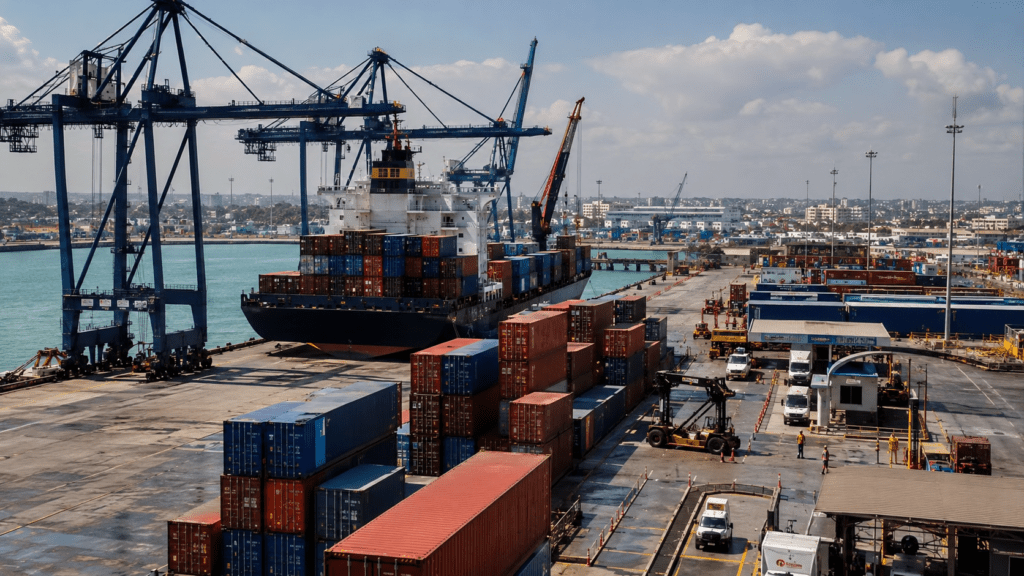
For a company importing merchandise into the Dominican Republic, the shipment does not begin when a container reaches a port. It begins when the business decides what it will buy, confirms how the product will be classified and regulated, agrees commercial terms with the foreign supplier, and chooses how the goods will travel to the country. Decisions made at that stage can determine how much the shipment costs and how easily it can be cleared.
The import process then moves through several connected stages: purchasing from the foreign supplier, preparing commercial and regulatory documentation, arranging international transportation, submitting information to Dominican customs, paying applicable duties and taxes, undergoing any required inspections, obtaining release and arranging delivery. For commercial imports, the Dirección General de Aduanas (DGA) is the central customs authority, while other government agencies may become involved depending on the nature of the goods.
What Is The Basic Import Process In The Dominican Republic?
The simplest way to understand commercial importing is as a chain of decisions and controls rather than a single customs procedure. A typical shipment follows this sequence:
- Confirm the product can legally be imported.
- Identify the applicable tariff classification and regulatory requirements.
- Select the foreign supplier and agree the commercial terms.
- Prepare the purchase and shipping documentation.
- Choose the appropriate transport and logistics providers.
- Ship the merchandise to the Dominican Republic.
- Prepare and submit the customs declaration.
- Pay applicable customs duties, taxes and charges.
- Complete customs review or inspection when required.
- Obtain customs release and remove the cargo.
- Transport the merchandise to its final destination.
The exact requirements vary by product, value, origin, transportation method and applicable trade or regulatory regime. The DGA states that the customs declaration is submitted electronically through its Sistema Integrado de Gestión Aduanera (SIGA), while the VUCE integrates electronic services from government agencies that issue import authorizations.
1. Check The Product Before Placing The Order
The first practical step is not contacting a freight forwarder. It is determining whether the merchandise can enter the Dominican Republic and under what conditions.
Some products can be imported through the ordinary customs process, while others may require permits, licenses, certificates, sanitary approvals, technical documentation or authorization from a government agency. The relevant requirements depend on the product rather than simply on the fact that it is being imported.
The DGA’s Sistema de Información Regulatoria de la Ventanilla Única de Comercio Exterior (SIREVUCE) is designed to help importers identify regulatory requirements, permits, tariff classifications and applicable taxes by product or tariff subheading. It is particularly useful before a purchase is finalized because regulatory problems are considerably easier to resolve before merchandise has left the supplier’s country.
At this stage, the importer should establish at least four things: what the product is, how it will be classified for customs purposes, whether it is subject to special controls, and what documentation will be needed to release it.
Why Product Classification Matters
Customs classification is important because the tariff classification helps determine the customs treatment of the merchandise, including applicable duties and regulatory requirements. A classification problem can therefore become a financial or operational problem later in the shipment.
Businesses should avoid treating the supplier’s product description or an online marketplace description as a definitive customs classification. The information used for the import declaration should accurately describe the merchandise and correspond to the applicable customs nomenclature.
2. Confirm The Importer’s Documentation And Registration
A business should make sure its own records are in order before the merchandise is shipped. The DGA provides an Importer/Exporter Registration service, and commercial operators use its electronic customs systems for import procedures. The agency also provides procedures for updating company information in SIGA.
The company should also determine who will represent it before customs. Depending on the shipment and operating model, the importer may work with a customs broker or other authorized logistics professionals. The important point is to establish responsibility before the cargo arrives rather than discovering at the port that nobody has the documentation or authority needed to complete the declaration.
3. Choose The Foreign Supplier And Agree The Purchase Terms
Once the product has been cleared from a regulatory planning perspective, the importer can negotiate with the foreign supplier. The commercial agreement should establish the merchandise, quantity, unit price, total price, currency, packaging, delivery terms, payment conditions and responsibilities for transportation and insurance.
The agreed international delivery term is particularly important. Terms such as those defined by Incoterms determine which party is responsible for different portions of the international movement, costs and risk. They should not be confused with Dominican customs requirements: an agreement between buyer and seller does not remove the importer’s obligation to comply with Dominican law.
The supplier’s commercial invoice should accurately describe the merchandise and its value. The DGA specifically identifies the original commercial invoice as one of the documents required for a customs declaration, together with the transport document.
4. Prepare The Import Documentation
Documentation is the bridge between the commercial transaction and the customs declaration. Missing or inconsistent documents can delay clearance, create valuation questions or require corrections.
For a standard import declaration, the DGA identifies two fundamental documents: the commercial invoice and the applicable transport document, such as a bill of lading (BL) for ocean freight or an air waybill (AWB) for air cargo. Additional documents may be required depending on the merchandise and the applicable regulatory regime.
A commercial shipment may therefore involve a broader documentation package, potentially including:
- Commercial invoice.
- Bill of lading or air waybill.
- Packing list when applicable.
- Import permits or authorizations when required.
- Certificates or regulatory documents required for the product.
- Origin documentation when a preferential tariff treatment is being claimed and the applicable agreement requires it.
- Other documents requested by customs or the competent government authority.
The exact package should be determined before shipment. It is poor practice to wait until cargo has arrived in the Dominican Republic to discover that a regulated product requires an authorization that was never requested.
5. Select The Transport And Logistics Providers
The transportation decision depends on the merchandise, shipment size, urgency, origin, destination and budget. The principal choices for commercial cargo are generally ocean freight and air freight, with courier services serving a different segment of the market.
| Transport Option | Typical Use | Main Consideration |
|---|---|---|
| Ocean freight | Containers, pallets and larger commercial shipments | Usually suited to planned inventory movements where transit time is less critical than cargo economics. |
| Air freight | Smaller, urgent or higher-value shipments | Can reduce transit time but generally requires a different cost calculation. |
| Courier | Small shipments and express deliveries | Uses a specialized express-delivery customs regime and should not be treated as equivalent to ordinary commercial cargo. |
For larger commercial imports, a company may work with a freight forwarder, shipping line, customs broker, port or terminal operator and inland carrier. These providers perform different functions, so the importer should understand exactly which services are included in each quotation.
When comparing logistics proposals, the headline freight rate is only one part of the cost. Businesses should also determine which origin charges, documentation fees, destination charges, handling, customs brokerage, storage, inland transportation and other services are included or excluded.
6. Arrange The International Shipment
After the supplier and logistics arrangements are confirmed, the goods are prepared for export from the country of origin. The supplier or its logistics provider normally coordinates the export-side movement, while the Dominican importer or its representative prepares for the arrival and customs process.
The transport document becomes particularly important at this point. The information on the commercial invoice, packing documentation and transport document should be consistent. Differences in quantities, descriptions, consignee information or values can complicate the customs process.
For containerized ocean cargo, the importer should also monitor the vessel and estimated arrival date. This gives the customs representative and receiving team time to prepare the declaration, documentation, tax calculations and inland delivery plan.
7. Understand What Happens When The Cargo Arrives
Arrival in the Dominican Republic does not mean that the merchandise is automatically available to the importer. Cargo enters the customs-controlled environment and must go through the applicable declaration and clearance process before it can be released.
The DGA explains that the legal receipt of the means of transport involves documentary validation through its electronic system after the carrier electronically notifies customs of the arrival. Under Article 199 of Law 168-21, the general period for submitting the import declaration is five business days, counted from the legal receipt of the means of transport.
This makes advance preparation important. A company that waits until the vessel has arrived to begin assembling its paperwork may unnecessarily increase the risk of delays and additional cargo-related costs.
8. File The Customs Declaration
The principal customs declaration for an ordinary import is the Declaración Única Aduanera (DUA). The DGA describes it as an electronic form submitted through SIGA to provide the information required for imports and exports.
The declaration connects the shipment’s commercial information with its customs treatment. It must accurately identify the importer, merchandise, quantities, values, origin and other information required by the customs system.
The commercial invoice and transport document form the core supporting documents for the declaration. Depending on the goods, additional regulatory approvals or supporting documentation may need to be incorporated into the process.
Why Accuracy Matters
A customs declaration is not simply an administrative formality. The information submitted can affect the amount of duties and taxes, regulatory treatment and whether the cargo is selected for additional review.
The importer should therefore make sure that the declared information corresponds to the actual shipment. Understating the value, using an inaccurate description or selecting an inappropriate classification can create customs problems and should not be treated as a way to reduce the cost of an import.
9. Calculate Customs Duties And Taxes
Import costs in the Dominican Republic are not determined by the purchase price alone. The applicable customs treatment depends on the merchandise, its classification, customs valuation, origin and any preferential or special regime that applies.
The DGA provides an online tax-liquidation simulator that can be used to obtain an estimate of taxes payable on imported merchandise. Because the actual amount depends on the specific shipment and its legal treatment, an estimate should be confirmed through the formal customs process.
ITBIS, the Dominican Republic’s value-added-type consumption tax, applies to imports of taxable industrialized goods. The Dirección General de Impuestos Internos (DGII) states that the general ITBIS rate is 18%, while noting that specific goods may be exempt or subject to special treatment. For imports, ITBIS is paid together with customs duties or other customs taxes through the DGA.
Other charges can apply depending on the merchandise and its circumstances. Certain products may be subject to selective consumption taxes, special duties, fees or regulatory requirements. Consequently, businesses should not apply a single percentage to every imported product when estimating landed cost.
10. Consider Trade Agreements And Special Customs Treatment
The Dominican Republic participates in trade arrangements that can affect the tariff treatment of qualifying merchandise. One example is the Dominican Republic-Central America-United States Free Trade Agreement (DR-CAFTA).
A preferential tariff is not necessarily automatic merely because goods come from a country covered by a trade agreement. The merchandise must meet the applicable origin rules and documentary requirements. Businesses should verify eligibility before assuming that a standard customs duty will be reduced or eliminated.
The DGA’s legal framework includes Law 168-21 and regulations governing customs procedures, as well as legislation implementing DR-CAFTA and other customs-related rules.
11. Complete Regulatory Inspections And Customs Controls
Not every shipment follows exactly the same clearance path. Customs authorities use risk-management and control procedures, and certain goods may also require intervention by other government agencies.
The VUCE framework integrates services from agencies responsible for import authorizations. The implementing regulation identifies, among others, the Ministry of Agriculture, Ministry of Public Health and Social Assistance, Ministry of Environment and Natural Resources, Instituto Dominicano para la Calidad (INDOCAL), Instituto Dominicano de las Telecomunicaciones (INDOTEL) and other public bodies as participants in the system.
This matters especially for products such as food, agricultural goods, pharmaceuticals, cosmetics, chemicals, telecommunications equipment and other regulated merchandise. The relevant authority depends on the product and its intended use.
If customs or another competent agency requires an inspection, document review or additional authorization, the cargo may remain under customs control until the requirement has been satisfied.
12. Pay The Amounts Due And Obtain Customs Release
Once the declaration has been processed and the applicable amounts have been determined, the importer must satisfy the customs payment obligations and any other requirements necessary for release.
The DGA has continued to expand online services for customs procedures and payments. Its current service infrastructure includes SIGA and integrated digital services intended to make customs procedures more accessible to users.
Payment, however, should not be understood as the only condition for release. The merchandise must also have completed the applicable documentary, regulatory and control requirements. A shipment can therefore remain uncleared even when the importer is prepared to pay, if another requirement has not been satisfied.
13. Arrange Port Or Airport Release And Inland Delivery
After customs release, the shipment must physically leave the customs-controlled area and travel to its final destination. This is where the import process connects with domestic logistics.
For ocean cargo, the importer or its logistics provider may need to coordinate with the relevant terminal, carrier and inland transport provider. For air cargo, the process involves the relevant airport cargo facility and carrier or handling arrangements. The precise steps depend on the shipment and facility.
The inland carrier should receive clear delivery instructions, including the destination, receiving hours, contact person, cargo requirements and any restrictions at the delivery location. For containerized cargo, the importer should also plan for the return of the empty container when applicable under the carrier’s terms.

How To Calculate The Real Cost Of An Import
The purchase price is only one component of the final cost of imported merchandise. A useful commercial calculation is the landed cost: the amount the business ultimately incurs to obtain the goods at their intended destination, after considering the relevant international and domestic costs.
A simplified planning model can include:
- Purchase price of the merchandise.
- International freight.
- Insurance when applicable.
- Origin-country logistics and handling charges.
- Customs duties and other applicable import taxes.
- ITBIS and any other applicable taxes.
- Customs brokerage and documentation costs.
- Port, airport or terminal charges.
- Storage or other charges caused by delays, when applicable.
- Domestic transportation to the final destination.
The exact tax base and treatment should be determined under the applicable Dominican customs and tax rules rather than assumed from a simple freight-plus-invoice calculation. The DGA’s customs valuation framework includes Regulation 36-11, while Law 168-21 governs the broader customs system and procedures.
What Is The Role Of A Customs Broker?
A customs broker can help the importer prepare and process customs documentation, communicate with customs and coordinate the clearance process. For businesses without an established import department, professional customs assistance can be particularly useful when shipments involve regulated products, complex classifications or significant cargo values.
Using a customs broker does not transfer the commercial responsibility for the accuracy of the underlying transaction. The importer should still understand what is being declared, review the documentation and retain records supporting the purchase and value of the merchandise.
Businesses should establish responsibilities in writing, including who prepares the DUA, who obtains permits, who pays customs charges, who coordinates inspections, who handles terminal formalities and who arranges inland transportation.
When Does VUCE Matter?
The Ventanilla Única de Comercio Exterior (VUCE) is designed to integrate government services involved in foreign-trade procedures. Its purpose is particularly relevant when an imported product requires authorization from an agency other than customs.
Rather than treating each government requirement as a completely separate process, VUCE provides an electronic framework for coordinating import and export authorizations. The DGA’s SIREVUCE system also provides regulatory information based on tariff subheadings and product descriptions, including applicable permits and tax information.
For an importer, the practical lesson is simple: check regulatory requirements before ordering the merchandise, not after it has arrived.
Common Importing Mistakes Businesses Should Avoid
Ordering Before Checking Import Requirements
A product can be commercially attractive and still present regulatory difficulties. Confirm the applicable requirements before paying the supplier or shipping the goods.
Using An Inaccurate Product Description
The customs declaration should describe the actual merchandise accurately. Generic descriptions can make classification and valuation more difficult and may trigger questions during review.
Ignoring The Transport Document
The bill of lading or air waybill is a core customs document. The information it contains should be consistent with the commercial invoice and the declaration.
Waiting Until Arrival To Prepare The Declaration
Preparation should begin before the shipment arrives. The DGA’s five-business-day declaration period under Law 168-21 makes timing an important operational consideration.
Budgeting Only For The Supplier’s Price And Freight
A shipment can appear profitable until customs duties, taxes, terminal charges, brokerage, storage and domestic transportation are included. Landed cost should be calculated before the purchase order is finalized.
Assuming Every Product Has The Same Tax Treatment
Customs duties and taxes vary according to the merchandise and applicable legal treatment. The DGA’s regulatory information and tax tools should be consulted for the specific product.
A Practical Import Checklist For Businesses
Before placing an international purchase order, an importer can use the following sequence as a basic control checklist:
- Confirm that the merchandise is permitted for import.
- Identify its appropriate customs classification.
- Check whether permits, licenses, certificates or other approvals are required.
- Confirm the importer’s registration and customs-system access.
- Choose the supplier and agree commercial terms.
- Determine the applicable international delivery term.
- Obtain a complete commercial invoice.
- Confirm packaging and shipment details.
- Select the freight and logistics providers.
- Confirm the required transport document.
- Estimate customs duties and taxes.
- Prepare the customs declaration and supporting documentation.
- Monitor the shipment and expected arrival date.
- Coordinate any required inspections or regulatory approvals.
- Pay applicable customs obligations.
- Obtain release and arrange inland delivery.
- Retain the commercial, customs and payment records.
How Businesses Can Make Importing More Efficient
Efficient importing is primarily a matter of preparation and coordination. The best time to resolve a classification, permit or documentation problem is before the merchandise is shipped.
Companies that import regularly can standardize product records containing descriptions, tariff classifications, regulatory requirements, supplier information and typical logistics costs. They can also establish a repeatable workflow assigning responsibility for purchasing, freight, customs, tax review and delivery.
Businesses should also distinguish between costs they can control and costs they can only manage. Supplier pricing and shipment planning may be negotiable, while customs duties are determined by the applicable legal framework. Good planning reduces avoidable expenses such as storage, document corrections and delays, but it does not eliminate statutory import obligations.
What Is The 24-Hour Customs Clearance Program?
The DGA operates a Despacho en 24 Horas program aimed at reducing the time required to clear qualifying containerized cargo. The DGA states that the program is designed for merchandise with a prior declaration that is not classified as high risk and is handled by companies certified as an Operador Económico Autorizado (OEA) or OEA Simplificado.
This should not be interpreted as a universal guarantee that every container entering the Dominican Republic will be released within 24 hours. Eligibility depends on the program’s requirements and the characteristics of the shipment and importer.
How Courier Imports Differ From Ordinary Commercial Cargo
Small shipments delivered through express courier services follow a different customs framework from standard commercial cargo. The DGA distinguishes several courier categories based on shipment type and value, including a low-value category with a stated FOB threshold of US$200 and higher-value categories above that threshold.
A business importing merchandise for resale should not assume that a series of small courier shipments is equivalent to a normal commercial import. The DGA defines commercial purpose for courier shipments according to factors including quantity, value, intended use and related circumstances.
For companies establishing a regular supply chain, ocean or air cargo under the appropriate commercial customs procedure may be more relevant than relying on a courier framework designed for express shipments.
Frequently Asked Questions
What Documents Are Needed To Import Goods Into The Dominican Republic?
For a standard customs declaration, the DGA identifies the commercial invoice and the applicable transport document, such as a bill of lading or air waybill, as required documents. Additional permits, certificates and supporting documents may be necessary depending on the product and applicable regulations.
Who Handles Customs Clearance?
The importer can work with customs professionals to handle the declaration and clearance process. The specific responsibilities depend on the arrangement between the importer and its customs or logistics representatives.
How Long Does Customs Clearance Take?
There is no single clearance time that applies to every import. Processing depends on factors including declaration readiness, cargo risk, regulatory requirements, inspections and whether the shipment qualifies for programs designed to accelerate clearance. The DGA’s Despacho en 24 Horas program applies only to qualifying shipments rather than to every import.
When Must The Import Declaration Be Submitted?
Under Article 199 of Law 168-21, the general period for declaring imported merchandise is five business days from the legal receipt of the means of transport, subject to the provisions of the law and applicable procedures.
Is ITBIS Paid On Imports?
ITBIS applies to taxable imports of industrialized goods, with a general rate of 18% according to the DGII. The tax is paid through the DGA together with applicable customs duties and other customs taxes. Specific goods may receive different treatment under Dominican tax law.
Does Every Import Need A Permit?
No single permit requirement applies to every product. Requirements depend on the merchandise and the regulations governing it. The VUCE and SIREVUCE systems can help identify the government authorizations and regulatory requirements associated with particular goods.
Can Customs Ask For More Information About The Value Of The Goods?
Yes. The DGA requires documentation supporting the value of imported merchandise and explains that alternative evidence, such as a declaration of value or transaction records, may be requested when the commercial invoice is unavailable. Customs valuation rules apply when the declared value cannot be established through the normal documentation.
Official Resources For Importers
Businesses should verify the requirements for each shipment against the official information available from Dominican authorities. The Dirección General de Aduanas provides customs procedures, legal information, electronic services and import guidance. The Dirección General de Impuestos Internos provides information on ITBIS and other tax obligations.
The DGA also provides access to its legal framework, including Law 168-21 on Customs and its implementing regulations. Businesses dealing with regulated merchandise should use the VUCE and SIREVUCE resources to verify the requirements applicable to their specific products.