 25°C
25°C

Foreign Direct Investment in the Dominican Republic
Foreign direct investment has become one of the most important channels through which the Dominican Republic connects its domestic economy with global capital. Inflows have risen from US$2.56 billion in 2020 to US$5.03 billion in 2025, while preliminary data for the first half of 2026 show another increase to US$3.28 billion. The composition of that investment is equally revealing: tourism remains central, but energy, real estate, mining, free zones, transport and other activities increasingly shape the country's investment profile, pointing to an economy that is becoming more diversified while retaining a strong dependence on tourism and infrastructure-related capital.


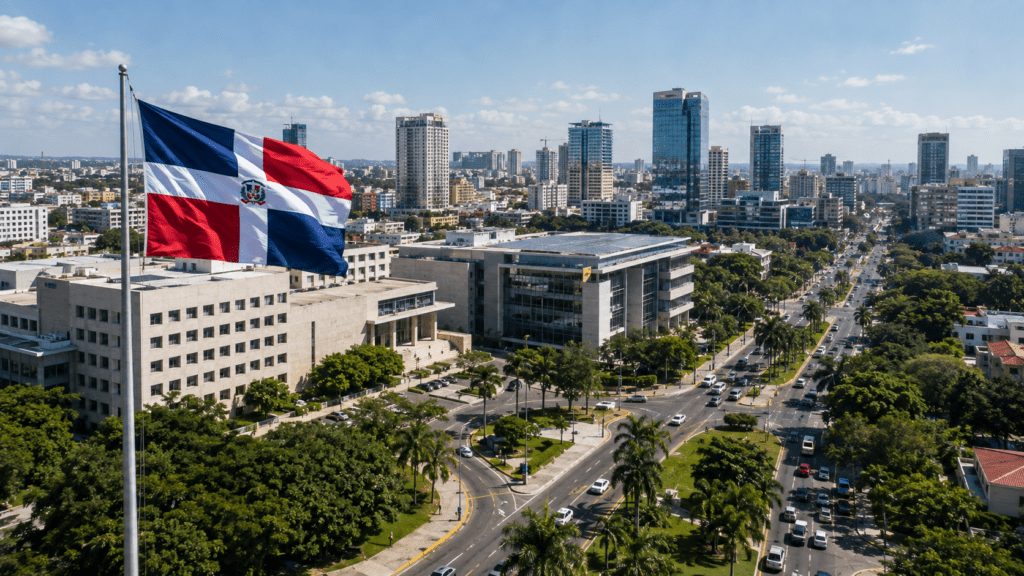
Foreign direct investment (FDI) is more than a measure of how much foreign capital enters the Dominican Republic each year. It is also an indicator of how international investors assess the country’s economic prospects, infrastructure, institutions, market access and ability to support long-term projects. Over the past several years, the Dominican Republic has attracted increasingly large FDI inflows, reaching US$4.52 billion in 2024 and US$5.03 billion in 2025. Preliminary data for the first half of 2026 indicate that the upward trend has continued.
The evolution is significant because it has taken place while global investment conditions have become more difficult. International investment has been affected by geopolitical tensions, trade-policy uncertainty, higher financing costs and a growing concentration of capital in strategic industries. Against that backdrop, the Dominican Republic has continued to attract substantial flows, suggesting that investors see structural advantages in the country’s economy.
What Is Foreign Direct Investment in the Dominican Republic?
Foreign direct investment refers to investment by an individual, company or institution from one country in productive assets or business activities in another country, with an interest that generally implies a lasting relationship with the recipient economy. Unlike short-term portfolio investment, FDI is normally associated with business operations, expansion projects, acquisitions, reinvested earnings and other forms of long-term corporate participation.
In the Dominican Republic, FDI is recorded as part of the country’s external accounts by the Central Bank of the Dominican Republic (BCRD). The data include different components of foreign investment in Dominican Republic and can fluctuate because of new capital contributions, reinvested earnings, intercompany financing, disinvestment and dividend payments. Consequently, a single year’s headline figure should be interpreted together with its composition and sectoral distribution.
This distinction matters when assessing the country’s investment performance. A high FDI figure does not automatically mean that the entire amount represents new factories, hotels or infrastructure built during that year. Part of the flow can reflect the reinvestment of profits by companies already operating in the country or other financial transactions associated with established foreign-owned businesses.
How Foreign Direct Investment Has Evolved
The Dominican Republic’s FDI trajectory shows a clear increase over the first half of the 2020s. According to UN Trade and Development (UNCTAD), inward FDI rose from US$2.56 billion in 2020 to US$3.20 billion in 2021, US$4.10 billion in 2022, US$4.39 billion in 2023 and US$4.52 billion in 2024. The 2024 figure represented a 3% increase over 2023 and was the third consecutive annual record reported by ProDominicana.
| Year | FDI inflows | Annual change |
|---|---|---|
| 2020 | US$2.56 billion | — |
| 2021 | US$3.20 billion | 24.9% |
| 2022 | US$4.10 billion | 28.2% |
| 2023 | US$4.39 billion | 7.1% |
| 2024 | US$4.52 billion | 3.0% |
| 2025 | US$5.03 billion | 11.3% |
The progression is notable not only because of the absolute increase but also because it represents a substantial change from the pandemic period. Between 2020 and 2025, annual inward FDI almost doubled. UNCTAD’s figures also show that the stock of inward FDI increased from US$45.47 billion in 2020 to US$60.87 billion in 2024, equivalent to 48.8% of GDP that year.
The 2025 result marked a fourth consecutive year above US$4 billion. The BCRD reported that FDI reached US$5.03 billion for the full year, confirming that the increase seen in 2024 was not a one-year anomaly. The country’s investment performance therefore reflects a broader upward trend rather than a single large transaction.
FDI in 2026: The Trend Continues
Preliminary data from the BCRD indicate that FDI reached US$3.28 billion in the first half of 2026, an increase of US$233.4 million, or 7.7%, compared with the first half of 2025. Approximately US$2.19 billion of that amount consisted of new capital contributions, meaning that about two-thirds of the inflows represented fresh capital from investors.
The second quarter alone accounted for US$1.60 billion in FDI. Based on the first-half performance, the BCRD expects full-year 2026 inflows to exceed US$5.3 billion, although that figure is a projection rather than a completed annual result.
The 2026 figures should therefore be treated differently from the historical annual series. The first-half number is preliminary and cannot be directly interpreted as a full-year total. Nevertheless, it provides evidence that the investment momentum continued after the US$5.03 billion recorded in 2025.
Which Countries Invest Most in the Dominican Republic?
The origin of foreign capital provides another perspective on the Dominican Republic’s attractiveness. ProDominicana data based on BCRD figures show that the United States, Spain and Mexico were the three largest sources of FDI during 2023 and 2024 combined.
| Country or territory | 2023 | 2024 | 2023–2024 total |
|---|---|---|---|
| United States | US$1,328.5 million | US$1,161.9 million | US$2,490.4 million |
| Spain | US$668.4 million | US$1,126.0 million | US$1,794.4 million |
| Mexico | US$348.7 million | US$209.6 million | US$558.3 million |
| Canada | US$286.7 million | US$207.4 million | US$494.1 million |
| Panama | US$247.2 million | US$192.2 million | US$439.4 million |
| France | US$158.5 million | US$163.1 million | US$321.6 million |
The United States remains the largest single source in the two-year period, with US$2.49 billion in combined flows. Spain stands out for the scale of its increase: Spanish-origin FDI rose from US$668.4 million in 2023 to US$1.13 billion in 2024.
The presence of investors from North America, Europe and Latin America is important because it shows that the Dominican Republic’s FDI base is not dependent on a single foreign market. In addition to the leading countries, capital has arrived from Canada, Panama, France, Germany, Italy, the United Kingdom, Switzerland, Colombia, Venezuela, Brazil and other economies. ProDominicana notes that the Dominican Republic has attracted investment from more than 60 countries in recent years.
Country-of-origin data also need to be interpreted carefully. Negative values in individual years do not necessarily mean that investors from a particular country have abandoned the Dominican market. They can result from operating losses, disinvestment or dividend payments, among other factors.
Which Sectors Receive the Most Foreign Investment?
The sectoral distribution of FDI provides perhaps the clearest picture of the Dominican economy’s transformation. ProDominicana’s 2023–2024 data show that tourism, energy, real estate, and commerce/industry accounted for 81.1% of total FDI flows during the two-year period.
| Sector | 2023 | 2024 | 2023–2024 total | Share |
|---|---|---|---|---|
| Tourism | US$1,182.1 million | US$1,284.8 million | US$2,466.9 million | 27.7% |
| Energy | US$1,071.1 million | US$1,140.5 million | US$2,211.6 million | 24.8% |
| Real estate | US$621.1 million | US$798.3 million | US$1,419.4 million | 15.9% |
| Commerce / industry | US$689.3 million | US$441.4 million | US$1,130.7 million | 12.7% |
| Free zones | US$345.0 million | US$417.4 million | US$762.4 million | 8.6% |
| Transport | US$98.2 million | US$283.8 million | US$382.0 million | 4.3% |
| Mining | US$278.5 million | US$38.5 million | US$317.0 million | 3.6% |
| Financial | US$137.3 million | US$162.8 million | US$300.1 million | 3.4% |
| Telecommunications | -US$32.4 million | -US$44.3 million | -US$76.7 million | -0.9% |
Tourism was the largest recipient, attracting US$2.47 billion over the two years. Energy followed closely with US$2.21 billion, while real estate received US$1.42 billion. Commerce and industry accounted for another US$1.13 billion.
Tourism Remains the Largest Investment Magnet
Tourism’s leading position reflects the importance of the Dominican Republic’s visitor economy and the continuing development of hotels, resorts and related infrastructure. Spanish and U.S. investors have played an important role in this segment, according to ProDominicana.
The significance of tourism extends beyond the hotel industry itself. Tourism investment creates demand for transport, real estate, construction, utilities, food suppliers, retail businesses and other services. This helps explain why several of the largest FDI categories are interconnected rather than isolated parts of the economy.
At the same time, the concentration of investment around tourism means that the sector remains an important source of exposure to changes in international travel demand, global economic conditions and investor perceptions of Caribbean destinations.
Energy Is Becoming a Major Pillar of FDI
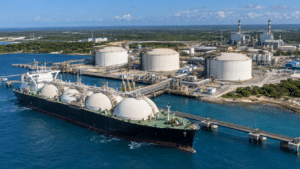
Energy represented 24.8% of FDI flows in 2023–2024, making it the second-largest destination. The scale of investment reflects the growing need for electricity generation and related infrastructure as the Dominican economy, urban areas and tourism destinations expand.
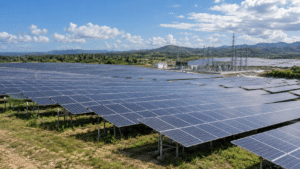
Energy’s importance is also consistent with the country’s search for greater infrastructure capacity and the development of renewable-energy opportunities. ProDominicana currently identifies renewable energy as one of the sectors with investment opportunities in the Dominican Republic.
The rise of energy investment is significant because it can support economic activity beyond the projects receiving capital directly. Reliable and sufficiently scalable energy infrastructure is a prerequisite for manufacturing, tourism, telecommunications, commercial activity and residential development.
Real Estate Is Closely Linked to Tourism
Real estate attracted US$1.42 billion in 2023–2024, representing 15.9% of total FDI flows. The sector is particularly relevant in areas experiencing rapid tourism development, where hotel projects and residential or mixed-use developments can expand in parallel.
The relationship between real estate and tourism illustrates how FDI can move through interconnected sectors. An increase in international visitors can create demand for additional accommodation and property development, while new tourism infrastructure can make destinations more attractive to additional investors.
Commerce, Industry and Free Zones Broaden the Investment Base
Commerce and industry accounted for 12.7% of FDI flows in 2023–2024, while free zones represented another 8.6%. These categories are particularly important when assessing whether the Dominican economy is attracting foreign capital beyond tourism and property development.
ProDominicana highlights the contribution of commerce/industry and free zones to employment and technology transfer. Free zones are especially relevant to the country’s role in regional manufacturing and export-oriented production, connecting the Dominican economy with international supply chains.
In 2024, FDI entering free zones reached US$417.4 million, the highest level in the 2020–2024 period. That increase suggests that foreign investors continue to see value in export-oriented production in the Dominican Republic alongside the country’s much larger tourism and infrastructure-related investment flows.
What the FDI Numbers Reveal About the Dominican Economy
The most important conclusion from the investment data is not simply that the Dominican Republic receives more foreign capital than it did several years ago. The composition of that capital shows how the country’s economic structure is evolving.
The Economy Is Becoming More Capital Intensive
Large investments in energy, tourism, real estate and transport indicate that the country is building and expanding physical assets at a significant scale. These sectors require substantial upfront capital and often involve projects designed to generate returns over many years.
This pattern is consistent with an economy that has moved beyond reliance on a narrow set of traditional activities. The investment pipeline increasingly includes infrastructure, utilities, property development, logistics, export manufacturing and services alongside tourism.
Tourism Still Shapes the Broader Investment Ecosystem
Although the FDI base is broader than tourism alone, tourism remains a central organizing force. Its links with real estate, transport, energy and commerce mean that investment in the visitor economy can generate secondary demand across several sectors.
This helps explain why the sectoral figures should not be interpreted independently. A project classified under real estate or transport may be economically connected to tourism development even when the investment is not recorded under the tourism category itself.
Manufacturing and Export Capacity Matter More Than the Headline Suggests
Tourism and energy dominate the investment statistics, but the presence of commerce/industry and free zones is strategically important. Export-oriented manufacturing can contribute to diversification because it connects foreign capital with production, employment, logistics and international markets.
The Dominican Republic’s geographic position also matters. Its proximity to the United States and its integration into regional trade networks make it a potential production and distribution platform for companies seeking access to Caribbean, Central American and North American markets.
The Country Is Attracting Investment From a Broad International Base
The concentration of capital among the United States and Spain is substantial, but the wider list of investor countries demonstrates a more diversified international network. This matters for resilience because it reduces the extent to which investment flows depend on a single bilateral relationship.
At the same time, diversification of origin does not mean that all sectors receive capital equally from all countries. Different investor groups have historically been associated with different industries, and individual annual flows can be heavily influenced by large projects or corporate transactions.
Why Has the Dominican Republic Remained Attractive to Foreign Investors?
The country’s sustained FDI performance reflects a combination of factors rather than a single incentive. The BCRD has identified social and political stability, economic stability, legal security, fiscal incentives, modern infrastructure, advanced telecommunications and government support for foreign investment as factors supporting the country’s attractiveness.
Geography is another structural advantage. The Dominican Republic occupies a strategic position in the Caribbean and has close economic ties with the United States. Its tourism infrastructure, ports, airports and export-oriented industrial base further strengthen its connections to international markets.
The country’s economic scale within the Caribbean also matters. A population of more than 11 million gives investors access to a domestic consumer market that is considerably larger than that of many neighboring island economies. That market can complement opportunities associated with exports and tourism.
Macroeconomic performance is also relevant. The Dominican Republic recorded annual GDP growth of 5.0% in 2024, followed by slower growth of 2.1% in 2025. The economy nevertheless continued attracting FDI during the slowdown, illustrating that investment decisions can be based on longer-term structural considerations rather than one year’s growth rate.
The Dominican Republic in the Regional FDI Landscape
The country’s position becomes clearer when viewed against Latin America and the Caribbean. CEPAL reported that the region received US$194.23 billion in FDI in 2025, an increase of only 1.7% from 2024. Brazil and Mexico absorbed 62% of the regional total, while the Dominican Republic accounted for approximately 3%, placing it among the largest recipients in the region after the two dominant economies and several other major destinations.
The regional context is important because it shows that the Dominican Republic’s investment performance is not occurring in isolation. Investors have many possible destinations across Latin America and the Caribbean, and competition for capital has intensified as companies reassess supply chains, production locations and access to major markets.
CEPAL also notes that regional FDI in 2025 remained concentrated in services, which received 53% of total inflows, followed by manufacturing with 31% and natural resources with 16%. The Dominican Republic’s own investment profile differs in its details, but its strong service, tourism and infrastructure components fit into a broader regional shift toward services and capital-intensive activities.
What Are the Main Risks and Limitations?
Strong FDI inflows should not be interpreted as proof that every aspect of the investment environment is equally attractive or that all capital produces the same economic benefits. The quality, productivity and long-term effects of investment matter as much as the headline amount.
One limitation is sectoral concentration. Tourism, energy and real estate account for a very large share of the country’s FDI. These sectors can generate employment and economic activity, but excessive concentration can expose the economy to external shocks affecting tourism demand, energy markets, property cycles or international financing conditions.
A second issue is the distinction between capital accumulation and productive transformation. Investment can expand physical capacity without automatically producing large gains in productivity, technology or domestic value added. The long-term development impact depends on whether foreign-owned projects create local supply chains, improve skills, transfer technology and increase productive capacity.
Global conditions also create risks. UNCTAD has highlighted increasing geopolitical fragmentation, trade-policy uncertainty and concentration of international investment in strategic, capital-intensive sectors. Developing economies face particularly strong competition for projects that can generate productivity gains and technological upgrading.
For the Dominican Republic, this means that maintaining a high volume of FDI is only part of the policy challenge. The larger objective is to attract investment that strengthens the country’s productive base while broadening the range of sectors and capabilities linked to international capital.
FDI and the Transformation of the Dominican Economy
The evolution of foreign investment suggests that the Dominican economy is moving through a broader transformation. The country remains heavily associated with tourism, but investment flows increasingly connect tourism with energy, real estate, transportation, commerce, industry and export manufacturing.

This transformation can be seen in the contrast between the country’s traditional investment engines and emerging areas of opportunity. Tourism continues to attract the largest share, while energy has become almost equally important. Free zones and industrial activity provide a different channel for foreign capital by linking investment to exports and international production networks.
ProDominicana’s investment promotion strategy also identifies renewable energy, technology, semiconductors, manufacturing, agro-industry and biomedicine among sectors with investment opportunities. The presence of these sectors in the country’s investment agenda suggests an effort to broaden the economy beyond its established sources of foreign capital.
Whether that diversification becomes a defining feature of the next stage of economic development will depend on the ability to connect foreign investment with domestic companies, skilled workers, infrastructure, research, technology and export capacity. The investment data provide evidence of strong international interest, but they do not by themselves guarantee that all of those links will develop.
What Investors Are Signaling Through Their Capital
FDI is ultimately a form of market judgment. Investors commit capital when they believe the expected long-term return justifies the risks involved. The Dominican Republic’s rising inflows therefore provide evidence that international companies and investors see commercially viable opportunities in the country.
The sectoral distribution adds important detail to that signal. Strong investment in tourism indicates confidence in the country’s role as a major Caribbean destination. Energy investment points to expectations of continued economic and infrastructure expansion. Real estate investment reflects demand associated with tourism, population growth and urban development. Free zones and industrial investment indicate opportunities linked to exports and international supply chains.
The geographical distribution sends a second signal: the Dominican Republic has developed durable commercial relationships with investors from North America, Europe and Latin America. The scale of U.S. and Spanish investment is particularly important, but the broader investor base indicates that the country’s appeal extends beyond a single bilateral economic relationship.