 25°C
25°C

Foreign Investment in the Dominican Republic: A Growing Pillar of the Economy
Foreign investment plays a central role in the Dominican Republic's economy, connecting international capital with sectors ranging from tourism and real estate to energy, mining, manufacturing, and services. For foreign investors, the country combines access to regional markets with a legal framework that generally provides national treatment to foreign and domestic investors. For the Dominican economy, these capital flows can support business expansion, employment, exports, technology transfer, and foreign-exchange earnings. Understanding how foreign investment works provides a useful starting point before examining individual sectors, incentives, regulations, or investment procedures in greater detail.



Foreign investment is one of the main ways international capital enters the Dominican Republic. It can take the form of a new business established by an overseas investor, an expansion of an existing operation, participation in a Dominican company, or the reinvestment of profits generated locally. The most important category for understanding its economic impact is foreign direct investment (FDI), which generally involves a lasting interest in an enterprise operating in another country rather than a short-term financial investment. In the Dominican Republic, FDI has become an established part of the country’s economic model, with international investors participating in a broad range of productive activities.
What Is Foreign Investment in the Dominican Republic?
Foreign investment refers broadly to capital originating outside the Dominican Republic and committed to economic activities in the country. The investor may be an individual, a private company, an investment group, or another type of legal entity. The investment can involve financial capital, ownership interests, productive assets, or, under the Dominican legal framework, certain forms of technology transfer.
Foreign direct investment is different from buying a financial asset simply to earn a return. An overseas investor that establishes a hotel, acquires an interest in a Dominican company, develops an industrial facility, or expands a local operation is participating directly in the economy. The investment therefore has a business presence and can influence production, employment, supply chains, exports, and the provision of services.
The Dominican Republic’s general foreign investment framework is established principally by Law 16-95 on Foreign Investment. ProDominicana, the government institution responsible for promoting exports and attracting investment, explains that the law establishes national treatment for foreign investors, meaning that foreign and Dominican investors are generally subject to the same rights and obligations in investment matters. Sector-specific rules, licenses, registrations, and permits can still apply depending on the activity involved.
How Does Foreign Investment Work?
At its simplest, the process involves an investor bringing capital, assets, technology, or business resources into the Dominican Republic and using them in a local economic activity. The exact structure depends on the investment. A foreign company may establish a Dominican subsidiary, acquire an interest in an existing company, participate in a joint venture, develop a project, or invest in another legally permitted structure.
The distinction between the investment itself and its formalization is important. Dominican law provides a relatively open general framework for foreign investment, but operating a business still requires compliance with the rules applicable to that particular activity. Depending on the project, these can include corporate registration, tax registration, environmental approvals, construction permits, sector licenses, labor obligations, or other regulatory requirements.
Foreign investors may also register their investment with the Dominican authorities. ProDominicana describes a Foreign Investment Registration and Technology Transfer Certificate as an instrument associated with the country’s investment framework. Registration should not be confused with permission to operate: sector-specific authorizations can remain necessary even when the investment itself is legally permitted.
The legal framework also provides important protections concerning the movement of investment-related funds. ProDominicana states that Law 16-95 provides for national treatment, free convertibility of funds, and the repatriation of capital and profits, subject to the applicable legal and financial procedures.
Who Invests in the Dominican Republic?
Foreign investment comes from a diverse group of international investors rather than from a single country or type of company. Multinational corporations, regional companies, private investors, financial groups, hotel operators, industrial companies, developers, and entrepreneurs can all participate in the Dominican market.
The country’s geographical position helps explain part of this diversity. Located in the Caribbean between North and South America, the Dominican Republic has commercial relationships with major markets in the Americas and Europe. Its participation in trade agreements, including the DR-CAFTA agreement with the United States and Central American countries and its economic partnership with the European Union, adds to the country’s appeal for companies whose business models depend on international trade.
Investors can also be attracted by the possibility of serving the Dominican domestic market. With a large population, a diversified economy, extensive tourism activity, and established infrastructure, the country is not solely a production platform for exports. Many investments are aimed at providing goods or services to consumers and businesses within the Dominican Republic.
The countries and companies involved in FDI change over time, and investment statistics should therefore be examined using the latest data from the Central Bank of the Dominican Republic. The Central Bank publishes FDI statistics by country of origin and by destination sector, allowing the composition of foreign investment to be analyzed rather than treating it as a single source of capital.
Which Sectors Attract Foreign Investment?
Foreign capital is distributed across a wide range of activities. Historically important sectors have included tourism, real estate, telecommunications, free zones, mining, energy, financial services, and other business activities. The relative importance of each sector changes according to economic conditions, major projects, commodity prices, tourism demand, infrastructure development, and international investment trends.
Tourism is one of the most visible areas of foreign investment. International capital can support hotels, resorts, tourism-related real estate, infrastructure, and businesses serving visitors. Because tourism also generates demand for transportation, food, construction, professional services, and other activities, investment in the sector can have effects beyond the individual project.
Real estate is another important destination for international capital. Foreign investors participate in residential developments, commercial properties, hospitality projects, and mixed-use developments. Real estate investment can overlap with tourism, particularly in destinations where accommodation and property development are closely connected.
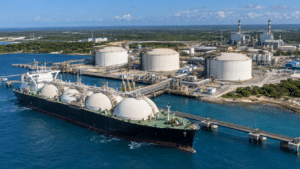
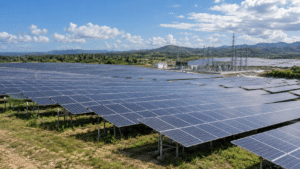
Energy has also become an important investment area. Projects involving electricity generation and other forms of energy infrastructure can require substantial amounts of capital and long investment horizons. The sector is particularly relevant to economic development because reliable and sufficient energy supply is fundamental to households and businesses.
Mining represents another major area of foreign participation. Mining projects can attract large amounts of capital because they require exploration, infrastructure, equipment, and long-term operations. At the same time, mining investment is subject to specific regulatory, environmental, fiscal, and operational considerations that distinguish it from many other forms of investment.
Free zones and manufacturing provide another important channel for international investment. Companies operating under the Dominican Republic’s free-zone regime can produce goods for international markets and participate in global supply chains. The sector has particular relevance to exports and industrial diversification.
Other areas, including telecommunications, financial services, commercial activities, logistics, and professional services, also form part of the broader foreign investment landscape. The result is an economy in which foreign capital is not concentrated exclusively in one industry.
What Makes the Dominican Republic Attractive to Foreign Investors?
Foreign investment decisions are normally based on several factors rather than a single advantage. The Dominican Republic’s investment proposition combines geographic location, market access, economic activity, infrastructure, legal protections, sector-specific incentives, and the country’s established connections with international business.
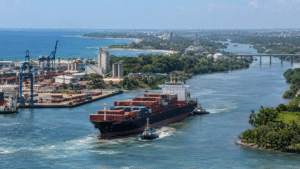
Geographic location is particularly relevant to companies involved in trade, manufacturing, logistics, tourism, and distribution. The country is positioned within relatively short transport distances of major markets in North America and has established air and maritime connections.
Market access is another consideration. Trade agreements can give companies operating from the Dominican Republic access to preferential commercial relationships with external markets, subject to the rules applicable to each agreement and product.
Investment incentives can also influence the economics of a project. Dominican legislation provides special incentive regimes for certain activities, including free zones, tourism, renewable energy, film, and other qualifying sectors. These incentives are not universal and may depend on specific eligibility requirements, investment structures, geographic areas, or operating conditions.
Macroeconomic and institutional conditions also matter. Investors generally consider factors such as economic stability, infrastructure, access to financial services, telecommunications, labor availability, regulatory predictability, and the ability to move funds. No single factor guarantees the success of an investment, but together they shape the environment in which companies evaluate projects.
What Is the Economic Importance of Foreign Investment?
Foreign investment matters because it can provide capital that complements domestic savings and financing. A company establishing a new facility, developing a hotel, expanding an industrial operation, or building infrastructure requires resources that may not otherwise be available at the same scale. When the investment is productive, it can increase the economy’s capacity to produce goods and services.
One of the clearest effects is employment. New projects can create direct jobs while also generating demand for suppliers, contractors, transportation companies, professional services, and other businesses. The scale and quality of these effects vary considerably from one investment to another.
Foreign investment can also contribute to technology and knowledge transfer. International companies may introduce production methods, management practices, technical standards, equipment, or specialized expertise that can spread through local supply chains and labor markets. Dominican law explicitly recognizes technology transfer as a form of investment in certain circumstances.
Another important contribution is foreign-exchange generation. Investment can support activities that generate export revenues or international service earnings. Tourism is a prominent example because international visitors spend foreign currency in the Dominican economy, while manufacturing in free zones can generate export revenues.
Foreign investment can also strengthen links between the Dominican Republic and international production networks. A factory supplying overseas customers, a hotel operated by an international group, or a logistics company connected to global trade can connect local businesses to markets and standards beyond the domestic economy.
How Large Is Foreign Investment in the Dominican Republic?
The scale of FDI can be illustrated through official statistics. According to preliminary figures from the Central Bank, foreign direct investment reached approximately US$5.03 billion in 2025, an increase of about 11.3% from the previous year. The figure represents investment flows recorded during the year and should not be confused with the total stock of foreign-owned assets already present in the country.
The distinction between FDI flows and the FDI stock is important. A flow measures investment recorded during a particular period, such as a year. A stock represents the accumulated position of foreign investment at a given point in time. A country can therefore have a large foreign investment presence even when annual inflows fluctuate.
Preliminary Central Bank data also show that FDI remained significant in the first half of 2026, reaching US$3.2765 billion through June. The Central Bank reported that approximately two-thirds of those inflows represented new capital contributions by investors. These figures illustrate why annual investment numbers should be interpreted as part of a longer-term pattern rather than as isolated events.
What Are the Main Characteristics of Foreign Investment?
Foreign investment in the Dominican Republic has several characteristics that help explain its role in the economy.
- It is diversified. Capital reaches tourism, real estate, energy, mining, manufacturing, services, and other activities rather than remaining limited to one industry.
- It can be long term. Many productive investments require years to develop and recover their initial capital, particularly in tourism, infrastructure, energy, and industry.
- It can involve reinvestment. Foreign-owned companies do not necessarily remove all profits from the country. They may reinvest earnings to expand existing operations.
- It connects the local economy with international markets. Foreign-owned businesses can participate in global supply chains, exports, tourism networks, and international services.
- It operates within both general and sector-specific rules. The general foreign investment framework does not eliminate the licenses, permits, environmental requirements, tax obligations, or other regulations associated with individual activities.
These characteristics mean that the economic impact of foreign investment cannot be judged solely by the amount of money entering the country. The type of investment, the sector involved, the duration of the project, its links with local suppliers, the jobs created, and its contribution to exports or productive capacity all influence its broader economic significance.
Foreign Investment and Government Incentives
The Dominican Republic uses a combination of general investment protections and sector-specific incentive regimes to attract capital. Law 16-95 establishes the general framework for foreign investment, while other laws establish special regimes for particular industries or locations.
Among the best-known examples are the free-zone regime, tourism incentives, renewable-energy incentives, and incentives associated with certain industrial and development activities. These regimes are designed to encourage investment in areas considered strategically important, but their benefits and requirements differ.
For an investor, the existence of an incentive does not automatically mean that a project qualifies. Eligibility can depend on the activity, location, legal structure, investment characteristics, approvals, and compliance with the relevant law. For this reason, sector-specific analysis is essential before relying on a particular tax or regulatory benefit.
Foreign Investment Compared With Other Forms of International Capital
Foreign direct investment is only one way capital can cross borders. International investors can also purchase stocks, bonds, government securities, or other financial assets without establishing a direct operating presence in the country. These forms of investment can be economically important, but they are different from FDI.
The distinction matters because FDI is generally associated with a longer-term relationship with an enterprise or productive activity. Portfolio investment, by contrast, can be more easily bought and sold and may therefore respond differently to interest rates, market conditions, risk perceptions, and global financial movements.
Foreign investment should also not be confused with remittances. Remittances are funds sent by individuals, often migrants, to relatives or other recipients in the Dominican Republic. They are an important source of foreign currency but are not classified as foreign direct investment.
What Are the Risks and Limitations?
Foreign investment can generate substantial economic benefits, but it does not automatically produce the same results in every project or sector. Investment decisions are influenced by market demand, financing costs, regulatory conditions, exchange rates, international competition, political and economic risks, and conditions in the investor’s home country.
There can also be sector-specific concerns. Large projects may face environmental requirements, infrastructure constraints, land-use considerations, or lengthy development periods. In some industries, investment can be particularly sensitive to international commodity prices or global tourism conditions.
For the Dominican economy, diversification also matters. Strong investment in a particular sector can support growth, but a broad investment base can make the economy less dependent on the performance of any one industry. This is one reason investment in manufacturing, logistics, energy, technology, services, and other productive activities is relevant alongside established sectors such as tourism and real estate.
Why Foreign Investment Matters Beyond the Investment Itself
The significance of foreign investment extends beyond the initial transfer of capital. A successful project can create a network of economic relationships involving employees, local suppliers, banks, contractors, distributors, professional services, exporters, and consumers.
For example, a hypothetical foreign-owned manufacturing plant may import specialized equipment, hire Dominican workers, purchase some inputs locally, use domestic financial and professional services, and export finished products. The original foreign investment is therefore only the starting point of a wider set of economic transactions.
The same principle can apply to tourism. A foreign-backed hotel project may involve construction companies, architects, food suppliers, transportation providers, maintenance businesses, financial institutions, and local workers. The resulting economic footprint can therefore extend well beyond the hotel itself.
What Should a Potential Investor Examine First?
Foreign investment decisions should begin with the fundamentals of the proposed business rather than with incentives alone. An investor evaluating the Dominican Republic should first determine whether there is a viable market for the product or service, whether the proposed location is suitable, and whether the project can operate competitively under local conditions.
The next step is to understand the regulatory environment. Investors should identify the corporate, tax, labor, environmental, construction, sector-specific, and licensing requirements that apply to the project. The existence of a general foreign investment framework does not remove these obligations.
It is also important to distinguish between the country’s overall investment environment and the conditions of an individual project. A country may offer favorable general conditions while a particular project faces challenges related to land, infrastructure, financing, permits, competition, or demand.
Official information from ProDominicana and the Central Bank of the Dominican Republic provides a useful starting point for understanding the investment framework and economic data. More detailed analysis is normally required for specific sectors, incentives, corporate structures, immigration matters, taxation, or regulatory procedures.