 25°C
25°C

Why the Dominican Republic Is Emerging as a Major Investment Hub
The Dominican Republic has become one of the Caribbean’s most important destinations for foreign investment, combining access to major international markets, a diversified economy, established tourism infrastructure, expanding export industries, and a growing base of foreign direct investment. Its location, trade agreements, logistics network, workforce, and sector-specific incentives create opportunities across manufacturing, tourism, technology, energy, logistics, real estate, and other industries, although investors should also assess issues such as electricity, climate exposure, regulation, and infrastructure requirements before committing capital.


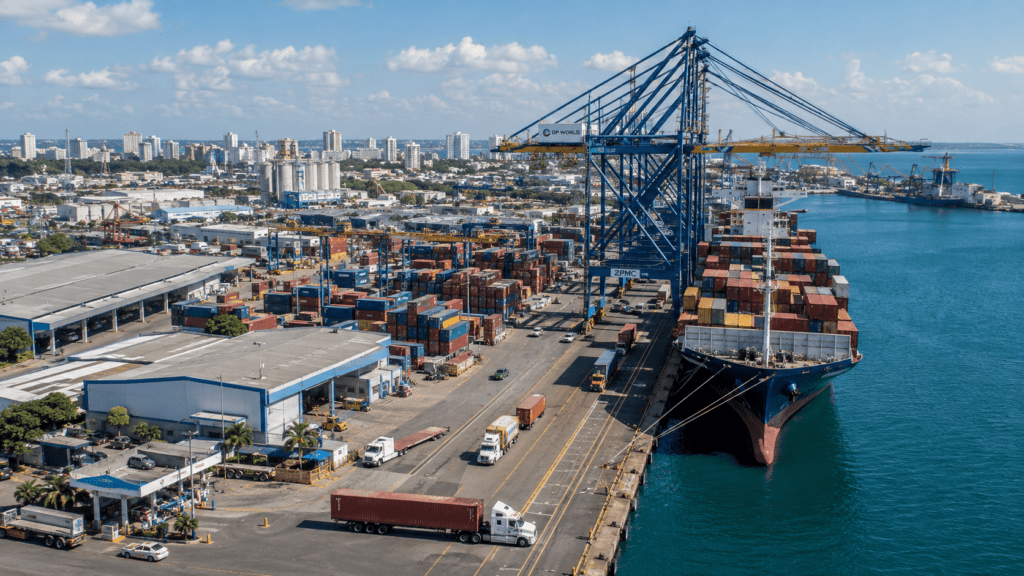
The Dominican Republic offers a combination of geographic, economic, and commercial advantages that has made it an important investment destination in the Caribbean. The country is not simply a tourism market: it has developed significant manufacturing, logistics, mining, agricultural, technology, financial, and export-oriented activities, while continuing to attract substantial foreign direct investment (FDI).
For an international company, the investment case is largely based on the country’s ability to connect production and services with markets in North America, Europe, the Caribbean, and Latin America. For investors focused on the domestic market, the appeal is different: a relatively large population for the Caribbean, sustained economic development, expanding infrastructure, and demand generated by tourism, construction, consumption, and business services.
Strategic Location in the Caribbean
Geography is one of the Dominican Republic’s strongest commercial advantages. The country occupies a central position in the Caribbean, between North America and South America and along important maritime and air routes connecting the Caribbean with Europe.
This position can be particularly valuable for companies whose business model depends on serving several markets from a single regional base. The country’s proximity to the United States makes it relevant to manufacturers, distributors, logistics operators, and service companies evaluating nearshoring strategies.
The advantage is strengthened by the country’s established network of ports, airports, roads, logistics facilities, and telecommunications infrastructure. ProDominicana, the government’s export and investment promotion agency, describes the country as a commercial link between Europe, North America, and Latin America and highlights its preferential access to international markets.
Preferential Access to Major Markets
Market access is one of the most important reasons an international company may consider investing in the Dominican Republic rather than serving the Caribbean exclusively from another location.
The Dominican Republic participates in the Dominican Republic-Central America Free Trade Agreement (DR-CAFTA), which links it commercially with the United States and Central American economies. It also participates in the Economic Partnership Agreement (EPA) between the European Union and CARIFORUM states.
For companies that qualify under the applicable rules of origin and other trade requirements, these agreements can provide an important platform for exporting goods from the Dominican Republic to major consumer markets. ProDominicana estimates preferential access to more than 1.2 billion consumers through these arrangements, although the practical value of market access depends on the product, origin requirements, tariffs, regulations, and destination market.
This makes the country particularly relevant for export-oriented manufacturing and businesses seeking to diversify supply chains. The opportunity is not limited to traditional apparel. Dominican free zones have expanded into medical devices, electrical and electronic products, tobacco, pharmaceuticals, logistics, and business services.
A Strong and Diversified Economic Base
The Dominican economy has experienced substantial long-term expansion and has developed a broader productive base than its traditional tourism image suggests. Tourism remains crucial, but exports, free-zone manufacturing, construction, mining, financial services, agriculture, communications, and domestic consumption also contribute significantly to economic activity.
The International Monetary Fund reported that real GDP grew by about 5 percent in 2024. Growth slowed in 2025 amid greater uncertainty and tighter financial conditions, with the World Bank reporting growth of 2.1 percent for the year. The World Bank projects a recovery to 3.6 percent in 2026 and 4.4 percent in 2027, supported in part by private investment, construction, exports, tourism, and foreign direct investment.
These figures illustrate an important point for investors: the country offers a long-term growth story, but annual performance can vary with global financial conditions, tourism trends, commodity prices, domestic policy, and external demand. Investment decisions should therefore be based on the economics of a specific sector and business model rather than on headline GDP growth alone.
Foreign Direct Investment Is Already Significant
The presence of international investors provides another indication of the country’s position within regional capital flows. According to preliminary data from the Central Bank of the Dominican Republic, FDI inflows reached US$5.03 billion in 2025, an increase of 11.3 percent from the previous year.
The country’s external accounts also benefit from tourism receipts, merchandise exports, remittances, and other service revenues. In 2025, merchandise exports reached approximately US$15.93 billion, while tourism generated about US$11.32 billion in foreign-exchange earnings, according to preliminary Central Bank data.
These flows matter to investors because they demonstrate that the Dominican economy is connected to international sources of demand and capital. They also create opportunities for businesses that supply hotels, manufacturers, exporters, logistics operators, financial institutions, and other companies participating in internationally oriented sectors.
Tourism Creates a Large Investment Ecosystem
Tourism is one of the clearest investment opportunities in the Dominican Republic. The country has developed large resort destinations, international airports, hotels, restaurants, entertainment businesses, transportation services, property developments, and supporting infrastructure.
The scale of the sector creates opportunities well beyond the construction of traditional hotels. Investors can participate in hospitality, vacation properties, restaurants, excursions, transportation, entertainment, technology, medical tourism, wellness, meetings and events, retail, and services for the hospitality industry.
The country’s tourism performance also provides evidence of sustained international demand. During the first half of 2026, the Dominican Republic received more than 6.5 million international visitors, while tourism revenues reached approximately US$6.72 billion, according to Central Bank data. The number of international visitors was 10 percent higher than in the same period of 2025.
Tourism therefore has a multiplier effect on the wider economy. A hotel development can generate demand for construction, food and beverage suppliers, transportation, maintenance, professional services, technology, entertainment, and local businesses. Investors should nevertheless evaluate seasonality, destination-specific competition, environmental constraints, water and energy availability, and the regulatory requirements associated with individual projects.
Infrastructure Supports Regional Operations
Infrastructure is another central part of the investment case. The Dominican Republic has developed a network of international airports, seaports, highways, industrial parks, telecommunications systems, warehouses, and logistics facilities that supports both tourism and international trade.
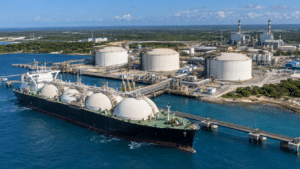
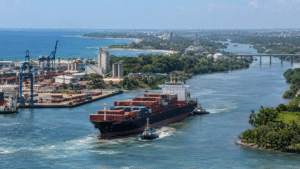
Recent investment-promotion data highlight more than 90 weekly maritime routes connecting the country with North America, Europe, Asia, and the Caribbean, together with more than 370 daily flights. The country’s logistics infrastructure has also expanded through free zones, logistics hubs, warehouses, and improvements to customs procedures.
Trade facilitation has become increasingly important. The Dominican Republic has expanded digital systems for foreign trade and customs processing, reducing the administrative friction associated with importing and exporting goods. These improvements can be particularly relevant for manufacturers and distributors whose competitiveness depends on predictable supply chains.
Infrastructure quality is not uniform across every location or project, however. Investors should assess the specific availability and reliability of electricity, water, roads, telecommunications, waste management, and logistics services before selecting a site.
Free Zones Provide an Established Export Platform
The Dominican Republic’s free-zone system is one of its most developed tools for attracting export-oriented investment. The sector has evolved from traditional labor-intensive manufacturing toward a broader mix of industries and services.
By 2025, the country’s free zones had reached more than 200,000 direct jobs and approximately US$8.6 billion in exports, according to the National Council of Free Trade Zones for Exportation (CNZFE). The sector includes medical devices, electrical and electronic products, tobacco, textiles, logistics, business services, and other manufacturing activities.
This established industrial ecosystem can reduce some of the challenges associated with entering a new market. Investors can potentially find existing industrial parks, trained workers, suppliers, logistics providers, and companies familiar with international production standards.
The growth of medical devices and other higher-value manufacturing is especially significant because it demonstrates that the country’s investment proposition is not limited to low-cost production. Companies can evaluate the Dominican Republic as part of more sophisticated regional supply chains where proximity, trade access, labor availability, and logistics are important considerations.
A Competitive and Expanding Workforce
Labor availability is another factor behind the country’s attractiveness. The Dominican Republic has a large working-age population relative to many neighboring Caribbean economies, while its education, vocational training, and technical capabilities have expanded alongside industrial and service-sector development.
Human capital requirements vary considerably by sector. Tourism and business services may prioritize language skills and customer-service capabilities, while manufacturing requires technical training, quality control, engineering, and production management. Technology companies may require software development, cybersecurity, data, and other specialized skills.
The free-zone sector illustrates the direction of this transition. CNZFE reported that more than 200,000 people were directly employed in free zones in 2025, while training programs have increasingly focused on technical capabilities and higher-value activities.
For investors, the relevant question is therefore not simply whether labor is inexpensive. A more useful assessment considers the availability of the specific skills required, expected wage growth, employee turnover, training costs, productivity, labor regulations, and the possibility of developing talent locally.
Legal Protections and Investment Incentives
The Dominican Republic has a legal framework designed to accommodate foreign investment, together with sector-specific incentive regimes. ProDominicana identifies legal security, foreign-investment protections, and fiscal incentives among the country’s principal investment advantages.
Incentives can be particularly relevant in areas such as free zones, tourism, renewable energy, film production, technology, and other designated activities. However, incentives are not automatically available to every investor. Eligibility can depend on the industry, project structure, location, authorization, investment regime, and compliance with applicable legislation.
Investors should therefore distinguish between the general investment environment and the incentives available to a particular project. A professional legal and tax review should be conducted before relying on a tax exemption or other benefit in a financial model.
Opportunities Beyond Tourism
The investment opportunity is increasingly diversified. ProDominicana identifies sectors including tourism, renewable energy, technology, manufacturing, semiconductors, agriculture, biomedicine, film, and real estate as areas with investment potential.
Manufacturing and Nearshoring
The combination of geographic proximity to the United States, trade agreements, industrial parks, logistics infrastructure, and an established free-zone sector makes manufacturing and nearshoring particularly relevant. Companies seeking to shorten supply chains or diversify production away from distant Asian facilities can evaluate the Dominican Republic alongside other locations in the Americas.
Medical Devices and Advanced Manufacturing
Medical devices, electrical products, and other higher-value manufactured goods have become increasingly important within the free-zone sector. This creates opportunities for manufacturers, component suppliers, logistics providers, maintenance companies, and specialized business services.
Renewable Energy
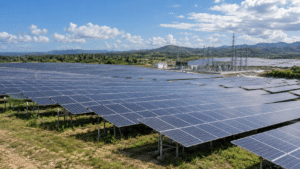
Energy is both an investment opportunity and an operational consideration. The government has identified diversification toward cleaner energy sources as part of efforts to improve the electricity sector. Investors may therefore find opportunities in renewable generation, energy efficiency, storage, grid-related services, and technologies that help commercial and industrial customers manage energy consumption.
Technology and Digital Services
Technology presents opportunities in software development, business-process services, customer support, fintech, data infrastructure, and nearshore services. ProDominicana specifically highlights software development, call centers, nearshoring, data centers, artificial intelligence, and financial technology among potential areas for investment.
Logistics and Distribution
The country’s location and expanding trade infrastructure create opportunities for warehousing, distribution, freight services, fulfillment, packaging, cold-chain logistics, and other activities that support regional commerce. These opportunities can benefit from the same infrastructure that makes the Dominican Republic attractive to exporters and manufacturers.
Agroindustry
Agriculture remains an important part of the economy and offers opportunities for investors interested in food processing, agricultural technology, cold chains, packaging, export-oriented production, and value-added products. The combination of agricultural resources and access to international markets can create opportunities beyond the sale of unprocessed commodities.
Macroeconomic Stability Is an Important Advantage
Investment decisions require more than high growth. Investors also look for manageable inflation, a functioning financial system, access to foreign currency, and institutions capable of responding to economic shocks.
The IMF has described the Dominican Republic as having strong economic fundamentals and policy space to respond to external risks. Inflation has remained relatively close to the central bank’s target, while the banking system has been described as resilient and well capitalized.
The Central Bank also reported that foreign-exchange earnings from FDI, tourism, remittances, merchandise exports, and other services exceeded US$26.5 billion during the first half of 2026. Such inflows contribute to foreign-exchange liquidity and support the country’s external position.
Macroeconomic stability should not be interpreted as the absence of risk. Exchange-rate movements, international interest rates, commodity prices, geopolitical conditions, and changes in global trade can still affect investment returns.
What Investors Should Consider Before Investing
The Dominican Republic’s advantages do not eliminate the need for careful due diligence. The strongest investment decisions begin by identifying the specific risks associated with a project rather than assuming that the country’s overall investment climate will apply equally to every business.
- Electricity: Energy reliability and cost should be evaluated carefully, particularly for industrial and energy-intensive projects. The electricity sector remains an important area of structural reform.
- Regulation: Licensing, environmental approvals, land-use rules, labor requirements, taxes, customs procedures, and sector-specific permits can affect both the timeline and cost of a project.
- Climate exposure: As a Caribbean country, the Dominican Republic is exposed to hurricanes, flooding, extreme rainfall, drought, and other climate-related risks. Site selection and insurance should reflect these realities.
- Infrastructure by location: National infrastructure statistics do not guarantee identical conditions at every site. Investors should assess local roads, utilities, telecommunications, ports, airports, and suppliers.
- Workforce availability: A project requiring specialized technical skills may need a substantial training program even when general labor availability is strong.
- Market competition: Tourism, real estate, retail, logistics, and other attractive sectors can also be highly competitive. A strong national investment environment does not guarantee the commercial success of an individual project.
These considerations are not arguments against investing. They are part of determining whether a specific investment is viable and what structure, location, financing, and risk-management strategy it requires.
How to Evaluate the Dominican Republic as an Investment Destination
A company considering the Dominican Republic should begin by defining its objective. An exporter may prioritize free zones, ports, customs, trade agreements, and workforce availability. A hotel investor may focus instead on tourism demand, land, utilities, airport connectivity, destination competition, and environmental requirements. A technology company may place greater weight on talent, telecommunications, operating costs, and access to international clients.
The next step is to compare locations within the country. Santo Domingo offers the largest metropolitan business environment, while Santiago has a major industrial and commercial base. Punta Cana is closely associated with tourism and hospitality, while other provinces offer industrial parks, agricultural resources, ports, or specialized opportunities.
Investors should then calculate the full cost of operating in the country. This includes land or rent, construction, utilities, labor, taxes, logistics, insurance, financing, compliance, technology, security, and any required training. Available incentives should be incorporated only after eligibility has been verified.

Finally, the investment case should be tested against realistic scenarios. A project that works only under optimistic assumptions about tourism growth, exchange rates, occupancy, labor costs, or energy prices may require restructuring before capital is committed.