 25°C


Telecommunications Industry in the Dominican Republic: Networks, Operators and Investment
The telecommunications industry in the Dominican Republic is built around mobile networks, fixed broadband, fiber-optic infrastructure and the services that connect households, businesses and public institutions. A market led by a small number of major operators is evolving through 5G deployment, fiber expansion and growing demand for reliable connectivity. Understanding its competitive structure, regulatory framework and infrastructure needs is essential for businesses and investors evaluating opportunities in the country's communications sector.


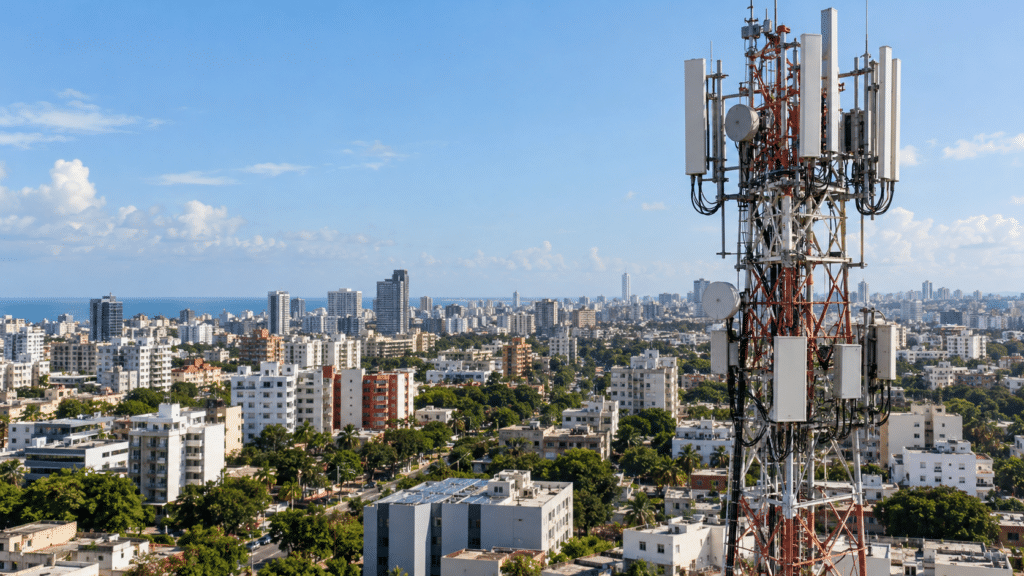
The telecommunications industry in the Dominican Republic provides the connectivity that supports business operations, consumer communications, public services and the wider digital economy. Its core activities include mobile telephony, fixed and mobile internet access, network infrastructure, data transmission, fixed-line services and pay television delivered through telecommunications networks.
The sector combines large operators with national networks, smaller service providers, infrastructure suppliers and companies that build or maintain connectivity systems. Its development depends on investment in spectrum, fiber-optic networks, mobile base stations, international connections and the equipment needed to deliver increasingly demanding services.
For investors and businesses, telecommunications is both a commercial sector in its own right and an essential input for the rest of the economy. Reliable connectivity influences how companies serve customers, coordinate logistics, communicate with employees and access cloud-based services. However, this article focuses on telecommunications networks and services themselves, rather than software development, application businesses or the broader information technology industry.
Structure of the Telecommunications Market
The Dominican telecommunications market is organized around several service categories, each with distinct infrastructure requirements, customer needs and competitive dynamics.
Mobile telecommunications includes cellular voice services, messaging, mobile data and access to 4G and 5G networks. Operators compete through coverage, service quality, data allowances, pricing, device offers and customer support.
Fixed broadband provides internet access to homes, offices, commercial establishments and institutions. Connections can use fiber to the premises, cable, legacy copper infrastructure and other access technologies, depending on the provider and location.
Fixed telephony serves residential and business customers through fixed-line services. Although mobile communications have reduced the centrality of traditional landlines for many users, fixed voice remains relevant in some commercial and institutional environments and may be bundled with broadband.
Pay television and bundled services allow providers to combine connectivity with television or other communications services. The commercial value of these offerings depends on customer preferences, network capabilities and competition from alternative forms of content delivery.
Wholesale connectivity and network infrastructure supports the services sold to end users. This includes fiber routes, transmission capacity, towers, ducts, international connectivity, data transmission facilities and infrastructure sharing arrangements. Wholesale services can be important for smaller providers that do not operate a complete national network of their own.
These categories overlap. A telecommunications company may sell mobile and fixed broadband, provide voice services and offer television or bundled packages. Other providers specialize in particular regions or technologies. This creates a market in which companies compete both for individual subscribers and for the infrastructure and capacity required to deliver services.
Major Telecommunications Operators
Three brands occupy the central position in the Dominican mobile market: Claro, Altice and Viva. Their networks, customer bases and investment decisions shape much of the competitive environment.
Claro Dominican Republic, part of the América Móvil group, operates mobile and fixed telecommunications services. Its activities include cellular connectivity, fixed broadband and other communications offerings. Its broad presence across multiple service categories gives it a substantial position in the market.
Altice Dominicana provides mobile and fixed telecommunications services, including internet access and other consumer and business connectivity products. Its network investments and commercial offers make it a major competitor to Claro.
Viva, operated by Trilogy Dominicana, participates in the mobile market. Its smaller position relative to the two leading operators means that its competitive strategy is particularly important to understanding the degree of choice available to consumers.
Fixed internet also includes providers such as Wind Telecom, cable operators and other regional or specialized companies. Their presence varies by service type and geography. Satellite internet services, including Starlink, provide another option in some locations, particularly where terrestrial infrastructure is limited or difficult to extend economically.
Market share differs across services. A company that leads mobile telephony does not necessarily have the same position in fixed broadband, television or wholesale connectivity. Market assessments should therefore distinguish among subscriber lines, internet accounts, household penetration, network coverage and revenue rather than treating them as interchangeable measures.
Mobile Telephony and Subscriber Demand
Mobile communications are one of the most widely used telecommunications services in the Dominican Republic. They support personal calls, messaging, internet access, business communications and access to digital services across urban and rural areas.
According to industry data compiled from the Dominican Telecommunications Institute (INDOTEL), the country recorded approximately 10.79 million mobile lines at the end of 2024, representing reported penetration of 94.4%. Claro accounted for about 62.8% of those lines, Altice 33.7% and Viva 3.5%.
These figures refer to mobile lines rather than unique individuals. A person may have more than one SIM card or subscription, and some lines may be used for business, connected equipment or other purposes. Mobile penetration should therefore not be interpreted as the exact percentage of the population that owns a phone.
The market’s commercial structure reflects the high cost of building and maintaining radio access networks. Operators need spectrum, towers or other suitable sites, antennas, base stations, transmission links, power systems and network-management capabilities. Expanding coverage requires investment before all the potential customers in an area become subscribers.
Competition takes place through monthly plans, prepaid packages, data allowances, promotions, device financing where offered, network performance and customer service. Prepaid services can appeal to users who prefer to control spending and avoid long-term commitments, while postpaid packages may suit households and businesses seeking predictable billing or bundled services.
As smartphone use and data consumption increase, mobile internet has become an important part of operators’ value propositions. Voice remains available, but network investment and competition increasingly focus on data capacity, indoor coverage, reliability and the ability to support applications that require higher speeds or lower latency.
Fixed Broadband and Fiber-Optic Networks
Fixed broadband serves households and organizations that need a connection at a particular location. Residential customers may prioritize price, download speed, reliability and Wi-Fi performance, while businesses may also require service-level commitments, technical support, backup connectivity and predictable performance during peak periods.
Fiber-optic infrastructure has become increasingly important because it can support high-capacity data transmission and accommodate future increases in traffic. Fiber-to-the-home and fiber-to-the-building networks bring optical connections closer to end users, reducing dependence on older access technologies where fiber deployment is available.
At the end of 2024, the Dominican Republic had approximately 1.29 million fixed broadband connections, according to figures compiled from INDOTEL. Fiber-based technologies represented the largest share of fixed broadband access in the available technology breakdown, reflecting the continued transition away from older copper-based connections.
Fiber expansion requires substantial capital expenditure. Operators must plan routes, obtain access to rights of way or buildings, install cables and distribution equipment, connect customers and maintain the network. The cost per potential subscriber can vary considerably between dense urban neighborhoods and more dispersed communities.
Existing ducts, utility poles, building access and the availability of local infrastructure can affect deployment costs and timelines. In apartment buildings and commercial properties, the ability to obtain permission to install equipment and reach individual units can be as important as the availability of a nearby fiber route.
For providers, the commercial challenge is to balance network investment against expected take-up. An area may have strong demand for high-speed internet but still be difficult to serve profitably if homes are widely dispersed or installation costs are unusually high. Wholesale access, infrastructure sharing and public connectivity initiatives can influence the economics of extending service.
Internet Access, Coverage and the Connectivity Gap
Internet access in the Dominican Republic has expanded through mobile networks and fixed broadband, but connectivity indicators measure different aspects of the market. Network coverage shows where a service may be available, subscriptions count active accounts or connections, and household access measures whether people have a connection available where they live.
The National Observatory of Information and Communication Technologies (ONTIC), drawing on data from INDOTEL and the National Statistics Office, reported approximately 9.8 million mobile internet subscriptions and 1.29 million fixed internet subscriptions for 2025. It also reported that 58.3% of households had internet access in that year. These measures are not directly comparable: mobile subscriptions are not equivalent to unique users, and a household may rely on a mobile connection rather than fixed broadband.
Geography influences the type and quality of service available. Dense urban areas can support more subscribers per kilometer of network, improving the economics of fixed fiber and mobile capacity. Rural communities, mountainous terrain and remote settlements can require longer transmission routes, additional sites or alternative access technologies.
Coverage also does not guarantee a consistent customer experience. A mobile signal may be available while indoor performance remains weak, or a fixed service may be technically available but unaffordable for some households. Network congestion, power interruptions, equipment limitations and the quality of in-building Wi-Fi can further affect the experience of users.
Satellite connectivity can complement terrestrial networks in remote locations, providing an alternative where fixed infrastructure is unavailable or difficult to build. Its suitability depends on equipment and service costs, installation requirements, local conditions and the specific needs of the customer.
Closing the connectivity gap is therefore not simply a matter of extending coverage maps. It also involves affordability, network capacity, reliability and the ability to connect schools, health facilities, businesses and households that may otherwise remain underserved.
4G, 5G and the Evolution of Mobile Networks
Fourth-generation mobile networks, commonly known as 4G or LTE, provide the foundation for much of the country’s mobile data usage. They support video, navigation, messaging, online transactions and a broad range of services used by consumers and businesses.
The transition to 5G introduces additional capacity and the potential for higher speeds and lower latency under suitable network conditions. These characteristics can support applications that require more responsive connectivity, although actual performance depends on spectrum, network design, device compatibility, congestion and coverage.
The Dominican Republic began its commercial 5G deployment after a spectrum licensing process that awarded frequencies in the 3.5 GHz band to Claro and Altice. Viva has also been associated with 5G deployment in the market. Availability and performance vary by operator, location and compatible device.
5G investment involves more than installing new antennas. Operators must acquire or use appropriate spectrum, upgrade radio equipment, strengthen backhaul connections, manage power and site requirements, and maintain compatibility with existing network infrastructure. Additional sites may be needed in areas where high-frequency capacity or dense usage requires them.
For operators, the business case depends on whether improved capacity and new service opportunities justify the cost. In some areas, 5G can help accommodate rising traffic and improve customer experience. In others, the near-term priority may be strengthening 4G coverage or expanding fixed fiber rather than deploying a new mobile layer.
Consumers should also distinguish between the technical capabilities of a network and the service they receive. A 5G-compatible phone does not guarantee 5G access everywhere, and advertised peak speeds do not necessarily represent typical performance. Coverage, spectrum availability, network load and the user’s device all influence results.
Infrastructure Behind Telecommunications Services
Telecommunications services depend on a network of physical and technical assets that extend far beyond mobile phones and residential routers. These assets carry traffic between users, local networks, national infrastructure and international destinations.
Cell sites and towers provide locations for antennas and radio equipment. Operators must select suitable sites, obtain necessary permissions, secure power and transmission links, and maintain equipment in working condition. Shared towers can reduce duplication where technical and commercial arrangements permit.
Fiber-optic cables and transmission networks carry large volumes of data between mobile sites, fixed access networks, data facilities and international gateways. They are critical to increasing capacity and maintaining consistent performance as traffic grows.
International connectivity links the Dominican Republic to the global internet and international communications networks. Submarine cables and international transmission arrangements are important because local users routinely access content, cloud services and platforms hosted outside the country.
Internet exchange points allow participating networks to exchange traffic directly under agreed arrangements. Local traffic exchange can improve efficiency and reduce the need to route certain communications through external networks, depending on the networks and services involved.
Power and resilience systems help keep telecommunications equipment operating during disruptions. Backup power, redundancy, network monitoring, physical security and disaster recovery arrangements are important in a Caribbean country exposed to storms, flooding and other events that can affect infrastructure.
These infrastructure layers create opportunities for contractors, equipment suppliers, tower operators, fiber specialists, engineering firms and maintenance providers. Their commercial prospects depend on technical capability, regulatory compliance, financing, access to sites and the ability to deliver reliable service over the life of an asset.
Competition and Market Concentration
The Dominican telecommunications market is concentrated, particularly in mobile services and fixed broadband. A small number of large operators account for most subscriptions in key segments, while smaller providers contribute competition in specific technologies, locations or customer categories.
Network economics help explain this structure. Building a national mobile network or extensive fixed infrastructure requires large initial investments and ongoing spending on maintenance, spectrum, power, transmission, equipment upgrades and customer support. New entrants must either finance their own infrastructure, obtain wholesale access or focus on areas where a more limited network can be commercially viable.
Scale can provide advantages in purchasing, network management, marketing and the ability to spread fixed costs across a larger customer base. Established operators may also have stronger brand recognition and broader service portfolios. However, scale does not eliminate competition or guarantee that every customer receives the same quality of service.

For consumers, competition can influence prices, data allowances, bundled offers, service quality and the availability of alternative providers. For businesses, it affects the options available for fixed connectivity, mobile fleets, backup services and multi-site communications.
Market concentration also makes regulation important. The regulator’s responsibilities include promoting sustainable and effective competition, managing spectrum, protecting users and overseeing compliance with applicable telecommunications rules. Decisions concerning spectrum allocation, interconnection, infrastructure access and service quality can influence both investment incentives and market outcomes.
When evaluating a provider, customers should compare the service available at their specific location rather than relying only on national market share or advertised coverage. The practical alternatives may differ substantially between a central urban district and a rural area.
Regulation and the Role of INDOTEL
The Instituto Dominicano de las Telecomunicaciones (INDOTEL) is the Dominican Republic’s telecommunications regulator. Established under General Telecommunications Law No. 153-98, it oversees the sector’s regulatory framework and has responsibilities relating to competition, service providers, spectrum use and the protection of telecommunications users.
The regulatory framework affects how companies obtain authorization to provide services, deploy networks, use radio frequencies and meet applicable obligations. Spectrum is particularly important for mobile operators because access to suitable frequencies affects coverage, capacity and the economics of network deployment.
Licensing and authorization requirements vary according to the service and activity involved. A business planning to operate a public telecommunications service, provide infrastructure or use regulated spectrum should determine the applicable requirements before making major investments.
INDOTEL also plays a role in connectivity initiatives and the development of sector statistics. Reliable data on subscriptions, network access, service quality and market structure help policymakers, investors and providers understand the evolution of the industry.
The legal framework is not static. Regulatory discussions can address how existing rules should respond to new technologies, changing market structures and new expectations for connectivity. Businesses should verify current requirements and applicable decisions rather than assume that an older authorization or commercial arrangement covers every new service.
The regulator’s official website, INDOTEL, provides access to telecommunications regulations, statistical publications, resolutions and information for users and service providers.
Investment Opportunities in Telecommunications
Investment opportunities extend beyond becoming a national mobile operator. The market includes infrastructure, network expansion, specialized services and technologies that improve the performance and resilience of existing systems.
Fiber-optic deployment. Expanding fixed broadband creates demand for cable installation, civil works, network planning, building connections, maintenance and related engineering services. Projects must be assessed against route costs, local demand, rights of way and expected subscriber take-up.
Tower and site infrastructure. Mobile network expansion and capacity upgrades require suitable locations, equipment support, power systems and ongoing maintenance. Infrastructure businesses may serve several operators where site-sharing arrangements are technically and commercially feasible.
Network equipment and maintenance. Operators need antennas, transmission equipment, routers, optical systems, power supplies, monitoring tools and replacement components. Suppliers need to meet technical specifications, maintain product availability and provide dependable support.
Enterprise connectivity. Companies with multiple locations or critical communications requirements may need dedicated connections, redundancy, managed connectivity and service-level commitments. Telecommunications providers and infrastructure specialists can compete by offering reliable services suited to business operations.
Rural and underserved-area connectivity. Extending networks to communities with limited service can create opportunities for providers, contractors and infrastructure partners. The financial case may depend on public programs, wholesale arrangements, shared infrastructure or other mechanisms that make deployment viable.
Satellite communications. Satellite broadband can serve remote sites, maritime operations, temporary facilities and locations where terrestrial networks are limited. Commercial viability depends on equipment costs, service plans, performance requirements and the availability of alternatives.
Resilience and backup infrastructure. Telecommunications networks need to withstand power interruptions, severe weather, equipment failure and other disruptions. Backup power, redundant links, protected sites and disaster recovery capabilities create demand for specialized engineering and maintenance.
For investors, the opportunity must be evaluated in terms of capital intensity, regulatory requirements, customer concentration, equipment lifecycle, contract duration and the predictability of revenue. Telecommunications infrastructure can offer long-lived assets, but returns depend on utilization, operating costs, financing and the commercial terms under which capacity is sold.
Economic Importance and Business Demand
Telecommunications contributes to the economy directly through network investment, service revenue, employment, equipment procurement and infrastructure maintenance. It also enables activity in sectors that depend on reliable communications, including tourism, financial services, manufacturing, logistics, retail, healthcare and education.
Businesses use connectivity to coordinate distributed operations, communicate with suppliers and customers, manage transactions and access remote systems. For companies operating in several locations, reliable broadband and mobile coverage can reduce operational friction and support centralized management.
Tourism and hospitality depend on connectivity for reservations, guest communications, payment systems and coordination among properties and service providers. Logistics and transportation businesses use mobile communications to coordinate vehicles, drivers, warehouses and customers. Public institutions rely on telecommunications for service delivery and communication with citizens.
These uses create demand for both consumer and business telecommunications services. Enterprise customers may require stronger service guarantees, dedicated support, redundant connections or specific network configurations that differ from standard residential offers.
Connectivity can also influence where companies choose to establish offices, facilities and service operations. While it is only one factor in location decisions, reliable infrastructure supports productivity and access to markets. Conversely, weak or unreliable service can impose costs through delays, downtime and reduced access to digital services.
The wider economic value of telecommunications therefore extends beyond the revenue earned by operators. Network quality, affordability and geographic availability affect the efficiency of many other industries.
Challenges Facing the Telecommunications Industry
The sector faces several structural challenges. The first is the cost of maintaining and upgrading networks while customer expectations continue to rise. Operators must increase capacity, replace aging equipment and improve coverage without allowing capital expenditure and operating costs to undermine financial performance.
Geographic disparities create another challenge. Dense urban markets can support more customers per network site, while rural areas may require higher investment per subscriber. Extending service to less profitable locations can require different technical solutions or supportive financing arrangements.
Competition can also place pressure on prices and margins. Operators must balance promotions and affordable packages with the investment required to maintain service quality. Customers may switch providers when prices or performance are unsatisfactory, but the availability of alternatives differs by location and service type.
Network resilience is particularly important in the Caribbean. Storms, flooding, power interruptions and physical damage can disrupt service. Maintaining backup power, redundant routes and effective recovery procedures increases costs but can reduce the duration and impact of outages.
Cybersecurity and network integrity are further concerns. Telecommunications operators manage critical infrastructure and large volumes of customer information. They need appropriate technical controls, access management, monitoring and incident response capabilities to protect networks and maintain service continuity.
Finally, rapid technological change can shorten equipment lifecycles and require repeated investment. Operators must decide when to expand 5G, where to extend fiber, how to retire legacy systems and how to allocate capital across competing needs. These decisions require a clear understanding of demand rather than a simple assumption that newer technology will always produce higher returns.
Outlook for Telecommunications in the Dominican Republic
The telecommunications industry in the Dominican Republic is evolving through continued mobile data demand, fiber expansion, 5G deployment and efforts to extend connectivity to underserved areas. Its future development will depend on the ability of operators and infrastructure providers to invest in capacity while maintaining commercially sustainable services.
The market’s structure is likely to remain shaped by the substantial capital requirements of telecommunications networks and the leading position of a small number of operators. Competition will continue to influence pricing, customer service, coverage and the quality of available offers, while regulation will shape spectrum use, network deployment and user protection.
For investors and suppliers, opportunities exist in network construction, fiber access, tower infrastructure, equipment, maintenance, enterprise connectivity and resilience. Each requires a distinct assessment of capital requirements, technical capabilities, regulatory obligations and customer demand.
The sector’s long-term importance lies in its role as essential infrastructure. Reliable and affordable telecommunications services support productivity, enable other industries and connect communities to economic opportunities. Sustainable growth will depend not only on the adoption of newer technologies, but also on network quality, competitive conditions and the ability to deliver dependable service across the country.