 22°C
22°C

Dominican Republic’s Trade Ties: U.S. Leads as Haiti, China and Europe Shape the Economy
The Dominican Republic’s trade relationships are concentrated around a few major markets, but exports and imports tell very different stories. The United States is by far the country’s largest trading partner overall and its dominant export destination, while China is the second-largest source of imports. Haiti is unusually important as an export market, particularly given its geographic proximity, while Europe, the Caribbean and Latin America provide additional markets and supply chains that have become more significant as the Dominican economy has diversified.


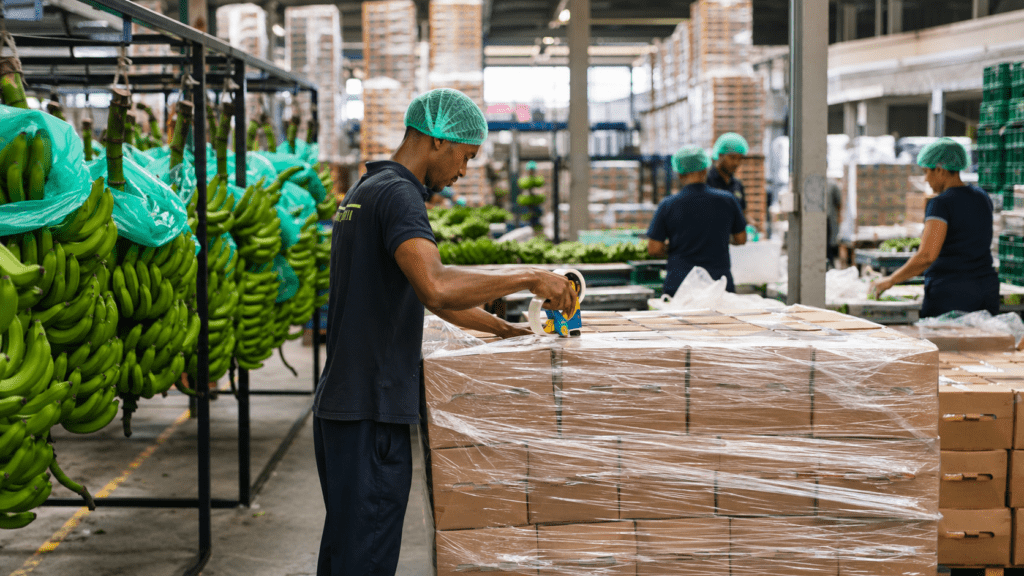
The Dominican Republic is one of the Caribbean’s most commercially integrated economies, with trade extending well beyond its immediate region. Its position between North America, the Caribbean and Latin America has helped make the country an important manufacturing, agricultural and services hub. Yet the geography of trade is not symmetrical: the countries that buy Dominican products are not necessarily the same countries that supply most of its imports.
The United States occupies the central position on both sides of the trade relationship, but for different reasons. Haiti is especially important as a destination for Dominican exports, while China has become a major source of imported goods. Europe remains an important export market and supplier, and Caribbean and Central American countries provide regional markets, intermediate goods and alternative commercial links.
Who Are the Dominican Republic’s Main Trading Partners?
Using 2024 World Trade Organization data based on UN Comtrade, the Dominican Republic exported about $13.2 billion in goods and imported about $32.8 billion. The concentration of exports was particularly pronounced: the United States alone accounted for 58.6% of Dominican goods exports, compared with 39.5% of imports. China, by contrast, represented 18.3% of imports but only 2.8% of exports.
| Partner | Role in Dominican Trade | 2024 Share |
|---|---|---|
| United States | Largest export market and import supplier | 58.6% of exports; 39.5% of imports |
| China | Major import supplier | 18.3% of imports; 2.8% of exports |
| European Union | Major export market and import source | 8.3% of exports; 12.9% of imports |
| Haiti | Major export market | 7.0% of exports |
| Switzerland | Important export destination | 5.7% of exports |
| India | Important export destination | 5.2% of exports |
| Mexico | Important import supplier | 3.8% of imports |
| Brazil | Important import supplier | 3.7% of imports |
These figures illustrate why it is misleading to speak of the Dominican Republic’s “top trading partners” without distinguishing between export destinations and import origins. The United States is the leading partner in both categories, but Haiti has a much larger role as a buyer of Dominican goods than as a supplier, while China has almost the opposite profile.
The United States Is the Dominican Republic’s Dominant Trade Partner
The United States has been the defining external market for the Dominican economy for decades. It is the country’s largest destination for merchandise exports and its largest source of imports. In 2024, Dominican exports to the United States were worth about $7.7 billion, while imports from the United States reached approximately $12.9 billion, according to WTO data based on UN Comtrade.
The relationship is broader than merchandise trade alone. The U.S. Trade Representative reported total U.S.-Dominican trade in goods and services of an estimated $33.4 billion in 2024. Services are particularly relevant because the Dominican economy has strong links with tourism, travel and other internationally traded services.
Manufacturing ties also matter. The Dominican Republic’s free-trade relationship with the United States has helped support production for the U.S. market, including goods manufactured in export-oriented industrial zones. This creates a relationship that goes beyond simple buying and selling: American companies can be part of Dominican production networks, while Dominican producers can use the U.S. market as an important destination for manufactured goods.
The United States’ importance has nevertheless changed in relative terms. World Bank research shows that the U.S. remained the leading export destination and import origin for the Dominican Republic over the past two decades, while its share of exports declined from earlier levels as the country’s trading relationships became more diversified.
Why Haiti Is Such an Important Export Market
Haiti is the Dominican Republic’s second-largest individual export destination in many recent trade datasets, despite being a much smaller source of imports. Its importance is largely explained by geography, market proximity and the structure of bilateral commerce.
In 2024, Haiti accounted for about 7.0% of Dominican goods exports, equivalent to roughly $924 million. That placed Haiti ahead of most individual Latin American and Caribbean markets. In 2023, World Bank trade data likewise placed Haiti second among Dominican export destinations, with exports of about $856 million.
The relationship has developed over a much longer period. Historical World Bank data show that Haiti was already an important destination for Dominican exports in the 1990s and became particularly significant in the 2000s and 2010s. A World Bank analysis of Dominican trade found Haiti accounting for 13.3% of exports during 2010-2014 and 9.6% during 2015-2019, illustrating how the bilateral market has at times represented a substantial share of Dominican external sales.
Haiti’s importance should not be confused with balanced bilateral trade. The relationship is strongly asymmetric from the Dominican perspective, with the Dominican Republic selling substantially more goods to Haiti than it buys from its neighbor. This makes Haiti primarily an export market within the Dominican Republic’s wider trade network.
China Is a Major Source of Imports
China occupies a very different position. It is the Dominican Republic’s second-largest source of imported goods, behind the United States. In 2024, imports from China were worth about $6.0 billion, representing 18.3% of all Dominican merchandise imports.
Chinese products enter the Dominican market across a broad range of categories, reflecting China’s role as a global manufacturing center. The relationship therefore has a different economic function from the Dominican Republic’s relationship with the United States or Haiti. China is primarily important as a supplier, while the Dominican Republic sells comparatively fewer goods to the Chinese market.
In 2024, Dominican exports to China amounted to about $368 million, or 2.8% of total exports. The resulting gap between imports and exports demonstrates the scale of the bilateral merchandise imbalance.
China’s importance has increased over time. World Bank data show that Chinese imports represented 17.79% of Dominican imports in 2022, compared with 16.44% in 2023. The precise annual share varies with commodity prices and domestic demand, but the broader pattern is clear: China has become one of the Dominican Republic’s principal external suppliers.
Europe Provides Both Markets and Investment Links
Europe is one of the Dominican Republic’s most important trading regions, although its role is distributed across multiple countries. When the European Union is treated as a single trading bloc, it accounted for 8.3% of Dominican exports and 12.9% of imports in 2024.
Individual European countries can also appear prominently in Dominican trade statistics. Switzerland, for example, represented 5.7% of Dominican exports in 2024, while the Netherlands accounted for a smaller but significant share. Spain has also been an important source of imports and has longstanding economic, commercial and investment links with the Dominican Republic.
European trade is supported by the EU-CARIFORUM Economic Partnership Agreement, which covers the Dominican Republic together with other Caribbean countries. The agreement provides a framework for trade in goods and services between the two regions.
The European Commission describes the Dominican Republic as a key participant in the EU-CARIFORUM trading relationship. The Dominican Republic accounted for 22% of total EU-CARIFORUM trade in 2024, while the broader EU-CARIFORUM relationship has expanded considerably in recent years.
Europe is therefore important not only because of the value of bilateral merchandise trade, but also because of the diversity of commercial relationships involved. European markets can absorb Dominican agricultural and manufactured products, while European suppliers provide machinery, pharmaceuticals, vehicles, food products and other goods used by Dominican households and businesses.
The Caribbean and Central America Create Regional Trade Links
The Dominican Republic’s trade geography also extends through the Caribbean and Central America. These markets are smaller than the United States, China or the European Union, but their proximity can make them commercially important.
Among Caribbean destinations, Jamaica and Cuba appear regularly among Dominican export markets. Puerto Rico is also a significant destination, although it is a U.S. territory rather than an independent country and therefore should be treated separately in many trade analyses.
Jamaica accounted for about 0.9% of Dominican exports in 2024, while Cuba accounted for about 0.6%. These shares are modest compared with the United States and Haiti, but they illustrate the Dominican Republic’s ability to serve neighboring Caribbean markets from its geographic position in the region.
Central America is also relevant, particularly through trade with countries such as Costa Rica, Guatemala, Panama, Honduras, Nicaragua and El Salvador. The region is connected to the Dominican Republic through broader regional supply chains and trade agreements, although individual Central American countries generally account for smaller shares of Dominican trade than the United States or China.
The importance of regional commerce becomes clearer when trade is viewed as a network rather than a ranking. Nearby countries can be important buyers of specific Dominican products even when their share of total national exports is relatively small. Regional trade can also provide alternative suppliers, intermediate inputs and markets that reduce dependence on a single commercial relationship.
India and Switzerland Show Why Export Rankings Can Be Misleading
Two countries illustrate an important feature of Dominican export statistics: relatively small or specialized markets can occupy a surprisingly high position in the rankings.
India represented 5.2% of Dominican exports in 2024, according to WTO data. That placed it ahead of Canada, Jamaica and the United Kingdom as an individual destination. Switzerland represented 5.7%, making it another unusually large market relative to its role as a general supplier to the Dominican economy.
These figures should not automatically be interpreted as evidence that the Dominican Republic has broad-based trade relationships with every country near the top of the export ranking. Export totals can be heavily influenced by particular commodities and by the way international trade statistics record transactions, including precious metals and other specialized products.
For that reason, a meaningful analysis of Dominican trade should consider both the value of exports and the composition of those exports. A country may rank highly because it buys a concentrated group of products rather than because it represents a broad market for Dominican businesses.
Who Supplies Most of the Dominican Republic’s Imports?
The import side of Dominican trade is more diversified than the export side, although the United States and China remain dominant.
| Import Partner | 2024 Import Value | Share of Dominican Imports |
|---|---|---|
| United States | $12.95 billion | 39.5% |
| China | $6.00 billion | 18.3% |
| European Union | $4.21 billion | 12.9% |
| Mexico | $1.25 billion | 3.8% |
| Brazil | $1.21 billion | 3.7% |
| Colombia | $843 million | 2.6% |
| Japan | $576 million | 1.8% |
| India | $474 million | 1.4% |
| Argentina | $434 million | 1.3% |
| Trinidad and Tobago | $398 million | 1.2% |
This pattern highlights the Dominican Republic’s role as a substantial importer of consumer goods, intermediate inputs and capital goods. In 2023, consumer goods represented 48.05% of imports, while intermediate goods accounted for 21.78% and capital goods for 18.58%. The composition helps explain why countries with large manufacturing sectors, including the United States, China, Mexico and Brazil, are important suppliers.
How Dominican Trade Relationships Have Changed
The Dominican Republic has not abandoned its traditional markets; instead, its trade network has become more diversified around them. The United States remains the dominant commercial partner, but its relative share of exports has fallen from earlier decades as other destinations have expanded.
World Bank research provides a useful long-term perspective. The United States accounted for an average of 62.9% of Dominican exports in 2006-2007, compared with 52.4% in 2010-2014 and 49.2% in 2015-2019. By 2019, it represented about 52.2%. During the same period, Haiti became substantially more important, while India, Switzerland and China also gained relevance in different periods.
The most recent data indicate that this diversification has continued, even though the United States remains overwhelmingly important. The Dominican Republic’s national exports reached about $14.4 billion in 2025, compared with $11.6 billion in 2021, according to Dominican Customs data. The 2025 geographic distribution also showed strong concentrations in the United States, Haiti, India, China and several Caribbean and European markets.
Dominican Customs reported preliminary 2025 national-export shares led by the United States at 33%, Haiti at 18%, India at 16%, China at 5%, Canada at 3%, Puerto Rico at 3%, the Netherlands at 3% and Belgium at 2%. These figures use a different statistical coverage from the WTO’s total merchandise trade series, so they should not be directly substituted for the 2024 WTO percentages. They are nevertheless useful for illustrating the continuing diversification of Dominican export destinations.
Trade Agreements Help Explain the Geography
The distribution of Dominican trade is partly the result of geography and demand, but trade policy also matters. The Dominican Republic participates in trade agreements that provide preferential access to important markets, including the United States and the European Union.
The CAFTA-DR framework connects the Dominican Republic with the United States and Central American economies. Its significance extends beyond tariff preferences: long-term market access can influence where manufacturers locate production, where companies source inputs and which markets become commercially attractive.
The EU-CARIFORUM Economic Partnership Agreement plays a comparable role on the European side. It establishes a framework for trade in goods and services between the European Union and participating Caribbean economies, including the Dominican Republic. These agreements complement the country’s geographic advantages and help explain why North America, Europe and the Caribbean occupy such prominent positions in Dominican trade.
Exports and Imports Tell Two Different Stories
The clearest way to understand Dominican trade is to separate the two flows.
- Exports: The United States is the dominant destination, followed by Haiti and a group of important markets including Switzerland, India, China, Canada and European and Caribbean countries.
- Imports: The United States is the largest supplier, followed by China and the European Union, with Mexico, Brazil, Colombia and other countries supplying additional goods.
- Regional trade: Haiti and Caribbean markets are disproportionately important as destinations compared with their role as suppliers.
- Asia: China is particularly important on the import side, while India has emerged as a significant destination for Dominican exports.
- Europe: The region matters on both sides of the trade balance, combining consumer and industrial suppliers with important markets for Dominican products.
This distinction is essential for businesses assessing the Dominican market. A country that is a major supplier to the Dominican Republic may not be a major destination for Dominican exports, and vice versa.
What the Trade Pattern Means for the Dominican Economy
The Dominican Republic’s trade structure reflects an economy connected to several different commercial systems at once. The United States provides the largest external market and a major source of goods and services. Haiti provides an important nearby market for Dominican products. China supplies a substantial volume of manufactured goods. Europe contributes both demand and investment relationships, while Latin American and Caribbean partners provide regional diversification.
This diversity creates opportunities, but it also leaves the country exposed to changes in its largest markets. Because the United States absorbs such a large share of Dominican exports, shifts in American demand, trade policy or economic conditions can have consequences for Dominican producers. Similarly, heavy reliance on foreign suppliers means that global shipping costs, commodity prices and disruptions in international supply chains can affect domestic businesses and consumers.
At the same time, the gradual expansion of markets outside the United States gives Dominican exporters more options. The rise of Haiti, India and selected European, Caribbean and Asian destinations shows that the country’s export base is not static.