 22°C
22°C

Economic Challenges Facing the Dominican Republic
The Dominican Republic has achieved one of Latin America and the Caribbean’s strongest long-term growth performances, but sustaining that progress will depend on resolving structural weaknesses that can limit productivity, widen inequality and increase exposure to external shocks. The central challenges include labor informality, uneven human-capital outcomes, infrastructure gaps, electricity-sector inefficiencies, limited fiscal capacity, dependence on tourism and other external sources of income, public debt pressures, and growing climate risks.


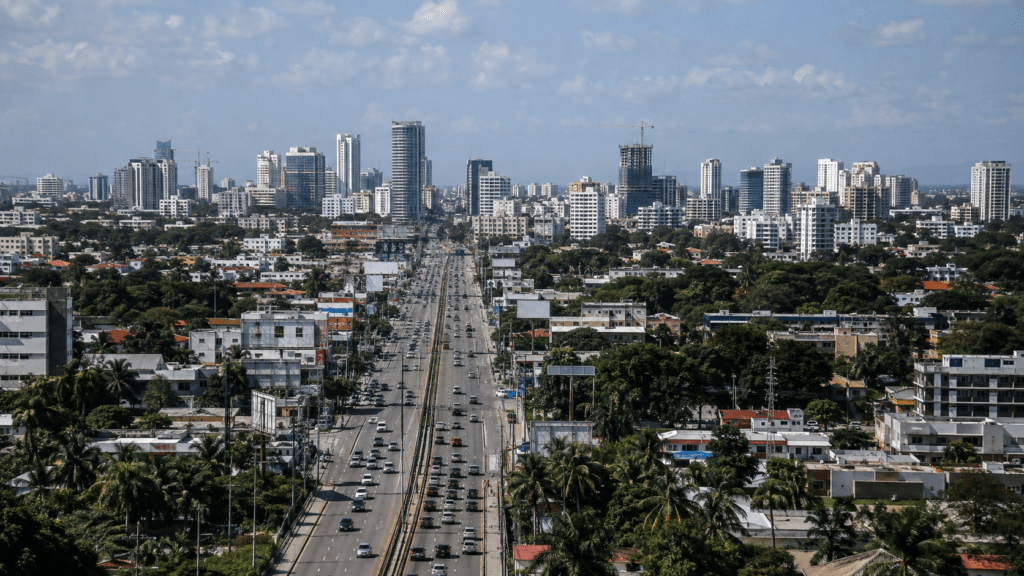
The Dominican Republic enters the next phase of its economic development from a position of relative strength. Over the past two decades, the country has grown faster than the Latin American and Caribbean average, reduced poverty substantially and developed a more diversified economy than it had in earlier periods. Real GDP grew by 5 percent in 2024, while the World Bank reported that official poverty fell from 23 percent in 2023 to 19 percent in 2024. Yet strong headline growth does not eliminate structural constraints. The challenge is to convert economic expansion into higher productivity, better-paid formal employment and more resilient public and private institutions.
This distinction matters because the next stage of development is generally harder than the first. Growth driven by investment, tourism, consumption, exports and favorable external conditions can raise incomes quickly, but sustained convergence toward high-income economies requires improvements in education, technology, infrastructure, competition, public services and institutional capacity. The International Monetary Fund has likewise emphasized that structural reforms in human capital, competitiveness, resilience and electricity are important for maintaining the Dominican Republic’s potential growth.
Why Strong Growth Does Not Remove the Structural Challenges
The Dominican economy has demonstrated considerable resilience. The country benefits from political and macroeconomic stability, a developed tourism industry, free-trade-zone manufacturing, mining, construction, services, remittances and substantial foreign investment. Its financial system has also remained resilient. These strengths give the country more room to respond to shocks than many economies with similar income levels.
At the same time, growth has not eliminated the productivity gap between the Dominican Republic and more advanced economies. The World Bank identifies productivity, human capital, competitiveness, public-sector efficiency and the quality of employment as central issues for the country’s next development phase. This means the main question is no longer simply whether the economy can grow quickly, but whether it can generate enough productivity growth to sustain higher incomes without increasing economic and social vulnerabilities.
1. Labor Informality and the Quality of Employment
Labor informality remains one of the most important structural weaknesses. Informal workers and businesses operate outside some or all of the country’s formal tax, labor and social-security systems. Informality is particularly prevalent among small firms and in labor-intensive activities, while informal employment tends to be associated with lower productivity, limited access to finance and technology, and weaker social protection.
The situation has improved. The World Bank reported that more than 170,000 formal jobs were created in 2024, raising formal employment to more than half of total employment. Nevertheless, a large informal segment remains. The International Labour Organization has identified informality in the Dominican Republic as a multidimensional issue connected to productivity, social security, gender, care responsibilities and the characteristics of firms and workers.
The economic problem is larger than the absence of a formal employment contract. When businesses remain small and informal, they often have less access to credit, technology, management expertise and markets. That can keep capital and labor concentrated in low-productivity activities. At the same time, workers without adequate social protection are more exposed to illness, unemployment and old age, increasing pressure on households and public programs.
There is therefore a potential growth dividend from formalization. Simplifying procedures, reducing unnecessary regulatory costs, improving access to finance and technical assistance, and aligning labor and social-security rules with the realities of smaller firms could make it easier for productive businesses to grow. Formalization would also broaden the tax base and strengthen workers’ access to social protection.
2. Low Productivity and the Difficulty of Moving Up the Value Chain
Productivity is ultimately the key constraint on long-term income growth. An economy can increase employment and investment for many years, but sustained improvements in living standards require workers and firms to produce more value with the resources they already use.
The Dominican Republic has made progress in manufacturing, services, logistics, tourism and export-oriented production, but productivity remains uneven across firms and sectors. Small enterprises often face difficulties accessing technology, management capabilities, financing and specialized skills. This creates a large gap between highly productive modern companies and a much larger group of smaller businesses operating with limited capital and technology.
Technology adoption is another part of the challenge. The World Bank has highlighted low intensive use of digital tools among workers and a persistent mismatch between the skills employers require and those available in the labor market. Nearly 40 percent of employers surveyed in one World Bank analysis reported difficulties filling vacancies because of insufficient technical skills or work experience.
The implication is significant: without faster productivity growth, the Dominican Republic could continue expanding while gradually finding it harder to achieve the income gains required to become a high-income economy. Productivity-enhancing policies therefore need to reach ordinary firms and workers rather than being concentrated only in the country’s most advanced export sectors.
3. Education and the Human-Capital Gap
Education is closely connected to both productivity and inequality. The Dominican Republic has expanded access to schooling and increased public education spending, but learning outcomes remain a major concern. The World Bank’s assessment of the country’s human-capital challenges identifies educational quality and skills mismatches as constraints on productive potential.
The issue is not simply how many years children spend in school. What matters economically is whether students acquire strong foundations in reading, mathematics, science, digital skills and problem-solving, followed by technical and professional skills that correspond to labor-market demand.
Poor learning outcomes can create a chain of economic consequences. Workers with weaker skills are less likely to obtain productive formal employment, firms have greater difficulty adopting new technologies, and employers may need to spend more on training. Lower productivity then translates into weaker wages and limits the country’s ability to move toward more sophisticated goods and services.
There is also a distributional dimension. Children from poorer households can be disproportionately affected when education quality varies by location, household resources or access to complementary services. Improving early childhood development, foundational learning, technical education and links between schools and employers would therefore serve both growth and social inclusion.
4. Inequality and Unequal Access to Economic Opportunity
The Dominican Republic has made major progress in reducing poverty. In 2024, per-capita GDP increased by 4.1 percent and official poverty declined substantially. Yet poverty reduction should not be confused with the elimination of inequality.
Economic opportunity remains uneven across households, regions and demographic groups. The World Bank has identified persistent gender disparities in labor-force participation and earnings. Women participate in the labor market at lower rates than men, while responsibilities related to childcare and unequal access to education and health services can limit their economic opportunities.
Geographic disparities also matter. Economic activity is concentrated in major urban and tourism centers, while poorer rural communities can have more limited access to high-quality infrastructure, education and productive employment. Climate shocks can intensify these differences because vulnerable households generally have fewer resources with which to recover from damaged homes, interrupted employment or lost income.
For long-term growth, inequality matters because it can prevent a large share of the population from accumulating skills, entering formal employment or starting productive businesses. A more inclusive economy is therefore not only a social objective; it can also expand the country’s productive capacity.
5. Dependence on Tourism, External Demand and Selected Sectors
The Dominican Republic has diversified considerably, but its external position remains strongly influenced by a limited number of activities and markets. Tourism is particularly important because it generates foreign exchange, employment and demand for construction, transportation, agriculture and services. Free-trade-zone manufacturing has also become an important export platform, while mining contributes substantially to merchandise exports.
This concentration creates both strengths and vulnerabilities. Specialization can generate economies of scale and attract foreign investment, but it also exposes the economy to changes in international demand. Tourism can be affected by recessions, airline capacity, geopolitical events, health emergencies and extreme weather. Manufacturing exports can be influenced by trade policy and global supply-chain disruptions. Commodity exports can fluctuate with international prices.
The United States is especially important. IMF data show that U.S. markets accounted for 53.5 percent of Dominican exports in 2024, while the United States was also the source of close to 85 percent of remittance inflows that year. These relationships provide enormous economic benefits but also mean that developments in a single external market can have significant consequences for the Dominican economy.
The long-term objective should not be to reduce tourism or external trade. Rather, the opportunity is to deepen diversification by increasing the share of higher-value manufacturing and services, strengthening domestic supplier networks, improving logistics and developing new export capabilities. A more sophisticated export structure would make the economy less dependent on a narrow group of activities while increasing productivity.
6. Electricity: A Structural Economic Constraint
The electricity sector is one of the clearest examples of how infrastructure, public finance and productivity can interact. The Dominican Republic has achieved near-universal access to electricity, but reliable and financially sustainable electricity remains a more difficult objective.
The IMF describes long-standing problems involving distribution losses, below-cost tariffs, subsidies, blackouts and aging infrastructure. These problems have direct economic consequences. Businesses facing unreliable electricity may need backup generation, absorb higher operating costs or lose production during outages. For households, unreliable service can reduce welfare and increase the cost of basic activities.
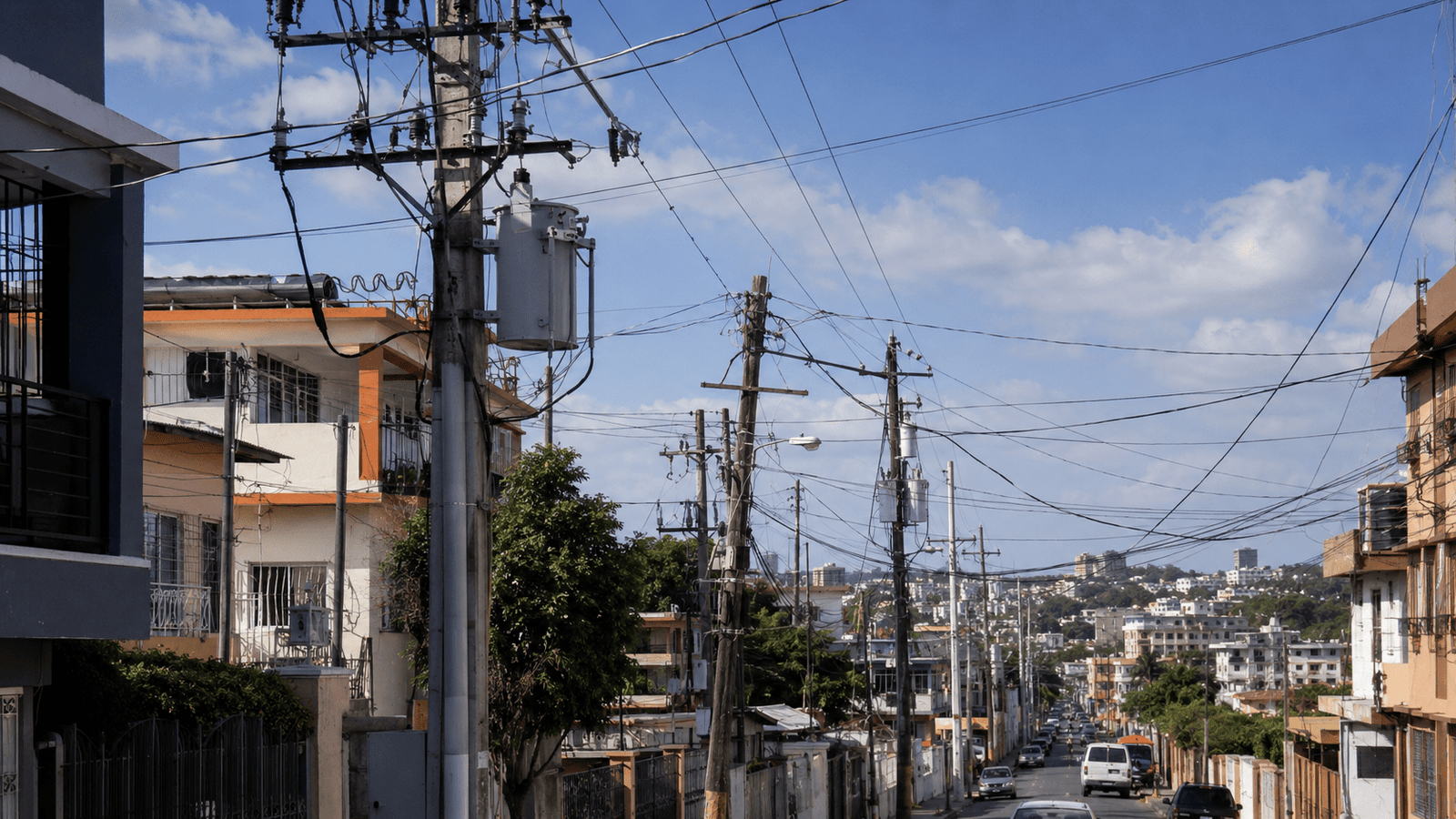
The fiscal consequences are also substantial. IMF analysis found that the electricity-sector deficit averaged around 1.5 percent of GDP during 2022-2024, a significant amount in an economy with relatively low tax revenues compared with many countries. Electricity subsidies and sector losses can therefore compete with spending on infrastructure, education, health and other productive investments.
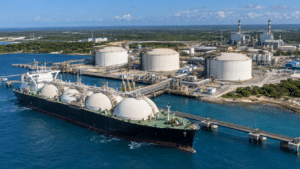
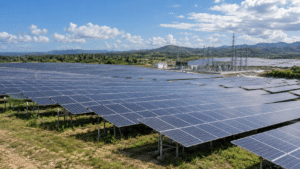
Electricity reform is consequently not simply an energy-policy issue. Improving distribution efficiency, reducing losses, strengthening the financial sustainability of utilities, investing in transmission and expanding renewable generation could simultaneously reduce fiscal pressure, improve energy security and lower production costs.
7. Infrastructure Gaps and Urban Pressures
Infrastructure is another potential bottleneck. Roads, ports, airports, public transportation, water systems, digital connectivity, electricity networks and climate-resilient infrastructure all influence the cost of doing business and the ability of people to participate in economic activity.
The World Bank has noted that public infrastructure investment in the Dominican Republic has historically lagged behind some regional peers. This matters because infrastructure deficiencies can become more expensive to correct as cities expand and economic activity becomes more concentrated.
Urban congestion illustrates the broader problem. When workers spend excessive time traveling between home and employment centers, the economy loses productive hours. Poor transport connectivity can also limit access to jobs and encourage companies to concentrate in areas where infrastructure is already better developed.
Infrastructure policy therefore needs to consider not only the construction of individual projects but also their economic return. Better project selection, public-investment management and carefully designed public-private partnerships can help direct scarce fiscal resources toward infrastructure that increases productivity and resilience.
8. Fiscal Pressure and Limited Tax Capacity
The Dominican Republic faces a structural fiscal constraint: government revenue is relatively low compared with the size of the economy and the public services and investments required for continued development. OECD data put total tax revenue at about 13.9 percent of GDP in 2022, well below the average for Latin American and Caribbean economies in the same comparison.
Low revenue does not automatically imply poor fiscal management. The Dominican Republic has maintained a generally prudent macroeconomic framework and adopted a Fiscal Responsibility Law. The problem is that limited revenue makes it harder to finance simultaneously the infrastructure, education, social protection, climate adaptation and energy investments needed to raise long-term productivity.
The narrow fiscal space also creates difficult choices. Energy subsidies can protect households and businesses from abrupt price increases, but poorly targeted subsidies can absorb resources that might otherwise finance public investment or social programs. Increasing revenue therefore has to be accompanied by improvements in the efficiency and fairness of public spending.
A stronger tax system would ideally broaden the base, reduce inefficient exemptions, improve compliance and make public revenues more predictable. The economic objective is not simply to collect more taxes, but to create enough fiscal capacity to provide essential services and invest without undermining debt sustainability.
9. Public Debt and the Cost of Financing Development
Public debt is not currently described by the IMF as unsustainable; its assessment points instead to a gradual downward trajectory under the country’s fiscal framework. Nevertheless, debt remains an important constraint because interest payments compete with other forms of government spending.
The challenge becomes more pronounced when global interest rates rise or international investors demand higher risk premiums. A country with limited tax revenue has less room to absorb higher financing costs. This can force governments to postpone infrastructure projects, reduce capital spending or increase taxes during periods when the economy is already weak.
Debt management therefore needs to be considered together with fiscal reform and growth. Borrowing to finance productive infrastructure can support future growth if projects are well selected and efficiently implemented. Borrowing to cover persistent structural deficits is more difficult to sustain because it increases future obligations without necessarily expanding the economy’s productive capacity.
10. Climate Change and Natural-Disaster Vulnerability
Climate change represents an economic risk as well as an environmental one. The Dominican Republic is exposed to hurricanes, tropical storms, floods, droughts, rising temperatures and other climate-related hazards. Because economic activity is concentrated in vulnerable coastal and urban areas, damage to infrastructure can have effects well beyond the immediately affected communities.
The IMF estimates that natural disasters can reduce quarterly GDP by roughly 0.2 to 0.5 percent on average. Agriculture and tourism are particularly exposed, while infrastructure damage can generate additional fiscal costs. Climate change may amplify these pressures through rising temperatures, sea-level rise, water stress and more intense extreme-weather events.
The distributional consequences are especially important. Poorer households generally have fewer savings, weaker insurance coverage and less access to resilient housing. A severe storm can therefore increase inequality even when national GDP eventually recovers.
Climate adaptation should consequently be treated as economic infrastructure. Stronger building standards, resilient roads and electricity networks, better water management, disaster-risk financing, coastal protection and improved emergency planning can reduce future economic losses. At the same time, shifting toward cleaner energy can reduce exposure to imported fossil-fuel prices while supporting long-term energy security.
11. External Vulnerability
The Dominican Republic’s openness is a major source of prosperity, but it also creates exposure to events beyond the government’s control. External financing conditions, tourism demand, U.S. economic performance, international trade policy, commodity prices and remittance flows can all affect domestic activity.
Remittances illustrate this dependence. They represented roughly 9 percent of GDP in 2024 according to World Bank data, while IMF analysis found that close to 85 percent of remittances originated in the United States. These transfers are a major source of household income and foreign exchange, but their future growth depends partly on labor-market and migration conditions in the United States.
The country’s current-account position has been supported by exports, tourism receipts, remittances and foreign direct investment. That combination has helped reduce external financing risks. Nevertheless, a sudden deterioration in global financial conditions could increase borrowing costs, weaken investment and reduce consumer confidence.
The appropriate response is not economic isolation. Greater resilience comes from diversification: more export markets, more sophisticated products, stronger domestic supply chains, deeper financial markets, flexible exchange-rate mechanisms and greater domestic productivity.
12. The Interaction Between the Challenges
These problems should not be viewed as separate policy boxes. They reinforce one another.
- Weak education can reduce productivity, making it harder for firms to adopt technology and move into higher-value activities.
- Low productivity can encourage informality, because small firms with thin profit margins may struggle to absorb the costs of formalization.
- Informality reduces fiscal capacity, limiting government resources for education, infrastructure and social protection.
- Electricity-sector losses increase fiscal pressure, while unreliable power raises production costs and reduces productivity.
- Infrastructure gaps increase regional inequality by limiting access to jobs, markets and services.
- Climate shocks can amplify inequality by damaging assets and incomes in vulnerable communities.
- External shocks can expose domestic weaknesses when tourism, exports, remittances or foreign investment slow simultaneously.
This interaction explains why isolated reforms may have limited effects. For example, improving education without creating productive formal jobs can leave skilled workers underemployed or encourage migration. Building infrastructure without improving public-investment management can produce weaker returns. Increasing taxes without improving public services can weaken compliance and public support.

What the Challenges Mean for Future Growth
The Dominican Republic’s future growth prospects therefore depend less on identifying a single economic problem than on improving the connections between productivity, human capital, infrastructure, public finance and resilience.
| Structural challenge | Economic consequence | Growth implication |
|---|---|---|
| Labor informality | Lower productivity, weaker social protection and narrower tax coverage | Limits wage growth and the expansion of productive firms |
| Skills and education gaps | Difficulty filling technical positions and adopting new technologies | Restricts productivity and economic diversification |
| Electricity-sector inefficiencies | Higher production costs and fiscal subsidies | Reduces competitiveness and public investment capacity |
| Infrastructure gaps | Higher logistics and mobility costs | Limits competitiveness and regional economic integration |
| Low tax capacity | Limited resources for public services and investment | Constrains the state’s ability to support long-term growth |
| External dependence | Exposure to tourism, trade, remittance and financial shocks | Can amplify international downturns |
| Climate vulnerability | Damage to infrastructure, agriculture, tourism and households | Raises fiscal and economic volatility |
The positive side is that many of these challenges also represent opportunities. Electricity reform can reduce fiscal losses and improve competitiveness. Better education can raise labor productivity. Formalization can expand the tax base while improving social protection. More resilient infrastructure can reduce disaster losses. Export diversification can create new sources of foreign exchange and higher-value employment.
The IMF has projected that the Dominican economy can return toward its longer-term growth potential, while the government’s META RD 2036 strategy seeks a broader structural transformation and higher-income status. Achieving that objective will depend on whether reforms translate into measurable improvements in productivity, human capital, competitiveness and resilience rather than simply maintaining high rates of aggregate GDP growth.
What Would Make Growth More Sustainable?
A sustainable growth strategy would need to focus on several mutually reinforcing priorities. First, education and workforce development should be aligned more closely with the skills required by modern manufacturing, services, logistics, technology and other growing sectors. Second, the business environment should make it easier for productive small firms to formalize, access finance, adopt technology and expand.
Third, infrastructure investment should prioritize projects with strong economic and climate-resilience returns. Fourth, electricity reform should continue reducing distribution losses and improving the sector’s financial sustainability while expanding reliable and cleaner generation. Fifth, fiscal reforms should create additional room for productive investment without placing public debt on an unsustainable trajectory.
Finally, diversification should remain central. The Dominican Republic does not need to abandon the sectors that have driven its success. Tourism, free-trade-zone manufacturing, mining, construction, services and remittances will remain important. The objective is to build stronger connections between these activities and the domestic economy while developing new higher-value exports and services.