 22°C
22°C

Dominican Republic Inflation: What Is Driving Prices?
Inflation in the Dominican Republic has moved through several distinct phases, from relatively contained price growth before the pandemic to a sharp surge in 2021 and 2022, followed by a return toward the Banco Central de la República Dominicana’s 4% target. That stabilization was significant, but it has not eliminated pressure on household budgets: food, transportation, housing, restaurants and personal services can rise at very different rates from the headline consumer-price index. By June 2026, annual inflation had reached 5.67%, temporarily exceeding the Central Bank’s 4% ± 1 percentage-point target range, largely because of higher fuel prices and selected food and service costs.


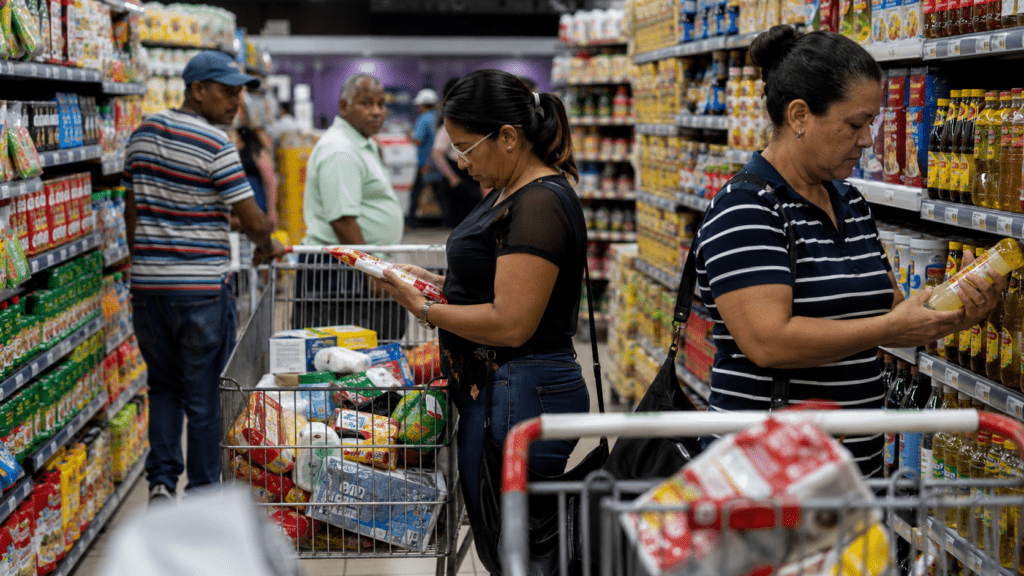
Inflation is one of the most important economic indicators for households and businesses in the Dominican Republic because it determines how quickly the general cost of living changes. When inflation rises, the same amount of Dominican pesos buys fewer goods and services than before. When inflation falls, prices do not necessarily become cheaper; rather, they are increasing more slowly.
The distinction matters. The Dominican Republic experienced a pronounced inflationary episode after the COVID-19 pandemic, when disrupted supply chains, higher freight costs, rising oil prices and stronger demand pushed consumer prices sharply higher. Inflation reached 10.48% year over year in May 2021 and, after easing temporarily, rose again during 2022 as the global commodity shock intensified. By the end of 2022, annual inflation was 7.83%, compared with 3.57% at the end of 2023 and 3.35% at the end of 2024.
Understanding that history helps explain why the Banco Central de la República Dominicana (BCRD), the country’s central bank, focuses closely on inflation expectations, interest rates, liquidity and exchange-rate conditions. It also explains why headline inflation and the experience of individual households can sometimes look very different.
What Is Inflation?
Inflation is a sustained increase in the general level of prices for goods and services in an economy. In the Dominican Republic, the BCRD measures consumer-price inflation through the Consumer Price Index (IPC), which tracks changes in the prices of a representative basket of goods and services purchased by households.
The important word is “general.” A single product becoming more expensive does not necessarily mean that the economy is experiencing broad inflation. For example, the price of a particular vegetable may rise because of weather conditions while other prices remain stable. Inflation becomes an economy-wide concern when price increases become sufficiently broad and persistent to affect the overall consumer basket.
The inflation rate is usually expressed as a percentage change over a specified period. An annual inflation rate of 4%, for example, means that the consumer-price index is approximately 4% higher than it was a year earlier. It does not mean that every product became 4% more expensive.
How Inflation Is Measured in the Dominican Republic
The BCRD publishes the IPC and related measures of inflation. Its statistical system includes historical data on consumer prices dating back decades, as well as breakdowns by groups of goods and services, individual products, household-income quintiles, geographic areas and other classifications.
The consumer basket is divided into categories such as food and non-alcoholic beverages, housing, transportation, health, education, restaurants and hotels, communications, recreation and culture, and miscellaneous goods and services. Each category has a different weight in the overall index because households do not spend the same proportion of their budgets on every type of product.
This weighting explains why a price increase in a heavily consumed category can have a much larger effect on headline inflation than an equally large increase in a product that represents a small share of household spending.
Inflation vs. the Cost of Living
Inflation and the cost of living are closely related, but they are not identical concepts. Inflation measures the rate at which prices are changing. The cost of living refers more broadly to how much households need to spend to maintain a particular standard of living.
For example, if annual inflation falls from 8% to 4%, prices are still rising. They are simply rising at a slower rate. A family that experienced several years of elevated inflation may therefore continue to feel that everyday expenses are high even after the headline inflation rate returns to the Central Bank’s target.
This is one reason inflation can remain politically and economically important even when the annual rate looks moderate. The price level does not automatically return to its previous level when inflation declines.
How Inflation in the Dominican Republic Has Evolved
Before the pandemic
Before the global disruption caused by COVID-19, inflation in the Dominican Republic was generally much less volatile than during the 2021-2022 episode. In August 2020, for example, annual inflation stood at 4.80%, within the BCRD’s 4% ± 1 percentage-point target range. The Central Bank was operating an inflation-targeting framework while also managing the economic shock produced by the pandemic.
The pandemic nevertheless created unusual conditions. Tourism and other foreign-exchange-generating activities were severely affected, while governments and central banks around the world adopted measures to support economic activity. These conditions subsequently interacted with the global supply shock that emerged as economies reopened.
The inflation surge of 2021
Inflation accelerated sharply during 2021. The BCRD reported annual inflation of 8.50% at the end of the year, after reaching a peak of 10.48% in May.
The Central Bank attributed the episode largely to external factors, including disruptions in global supply chains and higher petroleum prices. Rising international freight costs and more expensive raw materials also fed into local production costs and consumer prices, particularly in food and transportation.
The episode demonstrated an important characteristic of the Dominican economy: international price shocks can quickly influence domestic prices because the country is integrated into global markets and depends on imported fuel, inputs and consumer goods.
The second inflationary wave in 2022
Inflation remained elevated during 2022 and reached an annual peak of 9.64% in April. By December, it had fallen to 7.83%, but prices were still increasing considerably faster than the BCRD’s target.
The BCRD identified several overlapping causes. Global supply-chain disruptions continued, while the war in Ukraine contributed to higher commodity prices. At the same time, domestic demand created additional inflationary pressure. The Central Bank responded with tighter monetary policy, while government measures aimed to reduce the impact of higher raw-material prices.
The decline from the April peak was therefore not simply a result of falling international prices. It also reflected the combined effect of easing some external pressures, monetary tightening and measures designed to limit the pass-through of commodity costs to consumers.
Disinflation during 2023 and 2024
The inflation picture changed substantially in 2023. Annual inflation fell to 3.57% in December, below the 4% midpoint of the BCRD’s target. The Central Bank reported that inflation had returned to its target range from May onward.
The improvement continued through 2024. Inflation ended that year at 3.35%, remaining within the lower portion of the 4% ± 1 percentage-point target range. Core inflation, which is designed to provide a clearer signal of underlying price pressures, stood at 4.01% at the end of December.
That period of relative stability was important because it showed that the 2021-2022 surge was not permanent. Nevertheless, it did not mean that all prices stopped rising. In 2024, for example, food and non-alcoholic beverages increased 3.09%, transportation 2.20%, housing 1.71%, restaurants and hotels 5.78%, health 5.30% and education 5.42%.
The return of stronger price pressure in 2026
Inflation moved above the BCRD’s target range again during 2026. In June, the monthly CPI increased 0.51%, while annual inflation reached 5.67%, above the upper limit of the 4% ± 1 percentage-point target range.
The June increase was driven primarily by transportation, food and non-alcoholic beverages, miscellaneous goods and services, and restaurants and hotels. Together, those four groups explained approximately 90% of the monthly change in the CPI. Core inflation, however, remained within the target range at 4.96%.
The BCRD described the episode as a temporary shock associated particularly with higher energy prices. Its forecasting system indicated that annual inflation was expected to moderate and return to the target range in the fourth quarter of 2026.
What Drives Inflation in the Dominican Republic?
Inflation rarely has a single cause. In the Dominican Republic, domestic prices can respond to international commodity markets, exchange-rate movements, local demand, production costs, weather conditions, monetary conditions and government policies.
Food and agricultural prices
Food is particularly important because it represents a large share of the consumer basket and because agricultural prices can be volatile. Weather, harvest conditions, transportation costs, imported inputs and changes in supply can all affect the prices consumers pay.
During the first quarter of 2025, for example, food and non-alcoholic beverages rose 1.18%. The BCRD identified increases in products including coffee, avocados, rice, oranges, cod, cabbage, green plantains, fresh chicken and eggs, although the pace of food-price growth was moderating during the period.
This helps explain why households can experience noticeable changes in their grocery bills even when overall inflation remains relatively moderate.
Fuel and international oil prices
Energy is another major source of inflationary pressure. International oil prices affect the cost of gasoline, diesel and other fuels, while fuel costs can then influence transportation and the cost of moving goods around the country.
The effect can extend beyond the fuel station. Higher transportation costs can raise the cost of getting food and merchandise to consumers, increase business operating expenses and affect services that depend on mobility.
In June 2026, the BCRD specifically linked the increase in transportation prices to higher gasoline and diesel prices in a context of rising international oil quotations associated with geopolitical tensions in the Middle East.
Global supply chains and imported inflation
The Dominican Republic is integrated into international supply chains, so changes in global shipping costs, imported commodities and manufactured goods can be transmitted to domestic prices.
This mechanism was particularly visible during 2021. The BCRD linked that year’s inflation surge to disruptions in global supply chains, higher petroleum prices, international freight costs and more expensive raw materials.
Imported inflation can therefore occur even when domestic demand is not unusually strong. A Dominican company may face higher costs for fuel, machinery, packaging, food ingredients or other imported inputs and eventually pass some of those costs on to customers.
The exchange rate
The value of the Dominican peso also matters. When the peso depreciates against the U.S. dollar, imported products and dollar-priced inputs can become more expensive in peso terms, although the final effect depends on the product, supplier, contracts and market conditions.
The exchange rate can therefore influence inflation through the cost of imported goods and production inputs. At the same time, the BCRD’s inflation-targeting framework allows greater exchange-rate flexibility and treats the exchange rate as an important shock absorber rather than attempting to keep it permanently fixed.
Domestic demand
Inflation can also be generated by stronger domestic demand. When households, businesses and government spend more rapidly than the economy can expand its supply of goods and services, businesses may gain greater ability to raise prices.
This factor became more relevant during the 2022 inflation episode, when the BCRD described price pressures as reflecting both external shocks and demand-side pressures.
Services and domestic costs
Not all inflation originates in internationally traded goods. Services such as restaurants, education, personal care, health and housing can rise because of wages, rent, utilities, imported inputs and other domestic operating costs.
These price increases can be particularly persistent because service providers often have fewer opportunities to offset higher costs through international sourcing or inventory management.
Which Products and Services Are Most Affected?
The answer changes from year to year because inflation is not uniform across the consumer basket. The 2024 data provide a useful example of this variation.
| Category | 2024 Inflation |
|---|---|
| Food and non-alcoholic beverages | 3.09% |
| Alcoholic beverages and tobacco | 5.93% |
| Housing | 1.71% |
| Health | 5.30% |
| Transportation | 2.20% |
| Education | 5.42% |
| Restaurants and hotels | 5.78% |
| Miscellaneous goods and services | 5.53% |
The figures show why a national inflation rate should not be interpreted as a universal price increase. In 2024, restaurants and hotels, education, health and miscellaneous goods and services increased considerably faster than the overall 3.35% CPI rate, while housing and transportation rose more slowly.
Food deserves particular attention because of its weight in household spending. In the first quarter of 2025, food and non-alcoholic beverages represented 23.84% of the consumer basket used in the CPI. Transportation represented 16.65% and housing 12.98%.
As a result, even relatively moderate price movements in these categories can have a visible effect on household budgets.
What Is Core Inflation?
Core inflation is an alternative measure designed to identify more persistent underlying price pressures. In the Dominican Republic, the BCRD excludes categories and items whose prices are especially volatile or less responsive to domestic liquidity conditions, including certain food products, fuels, regulated services such as electricity and transportation, alcoholic beverages and tobacco.
The purpose is not to claim that those items do not matter to consumers. They clearly do. Instead, core inflation gives monetary policymakers a cleaner signal of the price pressures that are more closely connected to underlying economic and monetary conditions.
The distinction has become particularly useful in 2026. Headline inflation reached 5.67% in June, but core inflation remained at 4.96%, within the BCRD’s target range. That gap suggests that the recent increase was being driven substantially by components such as fuel and volatile food prices rather than by an equally broad acceleration in underlying prices.
What Role Does the Banco Central Play?
The BCRD’s primary monetary-policy role is to help maintain price stability within its inflation-targeting framework. The target is 4% inflation with a tolerance range of plus or minus 1 percentage point.

The main policy instrument is the monetary policy rate. Changes in that rate influence financial conditions, which can affect borrowing costs, credit demand, saving and ultimately economic activity and inflation.
When inflationary pressures become too strong and are expected to persist, a central bank can use tighter monetary policy to reduce demand and prevent temporary price shocks from becoming entrenched. When inflation is low and economic conditions require support, it can move in the opposite direction.
The Dominican Republic experienced this cycle after the pandemic. In August 2021, the BCRD began an orderly monetary-normalization process as inflationary pressures increased. During the subsequent decline in inflation, the Central Bank gradually reduced the policy rate and introduced liquidity measures to support credit transmission.
By September 2025, the BCRD had reduced its monetary policy rate by a cumulative 300 basis points from the beginning of its easing cycle in May 2023, bringing it to 5.50%. The IMF noted that the Central Bank had also introduced liquidity measures to improve monetary-policy transmission.
Why Government Subsidies Can Affect Inflation
Monetary policy is not the only policy affecting consumer prices. Government decisions about fuel and electricity subsidies can influence the amount households actually pay, particularly when international energy prices rise.
During and after the 2021-2022 inflation shock, the Dominican government used measures designed to mitigate the impact of higher commodity and energy prices. The BCRD has noted that fuel and other subsidies contributed to limiting the effect of international price pressures on the consumer basket.
Such measures can reduce the immediate impact on consumers, but they also have fiscal costs. The IMF has recommended moving from broad energy and fuel subsidies toward more targeted support for vulnerable households over time.
This creates an important policy trade-off: subsidies can cushion households against an external price shock, while targeted assistance may provide protection with less pressure on public finances.
How Inflation Affects Dominican Households
The most direct effect of inflation is a reduction in purchasing power. If wages do not increase as quickly as prices, households can buy fewer goods and services with the same income.
The impact is not uniform. Households that spend a large proportion of their income on food, transportation and housing can be especially sensitive to increases in those categories. Higher-income households may have more flexibility to absorb temporary price increases, while households with limited disposable income may have fewer options to adjust their consumption.
Inflation can also affect household decisions beyond everyday shopping. Families may postpone purchases, reduce discretionary spending, change brands, save less or borrow more when higher prices put pressure on their budgets.
For people living on fixed incomes, the problem can be particularly pronounced. If pensions or other fixed payments do not adjust fully with the cost of living, the real value of those payments declines.
How Inflation Affects Businesses
Businesses face inflation from both sides. Their customers may have less purchasing power, while the companies themselves may face higher costs for wages, fuel, electricity, transportation, rent, imported materials and financing.
A company that raises prices may protect its profit margin but risk losing customers. A company that absorbs higher costs may protect market share but experience lower profitability. The appropriate response depends on the industry, competition and ability to pass higher costs through to consumers.
Small businesses can be particularly exposed because they may have less bargaining power with suppliers and less access to financing. Higher interest rates used to contain inflation can also raise borrowing costs for companies that need working capital or investment financing.
Inflation and Purchasing Power
Purchasing power refers to what a unit of currency can actually buy. Inflation reduces purchasing power because prices rise while the nominal value of money remains unchanged.
Consider a simplified example. If a household spends RD$50,000 per month and the prices of the goods and services it buys rise by 5% while its income remains unchanged, it will need more than RD$50,000 to purchase the same basket. Alternatively, it must reduce the quantity or quality of what it buys.
This is why wage growth matters when assessing inflation’s effect on living standards. A worker whose salary increases by 6% during a period of 4% inflation has experienced positive real wage growth, assuming the comparison is appropriate. A worker whose salary increases by only 2% has experienced a decline in purchasing power in real terms.
Why a Lower Inflation Rate Does Not Mean Lower Prices
This is one of the most common sources of confusion. A decline in inflation means that prices are increasing more slowly, not that they have returned to previous levels.
Suppose a product costs RD$100 and rises 10% in one year to RD$110. If inflation subsequently falls and the product rises only 3%, its new price is RD$113.30. Inflation has fallen sharply, but the product has not become cheaper.
The same principle applies to the Dominican economy as a whole. The fall in annual inflation from 8.50% in 2021 to 7.83% in 2022 and then to 3.57% in 2023 represented a major improvement in the rate of price increases. It did not reverse the price increases accumulated during the earlier inflationary period.
Why Inflation Can Feel Higher Than the Official Rate
There is no contradiction between an official inflation rate and a household feeling that its own expenses have increased much more rapidly. The official CPI represents a weighted basket, while each household has its own spending pattern.
A family that spends more than average on gasoline, food, private education or restaurants will be more exposed when those categories rise quickly. Another household that spends more on products whose prices are stable may experience a smaller increase in its personal cost of living.
The BCRD recognizes this difference by publishing CPI information by household-income quintile as well as by product group.