 22°C
22°C

What the Dominican Republic Imports and Why It Matters
The Dominican Republic imports a broad mix of fuels, food products, industrial inputs, machinery, vehicles, medicines, and other consumer goods, reflecting an economy that combines manufacturing, tourism, agriculture, construction, and services with significant dependence on foreign supply. In 2024, merchandise imports were valued at about US$29.8 billion on a balance-of-payments basis, while World Bank trade data reported US$32.7 billion using CIF valuation; in the first nine months of 2025, imports reached US$22.3 billion, with consumer goods and industrial raw materials accounting for the largest shares.


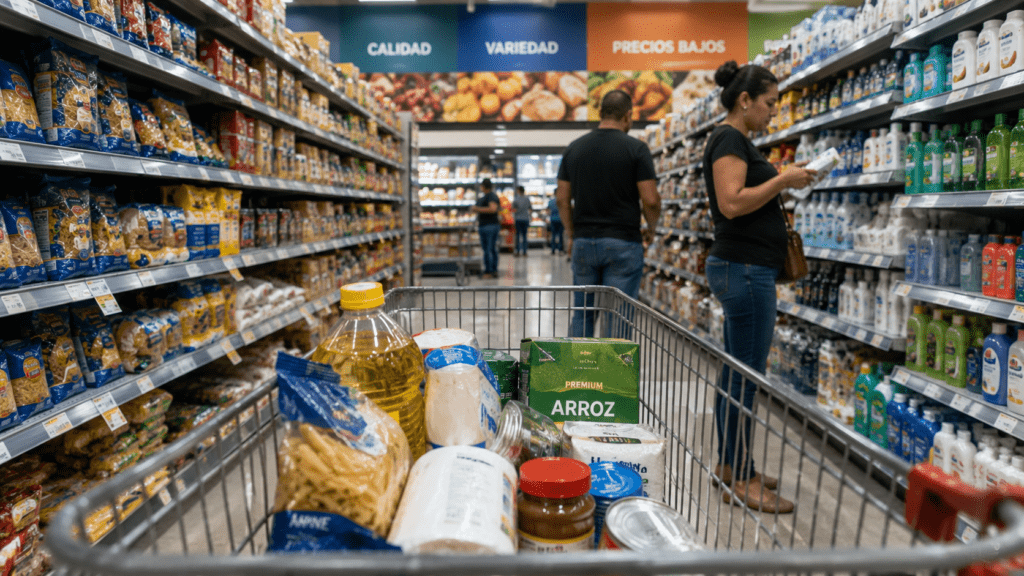
The Dominican Republic is one of the Caribbean’s largest and most diversified economies, but its domestic production base does not supply everything households and companies require. Imports therefore play a structural role in the economy. They provide fuel for transportation and electricity generation, food and agricultural inputs, medicines, machinery, construction materials, vehicles, electronics and the components used by manufacturers, including companies operating in the country’s free zones.
The scale of this dependence is visible in the trade figures. The Banco Central de la República Dominicana reported merchandise imports of US$29.8 billion in 2024 on a balance-of-payments basis. World Bank WITS data, using a CIF trade valuation, put 2024 merchandise imports at US$32.7 billion. The difference reflects methodology rather than two competing estimates of the underlying trade flow.
Looking at the structure of imports is more revealing than looking at the total alone. The country does not import primarily luxury products or finished consumer goods. A substantial portion consists of energy, industrial inputs and capital equipment that support domestic production. Consumer demand is also important, particularly for food, vehicles, pharmaceuticals, appliances and other products that are either not produced locally in sufficient quantities or are available from foreign suppliers at competitive prices.
What Does the Dominican Republic Import Most?
The broadest official classification divides imports according to their economic use: consumer goods, raw materials and intermediate inputs, and capital goods. This approach helps explain why imports matter to economic activity rather than simply measuring what enters the country.
| Major import group | Examples | Why it matters |
|---|---|---|
| Consumer goods | Fuel products, processed foods, medicines, vehicles, appliances and other household products | Meet household and commercial demand that domestic production cannot fully satisfy |
| Raw materials and intermediate goods | Food-industry inputs, industrial materials, textiles, packaging inputs, fuels and other components | Allow manufacturers, processors, farmers and other businesses to operate |
| Capital goods | Machinery, equipment and production assets | Support investment, construction, productivity and expansion |
| Free-zone inputs | Materials and equipment used by export-oriented manufacturers | Feed production chains whose output is largely destined for foreign markets |
In the first nine months of 2025, national imports totaled US$18.69 billion. Consumer goods accounted for US$10.18 billion, raw materials for US$5.48 billion and capital goods for US$3.03 billion. Imports associated with free-zone operations added another US$3.62 billion, most of it raw materials.
Fuel Is One of the Country’s Most Important Imports
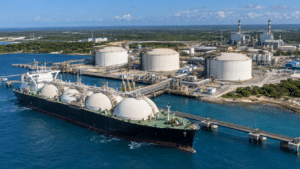
Energy is one of the clearest examples of structural import dependence. Petroleum products and other fuels represent a major part of the Dominican Republic’s import bill because the country needs imported energy for transportation, electricity generation and economic activity more broadly.
During the first nine months of 2025, imports of petroleum and derivatives totaled approximately US$3.52 billion, compared with US$3.60 billion in the same period of 2024. Within national consumer imports alone, refined petroleum products classified as fuels reached US$3.14 billion during the period.
This category also demonstrates why the value of imports can change even when physical demand changes relatively little. International oil prices can raise or reduce the country’s import bill without a proportional change in the quantity of fuel consumed. The Banco Central has repeatedly noted the effect of petroleum prices and volumes on the trade balance.
For businesses, imported energy affects transportation costs, manufacturing expenses, logistics and operating margins. For consumers, changes in international energy prices can eventually influence the cost of transportation and a wide range of goods whose production or distribution depends on fuel.
Food and Agricultural Inputs Are Also Significant
The Dominican Republic has a substantial agricultural sector, but domestic agriculture does not eliminate the need for imported food and agricultural inputs. Imports help satisfy demand from households, food processors, hotels, restaurants and the livestock industry.
In 2024, the country imported about 1.65 million metric tons of corn. Brazil supplied approximately 74% of that volume, followed by the United States with 19% and Argentina with 7%. Corn is particularly important because it is a major input for animal feed and therefore supports poultry and other livestock production.
Imports of consumer-oriented agricultural products reached about US$2.8 billion in 2024. The United States supplied approximately US$1.2 billion, or 43% of this category. Major imported products included pork, dairy, poultry, beef, fruits and vegetables, cereals, pasta and other processed foods. Tourism and the retail market are important sources of demand for these products.
The dependence is therefore not simply about food on supermarket shelves. Imported agricultural commodities and ingredients can become part of domestically produced food, animal feed and beverages. A change in international prices can consequently affect both producers and consumers inside the Dominican Republic.
Machinery and Capital Goods Support Domestic Production
Another major component of imports consists of capital goods and industrial equipment. These imports include machinery and other assets used by manufacturers, construction companies, farms, utilities, logistics operators and service businesses.
National capital-goods imports amounted to about US$3.03 billion during January-September 2025. Although this was lower than the comparable 2024 figure, capital goods remain an important component of the country’s external purchases because domestic investment frequently requires equipment manufactured abroad.
This type of import has a different economic effect from a finished consumer product. A machine purchased from abroad can become part of the productive capacity of a Dominican company for years. Construction equipment can support infrastructure and housing projects, while industrial machinery can increase production capacity or allow a business to manufacture goods that would otherwise have to be imported.
For that reason, a high import bill is not automatically evidence of economic weakness. Some imports represent investment and productive capacity. The more important question is what the imported goods are used for and whether they generate domestic economic activity, export revenue or higher productivity.
Vehicles, Spare Parts and Transport Equipment
Vehicles are another visible category of imports. The Dominican Republic has a large vehicle fleet, including a particularly high number of motorcycles, and many vehicles are manufactured abroad. This creates continuing demand not only for new and used vehicles but also for tires, batteries, filters, lubricants, electrical components, brakes, engines and other spare parts.
Data cited by the U.S. Commercial Service show that 6.2 million vehicles were circulating in the Dominican Republic at the end of 2024, including approximately 3.5 million motorcycles. Japanese-made vehicles represented 60.4% of the vehicle population, while South Korean vehicles represented 14.6% and U.S. vehicles 11.6%.
The distribution of spare-parts imports does not necessarily match the origin of the vehicles. Approximately 65% of automotive spare parts are imported from the United States, according to the same source, reflecting proximity, logistics, product variety and established distribution networks.
This illustrates an important feature of Dominican trade: the country can import a finished product from one region while sourcing replacement parts, maintenance products or complementary inputs from another. Supply chains are shaped not only by manufacturing origin but also by shipping costs, distribution networks, trade agreements and delivery times.
Pharmaceuticals and Medical Products
Medicines and pharmaceutical products are another important category because domestic production does not cover the full range of products demanded by the population, hospitals and private healthcare providers.
National imports of medicinal and pharmaceutical products reached US$749.3 million in the first nine months of 2025, compared with US$715.9 million in the same period of 2024.
These imports have a direct effect on consumers and healthcare providers. Prices depend not only on the cost of the medicine itself but also on international manufacturing costs, freight, insurance, exchange rates, distribution and the regulatory environment. The importance of imported medicines also means that disruptions in international supply chains can have consequences beyond ordinary commercial trade.
Which Countries Supply the Dominican Republic?
The Dominican Republic’s import network is geographically diversified, but two suppliers stand out: the United States and China. In the first half of 2025, the Dominican General Directorate of Customs reported that the United States accounted for 35.14% of imports under the customs regime for domestic consumption, while China accounted for 19.15%. Together, the two markets supplied more than half of imports under that regime.
| Supplier | Share of imports for domestic consumption, Jan.-Jun. 2025 | Typical importance |
|---|---|---|
| United States | 35.14% | Food, fuels and energy-related products, machinery, vehicles and parts, industrial and consumer goods |
| China | 19.15% | Manufactured goods, machinery, electronics, consumer products and industrial inputs |
| Spain | 4.71% | Food, consumer products, equipment and goods linked to tourism and hospitality |
| Mexico | 3.99% | Manufactured goods, food and industrial products |
| Brazil | 2.78% | Agricultural commodities and industrial products |
The broader World Bank trade database also shows the dominance of the United States and China in Dominican imports. For 2024, it reported approximately US$12.75 billion in imports from the United States and US$5.15 billion from China, followed by Brazil, Mexico and Spain.
The United States has an especially strong position because of geography, established commercial relationships and the Dominican Republic-Central America Free Trade Agreement, known as CAFTA-DR. The agreement gives many U.S. products preferential access to the Dominican market, while the proximity of the U.S. market reduces transportation and delivery costs for many categories.
China plays a different but complementary role. Its manufacturing scale makes Chinese suppliers important for machinery, electronics, household goods, industrial products and a wide range of manufactured items. The result is a two-pillar supply structure in which the United States is particularly important for nearby agricultural, industrial and consumer supply chains, while China is a major source of manufactured goods.
Why Does the Dominican Republic Depend on Imports?
Import dependence is the result of several structural factors rather than one single weakness in domestic production.
Limited domestic production of energy resources
The country must rely heavily on foreign energy supplies. This makes petroleum prices and international energy markets an important influence on the national import bill.
A relatively small domestic market
Although the Dominican Republic has the largest economy in the Caribbean, its domestic market is not large enough to make local production of every industrial product economically efficient. Importing specialized equipment, components or finished products can be cheaper than creating an entire domestic supply chain.
Tourism creates strong demand for imported goods
Tourism generates demand for food, beverages, hotel equipment, construction materials, vehicles, technology and other goods. The country received a record 11.2 million non-resident visitors in 2024, and tourism-related activity supports a broad network of businesses that purchase imported inputs.
Manufacturing is integrated into international supply chains
Free-zone companies often import materials that are transformed or assembled in the Dominican Republic before being exported. In this case, an import does not necessarily represent final domestic consumption. It can be one stage in a production chain serving customers abroad.
During the first half of 2025, free-zone imports totaled about US$2.42 billion, of which US$2.14 billion consisted of raw materials.
Consumer preferences and product variety
Consumers and businesses demand products that are not produced locally in sufficient variety or volume. Imported vehicles, electronics, pharmaceuticals, food products and appliances are examples of categories where international supply plays a major role.
How Imports Affect Dominican Businesses
Imports are simultaneously a cost and a productive resource for Dominican companies. A manufacturer may depend on imported raw materials, while a retailer depends on imported finished products. A construction company may require imported machinery, and a hotel may rely on foreign food, equipment and technology.
When imports become more expensive because of higher international prices, freight costs or exchange-rate movements, businesses can face higher operating costs. Companies may respond by raising prices, reducing margins, changing suppliers or seeking locally available substitutes.
At the same time, access to foreign inputs can increase competitiveness. A Dominican company that imports efficient machinery or competitively priced components may be able to produce more efficiently than it could using only locally available inputs. Imports can therefore strengthen productive capacity even while increasing the country’s external expenditure.
Trade agreements also influence these decisions. The U.S. Commercial Service notes that nearly all goods entering the Dominican Republic from CAFTA-DR countries receive duty-free treatment, with rice among the notable exceptions under the agreement’s tariff schedule.
How Imports Affect Consumers
Consumers experience imports through both availability and prices. Imported food expands the range of products available in supermarkets and restaurants. Imported vehicles provide choices that would not exist without international suppliers. Imported medicines give patients access to products manufactured in other countries.
The downside is exposure to international conditions. If a product becomes more expensive in its country of origin, if shipping costs rise, or if the Dominican peso loses purchasing power against the dollar, imported goods can become more expensive in the Dominican market.
Fuel is especially important because its influence extends beyond the price paid at a filling station. Transportation companies, farmers, manufacturers, retailers and delivery operators all face energy-related costs. Changes in imported energy prices can therefore spread through domestic supply chains.
Imports and the Dominican Trade Balance
The Dominican Republic normally records a substantial merchandise trade deficit because the value of goods imported is much greater than the value of goods exported. In 2024, Banco Central data showed merchandise imports of US$29.81 billion against exports of US$13.87 billion, producing a goods deficit of about US$15.94 billion.
That deficit should not be interpreted in isolation. The Dominican Republic also exports substantial services, particularly tourism. In the first nine months of 2025, the country recorded a goods deficit of US$10.72 billion but a services surplus of US$6.41 billion. The overall goods-and-services balance was therefore less negative, at US$4.31 billion.
This distinction is essential for understanding the Dominican economy. The country imports physical goods on a large scale while earning foreign currency through tourism and other services. The two sides of the external sector are closely connected: tourists create demand for imported food, beverages, equipment and construction inputs, while their spending generates service export revenue.
| External-sector component | Jan.-Sep. 2025 | Economic significance |
|---|---|---|
| Goods exports | US$11.59 billion | Foreign-currency earnings from merchandise exports |
| Goods imports | US$22.31 billion | Foreign purchases of consumer goods, inputs and capital goods |
| Goods balance | -US$10.72 billion | Merchandise imports exceeded exports |
| Services balance | +US$6.41 billion | Strong surplus, led by tourism and other services |
| Goods and services balance | -US$4.31 billion | Services earnings offset a substantial part of the merchandise deficit |
These figures also show why it is misleading to describe imports simply as money “leaving” the country. Imports purchase resources that households consume, but they also purchase inputs that businesses use to generate output, employment and exports. The economic effect depends on what is imported, how it is used and how efficiently it contributes to domestic activity.
What Role Do Services Play in Imports?
International trade is not limited to physical merchandise. The balance of payments also records services purchased from non-residents. These include transport, insurance, financial and business services, communications, royalties and other activities.
The Banco Central groups the Dominican Republic’s service transactions into transport, travel and other services. The “other” category includes communications, insurance, financial services, business services, royalties and license fees, among others.
One important example is international freight. Imported merchandise has to be transported, insured and handled before it reaches Dominican businesses or consumers. These services can therefore rise alongside merchandise trade and form part of the country’s external payments.
Available World Bank data recorded service imports of about US$5.64 billion in 2023, alongside service exports of approximately US$12.84 billion. The figures underline the unusual importance of services in the Dominican Republic’s external sector, particularly because tourism generates substantial service-export revenue.

Why the United States and China Matter So Much
The concentration of imports in the United States and China reflects two different competitive advantages. The United States benefits from geographical proximity, established logistics, deep commercial ties and CAFTA-DR preferences. China benefits from enormous manufacturing capacity and competitive production across many manufactured-goods categories.
Other countries are important in specific niches. Brazil is a major agricultural supplier, including corn. Spain and other European economies have strong positions in food, beverages, hospitality-related goods, machinery and specialized consumer products. Mexico and other Latin American economies contribute manufactured and intermediate goods that can reach the Dominican market through relatively short regional supply chains.
This diversification reduces dependence on a single supplier for many products, but it does not eliminate vulnerability. A disruption affecting energy markets, shipping routes, major suppliers or international commodity prices can still have a significant effect on the Dominican economy.
How Import Dependence Can Change Over Time
The composition of imports is not fixed. It changes as incomes rise, tourism expands, businesses invest, infrastructure develops and domestic industries become more or less competitive.
For example, rising investment can increase demand for machinery and construction equipment. Expansion in poultry production can increase demand for imported corn. Growth in tourism can increase purchases of food and hotel supplies. Changes in vehicle ownership can increase demand for spare parts. Conversely, stronger local production can reduce imports in particular categories.
International prices also matter. The value of petroleum imports can change substantially because of movements in crude-oil and refined-product prices. Food imports can react to global harvests and commodity markets. A country can therefore experience a higher import bill even without a major increase in physical consumption.
Imports and the Broader Dominican Economic Model
The Dominican Republic’s import structure reflects an economy that is increasingly integrated into international production and consumption networks. Tourism, free-zone manufacturing, construction, agriculture, retail and services all interact with the import system.
For free-zone manufacturers, imported materials can be transformed into products that are subsequently exported. For hotels and restaurants, imported food and equipment can support tourism services sold to international visitors. For households, imports expand the range of consumer goods available. For businesses, imported machinery can raise productive capacity.
This means that the objective of reducing imports cannot be evaluated simply by asking whether imports are high or low. A reduction caused by greater domestic production may be beneficial, while a reduction caused by weaker investment or lower consumption could signal something very different.
The more useful long-term question is whether the Dominican Republic can increase the domestic value generated around its imports: producing more components locally, improving logistics, developing competitive suppliers, investing in technology and expanding the ability of domestic firms to export higher-value goods and services.