 22°C
22°C

Dominican Economy Explained: How It Works
The Dominican economy is a diversified, service-led economy built around tourism, trade, manufacturing, construction, agriculture, mining, finance and other services, while remittances, foreign investment and exports provide important links with the rest of the world. Understanding how these parts interact helps explain why the Dominican Republic has become one of the Caribbean's largest and most dynamic economies.


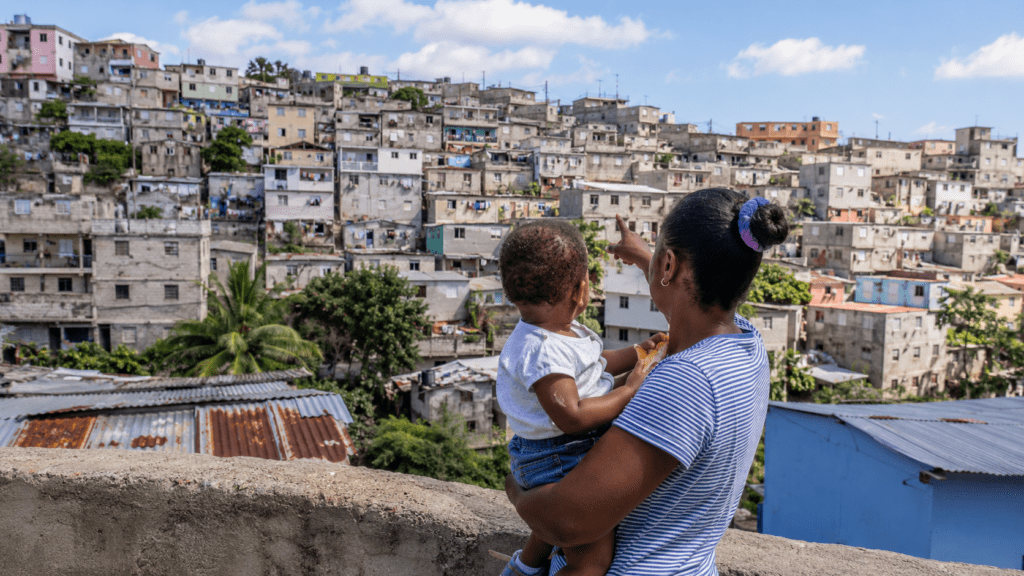
The Dominican economy is easier to understand as a network of connected activities than as a single industry. Tourism brings foreign visitors and foreign currency; manufacturing produces goods for domestic and international markets; construction responds to housing, infrastructure and investment; agriculture supplies food and raw materials; mining generates export revenue; and services such as banking, transportation, telecommunications, education and health support households and businesses. At the same time, money sent home by Dominicans living abroad and foreign investment connect domestic economic activity to international markets.
The Basic Structure of the Dominican Economy
At the broadest level, the economy can be divided into three groups: services, industry and agriculture. Services include tourism, commerce, transportation, finance, telecommunications, real estate, professional activities, education, health and public services. Industry covers manufacturing, construction, mining and other industrial activities. Agriculture includes crops, livestock, forestry and fishing.
Services have become the dominant part of economic activity, reflecting the country’s transformation from an economy historically associated with agriculture and commodity production into a more diversified economy. The U.S. Department of Commerce describes the country’s economic base as including tourism, agriculture, free-zone manufacturing, mining, real estate and services. The Central Bank’s national accounts similarly organize economic activity across agriculture, industry and a wide range of service sectors.
This diversification matters because the country does not depend on a single source of production. A visitor staying in Punta Cana, a factory producing medical devices in a free zone, a farmer supplying a supermarket, a construction project in Santo Domingo and a bank financing a business are all contributing to different parts of the same economic system.
Tourism: A Major Source of Foreign Currency
Tourism is one of the Dominican Republic’s most important economic activities. The country’s beaches, resorts, historic cities, climate, air connections and growing range of tourism products have made it a major destination in the Caribbean.
Tourism contributes much more than hotel revenue. Visitors spend money on accommodation, restaurants, transportation, excursions, entertainment, retail goods and other services. This creates demand across the economy, including for construction, agriculture, food processing, transportation and professional services.
The sector is also an important source of foreign currency. In the first half of 2026, tourism revenue reached approximately US$6.7 billion, according to the Central Bank, while international visitor arrivals exceeded 6.5 million when the relevant categories of visitors were included. These figures illustrate the scale of tourism’s connection with the external sector.
Tourism is particularly important because its economic impact extends beyond the main resort areas. Hotels and tourism businesses purchase food, beverages, construction materials, transportation and professional services, creating links with domestic suppliers. The strength of these connections determines how much of tourism’s value remains within the local economy.
Manufacturing and Free Zones
Manufacturing is another central component of the Dominican economy, but it is useful to distinguish between local manufacturing and free-zone manufacturing.
Local manufacturing produces goods primarily for the Dominican market as well as for export. Important activities include food and beverages, tobacco products, chemicals, construction-related materials and other manufactured goods. These industries are closely connected to domestic consumption and to the country’s agricultural and commercial sectors.
Free zones operate under a specialized regulatory and fiscal framework designed to encourage export-oriented production. Companies in these zones manufacture goods for international markets, taking advantage of the Dominican Republic’s geographic position, labor force and preferential access to several markets.
The sector has evolved considerably beyond traditional apparel manufacturing. Free-zone production includes medical devices and pharmaceutical products, electrical and electronic products, footwear, textiles and other manufactured goods. Medical and pharmaceutical products have become particularly significant: ProDominicana reports that they accounted for US$2.76 billion in free-zone exports in 2024.
This makes manufacturing important not only because it creates jobs but also because it gives the Dominican Republic a role in international production networks. A factory in the country can form part of a supply chain whose raw materials, components and finished products cross several borders before reaching the final customer.
Construction and Real Estate
Construction is closely linked to several other parts of the economy. Residential buildings, hotels, commercial developments, industrial facilities, roads and public infrastructure all require labor, materials, transportation, engineering and financial services.
The connection with tourism is particularly strong. New hotels and tourism-related developments create construction demand, while population growth and urbanization generate demand for housing, offices, retail space and infrastructure.
Real estate also attracts foreign capital, particularly in areas with strong tourism activity. However, construction and real estate should not be treated as synonymous with tourism. They are separate economic activities that can reinforce one another while responding to different sources of demand.
Agriculture and Food Production
Agriculture has a smaller share of the economy than it once did, but it remains strategically important. It provides food for the domestic market, supplies raw materials to manufacturers and generates exports.
The Dominican Republic produces a broad range of agricultural goods, including sugar, coffee, cocoa, tobacco, bananas, plantains, rice, fruits and vegetables, as well as livestock and dairy products. Fishing also forms part of the country’s primary sector.
Agriculture has an important relationship with tourism. Hotels and restaurants need large quantities of food, creating opportunities for domestic producers and food distributors. At the same time, the sector is exposed to weather events, water availability, global commodity prices, production costs and changing international demand.
For international readers, the key point is that agriculture is no longer the defining feature of the Dominican economy, but it remains an essential part of the country’s productive base and food system.
Mining and Gold
Mining is another important source of export earnings. The Dominican Republic has commercially significant mineral resources, with gold playing a particularly important role in merchandise exports.
Mining differs from tourism and most services because its production is closely tied to international commodity prices and the output of individual mines. This can make export values rise or fall substantially even when other parts of the domestic economy are moving differently.
Gold has recently been especially important to the external accounts. During the first half of 2026, gold exports were approximately US$1.59 billion, according to the Central Bank. Mining also attracted foreign direct investment, demonstrating the connection between natural resources, international capital and exports.
Mining’s contribution therefore needs to be viewed from several angles: production, exports, investment, employment, government revenue and its effects on the balance of payments. Its importance should not be confused with its share of total economic activity, since a relatively concentrated sector can have a substantial effect on foreign-exchange earnings without dominating GDP.
Services: The Broadest Part of the Economy
The Dominican service economy extends far beyond tourism. It includes commerce, transportation, financial services, telecommunications, real estate, professional services, education, health and other market and public services.
Commerce is essential because it connects producers and consumers. The country’s cities contain extensive networks of wholesalers, retailers, supermarkets, restaurants and other businesses that distribute domestic and imported products.
Financial services provide another important layer. Banks and other financial institutions channel savings into loans for households and businesses, process payments and support investment. The financial sector is therefore connected to construction, commerce, manufacturing, agriculture and household consumption rather than operating independently.
Transportation and logistics are similarly important because an island economy depends on the movement of goods and people. Ports, airports, roads, warehouses and freight services connect domestic producers with consumers and international markets.
Telecommunications and digital services have also become increasingly important as businesses, financial institutions and households rely on mobile communications, internet access and electronic payments.
Remittances: Money From the Dominican Diaspora
Remittances are money transfers sent by Dominicans living abroad to relatives and households in the Dominican Republic. They are not the same thing as exports because they do not represent payment for goods or services produced domestically. Nevertheless, they are a major source of foreign currency and household income.
The World Bank reports that personal remittances received by the Dominican Republic were equivalent to about 9% of GDP in 2024. This gives an indication of their economic importance.
Remittances can support household consumption, education, housing, health expenses and small-business activity. They also provide a direct financial connection between the Dominican economy and the Dominican diaspora, particularly in countries such as the United States.
For this reason, the Dominican economy cannot be understood solely by looking at what is produced inside the country. External income received by households also influences domestic demand and economic activity.
Foreign Direct Investment
Foreign direct investment, or FDI, is capital invested by foreign companies or investors in businesses and productive assets in the Dominican Republic. It can take the form of new factories, hotels, energy projects, real estate developments, mining investments and other business activities.
FDI matters because it can bring capital, technology, management expertise, international distribution networks and access to global supply chains. It can therefore have effects that extend beyond the initial investment.
ProDominicana reported record FDI of approximately US$5.03 billion for 2025. During the first half of 2026, the Central Bank reported particularly significant FDI flows toward energy, tourism, real estate and mining.
Investment is closely related to the country’s position between North American, Caribbean, Central American and European markets. Geographic location, trade agreements, infrastructure and access to international markets all influence the attractiveness of the Dominican Republic as a production and investment base.
Exports: What the Dominican Republic Sells Abroad
The Dominican Republic exports both goods and services. Goods include manufactured products, gold, agricultural commodities, tobacco products, textiles, medical devices and other merchandise. Services include tourism and other internationally traded services.
Merchandise exports have become increasingly diversified. ProDominicana reported record merchandise exports of approximately US$15.93 billion in 2025, with more than 3,000 exported products reaching more than 160 destinations.
Free-zone companies are particularly important to this export structure. Their production links the country to international supply chains, while agricultural and mining exports provide additional sources of foreign revenue.
Tourism should also be viewed as an export-like activity from the perspective of foreign exchange. An international visitor consumes services inside the Dominican Republic and pays using money brought from abroad. Economically, this makes tourism an important source of export earnings even though the service is delivered domestically.
Imports and the Trade Relationship With the World
The Dominican Republic is also a substantial importer. The country purchases fuels, machinery, vehicles, industrial inputs, food products, chemicals, consumer goods and many other products from abroad.
This is normal for a diversified, open economy. Domestic companies need imported machinery and raw materials, consumers purchase imported products, and industries integrated into global supply chains depend on components originating in other countries.
The result is a structural merchandise trade deficit: the value of imported goods is greater than the value of exported goods. This does not mean that the economy is necessarily losing money overall. The external accounts also include tourism receipts, other service exports, remittances, investment flows and financial transactions.
The United States is particularly important to the Dominican economy. It is a major trading partner, an important source of tourists and remittances, and a significant source of investment. The Dominican Republic is also integrated commercially with other Caribbean and Central American economies, Europe and markets in Latin America.
The Dominican Republic and CAFTA-DR
One of the most important frameworks for understanding the country’s trade relationships is the Dominican Republic-Central America Free Trade Agreement (CAFTA-DR). The agreement connects the Dominican Republic with the United States and several Central American economies through rules governing trade and investment.
For manufacturers and exporters, preferential market access can make the Dominican Republic more attractive as a production location. The country’s proximity to the United States is another advantage, particularly for industries where transportation time and supply-chain reliability matter.
Trade agreements do not eliminate all economic challenges. Companies still have to meet product standards, customs requirements, labor rules and other regulatory conditions. Nevertheless, preferential access is an important part of the country’s international economic strategy.
How the Main Economic Components Fit Together
The most useful way to understand the Dominican economy is to look at the relationships between sectors rather than studying each one separately.
| Economic component | Main role | Key connections |
|---|---|---|
| Tourism | Generates services activity and foreign currency | Hotels, restaurants, transport, agriculture, construction and retail |
| Manufacturing | Produces goods for domestic and international markets | Free zones, exports, logistics, labor and imported inputs |
| Agriculture | Provides food, raw materials and exports | Food processing, tourism, commerce and rural employment |
| Mining | Generates mineral production and export revenue | Foreign investment, exports and international commodity markets |
| Construction and real estate | Builds housing, infrastructure and commercial assets | Tourism, investment, finance and domestic demand |
| Services | Supports households, businesses and government | Finance, commerce, transportation, communications, health and education |
| Remittances | Provide foreign income to households | Consumption, housing, education and household finances |
| Foreign investment | Provides capital and international business links | Tourism, manufacturing, energy, mining and real estate |
These connections help explain why a change in one part of the economy can affect several others. A tourism boom, for example, can increase hotel occupancy, restaurant sales, transportation demand, agricultural purchases, construction and financial activity. Likewise, an expansion in manufacturing can increase demand for logistics, electricity, professional services and imported industrial inputs.

What Drives Economic Growth?
Economic growth in the Dominican Republic is driven by a combination of domestic demand, investment, exports, productivity and external income. Household consumption is supported partly by employment and wages and partly by remittances. Private investment contributes through construction, manufacturing, tourism, energy and other activities. Exports provide access to foreign markets, while foreign investment supplies capital and strengthens international connections.
The country’s long-term growth model has also benefited from diversification. The World Bank notes that the Dominican Republic has significantly outpaced the regional average over the past two decades and identifies private investment, consumption supported by remittances, exports and foreign direct investment among important drivers of future growth.
Growth, however, does not automatically mean that every household or region benefits equally. Productivity, access to quality jobs, education, infrastructure, electricity, public services and the distribution of economic opportunities remain important factors in determining how economic growth translates into living standards.
Key Challenges Facing the Economy
The Dominican economy has several structural challenges that are important for anyone studying the country. One is energy. Reliable and affordable electricity is essential for households and businesses, and improvements in the electricity system can affect productivity throughout the economy.
Another challenge is productivity. Continued economic development requires businesses and workers to produce more value with available resources. That depends on education and skills, infrastructure, technology, competition, access to finance and the quality of public institutions.
The economy is also exposed to external conditions. Tourism depends on international travel; manufacturing depends on foreign demand and supply chains; mining depends partly on commodity prices; and remittances depend on economic conditions in countries where the Dominican diaspora lives.
Climate and natural disasters are additional considerations for a Caribbean country. Hurricanes, flooding, drought and other events can affect agriculture, infrastructure, tourism and public finances, making resilience an increasingly important part of economic planning.
Why the Dominican Economy Is Different From the Traditional Caribbean Model
The Dominican Republic shares characteristics with other Caribbean economies, especially its dependence on tourism and international markets. But its economic base is unusually broad for the region. Tourism operates alongside substantial manufacturing, mining, agriculture, construction, financial services, commerce and other activities.
The country’s large domestic market also matters. With a population of more than 11 million, the Dominican Republic has a consumer base considerably larger than that of many Caribbean island economies. This supports supermarkets, banks, telecommunications companies, transport providers, manufacturers, real estate businesses and other domestic industries.
Its location also gives the country an important logistical role. Situated on the island of Hispaniola and close to major North American and Caribbean markets, the Dominican Republic can serve both domestic consumers and international supply chains.
Frequently Asked Questions
What is the Dominican Republic’s main industry?
There is no single industry that completely defines the economy. Services are the broadest component, with tourism, commerce, finance, transportation, telecommunications, real estate and professional services playing major roles. Manufacturing, construction, agriculture and mining are also important.
Is the Dominican Republic dependent on tourism?
Tourism is highly important, particularly for foreign-currency earnings, employment and investment, but the economy is more diversified than a tourism-only model. Manufacturing, construction, mining, agriculture, commerce and financial and professional services provide additional sources of economic activity.
Why are remittances important to the Dominican economy?
Remittances provide income directly to Dominican households and represent a significant source of foreign currency. They support consumption and can help finance education, housing, health expenses and small-business activity.
What does the Dominican Republic export?
Major export categories include manufactured goods from free zones, medical and pharmaceutical products, gold, tobacco products, agricultural goods, textiles, electrical products and other merchandise. Tourism and other services are also important sources of foreign earnings.
Who is the Dominican Republic’s main trading partner?
The United States is one of the Dominican Republic’s most important economic partners across trade, investment, tourism and remittances. The country also maintains significant commercial relationships with other Caribbean and Central American economies, Europe and Latin America.
Does the Dominican Republic have a trade deficit?
Yes. The country generally imports more merchandise than it exports. However, the merchandise trade balance is only one part of the external accounts. Tourism receipts, other service exports, remittances and foreign investment also generate foreign currency and influence the country’s overall external position.
The Bigger Picture
The Dominican economy is best understood as a diversified system connected closely to international markets. Tourism brings visitors and foreign currency; manufacturing integrates the country into global supply chains; agriculture supplies food and exports; mining contributes valuable commodities; construction responds to investment and population growth; and services support nearly every part of economic life.
Beyond production inside the country, remittances and foreign investment provide two additional international links. Together with exports of goods and services, they help explain the flow of foreign currency through the economy and the country’s relationship with the global financial and trading system.
For an international reader, the central lesson is that the Dominican Republic is neither simply a tourism economy nor a traditional agricultural economy. It is a diversified middle-income economy whose future depends on how effectively it combines services, manufacturing, investment, trade, infrastructure, human capital and international integration while addressing energy, productivity, climate resilience and inclusive growth.
Official economic data and longer-term series are available through the Central Bank of the Dominican Republic, while information on exports and foreign investment is available from ProDominicana. The World Bank’s Dominican Republic country resources provide additional international economic and development context.