 23°C
23°C

Main Industries in the Dominican Republic
The Dominican Republic has a diversified production base in which services, manufacturing, tourism, construction, agriculture, mining and energy all play distinct roles. The country's productive structure is especially notable for the combination of a large tourism industry, export-oriented free-zone manufacturing, domestic manufacturing, agriculture, mining and a broad service economy. Official data show that these activities also differ considerably in their employment and export profiles, making it more useful to examine how each sector produces value and connects with the rest of the economy than to rank industries by size alone.


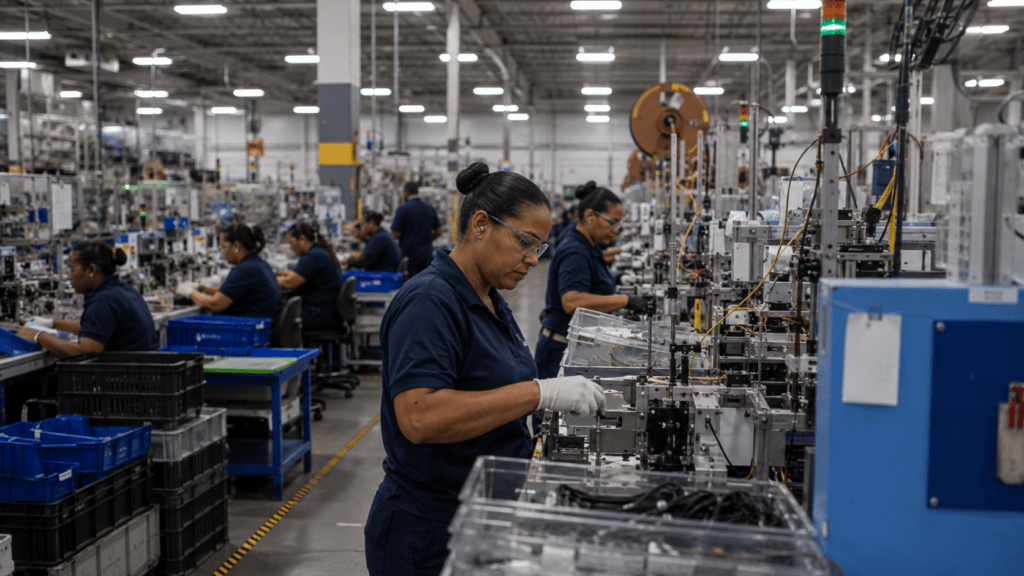
The main industries in the Dominican Republic form a diversified economy rather than a system dependent on a single product. Tourism generates international demand for accommodation and other services; manufacturing produces goods for both domestic and foreign markets; free zones connect factories to global supply chains; agriculture supplies food and export commodities; construction creates buildings and infrastructure; mining produces minerals for international markets; and energy provides an essential input for nearly every other activity.
Services tie many of these industries together. Commerce distributes goods, transportation moves people and products, financial institutions provide credit, telecommunications connect businesses and consumers, and professional services support companies across the economy. This combination explains why the Dominican Republic can be described as a service-led economy while still having substantial industrial, agricultural and extractive production.
How to Understand the Dominican Industrial Structure
Industry can mean different things depending on the classification being used. In everyday language, it may refer to any major business activity, including tourism or banking. In national accounts, however, activities are grouped according to standardized economic classifications. The Dominican Central Bank publishes GDP data by detailed economic activity, while the National Statistics Office, or ONE, publishes business and employment information for specific sectors.
For readers trying to understand the country’s productive structure, the most useful approach is to look at both what each sector produces and how it connects to employment, investment, exports and other industries. A hotel, for example, belongs to the service economy, but its operations create demand for agriculture, food processing, transportation, construction, utilities and financial services.
Tourism
Tourism is one of the Dominican Republic’s most important economic activities and a major source of foreign-exchange earnings. The country attracts international visitors through its beaches, resorts, historic cities, climate, air connections and growing range of tourism products.
The industry produces accommodation, food and beverage services, transportation, excursions, entertainment and other visitor-related services. Its economic impact therefore extends beyond hotels. Restaurants, transport companies, tour operators, retailers, construction firms and agricultural suppliers can all benefit from tourism demand.
Tourism is particularly important for exports because an international visitor effectively purchases a Dominican service using income earned abroad. No physical product has to cross a border for foreign demand to enter the economy.
The sector also attracts investment. Hotels, resorts, residential tourism projects, airports, restaurants and other tourism infrastructure require capital, construction and ongoing operating expenditure. The Central Bank reported tourism among the leading recipients of foreign direct investment in the first half of 2026, accounting for 20.1% of inflows during that period.
Tourism employment is spread across accommodation, food services, transportation, recreation, retail and supporting businesses. Because of these linkages, its importance cannot be measured only by the number of people working directly in hotels.
Manufacturing
Manufacturing converts raw materials, components and other inputs into finished or intermediate goods. In the Dominican Republic, manufacturing includes both local manufacturing serving the domestic market and export-oriented production located in free zones.
Domestic manufacturing includes activities such as food and beverages, tobacco products, chemicals, construction materials, metal products and other manufactured goods. These businesses supply Dominican consumers and other companies and can also export their products.
Manufacturing creates value through processing rather than simply extracting or reselling products. A food processor, for example, can transform agricultural products into packaged foods with a higher commercial value. A factory producing construction materials supplies inputs to another important domestic industry.
The sector also creates demand for transportation, electricity, packaging, machinery, maintenance, finance and professional services. Its importance therefore extends beyond the factory itself.
The National Statistics Office’s 2025 Economic Activity Survey estimated 301,987 employees in manufacturing companies covered by the survey in 2024, making manufacturing the largest employer among the surveyed formal sectors. The survey covers businesses with 16 or more employees and therefore should not be interpreted as total employment in the entire manufacturing economy.
Free-Zone Manufacturing
Free zones are a distinctive part of Dominican manufacturing. They operate under a specialized regime intended to encourage export-oriented production and international investment.
The sector began with a strong emphasis on apparel and textiles but has diversified considerably. Current production includes medical devices, pharmaceuticals, electrical and electronic components, footwear, textiles, food products and other manufactured goods. ProDominicana identifies medical devices and pharmaceuticals among the sector’s important investment and production opportunities.
The importance of free zones comes partly from their integration into international supply chains. A factory may import components, process or assemble them in the Dominican Republic and export the finished product to another market. This gives the country a role in international manufacturing even when some inputs originate abroad.
Exports are a particularly important measure of the sector. The Central Bank reported free-zone exports of US$4.36 billion during the first half of 2026, an increase of 3.2% compared with the same period of 2025.
Free zones also provide employment and can generate technology transfer, management expertise and connections with multinational companies. Their contribution is therefore broader than the value of the goods leaving the country.
Agriculture
Agriculture remains an important productive sector even though it represents a smaller share of GDP than services. The country produces crops, livestock and other agricultural products for domestic consumption, food processing and export.
Important agricultural activities include rice, sugar, cocoa, coffee, tobacco, bananas, plantains, fruits and vegetables, as well as livestock and dairy production. Fisheries also form part of the primary sector.
Agriculture has strong connections with tourism and manufacturing. Hotels and restaurants require large quantities of food, while food manufacturers depend on agricultural inputs for processing. Agricultural producers therefore participate in supply chains that extend well beyond farms.
The sector is also important for regional employment and economic activity. Its performance can be affected by weather, water availability, input costs, international prices, infrastructure and access to markets.
Agricultural exports provide an additional source of foreign revenue. At the same time, domestic production helps reduce dependence on imports for some food products. The sector’s importance should therefore be measured not only by its GDP share but also by its role in food supply, rural economies and trade.
Construction
Construction is one of the country’s most economically interconnected industries. It includes residential and commercial buildings, hotels, industrial facilities, roads and other infrastructure.
The industry creates demand for cement, steel, metals, aggregates, electrical equipment, machinery, transportation, engineering, architecture and professional services. This creates extensive links with domestic manufacturing and commerce.
Construction is also closely connected to tourism and real estate. New hotels and tourism projects generate construction activity, while population growth and urban development create demand for housing and commercial buildings.
The Central Bank reported particularly strong construction activity in June 2026, when the sector’s real value added increased 14.9% year over year. The Bank attributed the expansion largely to private investment projects, higher public investment and improved financial conditions. Credit directed to construction was also 22.6% higher than a year earlier.
Because construction is sensitive to interest rates, credit availability and investment expectations, it can also act as an indicator of broader domestic economic conditions.
Mining
Mining is a smaller employer than manufacturing or commerce but an important export industry. The Dominican Republic has deposits of several minerals, with gold particularly important to merchandise exports.
Mining differs from many other sectors because production is concentrated in specific operations and depends heavily on geological resources and international commodity markets. Changes in global metal prices can therefore affect export revenues even when domestic demand is unchanged.
Gold has been especially significant. The Central Bank reported gold exports of approximately US$1.59 billion during January-June 2026, 68.8% above the same period of 2025. The increase reflected higher production as well as favorable international prices.
Mining also attracts foreign investment and creates demand for specialized equipment, transportation, engineering and other services. Its direct employment footprint is comparatively concentrated: the ONE’s 2025 Economic Activity Survey recorded 7,067 employees in surveyed mining and quarrying companies in 2024.
The sector therefore illustrates why employment and export importance are not always proportional. A relatively small workforce can support a substantial volume of exports when the industry is capital-intensive and produces high-value commodities.
Energy and Electricity
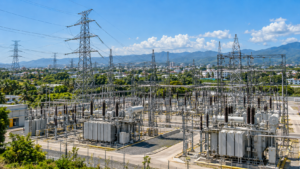
Energy is an enabling industry rather than simply another source of GDP. Every factory, hotel, supermarket, office, hospital and telecommunications network depends on electricity and other forms of energy.
The Dominican energy system includes electricity generation, transmission and distribution as well as fuels used in transportation, industry and households. Electricity generation has historically relied substantially on imported fuels, while renewable sources have become increasingly important within the generation mix.
Energy investment has an economic impact beyond the utilities themselves. New generation capacity, transmission infrastructure and renewable projects require construction, engineering, equipment and financing. More reliable electricity can also improve productivity in businesses that depend on continuous power.
Energy has become a significant destination for foreign investment. The Central Bank reported that energy accounted for 27.8% of foreign direct investment inflows in the first half of 2026, the largest share among the sectors identified in its breakdown.
The importance of energy should therefore be assessed both as an economic activity and as a fundamental input into the productivity of the rest of the economy.
Commerce and Retail
Commerce connects producers with consumers. Wholesalers, supermarkets, retailers, distributors and other merchants purchase products and resell them to households or businesses.
Commerce includes a large number of small and large enterprises and is closely tied to household consumption. When employment and household income rise, demand for many retail goods and services tends to increase. When households become more cautious, retailers can feel the effects quickly.
The sector also connects imported goods with the domestic market. A large share of the products sold by Dominican retailers may have been manufactured abroad, while others are produced locally. Commerce therefore sits at the intersection of domestic production, imports and consumer demand.
Among the formal sectors covered by the ONE’s 2025 Economic Activity Survey, commerce employed 276,779 people in 2024, second only to manufacturing within that survey.
Transportation and Logistics
Transportation and logistics support virtually every other productive activity. Goods need to move from farms and factories to warehouses, ports, shops and consumers, while tourists and workers need transportation between airports, hotels, businesses and communities.
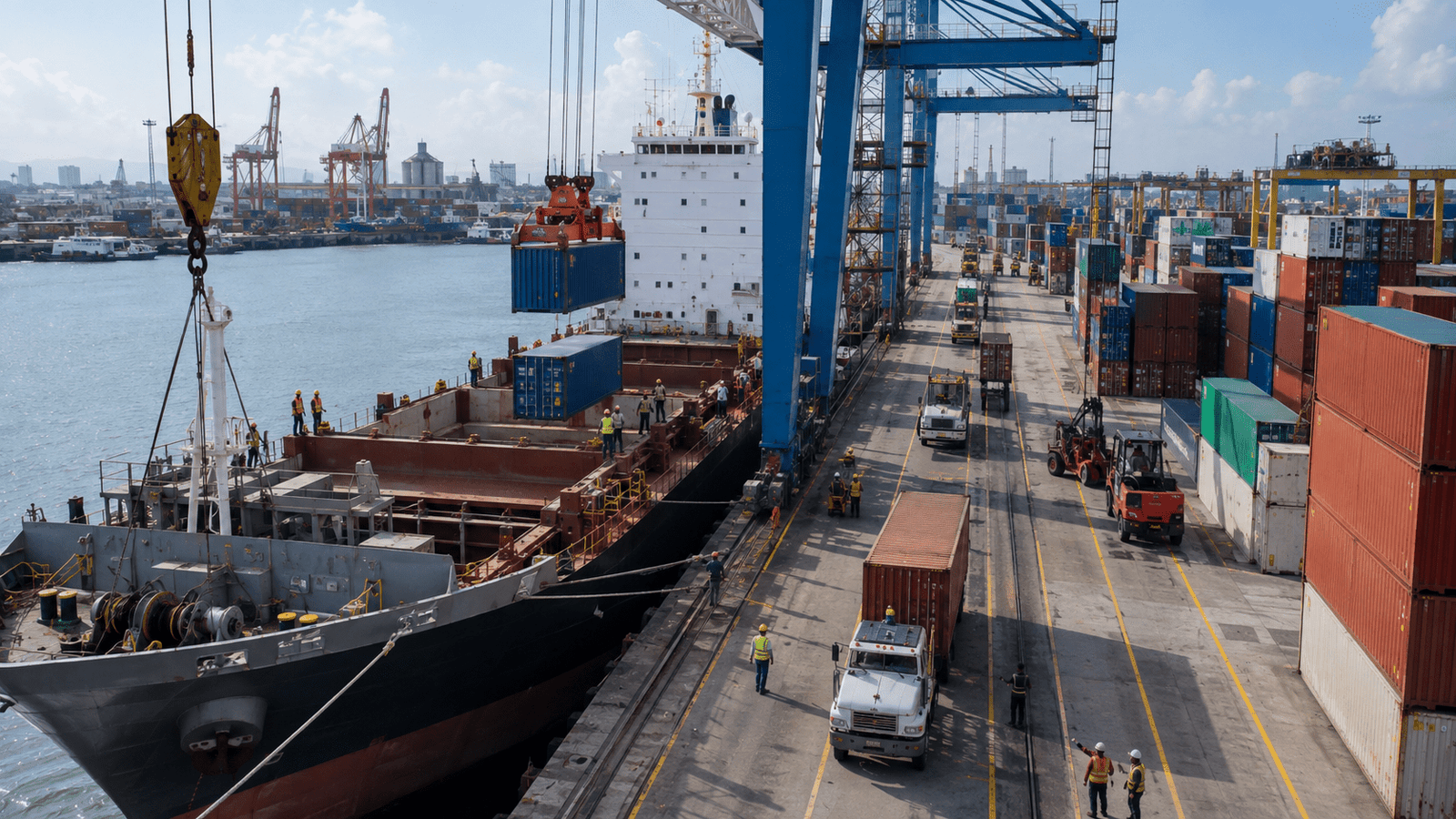
The Dominican Republic’s geographic position gives logistics particular importance. Its ports and airports connect the country to international markets, while roads and domestic transport networks connect producers and consumers within the country.
Manufacturing and free zones depend on predictable logistics because imported inputs and exported products must move efficiently. Tourism depends on airports, buses, taxis, rental vehicles and other forms of transportation.
The sector also creates employment directly through freight, passenger transport, warehousing, distribution and related services. Its broader economic importance is visible in the way transportation costs and reliability affect the competitiveness of almost every other industry.
Financial Services
Financial services provide the capital and payment infrastructure that allows businesses and households to operate. Banks and other financial institutions accept deposits, provide loans, process payments and support investment.
Businesses use financial services to finance equipment, inventories, construction and expansion. Households use banks and other financial institutions for savings, mortgages, consumer credit and payments.

The sector therefore has an indirect effect on virtually every industry. When credit is available on reasonable terms, businesses can finance investment and households can make major purchases. When financial conditions tighten, interest-sensitive sectors such as construction and real estate can slow.
The Central Bank reported 13.1% year-over-year growth in financial intermediation, insurance and related activities in June 2026. The result was associated in part with a 9.1% expansion in private-sector credit in domestic and foreign currency.
Telecommunications and Information Services
Information and communications have become essential to the modern Dominican economy. Telecommunications companies provide mobile and fixed connectivity, internet access and other communication services used by households, businesses and public institutions.
Digital connectivity supports electronic commerce, banking, tourism reservations, logistics, remote services and business communication. Technology-intensive services can therefore increase productivity in sectors that are not themselves classified as technology industries.
The sector also creates direct economic activity through telecommunications infrastructure, information services, software, data-related activities and professional technology services.
As businesses become more dependent on digital systems, the quality and availability of communications infrastructure increasingly influence the competitiveness of the wider economy.
Professional and Business Services
Professional services include activities such as legal, accounting, consulting, engineering, architecture, advertising and other specialized services. These businesses may not manufacture physical products, but they provide knowledge and expertise that allow other companies to operate.
A hotel needs accountants, lawyers, engineers and marketing professionals. A manufacturing company needs technical consultants, maintenance specialists, logistics providers and financial services. A construction project requires architects, engineers and legal and financial professionals.
The growth of these activities reflects the increasing complexity of the Dominican economy. As businesses become larger and more integrated with international markets, demand for specialized services tends to expand.
Health, Education and Other Services
Health and education form another major part of the service economy. They provide services directly to households and also create employment for professionals and support workers.
Public and private institutions both participate in these activities. Their economic role is not limited to the value recorded in national accounts: education develops human capital, while health affects workers’ ability to participate productively in the labor market.
The Central Bank includes health, education and other service activities among the detailed sectors tracked in its national accounts and monthly economic activity indicators. In June 2026, education grew 8.9% and health grew 4.9% year over year.
How the Main Industries Connect
The Dominican economy is best understood through the connections between industries. A sector can be important because of its direct production and because of the demand it creates elsewhere.
| Industry | What it produces | Main economic connections |
|---|---|---|
| Tourism | Accommodation, food, recreation and visitor services | Construction, agriculture, transport, commerce and finance |
| Manufacturing | Food, beverages, tobacco, chemicals, materials and other manufactured goods | Agriculture, energy, logistics, commerce and exports |
| Free zones | Medical devices, pharmaceuticals, textiles, electronics, footwear and other exports | International supply chains, logistics, investment and trade |
| Agriculture | Crops, livestock and other primary products | Food processing, tourism, exports and domestic consumption |
| Construction | Buildings and infrastructure | Manufacturing, finance, real estate, tourism and employment |
| Mining | Gold and other minerals | Exports, foreign investment, logistics and international commodity markets |
| Energy | Electricity and other energy inputs | All productive sectors, infrastructure and investment |
| Commerce | Distribution and retail services | Household consumption, imports and domestic production |
| Transportation and logistics | Movement and storage of people and goods | Tourism, manufacturing, agriculture, trade and commerce |
| Financial services | Credit, savings, payments and financial intermediation | Households, investment, construction and business activity |
| Information and communications | Connectivity and digital services | Businesses, households, finance, commerce and productivity |
This interconnected structure is one of the most important characteristics of the Dominican economy. Tourism creates demand for agriculture and construction. Manufacturing needs electricity and logistics. Construction purchases locally produced materials and uses bank financing. Mining generates export revenue and requires specialized services. Commerce distributes both imported and locally produced goods.
Which Industries Matter Most for Employment?
Employment and economic output are not distributed in exactly the same way. Some industries are labor-intensive, while others rely heavily on machinery, technology or natural resources.
The ONE’s Economic Activity Survey provides a useful example. Among the formal enterprises and sectors covered by its survey, manufacturing employed 301,987 people in 2024 and commerce employed 276,779. Accommodation and food services employed 133,125, while mining employed 7,067.
These figures should not be used as a complete ranking of national employment because the survey covers enterprises with 16 or more employees in selected sectors. The broader labor market includes smaller businesses, self-employment, agriculture, public-sector employment and other activities outside the survey’s scope.
The broader lesson is that the industries generating the most exports are not necessarily the industries employing the most people. Mining can generate substantial export revenue with relatively few direct employees, while commerce can employ many people without being a major merchandise exporter.
Which Industries Are Most Important for Exports?
Export exposure varies substantially among sectors. Free-zone manufacturing is strongly export-oriented, while mining is an important source of merchandise exports. Agriculture also produces export commodities, while tourism generates foreign income through international visitors.
The Central Bank reported total exports of US$8.75 billion during the first half of 2026. Free-zone exports reached US$4.36 billion and gold exports reached US$1.59 billion during the same period. Tourism revenue reached US$6.72 billion. These figures represent different types of external earnings and should not be added together without considering the distinctions between merchandise exports and service revenues.
This distinction matters because a country can generate substantial foreign income without exporting large quantities of physical goods. Tourism is the clearest example: the product is consumed inside the Dominican Republic by an international visitor.
Foreign Investment and the Main Industries
Foreign direct investment is distributed across several productive activities rather than concentrated in one industry. During the first half of 2026, the Central Bank reported energy as the largest recipient in its sectoral breakdown, with 27.8% of FDI, followed by tourism at 20.1%. Real estate development and mining each represented 12.4%.
Investment can have effects beyond the sector receiving the capital. A hotel project creates demand for construction. A manufacturing investment requires logistics and energy. An energy project requires engineering and construction. Mining investment creates demand for specialized services and transportation.
For this reason, foreign investment is not simply a financial statistic. It can influence the country’s productive capacity, employment, technology, exports and infrastructure depending on the type of project involved.
Why the Dominican Republic Has a Diversified Industrial Base
Several factors have contributed to the country’s diversification. Its geographic position provides access to major markets, while tourism resources support a large visitor economy. Trade agreements and free-zone policies have encouraged export manufacturing, while domestic population and consumption support commerce and local production.
Investment in infrastructure, ports, airports, telecommunications, energy and tourism has also helped connect different parts of the economy. The result is a production system in which domestic demand and international markets both matter.
The diversification does not eliminate economic risks. Tourism remains exposed to international travel conditions, manufacturing depends on global supply chains, agriculture is vulnerable to weather, mining depends partly on commodity prices and energy costs affect almost every business. But having several major sources of production and foreign income can reduce dependence on any single activity.