 25°C
25°C

Major Manufacturing Industries in the Dominican Republic
The Dominican Republic has developed one of the Caribbean’s most diversified manufacturing bases, producing everything from medical devices and pharmaceuticals to food, beverages, tobacco, textiles, chemicals, plastics and electrical components. The sector serves both the domestic economy and international markets, with free zones playing a particularly important role in export-oriented manufacturing.


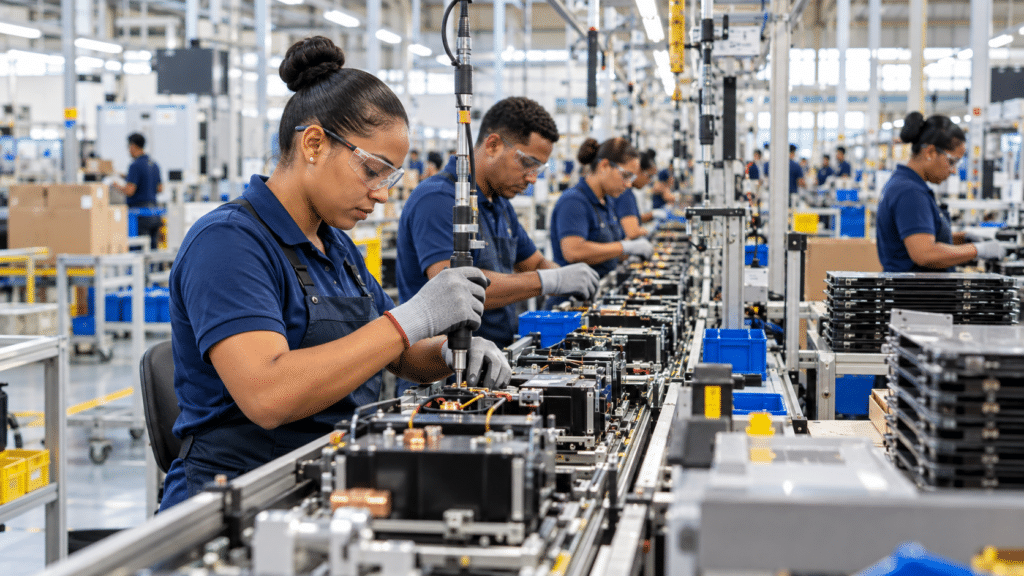
Manufacturing is an important part of the Dominican Republic’s economy and one of the country’s main links to international trade. The industry encompasses traditional activities such as food processing, tobacco and apparel as well as increasingly specialized production of medical devices, pharmaceuticals, electrical components and other industrial goods.
The country’s manufacturing base serves two broad markets. Domestic manufacturers supply consumers and industries inside the Dominican Republic, including construction, tourism, agriculture and retail. Export-oriented companies, particularly those operating under the free-zone regime, produce goods for customers around the world.
For international readers, understanding the country’s manufacturing industries also helps explain why the Dominican Republic has become an important production location in the Caribbean. Its industrial base combines access to major markets with established free-zone infrastructure, a growing range of specialized manufacturing capabilities and proximity to the United States.
What Does the Dominican Republic Manufacture?
The Dominican Republic produces a wide variety of manufactured goods. Major industries include medical devices, pharmaceuticals, tobacco products, textiles and apparel, food and beverages, chemicals, plastics, electrical and electronic products, footwear, jewelry and construction materials.
ProDominicana describes the country’s manufacturing sector as highly diversified, covering textiles, pharmaceuticals, medical devices, electronic components, agroindustry, processed foods, chemicals, cosmetics, plastics and other products.
The relative importance of individual industries varies depending on whether the focus is domestic production, free-zone manufacturing or total merchandise exports. This distinction matters because some of the country’s largest export industries are concentrated in free zones, while other manufacturing activities are primarily oriented toward the local market.
Medical Device Manufacturing
Medical devices are among the Dominican Republic’s most important manufacturing industries and have become a major component of its export economy.
Factories produce products and components used in healthcare, including medical instruments, surgical products, catheters, tubing and other specialized devices. The sector requires controlled production environments, quality-management systems and compliance with international regulatory standards.
The industry has developed particularly strongly within the free-zone system. ProDominicana identifies medical-device manufacturing as a strategic area within the country’s broader biomedical sector, alongside pharmaceutical production, biotechnology and medical research.
Medical-device manufacturing is significant not only because of its export value but also because it represents a shift toward more specialized production. Companies operating in this field connect Dominican factories with international healthcare supply chains.
Pharmaceutical Manufacturing
Pharmaceutical manufacturing is another established part of the Dominican industrial sector. Domestic and export-oriented companies produce pharmaceutical products and related goods for healthcare markets.
The pharmaceutical industry is closely linked to the country’s medical-device manufacturing base and forms part of the broader biomedical sector promoted by ProDominicana.
Export data also show that pharmaceutical products are an established component of Dominican merchandise exports. In provincial export profiles published by ProDominicana, pharmaceutical exports are recorded in several manufacturing centers, including Santo Domingo and San Cristóbal.
The combination of pharmaceutical and medical-device production gives the Dominican Republic an industrial specialization that goes beyond traditional low- and medium-value manufacturing.
Food and Beverage Manufacturing
Food and beverage manufacturing has a direct connection with the Dominican Republic’s agricultural production and large domestic consumer market.
Manufacturers process and package products such as meat, dairy products, beverages, coffee, cocoa, fruits, vegetables, baked goods, sauces and other food products. The sector also supplies restaurants, hotels and other businesses serving the country’s large tourism industry.
Food processing adds value to agricultural production by converting raw materials into products with longer shelf lives, more standardized quality and broader distribution potential.
The industry also illustrates the difference between manufacturing for domestic consumption and export manufacturing. While some food manufacturers sell primarily within the Dominican Republic, others participate in international trade and regional supply chains.
Tobacco and Cigar Manufacturing
Tobacco is one of the Dominican Republic’s most internationally recognized manufacturing industries.
The country has developed a large cigar industry supported by domestic tobacco cultivation, specialized craftsmanship and an established export network. The production process can involve cultivation, curing, fermentation, aging, rolling, packaging and distribution.
According to ProDominicana, the Dominican Republic has a strong tobacco-processing tradition, particularly in the northern region. Santiago, La Vega and Espaillat are among the provinces associated with tobacco production, while Dominican cigars are exported to markets including the United States, Germany, Belgium, Canada and Spain.
The industry’s international importance is also reflected in free-zone exports. ProDominicana reports that tobacco manufacturing accounted for 15.8% of total free-zone exports between 2020 and 2024, with exports of manufactured tobacco products reaching US$5.41 billion over that period.
Tobacco manufacturing therefore represents an important example of how an agricultural product has developed into a sophisticated export-oriented manufacturing industry.
Textiles and Apparel
Textiles and apparel have traditionally been among the Dominican Republic’s most established export-manufacturing activities.
Factories produce clothing, uniforms, specialized garments and other textile products for domestic and international customers. The sector has benefited from the country’s proximity to the United States and its participation in regional trade arrangements.
The industry is also evolving. In addition to conventional apparel production, Dominican free zones have attracted manufacturers producing specialized textiles and other products for particular industrial and commercial applications.
Textile manufacturing remains relevant to the country’s industrial ecosystem because it combines export production with employment-intensive operations and established supply-chain infrastructure.
Electrical and Electronic Manufacturing
Electrical and electronic products form another important part of Dominican manufacturing.
Companies produce and assemble electrical components, wiring systems, electronic products and other equipment used in international supply chains. This category is particularly important because it demonstrates the country’s growing role in manufacturing components rather than only finished consumer goods.
ProDominicana’s export data show substantial exports in the broader category of electrical machinery, equipment and related products. Provincial export profiles also show significant activity in San Cristóbal, Santo Domingo and San Pedro de Macorís.
Electrical and electronic manufacturing can also benefit from nearshoring, as companies seek production locations closer to major consumer markets and reduce the distance between manufacturing facilities and customers.
Chemical Manufacturing
Chemical manufacturing covers a broad range of products and industrial inputs used by other sectors of the Dominican economy.
The industry includes chemicals used in manufacturing, construction, agriculture, cleaning products, healthcare and other applications. Some companies focus on the domestic market, while others manufacture for export.
ProDominicana identifies chemicals as one of the country’s established industrial and agroindustrial areas, alongside pharmaceuticals, processed foods, cosmetics, plastics and medical devices.
The importance of chemical manufacturing extends beyond the value of the products themselves because chemical inputs support other manufacturing activities. This makes the sector part of the wider industrial supply chain.
Plastics and Plastic Products
Plastic manufacturing is closely connected to both domestic consumption and industrial production.
Manufacturers produce packaging, containers, household goods, industrial components and other plastic products used by businesses and consumers. Demand comes from industries including food processing, beverages, retail, construction and manufacturing.
ProDominicana’s provincial export data show significant exports under the category covering plastics and articles made from plastics, particularly from Santo Domingo and San Cristóbal.
The sector also illustrates the importance of manufacturing inputs. Plastic products are frequently used by other Dominican manufacturers for packaging, transportation and final product assembly.
Footwear and Leather Products
Footwear is another established manufacturing activity, particularly within the Dominican Republic’s free zones.
Manufacturers produce shoes, footwear components and related products for international markets. The industry benefits from the country’s export infrastructure and established experience in contract and export manufacturing.
Although smaller than some of the country’s largest manufacturing categories, footwear contributes to the diversification of the free-zone manufacturing base and provides another connection between Dominican factories and international supply chains.
Jewelry Manufacturing
Jewelry is a specialized manufacturing activity with an established presence in the Dominican Republic’s export sector.
The industry involves skilled production and finishing processes and serves international markets. It is one of the manufacturing activities represented within the country’s free-zone system.
Its importance is less about volume than diversification. Specialized industries such as jewelry demonstrate that Dominican manufacturing extends beyond large-scale commodity and labor-intensive production.
Construction Materials and Industrial Products
The Dominican Republic also has a substantial manufacturing base serving the construction and infrastructure sectors.
Domestic industrial production includes construction materials and other goods used in residential development, commercial projects, infrastructure and tourism-related construction. The country’s large construction industry creates sustained demand for locally produced industrial inputs.
Other domestic manufacturing activities include metal products, packaging, furniture, paints and a wide range of intermediate goods. These industries are important even when their output does not generate the same level of international visibility as medical devices or tobacco.
Why Free Zones Matter to Dominican Manufacturing
Free zones are central to the country’s export-oriented manufacturing model.
The Dominican Republic’s free-zone framework was designed to attract investment in activities producing goods and services primarily for international markets. The system has helped create industrial parks and manufacturing clusters across several parts of the country.

ProDominicana identifies free zones as one of the principal components of the country’s manufacturing investment proposition, alongside textiles, pharmaceuticals and food and beverages.
The importance of the system is visible in the diversity of industries operating under it. Medical devices, tobacco, textiles, electrical products, pharmaceuticals, footwear and other manufactured goods are produced within this export-oriented framework.
The free-zone model also helps explain why the Dominican Republic has become increasingly relevant to companies considering nearshoring. Production can take place relatively close to the United States while benefiting from established industrial parks, ports, airports and trade infrastructure.
Where Manufacturing Is Concentrated
Manufacturing activity is distributed across several regions rather than being limited to Santo Domingo.
Santo Domingo and San Cristóbal are important manufacturing and export centers, while Santiago has a particularly strong connection with tobacco and other industrial activities. San Pedro de Macorís and La Romana also participate in the country’s export manufacturing network.
ProDominicana’s provincial export data illustrate this geographic diversity. For example, exports of medical and surgical instruments are recorded from Santo Domingo and La Romana, electrical machinery from San Cristóbal and Santo Domingo, tobacco from Santiago and La Romana, and pharmaceutical products from Santo Domingo and San Cristóbal.
This distribution means that manufacturing contributes to economic activity across multiple regions of the country rather than being concentrated exclusively in the capital.
Manufacturing and the Dominican Republic’s Export Economy
Manufacturing is particularly important because it connects the Dominican economy to international markets. The country’s export portfolio includes thousands of products sold to destinations across the Americas, Europe and other regions.
ProDominicana reported merchandise exports of US$7.90 billion during the first half of 2026, a record according to the agency’s current data dashboard. The organization also reports more than 2,600 exported products and more than 150 export destinations.
Manufacturing accounts for a significant part of this export diversification. Instead of depending on a small number of commodities, the Dominican Republic exports products ranging from medical instruments and pharmaceuticals to cigars, electrical equipment, plastics and processed foods.
A Manufacturing Sector Becoming More Diverse
The most important change in Dominican manufacturing is not simply the growth of individual factories but the increasing diversity of products manufactured in the country.
Traditional industries such as tobacco, apparel and food processing remain important. At the same time, medical devices, pharmaceuticals, electrical products, chemicals and other specialized manufacturing activities have expanded the range of capabilities available to international companies.
This diversification matters because different industries require different skills, suppliers, infrastructure and quality standards. As those capabilities develop, they can create opportunities for additional companies to establish production or sourcing operations in the country.
For international businesses, the Dominican Republic’s manufacturing sector is therefore best understood as a broad industrial ecosystem rather than a single industry. It combines domestic manufacturing with export-oriented free zones and connects agriculture, healthcare, construction, tourism, logistics and international trade.
What Makes Dominican Manufacturing Relevant to International Businesses?
Several characteristics help explain the country’s appeal as a manufacturing location.
- Geographic proximity: The Dominican Republic is located close to the United States and major Caribbean and North American markets.
- Export infrastructure: The country has established ports, airports and industrial parks serving international trade.
- Free-zone manufacturing: Export-oriented companies have access to a framework specifically designed to facilitate international production.
- Industry diversification: Companies can find existing capabilities in sectors ranging from textiles to medical devices and electronics.
- Trade access: The country participates in trade arrangements that provide preferential access to important markets.
- Established industrial clusters: Several regions have developed specialized manufacturing ecosystems and supplier networks.
These characteristics do not make every industry equally suitable for production in the Dominican Republic. The appropriate location and operating model depend on the product, regulatory requirements, labor needs, supply chain and target market.
The Future of Manufacturing in the Dominican Republic
The country’s manufacturing sector is likely to remain an important part of its economic and export strategy, particularly as international companies reassess global supply chains and consider production locations closer to their principal markets.
The existing industrial base provides a foundation for further development. Medical devices, pharmaceuticals, electronics and other specialized activities can complement established sectors such as tobacco, textiles and food processing.
The key issue is therefore not whether the Dominican Republic has a manufacturing industry, but how successfully it can continue moving from a diversified manufacturing base toward increasingly specialized and higher-value production.
For readers evaluating the Dominican economy, manufacturing offers an important perspective on the country’s development. The sector links domestic consumption with international trade and connects traditional industries with newer forms of specialized production.