 25°C
25°C

Manufacturing Investment Opportunities in the Dominican Republic
The Dominican Republic has developed a diversified export-manufacturing base supported by free zones, preferential access to the U.S. market under CAFTA-DR, established industrial parks and a growing ecosystem of medical-device, pharmaceutical, electrical, electronic, textile, footwear, tobacco and other manufacturers. The strongest investment opportunities are concentrated in sectors where the country can combine geographic proximity to North American and regional markets with established production capabilities, skilled labor and specialized supply chains. In 2026, free-zone exports continued to expand, with medical and pharmaceutical products, tobacco, and electrical and electronic products among the largest contributors.


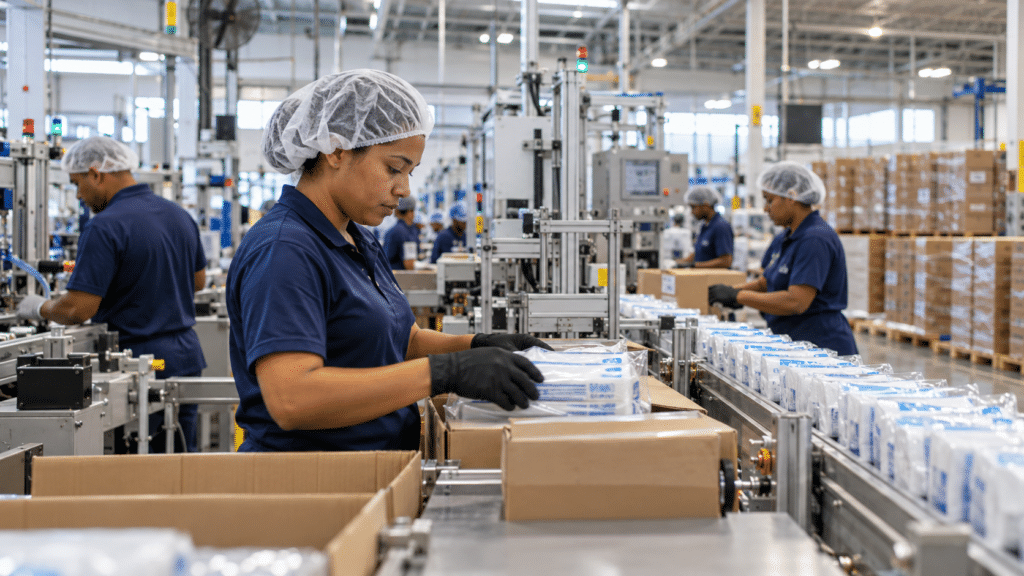
Manufacturing is one of the Dominican Republic’s most established platforms for export-oriented foreign investment. The country’s free-zone system has evolved beyond traditional labor-intensive activities into a broader industrial base that includes medical devices, pharmaceuticals, electrical and electronic products, textiles, footwear, chemicals, tobacco products and other manufactured goods. For investors evaluating the Caribbean as a production location, the opportunity is less about building an isolated factory and more about entering an existing network of industrial parks, exporters, logistics providers, suppliers and international buyers.
The scale of that platform is significant. The National Council of Export Free Zones (CNZFE) reports 858 operating free-zone companies, 200,231 jobs and US$8.6046 billion in free-zone exports for 2025. During the first four months of 2026, free-zone exports reached US$2.8033 billion, up 4.3% year over year. Medical and pharmaceutical products generated US$966 million during that period, followed by tobacco and derivatives at US$461.2 million and electrical and electronic products at US$415.2 million.
Why the Dominican Republic Is Relevant to Manufacturing Investors
The country’s manufacturing proposition rests on several factors that reinforce one another. Its location places production relatively close to the United States, while its trade agreements provide preferential access to important markets. At the same time, a mature free-zone framework offers fiscal and customs incentives, and industrial parks can reduce the time and capital required to establish production facilities.
The Dominican Republic is also not starting from zero. International manufacturers have operated in the country for decades, creating institutional knowledge, trained workers, supplier relationships and experience with demanding export markets. This is particularly visible in medical devices and electrical and electronic manufacturing, where established companies have developed production operations serving customers outside the Caribbean.
For companies considering nearshoring, these characteristics matter because the objective is usually not simply to find a lower-cost manufacturing location. It is to shorten supply chains, reduce geographic concentration, improve responsiveness to customers and create a production base that can serve a major market with relatively predictable logistics.
Key Manufacturing Investment Opportunities
| Sector | Investment Opportunity | Key Competitive Factors | Export Potential |
|---|---|---|---|
| Medical devices and pharmaceuticals | High-value manufacturing, assembly, consumables and selected pharmaceutical products | Established cluster, skilled workforce, export track record and regulatory experience | Particularly strong access to the United States and other international markets |
| Electrical and electronics | Components, switches, connectors, sensors, transformers and assemblies | Existing manufacturers, proximity to North America and established export channels | Strong U.S. orientation |
| Textiles and apparel | Nearshore apparel, specialized garments and vertically integrated production | CAFTA-DR framework, established industrial base and proximity to U.S. buyers | Strong regional and U.S. market relevance |
| Pharmaceutical and chemical manufacturing | Selected finished products, inputs, specialty chemicals and related manufacturing | Existing industrial base and diversification of free-zone production | Growing opportunity, subject to product-specific regulatory requirements |
| Agro-industrial manufacturing | Food processing, beverages, packaging and value-added agricultural products | Domestic agricultural base and regional market access | Combination of domestic, Caribbean and international markets |
| Footwear and leather goods | Export-oriented production and supplier integration | Existing free-zone capabilities and trade access | Primarily export-oriented |
| Industrial inputs and packaging | Plastics, cardboard, packaging, metal products and other supplier industries | Potential to serve manufacturers already operating in the country | Both domestic industrial demand and export opportunities |
Medical Devices and Pharmaceuticals
Medical devices are one of the clearest examples of the Dominican Republic’s move toward higher-value manufacturing. The sector has developed over several decades and now includes manufacturers producing items such as blood-transfusion equipment, blood-pressure monitoring products, surgical disposables, needles, catheters and other medical products.
According to the Dominican government’s investment information, medical and pharmaceutical exports from free zones reached US$2.7626 billion in 2024, representing 32.8% of total free-zone exports. The sector was also the largest recipient of accumulated free-zone investment during the preceding decade.
The sector’s attractiveness is reinforced by the presence of major international manufacturers. The Dominican government reported that 42 medical-device companies were operating in the country’s free zones and that seven of the world’s 10 largest medical-device manufacturers had operations there as of 2025. The same source reported US$2.8 billion in medical-equipment exports during 2024.
For investors, the opportunity extends beyond establishing another final-assembly operation. Potential areas include component manufacturing, specialized plastics, packaging, sterilization-related services, precision production, contract manufacturing and other supplier activities that can deepen the local industrial ecosystem.
The main consideration is that medical manufacturing is highly regulated. Companies must evaluate product-specific quality systems, regulatory approvals, traceability requirements, validation processes and customer qualification standards before selecting the Dominican Republic as a production base.
Electrical and Electronic Manufacturing
Electrical and electronic products represent another important area for investment. The existing industrial base includes switches, connectors, transformers, sensors, electronic components, alarm-related products and other assemblies.
The Dominican government reported that electrical and electronic exports reached US$1.1644 billion in 2024. The sector’s principal export destinations included the United States and Puerto Rico, demonstrating the importance of North American demand to the country’s electronics manufacturing ecosystem.
This sector can be particularly relevant to nearshoring strategies because many products do not require a complete semiconductor fabrication ecosystem. Assembly, testing, electromechanical components, wiring, connectors, sensors and other intermediate manufacturing activities can be integrated into regional supply chains while maintaining close access to customers.
Semiconductors represent a more specialized long-term opportunity. A study referenced by the Dominican government and the Information Technology and Innovation Foundation identified the country as a candidate for attracting investment in assembly, testing and packaging operations. This is materially different from semiconductor wafer fabrication: the potential opportunity is concentrated in downstream stages where logistics, workforce capabilities, reliability and access to markets can be decisive factors.
Textiles and Apparel
Textiles and apparel remain important components of the Dominican manufacturing base. The sector combines an established workforce and industrial infrastructure with the country’s trade relationship with the United States.
CAFTA-DR includes specific rules of origin and provisions covering textiles and apparel. These rules are important because preferential tariff treatment depends on whether a product satisfies the agreement’s applicable origin requirements. Investors therefore need to analyze the supply chain and product classification before assuming that production in the Dominican Republic automatically qualifies for preferential treatment.
The opportunity is not limited to conventional garment assembly. Nearshoring can create demand for shorter production runs, faster replenishment, specialized apparel, technical textiles, uniforms and other products where proximity to U.S. buyers can matter more than the lowest possible labor cost.
The sector can also benefit from greater integration with local and regional suppliers. Investments in trims, packaging, labels, specialized fabrics and other inputs can reduce supply-chain fragmentation and create opportunities alongside larger apparel manufacturers.
Agro-Industrial and Food Manufacturing
The Dominican Republic has a substantial domestic market and an agricultural sector that creates opportunities for value-added food and beverage manufacturing. The investment case is different from that of medical devices or electronics because domestic consumption can play a larger role alongside exports.
Potential activities include food processing, beverages, agricultural ingredients, packaging and other products that extend the value of locally produced or regionally sourced agricultural commodities.
Investors should distinguish between businesses designed primarily for the domestic market and export-oriented plants. The economics, regulatory requirements, distribution networks and scale assumptions can be materially different. Export projects must also evaluate sanitary standards, labeling, certification and the requirements of each destination market.
Footwear, Leather Goods and Consumer Products
Footwear is an established free-zone manufacturing activity, while the broader consumer-products category includes opportunities in luggage, bags, packaging and other light manufacturing. CNZFE data show that footwear remains part of the country’s diversified export-manufacturing base, while approvals for new companies in 2026 included luggage, backpacks and bags as well as other manufacturing activities.
These activities can be suitable for manufacturers seeking a combination of export access, industrial-park infrastructure and proximity to buyers. They may also offer opportunities to relocate selected production stages rather than an entire global supply chain.
Industrial Inputs and Supplier Manufacturing
One of the less visible opportunities may be the development of suppliers for companies that are already manufacturing in the country. A growing export platform creates recurring demand for packaging, plastics, metal products, industrial maintenance, specialized components, logistics services and other inputs.
CNZFE’s 2026 approvals illustrate this diversification. Approved projects included plastic-hose manufacturing, cardboard packaging, logistics services, container and cargo-equipment maintenance, pharmaceutical products for veterinary use and textile manufacturing.
This creates a different investment proposition from competing directly with established final-product manufacturers. A supplier can instead target a captive industrial ecosystem and potentially serve several manufacturers from one location.
Nearshoring: Where the Dominican Republic Can Fit
Nearshoring works best when location is strategically important to the supply chain. The Dominican Republic’s main advantage is its ability to combine Caribbean proximity with access to major external markets, particularly the United States.
CAFTA-DR provides the legal framework for preferential trade between the United States, the Dominican Republic and the other participating Central American economies. The agreement includes provisions covering market access, rules of origin, customs administration and investment.
For manufacturers, the practical question is not simply whether CAFTA-DR exists. It is whether the specific product meets the applicable rules of origin and other requirements. Origin rules determine whether a product qualifies for preferential tariff treatment, and they can vary by product.
This makes the Dominican Republic potentially useful for companies that need to shorten the distance between production and North American customers, diversify production away from a single Asian location, or establish an additional regional manufacturing base.
Access to Markets
The United States is the most important external market for many Dominican manufacturing operations. This is particularly clear in medical devices and electrical and electronic products, where a large share of production is exported to U.S. customers.
Beyond the United States, the country’s geographic position provides access to Caribbean and Latin American markets, while its trade agreements and export infrastructure support broader international distribution. ProDominicana reports more than 150 export destinations and more than 2,600 exported products across the country’s merchandise trade.
For an investment project, market access should nevertheless be evaluated product by product. Tariff treatment, rules of origin, technical standards, sanitary requirements, transportation costs and customer qualification can all influence the real commercial advantage of a Dominican production site.
Industrial Parks and Manufacturing Infrastructure
The Dominican Republic’s free-zone model gives investors access to an established network of industrial parks rather than requiring every project to develop an industrial site from the ground up.
The Inter-American Development Bank has highlighted the industrial-park system as an asset for competitiveness, noting that parks can provide standard or customized facilities and that leading parks serving the medical-device sector are located close to major container ports with road connections. The same research documented continued expansion of industrial-park capacity.
ProIndustria, the government institution responsible for industrial development and competitiveness, reported that it administered 18 free-zone parks in 15 provinces, seven industrial parks for micro, small and medium-sized enterprises, and additional industrial facilities across the country in its 2024 institutional report.
The geographic distribution matters because labor availability and logistics can differ substantially between locations. A plant that depends on a large workforce may have different site-selection priorities from a highly automated medical-device or electronics facility.
Labor and Skills
Labor availability is one of the factors investors must examine at the project level rather than treating the country as a single labor market. Manufacturing clusters have developed different capabilities, and established industries can provide workers with experience in production, quality control, logistics and regulated manufacturing.
Medical-device manufacturing is an example of how an industrial cluster can generate specialized capabilities. Government data indicate that medical-device companies employed more than 33,000 direct workers by October 2025, with women representing 53.6% of those positions.
At the same time, labor availability should not be confused with unlimited availability of specialized talent. Investors planning advanced automation, engineering-intensive manufacturing or highly regulated production should assess recruitment, training, retention and technical-management requirements before committing to a location.
Workforce development can therefore be part of the investment plan. Companies may need to establish training programs, partnerships with educational institutions or internal certification systems, particularly when transferring sophisticated production processes from another country.
Free-Zone Incentives
The Dominican Republic’s free-zone regime is a central element of its manufacturing investment proposition. It is regulated by Law 8-90, which established the legal framework for export free zones.
CNZFE states that companies operating under the free-zone regime can receive extensive fiscal and customs exemptions. These include exemptions from income tax and certain municipal, customs, import, export, property and other taxes and charges associated with qualifying free-zone operations.
ProDominicana also describes incentives including 100% exemptions on income tax, construction permits, land purchases and equipment, materials and furniture required for initial installations and startup operations, subject to the applicable legal framework.
The incentive structure should not be treated as a universal tax holiday without conditions. Eligibility, permitted activities, customs treatment, origin requirements and other obligations depend on the specific legal regime and project. Investors should conduct a project-specific legal and tax review before relying on any incentive in a financial model.
How Attractive Is the Free-Zone Model for Advanced Manufacturing?
The free-zone regime provides a broad incentive framework, but the same structure can apply to activities with very different levels of technological complexity. OECD analysis has noted that the generic nature of some free-zone incentives means that similar exemptions can be available across labor-intensive and advanced manufacturing activities.
For investors, this distinction is important. A high-value manufacturer should evaluate the country’s full operating proposition rather than focusing only on headline tax incentives. Product quality, regulatory compliance, engineering talent, supplier depth, logistics, energy reliability, intellectual property protection and customer access may have a greater long-term effect on competitiveness than the initial fiscal benefit.
Logistics and Supply-Chain Advantages
Manufacturing competitiveness depends heavily on the ability to move components into a plant and finished products to customers. The Dominican Republic’s industrial parks are connected to a network of ports, airports and roads, with some major manufacturing clusters located close to container terminals.
The IDB has specifically identified proximity to ports and road connectivity as important advantages for medical-device manufacturing parks.
This is especially relevant for nearshoring. A company relocating production from Asia may accept somewhat different labor or input costs if the overall supply chain becomes faster, more resilient and easier to manage. The value of proximity is greatest for products with short lead times, frequent replenishment, high transportation costs relative to value, or customers that require rapid response.

What Could Limit Manufacturing Investment?
The Dominican Republic’s manufacturing proposition also has limitations that investors should examine before committing capital. The U.S. Department of Commerce identifies concerns raised by investors involving bureaucratic hurdles, inconsistent implementation, customs valuation and classification issues, delays in government processes, corruption concerns and weaknesses in areas such as land tenure and administrative or judicial consistency.
Energy is another consideration. Manufacturing projects should model electricity availability, reliability and cost according to their actual consumption profile rather than relying on national averages. Highly automated or temperature-sensitive operations can have materially different energy requirements from labor-intensive assembly.
Supply-chain depth is also important. A country may have a strong final-assembly cluster while still importing a substantial share of specialized components. Investors seeking extensive local sourcing should therefore map the supplier base before assuming that local procurement will be available.
Finally, trade preferences are conditional. CAFTA-DR benefits depend on compliance with applicable rules of origin and other provisions. A project whose inputs and production process do not satisfy those requirements may not receive the expected preferential treatment.
Where Nearshoring Opportunities May Be Strongest
The most logical nearshoring projects tend to share several characteristics: a significant North American customer base, a need for shorter lead times, products that can be manufactured competitively at regional scale, and supply chains that can benefit from geographic diversification.
- Medical consumables and devices: Particularly relevant where established Dominican capabilities can support regulated production and supplier development.
- Electrical and electronic components: Attractive for companies seeking regional assembly, component manufacturing or supply-chain diversification.
- Specialized apparel: Relevant where speed, smaller production runs and proximity to U.S. buyers are important.
- Packaging and industrial inputs: Potentially attractive because suppliers can serve manufacturers already established in Dominican industrial parks.
- Selected pharmaceutical and chemical products: Potential opportunities where regulatory, technical and market-access requirements can be satisfied.
- Assembly, testing and related electronics activities: A potential avenue for higher-value manufacturing without requiring the full infrastructure of semiconductor wafer fabrication.
These categories should be viewed as areas for project evaluation rather than guaranteed investment outcomes. The economics of each factory depend on product specifications, input sourcing, labor requirements, customer contracts, capital intensity, regulatory obligations and target markets.
How Investors Should Evaluate a Dominican Manufacturing Project
A manufacturing investment decision should begin with the supply chain rather than the incentive package. A tax exemption can improve project economics, but it cannot compensate for an unsuitable site, unreliable inputs, inadequate technical talent or an unattractive customer-access model.
A practical evaluation should cover at least the following areas:
- Target market: Identify the customers and destination markets that the plant will serve.
- Rules of origin: Determine whether the planned production process and sourcing structure qualify for applicable trade preferences.
- Site and infrastructure: Compare industrial parks based on utilities, building specifications, logistics and expansion capacity.
- Workforce: Assess the availability of production workers, technicians, engineers, supervisors and quality personnel.
- Supplier ecosystem: Map domestic and regional sources for components, packaging, maintenance and other inputs.
- Regulatory requirements: Identify industry-specific approvals, quality standards, environmental requirements and customs obligations.
- Fiscal regime: Confirm eligibility for free-zone or other incentives and model their financial effect conservatively.
- Logistics: Calculate actual inbound and outbound transportation costs and lead times rather than relying only on geographic distance.
- Energy and utilities: Model electricity, water, telecommunications and backup requirements according to the factory’s operating profile.
- Expansion: Consider whether the selected location can support additional production lines, employees and warehouse capacity.
Manufacturing Opportunities Beyond the Factory Gate
The investment opportunity extends beyond companies that operate production lines. A deeper manufacturing ecosystem creates demand for engineering, maintenance, tooling, packaging, quality services, logistics, warehousing, testing, training and other industrial services.
This is particularly relevant as the free-zone sector diversifies. CNZFE reported strong growth in chemicals and metals and their manufactures during early 2026, while new approvals included logistics, packaging and industrial-support activities.
Such activities can create a second layer of investment opportunities. Instead of competing for a large final-manufacturing project, investors may serve several existing manufacturers with specialized products or services.
The Outlook for Dominican Manufacturing
The direction of the manufacturing sector is increasingly defined by diversification and integration into international value chains. Free-zone exports continued to grow during 2026, while medical devices, electrical and electronic products, chemicals and other categories demonstrated the breadth of the industrial base.
The pipeline of new investment also indicates continued expansion. CNZFE reported that 82 new free-zone companies and 10 industrial parks were approved during 2025, with projected investment of US$221.9 million in the companies and US$122.3 million in the parks.
During January-May 2026, CNZFE records also show approvals spanning logistics, textiles, packaging, luggage and bags, pharmaceuticals, tobacco and other manufacturing activities, illustrating the range of projects entering the system.
The most important structural question is therefore not whether the Dominican Republic can manufacture for export; it already has a substantial record of doing so. The more relevant question for new investors is which production activities can benefit from the combination of existing industrial capabilities, market access, geographic proximity and regional supply-chain diversification.
Frequently Asked Questions
What are the main manufacturing investment opportunities in the Dominican Republic?
The principal opportunities include medical devices and pharmaceuticals, electrical and electronic products, textiles and apparel, agro-industrial manufacturing, footwear, chemicals, packaging, industrial inputs and selected advanced-manufacturing activities. Medical devices and electrical and electronic products have particularly well-established export platforms.
Why is the Dominican Republic relevant to nearshoring?
Its location provides proximity to the United States and Caribbean markets, while CAFTA-DR creates a framework for preferential trade subject to product-specific requirements. The country also has established industrial parks, export manufacturers and logistics infrastructure, allowing some companies to establish production within an existing industrial ecosystem rather than creating one from scratch.
Does the Dominican Republic offer tax incentives for manufacturing?
Qualifying free-zone companies can receive extensive tax and customs exemptions under the Dominican Republic’s free-zone legislation. The exact treatment depends on the applicable regime, activity and legal requirements, so investors should verify eligibility for their specific project before incorporating incentives into a financial model.
Which manufacturing sector is the largest in the free zones?
Medical and pharmaceutical products are among the largest free-zone export categories. CNZFE reported US$966 million in medical and pharmaceutical exports during January-April 2026, while the Dominican government’s investment guide reported US$2.7626 billion in medical and pharmaceutical exports for 2024.
Is the Dominican Republic suitable for advanced manufacturing?
There is evidence of an expanding advanced-manufacturing base, particularly in medical devices and electrical and electronic products. Opportunities in semiconductor assembly, testing and packaging have also been identified. However, suitability depends on the project’s technology, workforce, infrastructure, supplier requirements and regulatory standards rather than on the country’s manufacturing profile alone.
What should a company check before investing in a free zone?
Investors should examine the applicable incentive regime, rules of origin, customs requirements, industrial-park infrastructure, workforce availability, energy costs and reliability, supplier depth, logistics, environmental obligations, product-specific regulations and the availability of space for future expansion.
Does CAFTA-DR automatically make products manufactured in the Dominican Republic duty-free in the United States?
No. Preferential treatment depends on the applicable provisions of CAFTA-DR, including product-specific rules of origin. A company must establish that its goods qualify as originating under the agreement before claiming preferential tariff treatment.
Conclusion
The Dominican Republic’s manufacturing opportunity is built on an existing export platform rather than a purely prospective industrial strategy. Medical devices, pharmaceuticals, electrical and electronic products, textiles, footwear, chemicals, packaging and other manufacturing activities already operate within a network of free zones and industrial parks serving international markets.
For investors, the strongest strategic rationale is likely to come from matching a specific supply-chain requirement with the country’s existing capabilities. Companies that value proximity to the United States, regional diversification, established export infrastructure and access to a mature free-zone framework can evaluate the Dominican Republic as part of a broader manufacturing footprint.
The opportunity is also becoming more diversified. Growth in higher-value manufacturing is occurring alongside continued activity in traditional sectors and the emergence of suppliers and industrial services. That creates possibilities not only for large manufacturers but also for companies supplying the components, packaging, logistics and specialized services required by an expanding industrial ecosystem.
Ultimately, the investment case should be determined at the project level. Market access, rules of origin, infrastructure, labor, supplier availability, regulatory compliance, energy, logistics and incentives all need to work together. Where those conditions align, the Dominican Republic can function not simply as a low-cost production location, but as a regional manufacturing and supply-chain platform.