 25°C
25°C

Best Sectors for Foreign Investment in the Dominican Republic
The Dominican Republic offers foreign investors a diverse set of opportunities extending well beyond its traditional tourism industry. Tourism and real estate remain major destinations for international capital, but renewable energy, free-zone manufacturing, logistics, technology, semiconductors, agroindustry and biomedicine are becoming increasingly important parts of the country's investment landscape. The strongest opportunities tend to be concentrated where the Dominican Republic combines domestic demand, export potential, infrastructure, access to international markets and established industrial or service ecosystems.


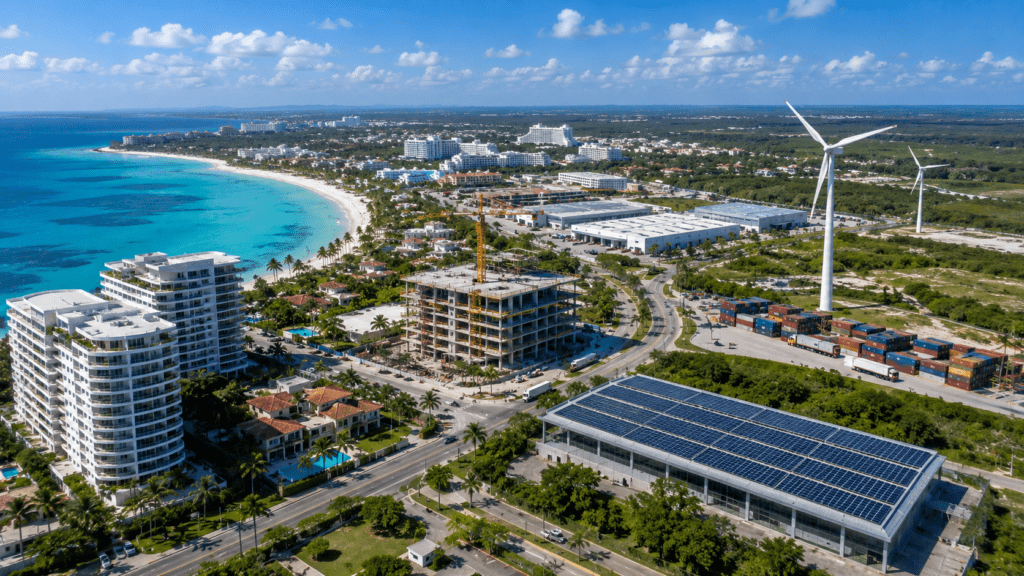
The Dominican Republic has one of the Caribbean’s broadest investment bases, with opportunities ranging from hotel development and residential real estate to export manufacturing, renewable energy, logistics, technology and agricultural processing. ProDominicana, the country’s export and investment promotion agency, currently identifies tourism, renewable energy, technology, manufacturing, semiconductors, agriculture, biomedicine, film and real estate among the country’s priority investment sectors.
The opportunity is therefore not concentrated in one industry. Instead, the Dominican economy presents several investment themes: serving a large and expanding tourism market, supplying growing domestic infrastructure needs, producing goods for international markets, positioning the country as a logistics and nearshoring platform, and developing higher-value services and technology. Understanding these differences is essential because the attractiveness of each sector depends on what type of demand and competitive advantage an investor is seeking.
Where Are the Best Investment Opportunities in the Dominican Republic?
The sectors with the strongest combination of existing investment activity, growth potential and strategic relevance include tourism, renewable energy, real estate, free zones and manufacturing, logistics, technology and telecommunications, and agroindustry. Other emerging areas, including semiconductors and biomedicine, are also gaining attention as the country seeks to diversify its productive base.
| Sector | Main opportunity | Why it matters |
|---|---|---|
| Tourism | Hotels, resorts, ecotourism, cultural and specialized tourism | Large established international market and continuing destination development |
| Real estate | Tourism-linked, residential, commercial and industrial projects | Strong connection with tourism, construction and population growth |
| Renewable energy | Solar, wind, biomass and energy infrastructure | Growing electricity demand and diversification of the energy mix |
| Free zones and manufacturing | Medical devices, electronics, textiles, tobacco and advanced manufacturing | Export platform connected to international supply chains |
| Logistics | Warehousing, distribution, cargo services and supply-chain infrastructure | Geographic position and expanding trade flows |
| Technology | Software, fintech, data centers, AI and digital services | Growing digital demand and potential for exportable services |
| Agroindustry | Processed food, controlled agriculture, aquaculture and export crops | Strong agricultural base combined with international food demand |
| Emerging industries | Semiconductors, biomedicine and other advanced activities | Potential for economic diversification and higher-value production |
Tourism: The Dominican Republic’s Established Investment Leader
Tourism remains the most established foreign-investment opportunity in the Dominican Republic. The country combines a large hotel base, internationally recognized beach destinations, extensive air connectivity and a mature tourism ecosystem that includes accommodation, transportation, food services, entertainment and property development.
Investment opportunities are broader than conventional all-inclusive resorts. ProDominicana identifies hotels and resorts, ecotourism, adventure tourism, cultural tourism and health tourism as areas of opportunity. This creates room for investors targeting different segments of the market rather than competing exclusively in the traditional mass-tourism model.
The sector’s importance is also visible in FDI data. According to the Central Bank of the Dominican Republic, tourism represented 20.1% of foreign direct investment in the first half of 2026. Energy represented 27.8%, while real estate and mining each accounted for 12.4%.
The opportunity in tourism is therefore both large and diversified. Beach destinations remain central, but the country’s investment strategy increasingly encompasses experiences, nature, culture, wellness and specialized tourism. Investors looking for opportunities linked to the country’s established international visitor base can therefore find several different business models within the same broad sector.
Where the Tourism Opportunity Is Strongest
Tourism-related opportunities are particularly relevant in destinations where visitor infrastructure continues to expand. Punta Cana and the eastern region remain major tourism centers, while Puerto Plata, Samaná, La Romana, Santo Domingo and other destinations offer different combinations of established demand and development potential.
The most interesting opportunities are not necessarily limited to constructing another conventional hotel. Supporting infrastructure, specialized accommodation, entertainment, food and beverage, wellness, cultural experiences and nature-based activities can all benefit from the expansion of tourism.
Real Estate: Closely Connected to Tourism and Construction
Real estate is one of the most important areas for foreign investment because it intersects with tourism, residential demand, commercial development and infrastructure. ProDominicana identifies residential, commercial, industrial and tourism-oriented real estate as investment opportunities.
The connection with tourism is particularly important. International visitors create demand for hotels and resorts, but tourism can also stimulate demand for vacation properties, serviced residences, commercial facilities and other developments around established destinations.
The Central Bank’s first-half 2026 FDI figures illustrate the sector’s importance: real estate represented 12.4% of incoming foreign direct investment. The bank specifically notes the close relationship between real estate development and tourism growth.
For investors, this means that real estate should not be viewed as a single market. Tourism-oriented development, residential construction, commercial property and industrial facilities have different demand drivers and risk profiles. The strongest opportunities are likely to be those supported by underlying economic activity rather than projects dependent solely on speculative property appreciation.
Renewable Energy: A Strategic Growth Sector
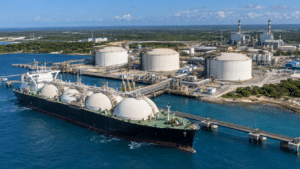
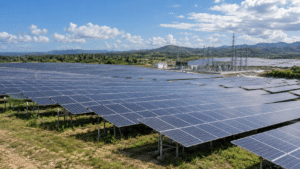
Renewable energy has moved to the center of the Dominican Republic’s investment landscape. The country’s growing electricity demand and the need to diversify its energy mix create opportunities in generation, infrastructure and related technologies.
ProDominicana identifies solar, wind, hydropower, biomass and clean technologies among the opportunities available to investors. The agency also highlights infrastructure for electricity generation and distribution as an area of potential investment.
Energy was the largest recipient of FDI in the first half of 2026, accounting for 27.8% of total inflows. This is significant because it demonstrates that renewable and broader energy infrastructure are not merely future-oriented investment themes: energy is already one of the country’s largest destinations for international capital.
The opportunity also extends beyond individual power-generation projects. Grid infrastructure, energy efficiency, storage, industrial energy solutions and technologies that improve system resilience can become increasingly relevant as electricity consumption grows.
Free Zones and Manufacturing: The Nearshoring Opportunity
The Dominican Republic’s free-zone sector is one of its strongest platforms for export-oriented foreign investment. Free zones connect international companies with a production base inside the country while allowing them to serve overseas markets.
The sector has become increasingly diversified. Traditional activities such as textiles and tobacco remain important, but the Dominican Republic has developed significant capabilities in medical devices and pharmaceuticals, electrical and electronic products, footwear, jewelry and other manufactured goods.
The latest data illustrate the sector’s industrial depth. During January-April 2026, free-zone exports reached US$2.80 billion, up 4.3% year over year. Medical and pharmaceutical products generated US$966 million of those exports, followed by tobacco and derivatives at US$461.2 million and electrical and electronic products at US$415.2 million.
This composition is particularly relevant for foreign investors because it demonstrates that the Dominican Republic is not limited to low-complexity manufacturing. Medical devices, electronics and other specialized products require quality systems, trained workers, logistics and integration into international supply chains.
Why Manufacturing Is Becoming More Attractive
Nearshoring is one of the most important strategic themes behind the manufacturing opportunity. Companies serving North American markets have increasingly examined locations closer to their customers as supply chains become more sensitive to transportation costs, geopolitical risk and production concentration.
The Dominican Republic’s geographic position in the Caribbean, its trade relationship with the United States through DR-CAFTA and its established free-zone infrastructure create conditions that can support this model. ProDominicana’s investment guide describes the country as a commercial link between Europe, North America and Latin America and highlights preferential access to more than 1.2 billion consumers through its trade agreements.
For investors, the strongest opportunities are therefore likely to be found in industries where proximity to major markets matters. Medical devices, electronics, specialized components, packaging, textiles, footwear and other export-oriented activities can benefit from an established industrial ecosystem and access to international buyers.
Logistics: Building on the Country’s Geographic Position
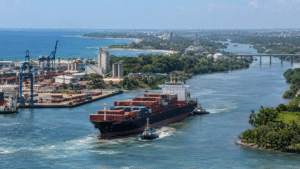
Logistics is closely linked to manufacturing, free zones, tourism and international trade. The Dominican Republic’s location in the Caribbean places it near major North American markets while also providing connections with Europe and Latin America.
The opportunity is not simply to operate warehouses. Modern logistics creates demand for distribution centers, cargo handling, storage, packaging, fulfillment, cold-chain infrastructure and specialized supply-chain services.
The development of free zones is reinforcing this opportunity. In 2025, the National Council of Free Export Zones approved new companies operating in activities that included logistics services, warehousing, labeling, packaging and international distribution. The council has also linked the expansion of free zones with the emergence of a regional logistics hub.
This relationship is important because logistics can become more valuable as manufacturing becomes more sophisticated. A country that produces medical devices or electronics for export needs reliable cargo handling, inventory management, customs-related infrastructure, specialized storage and predictable connections with international markets.
Technology and Digital Services
Technology represents a different type of investment opportunity from tourism, real estate or energy. Rather than depending primarily on physical assets, technology businesses can use the Dominican Republic’s workforce, connectivity and regional position to develop services for domestic and international customers.
ProDominicana specifically identifies software development, mobile applications, data centers, artificial intelligence and fintech as opportunities. The agency also highlights call centers and nearshoring within the broader technology ecosystem.
This creates several distinct investment models. Software companies can serve the domestic market or export digital products. Business-process and customer-service operations can serve international companies. Fintech businesses can address opportunities within the financial system, while data infrastructure can support the wider growth of digital services.
The most significant long-term opportunity may be the transition from labor-intensive digital services toward higher-value technology activities. Software engineering, cybersecurity, artificial intelligence, cloud infrastructure and specialized business services can potentially generate more value per worker than traditional outsourcing activities.
Technology and the Free-Zone Ecosystem
Technology also overlaps with the free-zone regime. The Dominican Republic has used special free-zone structures to support technology and digital-service businesses, creating an environment in which technology investment can connect with the country’s broader export platform.
This intersection is important for investors because it allows the technology sector to benefit from capabilities already developed in areas such as international customer service, telecommunications and export-oriented business operations.
Agroindustry: Moving Beyond Primary Agriculture
Agriculture is another important opportunity, but the strongest investment case is not necessarily limited to producing raw agricultural commodities. Agroindustry adds value by connecting agricultural production with processing, packaging, storage, distribution and export markets.
ProDominicana highlights opportunities in technologically advanced agriculture, sustainable livestock, organic food production and modern greenhouse systems. It also identifies tropical crops, livestock and aquaculture as areas of opportunity.
The Dominican Republic’s tropical climate and agricultural base provide a foundation for these activities, while international demand creates opportunities for products that meet increasingly specific quality, traceability and sustainability requirements.
Controlled agriculture is particularly relevant because greenhouse production can improve consistency and enable producers to manage quality more closely. Aquaculture can similarly provide opportunities to expand food production while responding to demand for seafood.
Where Agroindustry Creates Additional Value
The greatest potential often lies in the links between production and processing. A foreign investor may find opportunities not only in growing crops but also in food processing, cold storage, packaging, logistics, agricultural technology and export distribution.
This creates a broader investment ecosystem. Improvements in storage and processing can reduce losses, extend product shelf life and allow producers to target markets that require consistent quality throughout the year.
Semiconductors and Advanced Manufacturing
Semiconductors represent a more emerging opportunity than tourism, real estate or free-zone manufacturing, but they are strategically significant because of the global effort to diversify technology supply chains.
ProDominicana now lists semiconductors among the country’s investment sectors. The opportunity should not be interpreted as evidence that the Dominican Republic already has the same semiconductor manufacturing scale as established Asian or North American hubs. Rather, it reflects an effort to position the country within a strategically important industry and attract activities compatible with its capabilities and geographic advantages.
Potential opportunities may develop around specialized manufacturing, assembly, testing, components, electronics and supporting services. The sector is likely to depend heavily on infrastructure, technical skills, reliable electricity, supply-chain connectivity and the ability to integrate with established international companies.
For that reason, semiconductors should be viewed as a longer-term diversification opportunity rather than simply another version of conventional manufacturing.
Biomedicine and Medical Industries
Biomedicine is another emerging field with potential for higher-value investment. Its importance is reinforced by the country’s existing free-zone specialization in medical devices and pharmaceutical products.
The free-zone export data provide evidence of an established industrial base: medical and pharmaceutical products generated US$966 million in exports during the first four months of 2026, making them the largest free-zone export category during that period.
This creates an important distinction between a sector that is merely being promoted and one that already has industrial capabilities. The Dominican Republic has existing experience in medical manufacturing, while the broader biomedicine opportunity could potentially expand into related research, specialized services, laboratory activities and higher-value production.
Future growth in this area will depend on technical talent, quality standards, international certification, research capabilities and integration with global healthcare supply chains.
How the Main Investment Sectors Compare
The Dominican Republic’s investment opportunities differ substantially in maturity, capital intensity and exposure to international markets. Investors should therefore distinguish between sectors with an established track record and sectors that offer potentially higher long-term diversification value.
| Sector | Market maturity | Main demand driver | International potential |
|---|---|---|---|
| Tourism | Very high | International visitors | High |
| Real estate | High | Tourism, housing and commercial activity | Medium to high |
| Renewable energy | High and expanding | Electricity demand and energy transition | High |
| Free zones / manufacturing | High | Export supply chains and nearshoring | Very high |
| Logistics | Expanding | Trade and manufacturing | Very high |
| Technology | Developing | Digitalization and regional services | Very high |
| Agroindustry | Established but evolving | Food demand and exports | High |
| Semiconductors | Emerging | Supply-chain diversification | Potentially very high |
| Biomedicine | Emerging | Healthcare manufacturing and services | High |
The Strongest Opportunities Are Often Between Sectors
One of the most important characteristics of the Dominican investment landscape is that many opportunities do not fit neatly into a single industry. The country’s strongest investment themes often occur where two or more sectors reinforce one another.

Tourism and real estate are the clearest example. Hotel development can stimulate residential, commercial and infrastructure investment, while real estate development can support the growth of tourism destinations.
Manufacturing and logistics form another natural combination. As export-oriented production expands, companies require warehouses, distribution networks, cargo services and specialized supply-chain infrastructure.
Technology and manufacturing can also reinforce each other. Digital systems, automation, artificial intelligence, data services and specialized software can increase the efficiency of industrial operations while creating new technology businesses in their own right.
Agroindustry and logistics offer a similar connection. Food exports require processing, cold storage, packaging and transportation, creating opportunities beyond primary agricultural production.
These intersections are important because they can provide investors with access to broader economic trends rather than relying on a single source of demand.
What Makes a Sector Particularly Attractive?
The most promising sectors share several characteristics. First, they benefit from a structural source of demand rather than a temporary trend. Tourism benefits from the Dominican Republic’s established position in the Caribbean travel market; energy responds to growing electricity requirements; logistics benefits from trade; and food production responds to domestic and international consumption.
Second, strong sectors tend to have an existing ecosystem. Investors generally face fewer obstacles when suppliers, workers, infrastructure and supporting businesses are already present. The Dominican Republic’s free zones illustrate this principle particularly well because decades of export manufacturing have created capabilities that can support new international companies.
Third, sectors with access to international markets have an additional source of growth. Manufacturing, logistics, technology and agroindustry can potentially expand beyond domestic demand by selling goods and services abroad.
Finally, sectors that contribute to diversification can have strategic importance beyond their immediate financial returns. Technology, advanced manufacturing, renewable energy and biomedicine can help broaden the economic base and reduce excessive dependence on a small number of traditional activities.
The Investment Opportunity Is Becoming More Diversified
The recent FDI data show that the Dominican Republic is not simply attracting foreign capital into tourism and property. During the first half of 2026, energy and tourism together represented approximately half of FDI inflows, while real estate and mining each accounted for 12.4%. The distribution confirms the continuing importance of established sectors but also demonstrates that international capital is flowing into several parts of the economy.
The manufacturing and free-zone story adds another dimension. Free-zone exports are increasingly concentrated in higher-value products, including medical devices, pharmaceuticals and electronics. This indicates that the country’s export platform is capable of supporting industries that require more specialized production capabilities.
At the same time, ProDominicana’s current sector priorities point toward further diversification into technology, semiconductors, biomedicine and modern agriculture. These sectors are at different stages of development, so they should not be treated as equally mature investment markets. Their importance lies in the potential to expand the country’s economic capabilities over time.
Frequently Asked Questions
What is the best sector for foreign investment in the Dominican Republic?
There is no single best sector for every investor. Tourism is the country’s most established opportunity, while energy, real estate, free-zone manufacturing and logistics have strong existing investment ecosystems. Technology, agroindustry, semiconductors and biomedicine offer additional opportunities for investors seeking exposure to economic diversification and higher-value activities.
Is tourism still the main investment opportunity?
Tourism remains one of the country’s most important investment sectors and was responsible for 20.1% of FDI inflows during the first half of 2026. However, energy attracted an even larger share during that period, while real estate, mining and other sectors also represented significant portions of investment.
Why are free zones attractive to foreign manufacturers?
Free zones provide an established export-oriented industrial platform with companies operating across areas such as medical devices, pharmaceuticals, electronics, tobacco, textiles and other manufacturing activities. Their importance has increased as companies seek production locations closer to major markets and more resilient international supply chains.
Is renewable energy a major investment opportunity?
Yes. Energy represented 27.8% of FDI inflows in the first half of 2026, the largest share among the sectors reported by the Central Bank. ProDominicana identifies solar, wind, hydropower, biomass and related energy infrastructure as areas of opportunity.
Does the Dominican Republic offer opportunities outside tourism and real estate?
Yes. Manufacturing, free zones, logistics, renewable energy, technology, agroindustry, semiconductors and biomedicine are among the sectors receiving increasing attention. Free-zone exports in particular demonstrate the scale of the country’s industrial and export capabilities.
What technology opportunities exist in the Dominican Republic?
ProDominicana identifies software development, mobile applications, data centers, artificial intelligence and fintech among the country’s technology opportunities. The broader technology ecosystem also includes digital services, customer-service operations and nearshoring.
Why is logistics becoming more important?
Logistics benefits from the Dominican Republic’s geographic position and its expanding manufacturing, free-zone and international trade activity. Opportunities include warehousing, distribution, cargo handling, packaging, fulfillment and other specialized supply-chain services.
What opportunities exist in agriculture?
The investment opportunity extends from primary production to agroindustry. ProDominicana identifies technologically advanced agriculture, sustainable livestock, organic food, greenhouses, tropical crops and aquaculture. Processing, packaging, cold-chain infrastructure and export distribution can add further value.