 22°C
22°C

Advantages and Challenges of Doing Business in the Dominican Republic
The Dominican Republic has become one of the Caribbean’s most important business and investment markets, supported by sustained economic growth, access to major international markets, foreign investment, and sector-specific incentives. At the same time, companies entering the country must account for practical challenges involving electricity reliability, skilled labor, regulation, informality, and productivity.


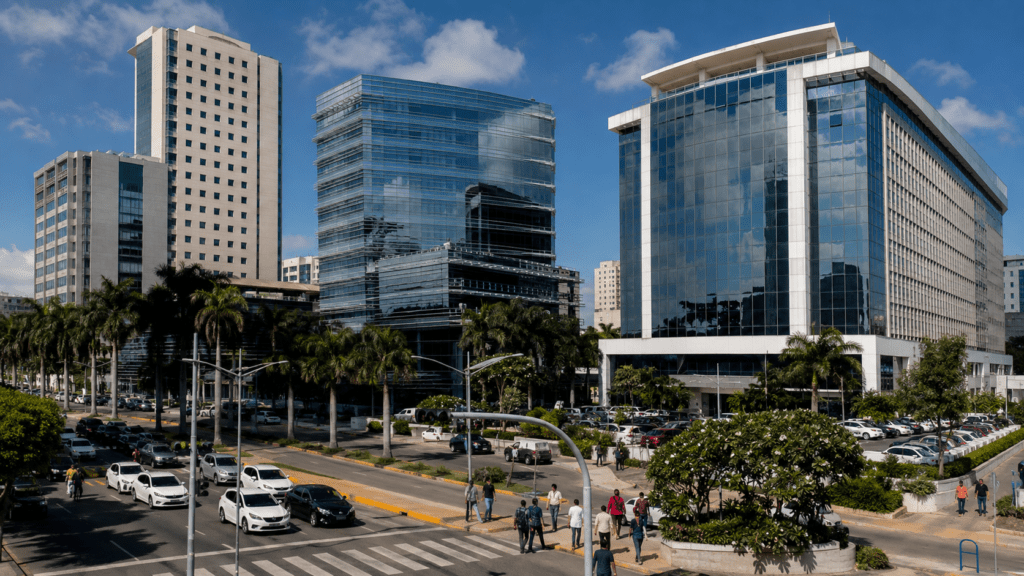
For international companies, the Dominican Republic offers a combination that is relatively unusual in the Caribbean: a large domestic market, proximity to North and Central America, established export industries, extensive tourism activity, and preferential access to major trading partners. The country has also attracted significant foreign direct investment and developed industrial clusters in areas such as medical devices, pharmaceuticals, textiles, tourism, agriculture, and business services.
Those advantages do not eliminate the difficulties of operating in the country. Businesses must evaluate infrastructure, electricity costs and reliability, workforce skills, regulatory requirements, taxation, access to finance, and the effects of informality before committing capital. The result is a market with substantial opportunities, but one in which the quality of local execution can be as important as the strength of the underlying business idea.
Why the Dominican Republic Attracts Businesses
The Dominican Republic is the largest economy in the Caribbean and has experienced stronger long-term economic growth than the Latin American regional average. The World Bank reports that the economy grew by 2.1% in 2025 and projects growth of 3.6% in 2026 and 4.4% in 2027, while identifying private investment, construction, exports, tourism, and foreign direct investment as important medium-term drivers.
This economic performance matters to businesses because it creates demand for goods and services while supporting the development of infrastructure, supply chains, financial services, technology, and specialized manufacturing. It also provides a broader base for companies that want to serve both local consumers and international customers.
Advantages of Doing Business in the Dominican Republic
Strategic Location and International Market Access
One of the country’s strongest advantages is its geographic position in the Caribbean. The Dominican Republic sits between North America, Central America, Europe, and the wider Caribbean, making it a practical location for companies that need to connect production, distribution, and services across several markets.
The country also benefits from preferential market access through agreements including the Dominican Republic-Central America-United States Free Trade Agreement, commonly known as DR-CAFTA, and the Economic Partnership Agreement with the European Union and CARIFORUM states. ProDominicana states that these agreements provide preferential access to more than 1.2 billion consumers.
For manufacturers and exporters, this can be particularly important. A company producing in the Dominican Republic may be able to use the country not simply as a domestic market, but as part of a broader regional supply-chain strategy. The exact benefits, however, depend on the product, rules of origin, customs requirements, and applicable trade agreement.
A Diversified Economy
The Dominican economy is not dependent on a single commercial activity. Tourism remains one of its most visible industries, but manufacturing, agriculture, mining, telecommunications, financial services, construction, logistics, and other services also contribute to economic activity.
ProDominicana identifies tourism, renewable energy, technology, manufacturing, semiconductors, agriculture, biomedicine, film, and real estate among the sectors offering investment opportunities. This diversification gives businesses several possible entry points and reduces the need to rely exclusively on tourism-related demand.
Strong Opportunities in Manufacturing and Nearshoring
The country’s free-zone system has helped establish an export-oriented manufacturing base. Companies operating under the free-zone regime can benefit from significant fiscal and customs incentives established by law, making the model particularly relevant for businesses producing goods for foreign markets.
Current investment opportunities include textiles, pharmaceuticals, medical devices, electronic components, food and beverages, and other forms of light manufacturing. ProDominicana also highlights nearshoring as an opportunity for companies seeking to shorten supply chains and position production closer to the United States.
The medical-device industry is a notable example. According to ProDominicana’s investment materials, exports of medical and pharmaceutical products from the free-zone regime reached US$2.76 billion in 2024, accounting for 32.8% of total free-zone exports.
Sector-Specific Investment Incentives
Another important advantage is the existence of targeted investment incentives. The benefits vary according to the sector and legal regime, so companies should not assume that every business automatically receives the same tax treatment.
The free-zone regime, regulated principally by Law 8-90, provides qualifying companies with substantial exemptions. The National Council of Free Export Zones states that qualifying operators and companies can receive 100% exemptions on several taxes and charges under Article 24, including income tax and certain taxes related to construction, capital formation, and property transactions.
There are also sector-specific incentives for activities such as tourism and certain manufacturing projects. These incentives can materially change the economics of an investment, but eligibility, documentation, geographic requirements, and operating conditions must be assessed before a project is structured around them.
A Legal Framework Open to Foreign Investment
The Dominican Republic’s foreign investment framework provides important protections for international investors. ProDominicana identifies Law 16-95 on Foreign Investment as the country’s general framework and states that it provides national treatment for foreign investors, free convertibility of funds, and the ability to repatriate profits under the conditions established by law.
For international businesses, the practical significance is that foreign ownership is not limited to a small set of special structures. Nevertheless, the appropriate corporate form, registrations, licenses, tax obligations, employment requirements, and sector-specific rules should be determined before operations begin.
A Growing Domestic Consumer Market
The Dominican Republic’s population of nearly 11 million provides a sizeable domestic market by Caribbean standards. Economic expansion and the growth of the middle class have also increased demand for housing, consumer products, financial services, healthcare, technology, transportation, entertainment, and other services.
For companies with a regional strategy, the domestic market can serve as an additional source of revenue rather than being the sole justification for establishing operations in the country. This is particularly relevant to businesses that can combine local demand with exports or services delivered to international customers.
Established Tourism and Hospitality Demand
Tourism creates opportunities beyond hotels and resorts. The broader ecosystem includes transportation, food and beverage, entertainment, construction, technology, health services, retail, property development, environmental services, and professional services.
ProDominicana identifies boutique hotels, ecotourism, adventure tourism, cultural tourism, sports tourism, and health tourism among the areas with investment potential. For businesses entering the tourism economy, the opportunity is therefore not limited to traditional resort development.
Challenges of Doing Business in the Dominican Republic
Electricity Reliability and Cost
Electricity remains one of the most important operational challenges for businesses. The World Bank has identified electricity reliability as a longstanding constraint on private-sector development and reports that the government continues to pursue reforms aimed at improving transparency, efficiency, affordability, and reliability in the sector.
The practical consequence varies by business. A digital company with modest electricity requirements may experience the issue differently from a factory, hotel, cold-storage facility, or commercial operation that depends on continuous power. Companies with critical electricity needs may therefore need backup generation, additional infrastructure, or other resilience measures.
Electricity should consequently be treated as an operating-cost and continuity issue during the planning stage rather than as a minor utility consideration after a business has opened.
Availability of Specialized Skills
Access to labor is not necessarily the same as access to the specific skills a company requires. World Bank research has identified mismatches between the skills supplied by the education system and those demanded by businesses, with technical skills shortages presenting a particular challenge for some employers.
This matters most for companies operating in specialized manufacturing, engineering, technology, advanced services, and other knowledge-intensive activities. Businesses may need to invest in training, establish internal development programs, or build relationships with educational and technical institutions.
Labor planning should therefore consider not only wage levels and workforce availability, but also the time and cost required to develop the skills needed for a particular operation.
Regulatory and Administrative Complexity
Starting and operating a formal company involves interaction with several institutions and requirements. Depending on the sector, procedures can include commercial-name registration, tax registration, commercial registration, employer registration, land-use approvals, environmental permits, construction licenses, and sector-specific authorizations.
ProDominicana’s investment materials illustrate how extensive the process can become for projects requiring construction or sector-specific approvals. A manufacturing or tourism project, for example, may involve substantially more permits than a relatively simple service business.
This makes professional local advice particularly valuable for foreign investors. The goal is not simply to register a company, but to identify every authorization required for the actual activity, location, workforce, imports, construction, and sale of products or services.
Tax Compliance and Changing Rules
Tax incentives can be attractive, but they should not be confused with an absence of taxation or compliance obligations. The Dominican tax authority, Dirección General de Impuestos Internos (DGII), administers the country’s principal internal taxes and publishes the applicable tax legislation and guidance.
For ordinary companies, the tax treatment can differ substantially from that available under a special investment regime. The DGII states that the standard corporate income-tax rate is 27%, with a temporary 30% rate for taxpayers meeting a specified revenue threshold during the 2026-2028 tax years.
Because tax rules and special regimes can change, businesses should model their tax position using the rules applicable to their specific activity rather than relying on a general statement that the Dominican Republic offers tax incentives.
Informality and Uneven Competition
Informality creates another challenge. Businesses operating formally must comply with taxes, labor rules, social-security obligations, permits, and other requirements, while informal competitors may operate outside part of that framework.
The World Bank has identified informality as a structural issue affecting productivity and the development of businesses. For formal companies, this can influence pricing, labor markets, competition, and the incentives to expand.
Companies should therefore evaluate competitors based not only on registered businesses but also on the broader informal economy relevant to their particular market.
Access to Finance
Financing conditions can also affect expansion. Capital requirements, interest costs, collateral expectations, and the availability of financing for smaller companies can differ from what an international investor may encounter in a larger developed market.
This is especially relevant for businesses whose investment model requires substantial local borrowing. A project may be commercially viable in principle but less attractive if its financing structure creates high carrying costs or exposes the company to excessive currency or interest-rate risk.
Exposure to External and Climate-Related Risks
The Dominican Republic is deeply integrated into international trade and tourism, which creates opportunities but also exposure to external shocks. Changes in global demand, energy prices, trade conditions, tourism flows, and international financing conditions can affect businesses operating in the country.
Climate-related risks are another consideration. The World Bank has identified disasters and climate change as structural factors that can affect productivity and economic resilience. Businesses with physical assets should therefore incorporate location, insurance, infrastructure resilience, and business-continuity planning into their investment decisions.
Advantages and Challenges at a Glance
| Factor | Potential Advantage | Potential Challenge |
|---|---|---|
| Location | Access to North American, European, Caribbean, and regional markets | International logistics still require careful planning |
| Trade | Preferential access under major trade agreements | Rules of origin and customs compliance must be managed |
| Investment incentives | Significant benefits available under certain sectoral regimes | Eligibility and compliance requirements vary |
| Manufacturing | Established free-zone and export manufacturing base | Specialized skills and reliable utilities can be important constraints |
| Labor | Large domestic workforce and growing formal employment | Some businesses face shortages of technical or specialized skills |
| Domestic market | Nearly 11 million consumers and a growing middle class | Purchasing power and demand vary considerably by segment and location |
| Electricity | Broad electricity access and ongoing sector reforms | Reliability and cost remain important operating considerations |
| Regulation | Established legal and institutional framework | Permits and approvals can be complex for regulated or construction-heavy projects |
Which Businesses May Benefit Most?
The Dominican Republic can be particularly attractive to companies whose business models align with its geographic position, export infrastructure, domestic demand, or investment incentives.
- Export manufacturers: Companies producing medical devices, pharmaceuticals, textiles, electronics, food products, and other goods can evaluate the free-zone system and the country’s trade relationships.
- Nearshoring operations: Businesses seeking production or supply-chain capacity closer to the United States may find the country’s location strategically relevant.
- Tourism and hospitality businesses: The established tourism industry supports opportunities across accommodation, experiences, transportation, food services, and related professional services.
- Technology and business services: Companies serving a regional or international customer base may benefit from the country’s location and growing services economy.
- Renewable-energy businesses: Energy remains an important economic and infrastructure issue, creating potential opportunities for projects that can support a more diversified and resilient energy system.
- Agribusiness: The country’s tropical climate, agricultural base, and access to international markets create opportunities in modern farming, food processing, greenhouses, aquaculture, and related activities.
The suitability of any sector depends on the project’s specific requirements. A company that needs uninterrupted power, highly specialized engineers, or complex environmental approvals will face a different operating environment from a small professional-services firm.
What International Companies Should Evaluate Before Entering
A serious market-entry assessment should go beyond comparing headline tax rates or labor costs. The most important question is whether the country’s advantages match the company’s operational requirements.
- Define the target market. Determine whether the business will primarily serve Dominican consumers, export products, provide regional services, or combine several models.
- Select the appropriate legal and incentive regime. Compare ordinary corporate structures with sector-specific regimes such as free zones where applicable.
- Model the full operating cost. Include electricity, backup systems, logistics, labor, taxes, insurance, compliance, professional services, financing, and imported inputs.
- Map all permits. Identify national and local approvals before purchasing property, signing long-term leases, or beginning construction.
- Assess the workforce. Determine which skills are readily available and which will require recruitment, training, or technology-assisted processes.
- Plan for infrastructure resilience. Businesses dependent on continuous power, communications, transportation, or climate-sensitive assets should include contingency measures from the outset.
- Use local expertise. Lawyers, accountants, customs specialists, engineers, and sector professionals can help international companies navigate requirements that are difficult to assess remotely.
Common Mistakes Foreign Businesses Should Avoid
One of the most common mistakes is treating the Dominican Republic as a single, uniform business environment. Conditions vary substantially by sector and location. A hotel project in a major tourism destination, an export manufacturer in a free zone, and a software company serving overseas clients can have very different requirements and cost structures.
Another mistake is building an investment case around incentives before confirming eligibility. Tax exemptions can significantly improve project economics, but they are generally linked to specific legal regimes, activities, procedures, or conditions. The underlying business should therefore remain viable under a realistic assessment of the applicable rules.
Foreign companies should also avoid assuming that labor availability automatically means immediate access to specialized talent. Workforce development can become an important part of the operating plan, especially in technical industries.
Finally, infrastructure should be evaluated at the individual site level. National averages can conceal important differences between locations, industrial parks, commercial districts, and tourism areas.
Is the Dominican Republic a Good Place to Do Business?
The answer depends on the business model, but the country has a strong set of structural advantages. Its location, trade relationships, expanding economy, established tourism industry, export manufacturing base, and investment incentives can make it an attractive platform for both domestic and international businesses.
At the same time, the country is not a frictionless market. Electricity, specialized labor, regulatory complexity, informality, financing, and climate-related risks can affect the cost and reliability of operations. These issues do not necessarily prevent investment, but they need to be incorporated into the business plan rather than treated as secondary concerns.
For an international company, the strongest investment case is usually one in which the Dominican Republic’s advantages directly solve a strategic need—such as proximity to customers, access to trade agreements, manufacturing diversification, tourism demand, or regional service delivery—while the company has a credible plan for managing local operating constraints.

Frequently Asked Questions
Is the Dominican Republic open to foreign investors?
Yes. The country’s general foreign-investment framework recognizes foreign investment and provides protections including national treatment and the ability to repatriate profits under the applicable legal framework. Sector-specific rules can apply, so investors should review the requirements for their particular activity.
What are the main advantages of doing business in the Dominican Republic?
The principal advantages include its strategic Caribbean location, preferential access to important international markets, a diversified economy, established export industries, a sizeable domestic market, and investment incentives available under certain legal regimes.
What are the biggest challenges for businesses?
Important challenges include electricity reliability and cost, shortages of specialized skills in some industries, regulatory and administrative complexity, tax compliance, informality, financing conditions, and exposure to external and climate-related shocks.
Does the Dominican Republic offer tax incentives to businesses?
Yes, but incentives depend on the activity and legal regime. Free-zone companies can qualify for substantial exemptions under Law 8-90, while other sectors may have their own incentive legislation. Companies should verify eligibility before incorporating incentives into a financial model.
Is manufacturing a good fit for the Dominican Republic?
The country has an established export-manufacturing ecosystem, particularly in free zones. Medical devices, pharmaceuticals, textiles, electronics, food products, and other manufacturing activities are among the sectors identified for investment. The suitability of a specific project depends on its supply chain, workforce, energy, logistics, and regulatory requirements.
What should a foreign company do before investing?
A company should conduct detailed market research, establish its intended market and operating model, assess the applicable legal and tax regime, map permits and licenses, evaluate workforce availability, calculate infrastructure and logistics costs, and obtain professional advice on local compliance.
Conclusion
The Dominican Republic offers a compelling combination of market size, geographic access, economic growth, international trade links, investment incentives, tourism activity, and export-oriented manufacturing. These characteristics explain why the country continues to attract domestic and foreign investment across a broad range of industries.
The opportunities are strongest when companies approach the market with a realistic understanding of its operating environment. Reliable execution requires careful attention to electricity, workforce skills, regulation, taxes, financing, infrastructure, and resilience. Businesses that evaluate those factors before entering are better positioned to determine whether the Dominican Republic is not merely an attractive market, but the right location for their particular strategy.
For official investment information, international investors can consult ProDominicana’s investment information, while tax requirements are published by the Dirección General de Impuestos Internos. Information on free-zone incentives is available from the National Council of Free Export Zones.